Dodge has spent decades chasing one idea: big power that regular drivers can actually buy. From the street bruisers of the 1970s to today’s turbocharged and hybrid-leaning era, a single family of engines has quietly shaped what “muscle” means for modern buyers. The company’s move from old-school V8 thinking to advanced six-cylinder performance is less a clean break than an evolution of that same obsession with accessible speed.
Following that evolution, from carbureted coupes to boosted trucks and sophisticated straight-sixes, shows how one brand’s engine strategy helped keep muscle cars alive long enough to be reinvented for a lower-emissions, software-heavy future.
The shift from carbureted brutes to modern muscle benchmarks
In the late 1970s, Dodge was still trying to keep the muscle flame alive in a world rapidly tightening emissions rules and shrinking displacement. Builds based on cars like the 1978 Dodge Magnum illustrate how owners leaned on traditional V8s, bodywork, and suspension upgrades to claw back the swagger that regulations had stripped away. A highly modified Magnum coupe, documented as a custom project with extensive engine and chassis work, shows how enthusiasts used that platform to chase the kind of straight-line performance earlier factory muscle had delivered, even as the showroom versions grew softer. That kind of custom Magnum kept the brand’s performance reputation alive when official output figures were modest.
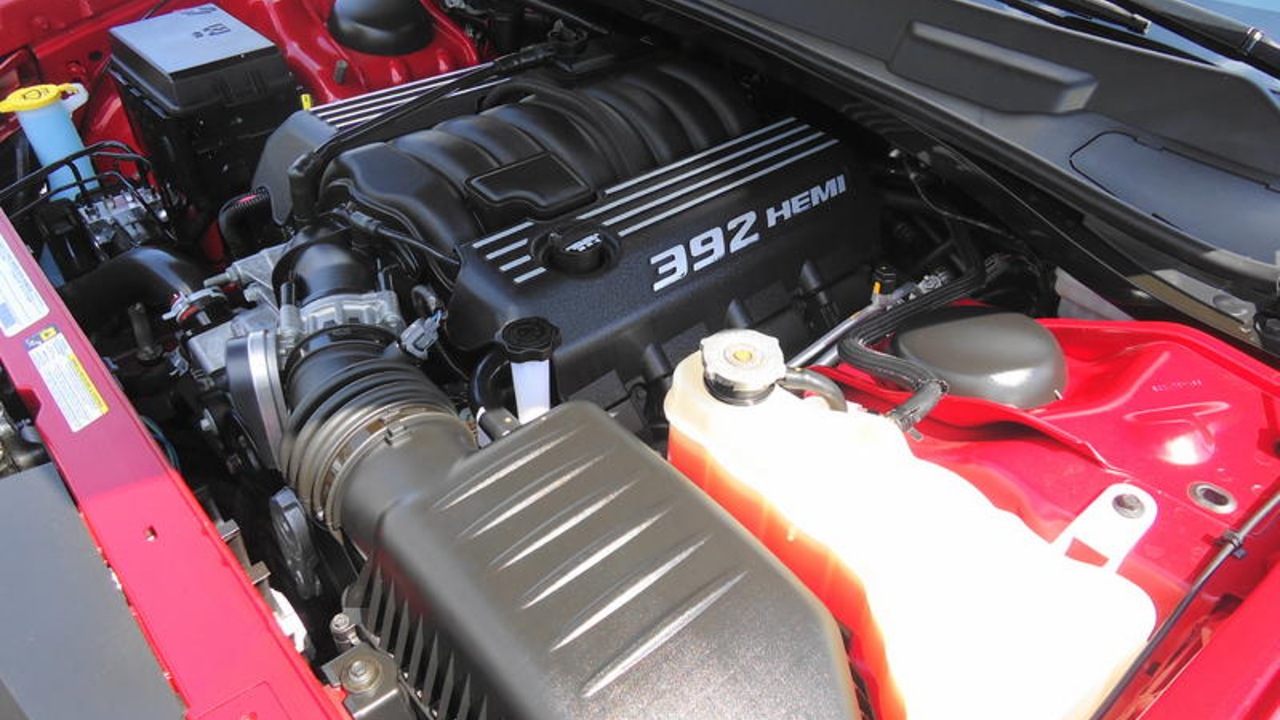
By the time the modern muscle revival arrived, Dodge had turned that underground loyalty into a business model. The reborn Charger and Challenger took a simple formula, rear-wheel drive and big power, and pushed it to extremes with successively hotter V8s. These cars did not just trade on nostalgia; they reset expectations for what a full-size sedan or two-door could do and made four-figure horsepower numbers part of mainstream car conversation.
Their influence extended beyond Dodge’s own showrooms. Once a large, relatively affordable sedan could run with high-end sports cars, it nudged rivals to rethink what “family car” performance could look like. The modern muscle segment became a proving ground for how far traditional internal combustion could be pushed while still meeting safety and emissions standards.
How an evolving Dodge engine formula redefined muscle expectations
As the 2010s rolled into the 2020s, the definition of muscle started to change. Buyers still wanted noise and drama, but they also began to care about fuel costs, daily usability, and technology. That is where Dodge’s engine strategy quietly pivoted. Rather than treating six-cylinders as rental-spec placeholders, the company started using them as a canvas for serious performance.
Current reporting on Dodge’s next-generation six-cylinder effort describes a brand determined to prove that a smaller, more efficient layout can still deliver the kind of shove buyers expect. The company is positioning its advanced inline-six as a legitimate replacement for long-serving V8s, with engineers targeting strong output and improved efficiency from a compact, turbocharged package. In public messaging, Dodge is clearly trying to prove that six cylinders can carry the muscle mantle without feeling like a downgrade.
This shift is not happening in a vacuum. The broader muscle market has already shown that unconventional formats can deliver serious performance. Lists of underrated modern muscle cars now highlight models that rely on smaller engines, forced induction, or sophisticated electronics rather than sheer displacement. One such rundown points to vehicles that combine strong acceleration with everyday practicality, arguing that they deserve more attention precisely because they move beyond the old big-block stereotype. These underrated modern muscle examples help normalize the idea that muscle can be measured in real-world speed and usability, not just cylinder count.
Enthusiast sentiment has followed. Community polls of modern muscle favorites show that while traditional V8 icons still command loyalty, there is growing respect for cars that deliver similar thrills with different hardware. One such vote on contemporary muscle highlights a mix of V8s and more efficient performance models, a sign that fans are open to change as long as the experience feels authentic. The community rankings suggest that sound, character, and acceleration matter more than whether the engine follows a 1960s template.
Why Dodge’s muscle-minded engines matter in a truck world
Dodge’s performance engines have never lived only in coupes and sedans. Pickup buyers have long benefited from the same focus on torque and durability. The Ram lineage, which grew out of Dodge’s truck division, built its reputation on stout powertrains that could tow, haul, and still feel quick enough to be fun. A detailed look at the Ram and Ram Truck legacy in the pickup world shows how successive generations leaned on stronger frames, better suspensions, and more capable engines to move from basic workhorses to highly optioned lifestyle vehicles. Those Ram and Ram developments helped normalize the idea that a truck could be both a tool and a performance statement.
That crossover matters for modern muscle because it spreads performance expectations across segments. When a full-size pickup can sprint like an old-school muscle car, buyers start to expect that same urgency from everything they drive. Dodge’s engine strategy, with powerplants shared or closely related across cars and trucks, reinforced that trend and turned torque-rich engines into a brand signature, not just a niche offering for weekend racers.
Meanwhile, tightening regulations and rising fuel prices have pushed trucks toward smaller, more efficient engines, often with turbocharging or hybrid assistance. The lessons Dodge is learning as it refines high-output six-cylinders for performance cars translate directly into pickups that need to tow heavy loads without guzzling fuel. In that sense, the “muscle” engine is no longer confined to burnouts and quarter-mile runs. It is part of a broader push to keep internal combustion relevant across the lineup as electrification accelerates.
Why this engine story matters right now
The transition from V8-dominated muscle to sophisticated six-cylinder powerplants lands at a moment when performance brands face intense scrutiny. Regulators are tightening emissions targets, investors are watching electrification timelines, and customers are split between wanting tradition and wanting lower running costs. Dodge’s evolving engine family sits at the center of that tension.
By committing to a high-output six-cylinder as a core performance engine, Dodge is effectively arguing that muscle can be modernized rather than abandoned. The company is betting that customers will accept fewer cylinders if the experience delivers equal or better acceleration, a distinctive sound, and credible efficiency gains. That approach positions Dodge as a bridge between old-school muscle and full battery-electric performance, which still faces infrastructure and price hurdles for many buyers.
The shift also matters for the used and enthusiast markets. Classic builds based on cars like the Magnum show that Dodge’s heritage continues to inspire ambitious projects. Modern six-cylinder platforms will likely fuel a new wave of tuning, with owners chasing big numbers through software, turbo upgrades, and hybrid add-ons instead of carburetors and cam swaps. The culture that grew around V8 muscle is already adapting to this new hardware.
What comes next for Dodge’s muscle-minded engines
Looking ahead, the engine that shaped modern Dodge muscle is less a single block of iron and more a philosophy that now centers on advanced six-cylinder technology. The next phase will likely involve layering electrification onto that base. Mild-hybrid systems can fill turbo lag and smooth stop-start operation, while plug-in setups can deliver instant torque that feels every bit as dramatic as a big-displacement launch.
For Dodge, the challenge will be maintaining the visceral qualities that made its V8 era so memorable. That means tuning exhaust notes, throttle response, and transmission behavior so that even a downsized, electrified powertrain feels alive. It also means choosing where to keep internal combustion at the center and where to let fully electric models take over the performance spotlight.
Enthusiasts will watch how the brand treats its last and next generations of engines. If Dodge can show that a turbocharged six with smart electrification can out-accelerate and outlast the old heroes while using less fuel, the definition of muscle will shift again, this time with broad customer buy-in. If it stumbles, nostalgia for the V8 era will only grow louder.
More from Fast Lane Only
- Unboxing the WWII Jeep in a Crate
- 15 rare Chevys collectors are quietly buying
- 10 underrated V8s still worth hunting down
- Police notice this before you even roll window down
*Research for this article included AI assistance, with all final content reviewed by human editors