The 1969 Pontiac GTO Judge occupies a rare place in automotive culture, admired not only for its performance but for the attitude it projected on the street. More than half a century after it first appeared, enthusiasts still treat the Judge as a benchmark for what a factory muscle car can be, from its vivid graphics to its purposeful hardware. Its lasting appeal rests on a blend of engineering, marketing, and mythology that few other models have matched.
That appeal begins with the broader story of the Pontiac GTO, which helped define American muscle in the 1960s and set the stage for the Judge as a focused, almost theatrical performance package. By the time the 1969 variant arrived, Pontiac had learned how to turn raw power into a complete experience, one that continues to resonate with collectors and younger fans discovering the car for the first time.
From muscle pioneer to courtroom drama
The Pontiac GTO had already reshaped Detroit performance by the time the Judge appeared, having been introduced for the 1964 model year as a template for the American muscle car era. The second generation, produced from 1968 to 1972, refined that formula with more sculpted bodywork and a stronger emphasis on both speed and style. Within that context, the 1969 Pontiac GTO Judge emerged as a special variant that distilled the GTO’s rebellious spirit into a more focused package, turning an already assertive coupe into something closer to a rolling manifesto.
Pontiac positioned the Judge as a performance package that could rival stripped‑down competitors while still carrying the GTO nameplate. It was conceived as a more affordable, performance‑focused version of the GTO designed to challenge cars like the Plymouth Road Runner, and it did so by bundling key hardware and visual cues into a single option. That strategy allowed Pontiac to keep the core GTO line broad, while the Judge served as a halo that signaled how serious the division was about performance and youth‑oriented image.
Design that shouted for attention
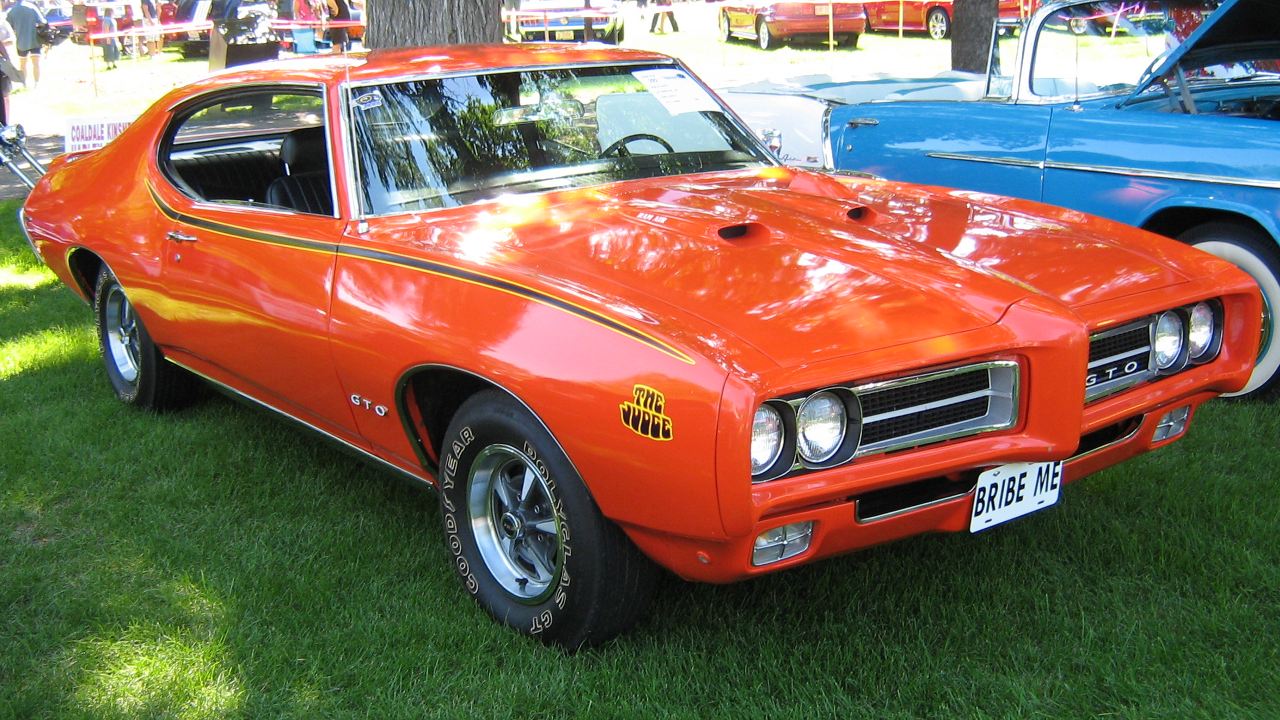
Visually, the 1969 Pontiac GTO Judge was engineered to stand out before the engine ever turned over. The car’s aggressive appearance, with its bold graphics, rear spoiler, and purposeful stance, made it a standout on both the street and the track. Bright colors, including the now‑famous high‑impact hues, worked with the graphics to create a look that was instantly recognizable from a distance and impossible to mistake for a standard GTO.
Details reinforced that visual drama. The Judge came with Rally II wheels without trim rings, wider tires, and a rear spoiler that added both presence and a hint of aerodynamic intent. The combination of these elements gave the car a more planted, muscular look that matched its performance ambitions. Contemporary observers and later enthusiasts have consistently described the 1969 Pontiac GTO Judge as wild, powerful, and unforgettable, a description that reflects how its styling has aged into a symbol of late‑1960s American performance design.
Powertrain and performance credibility
Under the hood, the Judge backed up its visual bravado with serious mechanical specification. The package came standard with the Ram Air 400 engine, a performance‑tuned version of Pontiac’s 400‑cubic‑inch V8 that delivered the kind of torque and responsiveness muscle car buyers expected. That engine, paired with a Hurst shifter featuring a distinctive T‑handle, gave drivers both the power and the tactile engagement that defined the era’s performance experience.
The broader 1969 GTO lineup already offered strong credentials, with a 400‑cubic‑inch V8 producing 350 horsepower in standard form and higher output versions like the Ram Air variants available for more demanding buyers. The Judge built on that foundation by making the Ram Air 400 standard equipment, effectively turning what had been an option into part of the car’s identity. Combined with its wider tires and performance‑oriented suspension tuning, the Judge earned a reputation as a car that could deliver on the promise implied by its graphics and nickname.
Marketing, pop culture, and the birth of a legend
The Judge’s enduring appeal owes as much to its cultural positioning as to its hardware. Pontiac named the package after a sketch from Rowan & Martin’s Laugh‑In, tapping directly into contemporary television comedy and youth culture. That decision signaled that the car was not just fast but also self‑aware, willing to play with the idea of “passing judgment” on the competition. Advertising leaned into this persona, with the 1969 Judge becoming closely associated with the tagline “The Judge can be brought,” a playful twist that helped the car lodge in the public imagination.
Marketing framed the 1969 Pontiac GTO as “affordable muscle for the young,” and the Judge sharpened that message by offering a concentrated bundle of performance and style at a price aimed at younger buyers. Period descriptions emphasize that it became a true street legend, a car that captured the rebellious spirit of late 1960s car culture rather than simply offering more horsepower. The combination of a memorable name, clever advertising, and a visual identity that matched the tone of the era turned the Judge into a cultural reference point as much as a product on a showroom floor.
Collector status and lasting influence
Over time, the 1969 Pontiac GTO Judge has evolved from contemporary performance car to highly prized collectible. Enthusiasts and historians frequently describe it as a muscle car legend and a symbol of Pontiac’s performance legacy, noting that it encapsulates the golden age of American muscle in a single model year. Its powerful engine and aerodynamic‑minded design details have contributed to its desirability among collectors, who see in the Judge a rare combination of factory specification, period‑correct flair, and cultural resonance.
That status has only grown as the broader Pontiac GTO story has been reassessed. The Judge is often described as the ultimate expression of Pontiac’s muscle car dominance, a statement of raw power and unapologetic American automotive excellence that still feels relevant to modern enthusiasts. Today, references to the 1969 Pontiac GTO Judge in enthusiast communities and museum collections underscore how firmly it remains embedded in car culture, not merely as an artifact of its time but as an enduring benchmark for what a performance car can represent.
More from Fast Lane Only