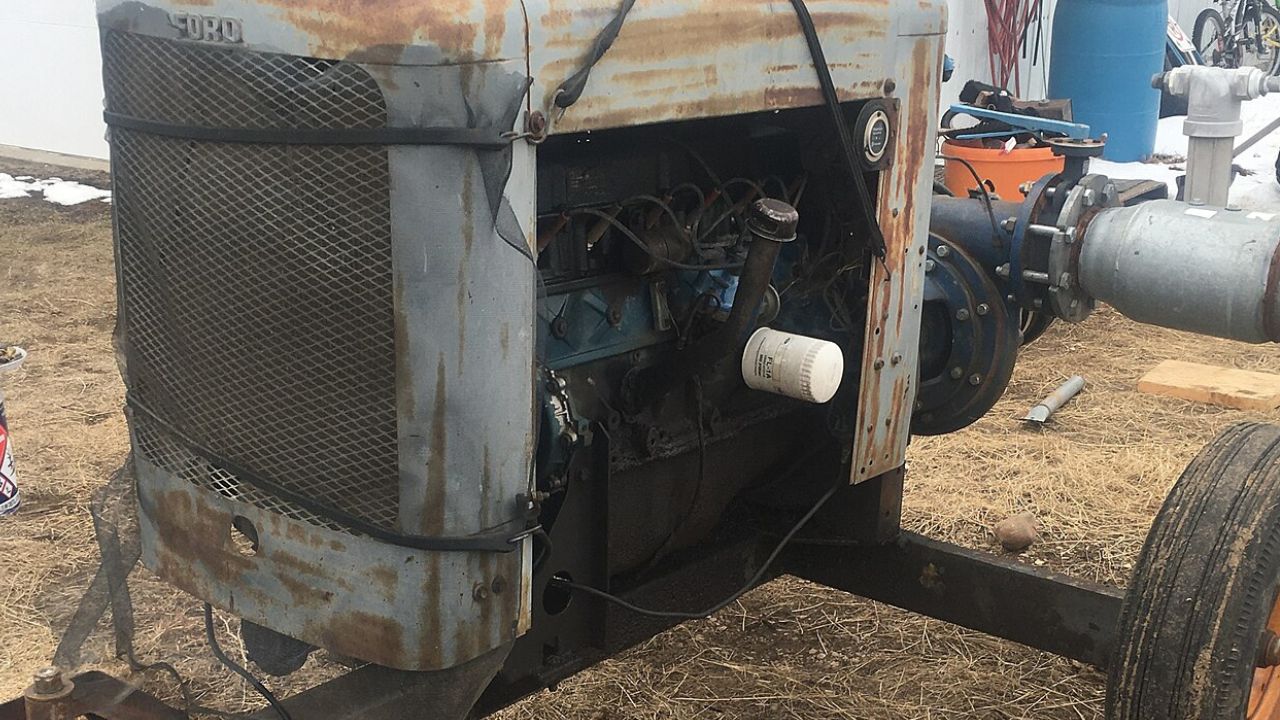
Some Ford engines earned legendary status, while others quietly transformed the company’s truck lineup without receiving the recognition they deserved. One such engine is the 300 cubic-inch inline-six. Known for its remarkable durability, dependable torque, and straightforward design, it became the backbone of countless Ford pickups, helping redefine what owners expected from a hardworking truck engine.
Built for Hard Work Instead of Headlines
When Ford introduced the 300 cubic-inch inline-six in the 1960s, it was never intended to be a high-performance engine. Instead, engineers focused on creating an engine that could handle heavy workloads day after day with minimal maintenance. Its long-stroke design produced strong low-end torque, making it ideal for hauling cargo, towing trailers, and tackling demanding job sites.
Unlike V8 engines that often received the spotlight, the 300 inline-six quietly earned the trust of farmers, contractors, fleet operators, and small business owners. It became known for starting reliably in difficult conditions and continuing to run even after accumulating hundreds of thousands of miles.
Its simple overhead-valve design also made repairs straightforward. Mechanics appreciated the engine’s accessibility, while owners valued its reputation for reliability over flashy performance numbers.
The engine’s true strength was consistency. It delivered dependable power year after year, proving that durability could be just as valuable as horsepower.
Torque That Made Trucks More Capable
One of the greatest strengths of the Ford 300 inline-six was its abundant low-end torque. Peak pulling power arrived at relatively low engine speeds, allowing trucks to move heavy loads without constant downshifting or excessive throttle. This characteristic made everyday work easier for drivers who depended on their trucks to earn a living.
Whether climbing steep grades, towing equipment, or hauling construction materials, the engine remained smooth and predictable. Owners often found that it performed demanding tasks with less effort than some larger engines designed primarily for higher-speed driving.
Its torque characteristics also improved drivability around town. The engine delivered steady acceleration from a stop and maintained momentum without requiring high engine speeds.
This combination of usable power and mechanical simplicity helped establish Ford trucks as dependable work vehicles across North America.
A Reputation That Grew With Every Mile
The Ford 300 inline-six developed a reputation for exceptional longevity. Stories of engines surpassing 300,000 or even 500,000 miles with routine maintenance became common among owners. Regular oil changes, cooling system care, and basic servicing were often enough to keep the engine running for decades.
Fleet operators appreciated the reduced maintenance costs, while individual owners enjoyed dependable transportation that rarely demanded major repairs. Many trucks equipped with the engine remained in daily service long after newer vehicles had been retired.
Its cast-iron construction and conservative engineering contributed significantly to its durability. Rather than chasing maximum output, Ford built an engine capable of enduring continuous hard use.
As a result, the 300 inline-six became one of the most respected truck engines in Ford’s history, even if it rarely received widespread attention.
A Legacy That Still Deserves Recognition
Although production eventually ended as newer engine designs and stricter emissions standards emerged, the Ford 300 inline-six continues to enjoy a loyal following. Enthusiasts still seek out trucks equipped with the engine because of its reputation for reliability, ease of maintenance, and practical performance.
Many classic Ford pickups remain on the road today thanks to this dependable powerplant. Owners continue restoring and preserving these trucks, recognizing that the engine played an important role in Ford’s success within the pickup market.
While more powerful engines often dominate automotive history, the 300 inline-six proved that lasting influence comes from dependability rather than headline-grabbing specifications.
Its quiet contribution to truck performance helped shape generations of Ford pickups, making it one of the most important forgotten engines the company ever built.
More from Fast Lane Only
- Unboxing the WWII Jeep in a Crate
- 15 rare Chevys collectors are quietly buying
- 10 underrated V8s still worth hunting down
- Police notice this before you even roll window down
*Research for this article included AI assistance, with all final content reviewed by human editors