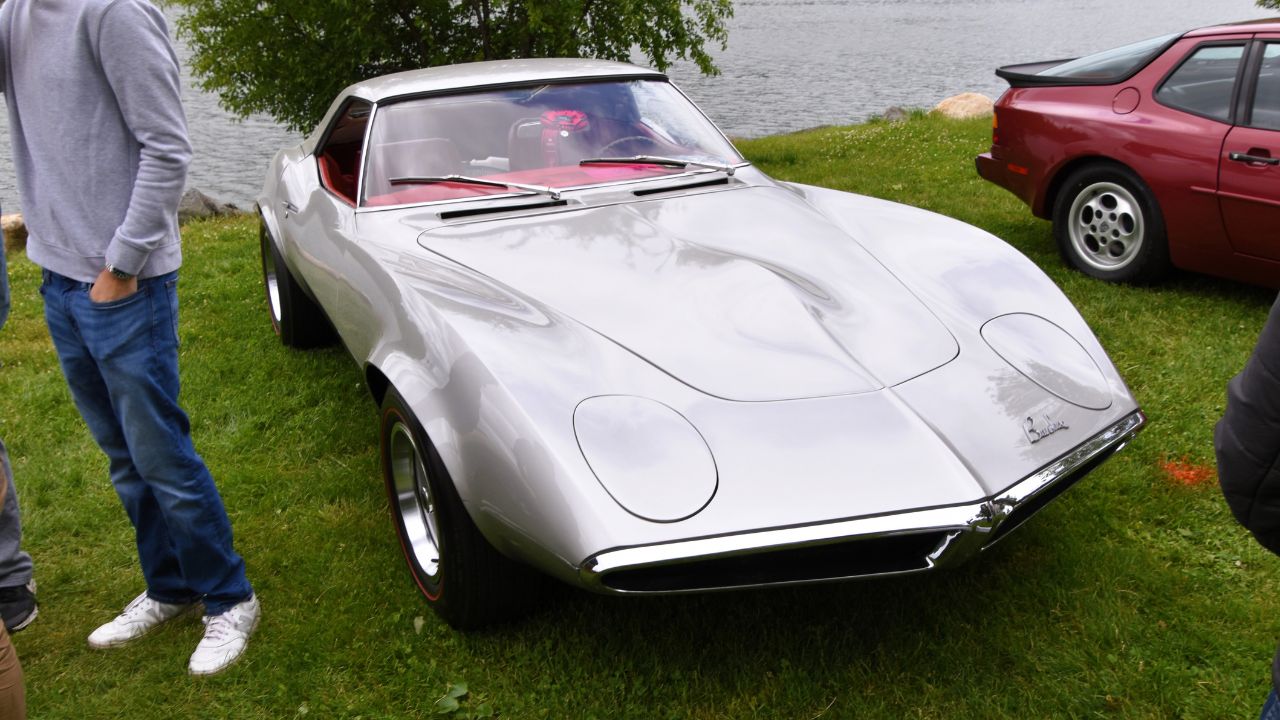
The 1974 Pontiac Banshee II was a groundbreaking concept car that held the potential to rival the iconic Corvette. However, several factors contributed to its eventual obscurity and the missed opportunity for Pontiac to enter the high-performance sports car arena.
The Birth of the Banshee II: Vision and Innovation
The Pontiac Banshee II emerged from a vision that combined innovative design with cutting-edge technology. Inspired by the sleek lines of contemporary sports cars, the Banshee II featured a low-slung, aerodynamic silhouette that was both aggressive and eye-catching. Its design was a reflection of the era’s trends, showcasing Pontiac’s ambition to carve out a niche in the performance market. The use of fiberglass for the body not only reduced weight but also allowed for more creative design possibilities, resulting in a stunning exterior that captured the essence of speed.
Under the skin, the Banshee II was equipped with advanced features that set it apart from its competitors. The advanced suspension system promised improved handling and stability, making it a formidable contender on both the street and the racetrack. The design team, led by notable figures such as John Z. DeLorean, infused the car with a blend of performance and style that was emblematic of Pontiac’s brand identity. Their dedication to innovation paved the way for a vehicle that could have challenged the likes of the Chevrolet Corvette and other high-performance models.
Market Context: The Automotive Landscape of the 1970s
The automotive landscape of the 1970s was characterized by the rise of the American muscle car, with consumers showing a growing appetite for vehicles that combined power and style. However, as the decade progressed, preferences began to shift due to a combination of factors, including the looming oil crisis. The 1973 oil embargo led to skyrocketing fuel prices, prompting consumers to reconsider their choices. This shift in consumer sentiment significantly impacted the market for performance vehicles, making it challenging for high-powered cars like the Banshee II to gain traction.
Moreover, regulatory changes aimed at improving fuel efficiency and reducing emissions further complicated the landscape for performance cars. As automakers scrambled to comply with new regulations, the focus shifted from raw power to practicality. The Banshee II, which was designed as a performance vehicle, found itself in a market increasingly favoring smaller, more fuel-efficient cars. Competitors like the Chevrolet Corvette adapted to these changes, ensuring their survival and continued success, which ultimately limited Pontiac’s strategic options.
Challenges and Setbacks: The Downfall of the Banshee II
Despite its promising design and innovative features, the Banshee II faced significant challenges that hindered its development. Internal corporate decisions within General Motors played a critical role in the car’s downfall. As the company navigated the shifting priorities of the automotive market, resources were diverted away from Pontiac, placing the Banshee II project in jeopardy. The lack of corporate support stifled the momentum that the design team had built, ultimately leading to the project’s stagnation.
Financial constraints further complicated matters. The economic climate of the 1970s, marked by inflation and recession, forced automakers to tighten their budgets. As a result, Pontiac faced budget cuts that limited both the development and marketing of the Banshee II. The ambitious concept car, once a symbol of Pontiac’s performance aspirations, became an afterthought as the company focused on more immediate concerns. Additionally, evolving automotive safety regulations posed challenges for the Banshee II’s production, as engineers struggled to incorporate necessary features without compromising the car’s performance.
The Legacy of the Banshee II: What Could Have Been
Although the Banshee II never made it to production, its legacy lives on in automotive lore. The concept car is often regarded as a “what could have been” moment for Pontiac—a missed opportunity to establish itself as a serious player in the high-performance sports car market. Enthusiasts and collectors continue to celebrate the Banshee II, often sharing images and information within fan communities. These groups keep the spirit of the car alive, discussing its design and speculating on what might have been had the Banshee II reached the production line.
The Banshee II’s influence can also be seen in subsequent Pontiac models, which often drew inspiration from its design language. The lessons learned from the Banshee II’s development serve as a cautionary tale for modern automakers. The automotive industry continues to evolve, with an increasing emphasis on innovation, efficiency, and performance. The Banshee II’s spirit can still be felt in the designs of contemporary sports cars, reminding us of the importance of pushing boundaries and embracing new ideas in automotive engineering.
Comparative Analysis: Banshee II vs. Corvette
When comparing the Banshee II to its most notable rival, the Chevrolet Corvette, several key differences and similarities emerge. Performance metrics reveal that the Banshee II was designed to compete directly with the Corvette’s established power and handling capabilities. With an expected top speed in the range of 150 mph and a lightweight structure thanks to its fiberglass body, the Banshee II promised to deliver a thrilling driving experience. In contrast, the Corvette of the time was known for its robust V8 engines, which offered impressive acceleration and a loyal following.
In terms of design elements, both vehicles shared a commitment to performance-oriented aesthetics. The Banshee II featured a more sculpted body with a futuristic look, while the Corvette maintained a classic sports car silhouette with a focus on muscular lines. Each vehicle’s design reflected the ethos of their respective brands, with Pontiac opting for a more avant-garde approach while Chevrolet leaned into tradition. Marketing strategies also differed significantly; the Corvette was positioned as the quintessential American sports car, while the Banshee II struggled to find its footing in a rapidly changing market landscape.
Reflecting on missed opportunities: Why the Banshee II remains a significant, yet forgotten, piece of automotive history
The story of the Pontiac Banshee II is a testament to the complexities of the automotive industry and the challenges faced by automakers. Despite its innovative design and potential to rival the Corvette, the Banshee II serves as a reminder of how external factors can impact even the most promising projects. It remains a significant piece of automotive history, not just for what it was, but for what it could have become.
As we look to the future of the automotive industry, the Banshee II’s spirit of innovation and creativity continues to inspire new generations of car enthusiasts and manufacturers alike. The lessons learned from its development—particularly the importance of adaptability in a changing market—remain relevant today. Speculating on a modern revival of the Banshee II, one can only imagine how Pontiac might reinterpret its vision to meet contemporary demands for performance, efficiency, and sustainability. Perhaps a new Banshee could blend the best of its roots with the advances of today, creating a vehicle that pays homage to its past while embracing the future.
More from Fast Lane Only
- Unboxing the WWII Jeep in a Crate
- 15 rare Chevys collectors are quietly buying
- 10 underrated V8s still worth hunting down
- Police notice this before you even roll window down
*Research for this article included AI assistance, with all final content reviewed by human editors.