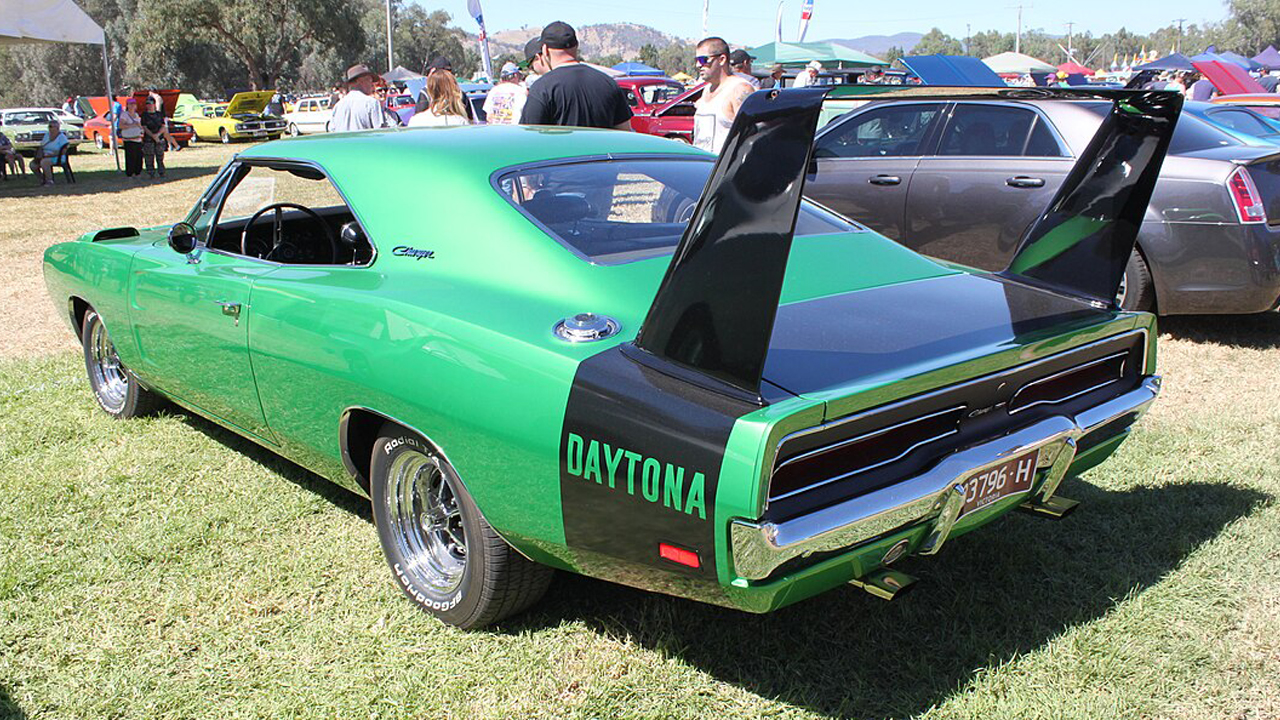
The 1969 Dodge Charger Daytona, famed for its distinctive giant rear wing, is often overlooked in automotive history. Its creation was driven by a combination of performance needs and innovative engineering, resulting in a vehicle that not only excelled on the racetrack but also became an icon of American muscle car culture. This exploration delves into the fascinating backstory of the Charger Daytona, the engineering innovations that defined its design, and its lasting impact on motorsport.
The Genesis of the Charger Daytona
The Dodge Charger has been a significant figure in American muscle car culture since its inception in 1966. Initially introduced as a fastback variant of the Dodge Coronet, the Charger quickly gained popularity for its bold design and powerful performance. By the time the 1969 model rolled out, the Charger was firmly established as a symbol of power and speed, embodying the spirit of American automotive engineering.
During the late 1960s, NASCAR racing was evolving rapidly, with a growing emphasis on speed and aerodynamics. The racing teams were seeking every possible advantage on the track, leading to fierce competition. Dodge recognized that to remain competitive, they needed to develop a vehicle that could outperform its rivals. This urgency led to a collaboration between Dodge engineers and professional racing teams, marking the beginning of the Charger Daytona’s development. The goal was clear: create a car that could dominate the NASCAR circuit while pushing the boundaries of automotive design.
Aerodynamic Innovations
The Charger Daytona was revolutionary in its aerodynamic design, a necessity for achieving high speeds on the racetrack. Key features included a pointed nose cone that reduced drag and a massive rear wing, which was instrumental in generating downforce. These elements were not merely aesthetic; they were carefully engineered to enhance the vehicle’s performance. The nose cone helped streamline airflow, allowing the Charger Daytona to cut through the wind more efficiently than its contemporaries.
Wind tunnel testing played a crucial role in refining the Charger Daytona’s design. Engineers conducted extensive tests to understand how air interacted with the car at various speeds, leading to modifications that improved its aerodynamics. This attention to detail set the Charger Daytona apart from other vehicles of its time, such as the Ford Torino and the Plymouth Superbird, which lacked the same level of aerodynamic sophistication. The Charger Daytona’s design was a clear testament to the era’s innovative engineering.
The Giant Wing Explained
The iconic rear wing of the Charger Daytona is perhaps its most recognizable feature. Designed to provide significant downforce at high speeds, the wing played a pivotal role in the car’s stability during races. This downforce ensured that the vehicle maintained traction, allowing drivers to navigate turns at greater speeds without compromising control. Such engineering was groundbreaking for its time, as most competitors either dismissed the importance of downforce or could not achieve it effectively.
However, the wing also faced its share of criticism. Some detractors argued that it was an eyesore, detracting from the car’s sleek lines. Others questioned its practicality, suggesting that it was more of a gimmick than a functional component. Despite this, the performance benefits were undeniable. The Charger Daytona’s ability to achieve higher speeds and maintain stability helped solidify its place in NASCAR history, proving that engineering innovation could indeed yield tangible results on the racetrack.
The Charger Daytona in NASCAR
The Charger Daytona made its NASCAR debut in 1969, and it quickly made waves in the racing community. During its first season, the car’s design and engineering led to an immediate impact, with notable drivers such as Buddy Baker and Richard Petty behind the wheel. Baker famously drove the Daytona to victory at the Talladega 500, marking the first time a stock car exceeded 200 mph on a closed circuit. This achievement not only showcased the Charger Daytona’s capabilities but also elevated the car’s status in the competitive world of NASCAR.
Throughout its racing career, the Charger Daytona amassed a series of impressive victories, contributing to its legacy as one of the most successful vehicles in NASCAR history. Its aerodynamic advantages allowed it to outpace competitors, and the car quickly became a favorite among fans and drivers alike. The performance of the Charger Daytona was not just about speed; it was also about the thrill of racing, and its presence on the track inspired a generation of automotive enthusiasts.
Cultural Impact and Popularity
The Charger Daytona’s influence extended beyond the racetrack and into popular culture. Its distinctive design and performance made it a sought-after vehicle, leading to numerous appearances in films and television. One of the most iconic moments came in the 1971 film “Vanishing Point,” where a white Charger Daytona became the centerpiece of a high-speed chase. Such portrayals helped solidify the car’s status as an icon of the American muscle car movement, captivating audiences and inspiring admiration among car enthusiasts.
Media coverage also played a significant role in boosting the Charger Daytona’s popularity. Magazines and automotive publications frequently featured the car, highlighting its unique design and impressive performance. This visibility helped create a lasting legacy, ensuring that the Charger Daytona would be remembered as a symbol of American automotive engineering excellence. As a result, it became a desirable vehicle for collectors and enthusiasts, further cementing its place in automotive history.
Production Challenges and Limited Availability
Despite its success on the racetrack, the production of the Charger Daytona was fraught with challenges. Dodge only produced a limited number of these vehicles, with approximately 503 units manufactured. This scarcity was a direct result of the company’s focus on balancing production with racing commitments, as well as the evolving regulations in NASCAR that ultimately led to the discontinuation of the Charger Daytona in the early 1970s.
Moreover, changing NASCAR regulations began to favor more traditional designs, making the Charger Daytona’s aerodynamic features less relevant. As a result, Dodge shifted its focus to other models, leaving the Charger Daytona as a rare gem in the muscle car landscape. The limited availability only added to its allure, making original models highly sought after by collectors and enthusiasts alike.
Legacy of the Charger Daytona
The legacy of the Charger Daytona is profound, influencing not only subsequent models within the Dodge lineup but also the broader landscape of muscle car design. The innovations introduced with the Daytona set the stage for future performance vehicles, demonstrating the importance of aerodynamics and engineering in automotive design. Cars that followed, such as the Dodge Charger models of the late 1970s and 1980s, continued to reflect the design philosophies pioneered by the Daytona.
Today, original Charger Daytonas command impressive prices at auctions, with enthusiasts willing to pay top dollar for the chance to own a piece of automotive history. The car’s rarity and storied past have made it a favorite among collectors, ensuring its status as a symbol of American automotive engineering excellence. The Charger Daytona continues to be celebrated in automotive circles, reminding us of an era when speed, performance, and innovative design reigned supreme.
Modern Tributes and Restorations
In recent years, the Charger Daytona has experienced a resurgence in popularity, with modern recreations and tributes capturing the essence of the original. Manufacturers and aftermarket companies have developed kits and modifications that allow enthusiasts to recreate the look and feel of the classic Daytona. These modern iterations pay homage to the original’s design while incorporating contemporary performance advancements, appealing to both nostalgia and modern taste.
Restoration efforts by enthusiasts and collectors have also become increasingly common, with many original Charger Daytonas being meticulously restored to their former glory. Events and gatherings, such as car shows and vintage racing events, celebrate the Charger Daytona’s legacy, bringing together fans and collectors to share their love for this iconic vehicle. These gatherings not only honor the past but also foster a sense of community among those who appreciate the engineering marvel that is the Charger Daytona.
More from Fast Lane Only