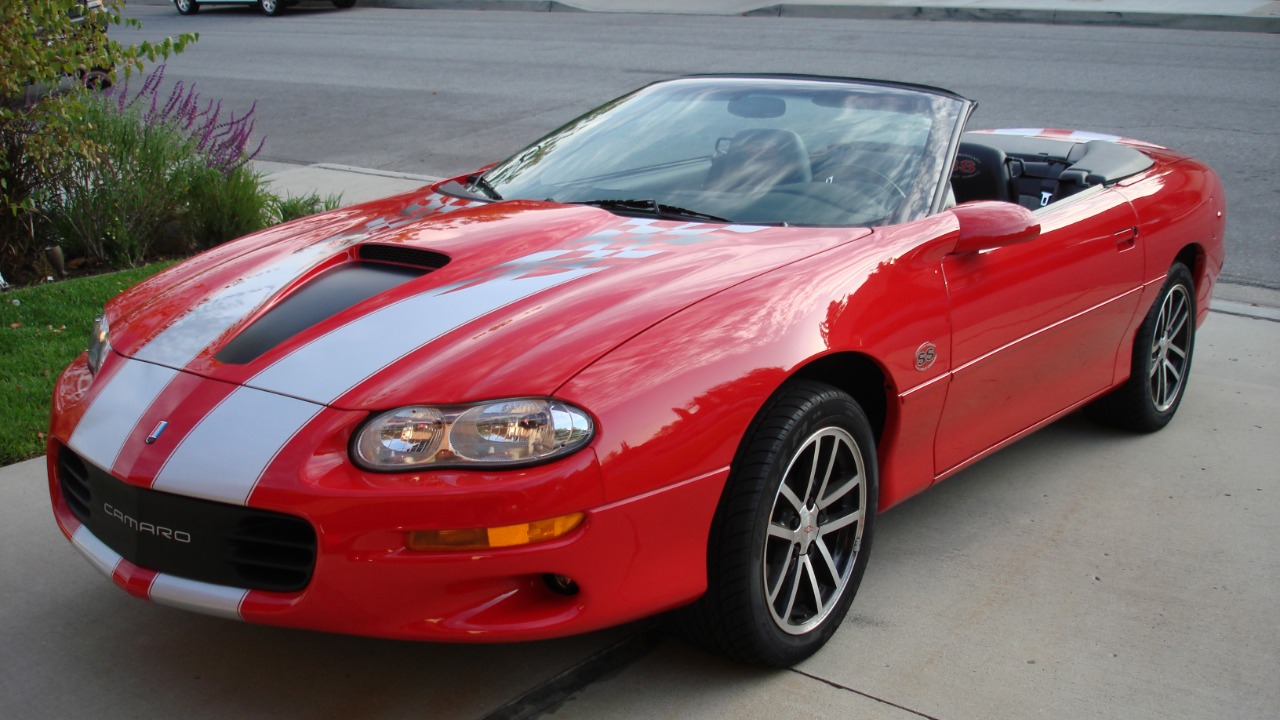
The Chevrolet Camaro, once an iconic American muscle car, seemingly vanished from the automotive landscape for decades. This article delves into the lesser-known reasons behind its disappearance and the factors that contributed to its eventual revival in the 21st century.
The Rise of the Camaro: A Brief History
Introduced in 1966 as a direct competitor to the Ford Mustang, the Chevrolet Camaro quickly became a symbol of American muscle and performance. Designed to capture the youthful spirit of the time, the first-generation Camaro offered a range of powerful engines and customizable options that appealed to driving enthusiasts. Its sleek design and aggressive stance helped it carve out a niche in the automotive market, leading to impressive sales figures and solidifying its status as a cultural icon.
Throughout the 1970s, the Camaro thrived during the muscle car era, offering models like the Z28 and SS that featured high-performance engines and sporty features. The Camaro’s distinct styling, characterized by its long hood and short rear deck, made it an immediate favorite among car lovers. The introduction of the second-generation Camaro in 1970 further refined its appeal, with enhanced aerodynamics and a focus on performance that resonated with consumers. By the end of the decade, the Camaro was not just a car; it was a representation of freedom, rebellion, and American engineering.
Market Trends and Consumer Preferences
The 1980s brought significant changes in consumer preferences, as rising fuel prices and increasing environmental concerns shifted the focus from muscle cars to more fuel-efficient vehicles. The Camaro, once at the forefront of the automotive scene, faced declining sales as buyers gravitated towards compact cars and imports. The introduction of stringent emissions regulations further complicated matters for American automakers, forcing them to rethink their production strategies. General Motors, the parent company of Chevrolet, struggled to adapt its classic muscle car lineup to meet these new standards.
During this period, Japanese automakers, such as Honda and Toyota, gained a foothold in the American market, offering reliable and economical vehicles that appealed to a broader audience. The once-dominant muscle car segment began to lose ground, and the Camaro’s sales reflected this shift. The combination of changing consumer preferences and the competitive landscape led to a decrease in production, signaling the beginning of a long hiatus for the iconic model.
Corporate Decisions and Economic Challenges
As the 1990s unfolded, General Motors faced significant financial challenges that further impacted the Camaro brand. Amidst declining sales and a changing market, GM’s leadership made tough decisions regarding production and marketing strategies. With a focus on cost-cutting and restructuring, the company opted to place the Camaro on hold, effectively discontinuing its production in 2002. This decision was not solely driven by poor sales; it was also a reflection of the broader economic challenges faced by the American automotive industry during this period.
The restructuring process at GM was tumultuous, involving layoffs, plant closures, and a reevaluation of the company’s portfolio. As the Camaro was sidelined, the brand’s legacy seemed to fade into obscurity. The absence of a dedicated marketing strategy and the lack of new models left consumers with limited options, further diminishing interest in the Camaro. It wasn’t just a car that disappeared; it was a piece of American culture that seemed on the brink of extinction.
The Impact of the F-Body Platform
The Camaro’s long-standing association with the F-body platform played a crucial role in its absence from the market. Originally developed in the late 1960s, the F-body platform underpinned both the Camaro and its Pontiac Firebird cousin. However, as automotive technology advanced, the F-body platform became increasingly dated, presenting challenges for engineers tasked with updating or redesigning the vehicle. Efforts to modernize the platform were met with complications, as it struggled to meet contemporary safety and performance standards.
By the early 2000s, it became apparent that the F-body platform could no longer support the modern features consumers were demanding. The decision to discontinue the F-body platform was a significant factor in the Camaro’s absence, as it effectively halted any potential redesigns or updates. Without a viable platform to build upon, the Camaro’s return to the market seemed unlikely, leaving fans of the muscle car to reminisce about its glory days.
The Revival: A New Era for the Camaro
The automotive landscape began to shift once more in the mid-2000s, driven by a resurgence in interest for classic muscle cars. In response to this trend, General Motors made the pivotal decision to revive the Camaro in 2009. This revival was not only a nod to nostalgia but also a strategic move to capitalize on the growing demand for performance-oriented vehicles. The new Camaro was built on a modified version of the Zeta platform, which provided a modern foundation while retaining the spirit of its predecessors.
The 2009 Camaro debuted with two powerful engine options: a 3.6-liter V6 and a robust 6.2-liter V8, the latter of which offered exhilarating performance reminiscent of the original models. The design of the new Camaro paid homage to its heritage while incorporating contemporary styling cues. Features such as advanced technology, improved fuel efficiency, and enhanced safety ratings made the new Camaro appealing to a new generation of drivers. The modern iteration was well-received by both enthusiasts and critics, marking a successful re-establishment of the brand in the competitive muscle car market.
Legacy and Cultural Impact
The enduring legacy of the Chevrolet Camaro is evident in its continued popularity and its significant place in American automotive history. Since its revival, the Camaro has reasserted itself in a market that now includes formidable competitors like the Ford Mustang and Dodge Challenger. The resurgence of interest in muscle cars has led to renewed competition, pushing manufacturers to innovate and refine their offerings to capture consumer attention.
The Camaro’s influence extends beyond the automotive industry, as it has cemented its status in popular culture. Its appearances in films such as “Transformers,” where it was portrayed as the iconic character Bumblebee, have reinvigorated interest in the vehicle among younger audiences. The combination of performance, design, and cultural significance has allowed the Camaro to maintain its relevance, ensuring that it remains a beloved choice for car enthusiasts and a symbol of American engineering excellence.
More from Fast Lane Only
- Unboxing the WWII Jeep in a Crate
- 15 rare Chevys collectors are quietly buying
- 10 underrated V8s still worth hunting down
- Police notice this before you even roll window down
*Research for this article included AI assistance, with all final content reviewed by human editors.