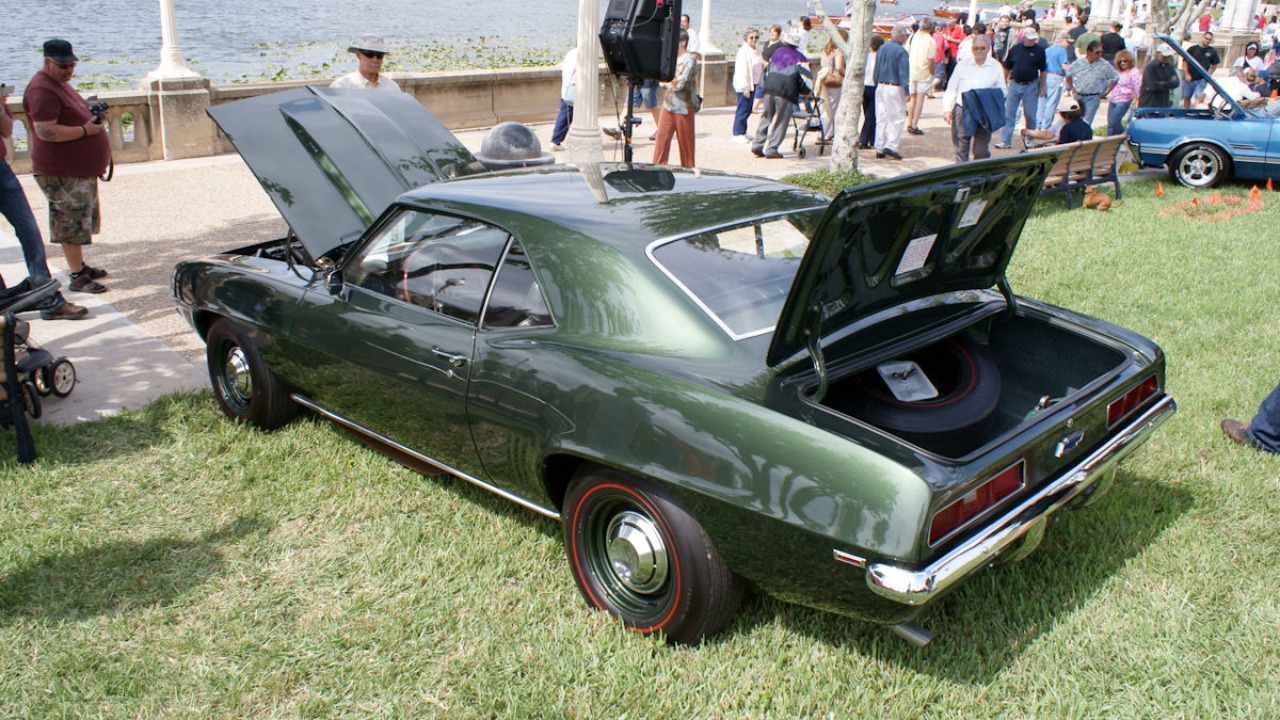
Among the greatest legends of the muscle car era, Chevrolet’s COPO models stand apart because they were never meant for the average buyer. Created through an internal ordering system rather than the standard product lineup, these rare machines bypassed corporate restrictions to deliver extraordinary performance. Their unusual origin helped establish some of the most desirable Chevrolets ever built.
An Ordering System Became a Performance Loophole
COPO stood for Central Office Production Order, a General Motors system originally designed for fleet vehicles, police cars, and special commercial orders. It was never intended to create high-performance muscle cars. However, a handful of Chevrolet insiders recognized that the system could be used to build vehicles with equipment unavailable through regular dealership order forms.
At the time, General Motors limited engine sizes in midsize cars, preventing Chevrolet from officially offering its largest racing engines in the Camaro. Rather than accepting those restrictions, creative planners found a way to use the COPO process to install engines that enthusiasts had been requesting.
The result was a factory-built performance car that technically complied with GM’s ordering procedures while delivering far more power than standard production models.
This clever workaround would become one of the most fascinating stories of the muscle car era.
Don Yenko Helped Turn the Idea Into Reality
Much of the COPO legend centers on Chevrolet dealer and racer Don Yenko. Convinced that serious enthusiasts wanted Camaros with Chevrolet’s biggest engines, Yenko worked closely with Chevrolet personnel to make those cars a reality through the COPO system.
The most famous examples featured the massive 427 cubic-inch V8, transforming the already capable Camaro into a formidable street and drag racing machine. These factory-installed engines offered reliability and engineering consistency that aftermarket conversions often struggled to match.
Yenko’s involvement demonstrated how determined dealers and engineers could work together to satisfy customer demand despite corporate limitations.
His efforts helped create some of the rarest and most celebrated Chevrolet performance cars ever produced.
Limited Production Created Instant Rarity
Unlike standard Camaros built in large numbers, COPO models were produced in very limited quantities. Their specialized nature meant relatively few buyers even knew they existed, and many were purchased by racers or dedicated performance enthusiasts who appreciated their unique capabilities.
The combination of factory-installed racing hardware, powerful engines, and low production numbers quickly made these cars highly desirable. Many examples lived hard lives at drag strips, making surviving original vehicles exceptionally uncommon today.
Collectors now value authentic COPO Camaros not only for their impressive performance but also for their unusual place in Chevrolet history. Documentation and originality have become critical factors because genuine examples are so scarce.
Their rarity has elevated them into the highest ranks of collectible American muscle cars.
A Legacy That Still Captivates Enthusiasts
The story of Chevrolet’s COPO muscle cars proves that innovation sometimes comes from working creatively within existing rules. What began as an administrative ordering process unexpectedly produced some of the most legendary high-performance vehicles of the late 1960s.
Today, original COPO Camaros are among the most sought-after collector cars in the world, frequently commanding extraordinary prices at major auctions. Their combination of factory engineering, limited production, and racing heritage continues to fascinate enthusiasts across generations.
The COPO program also inspired Chevrolet to revive the name for modern, track-focused specialty models, ensuring its legacy lives on beyond the original muscle car era.
What started as a little-known ordering loophole ultimately became one of the most remarkable chapters in Chevrolet’s performance history.
More from Fast Lane Only
- Unboxing the WWII Jeep in a Crate
- 15 rare Chevys collectors are quietly buying
- 10 underrated V8s still worth hunting down
- Police notice this before you even roll window down
*Research for this article included AI assistance, with all final content reviewed by human editors