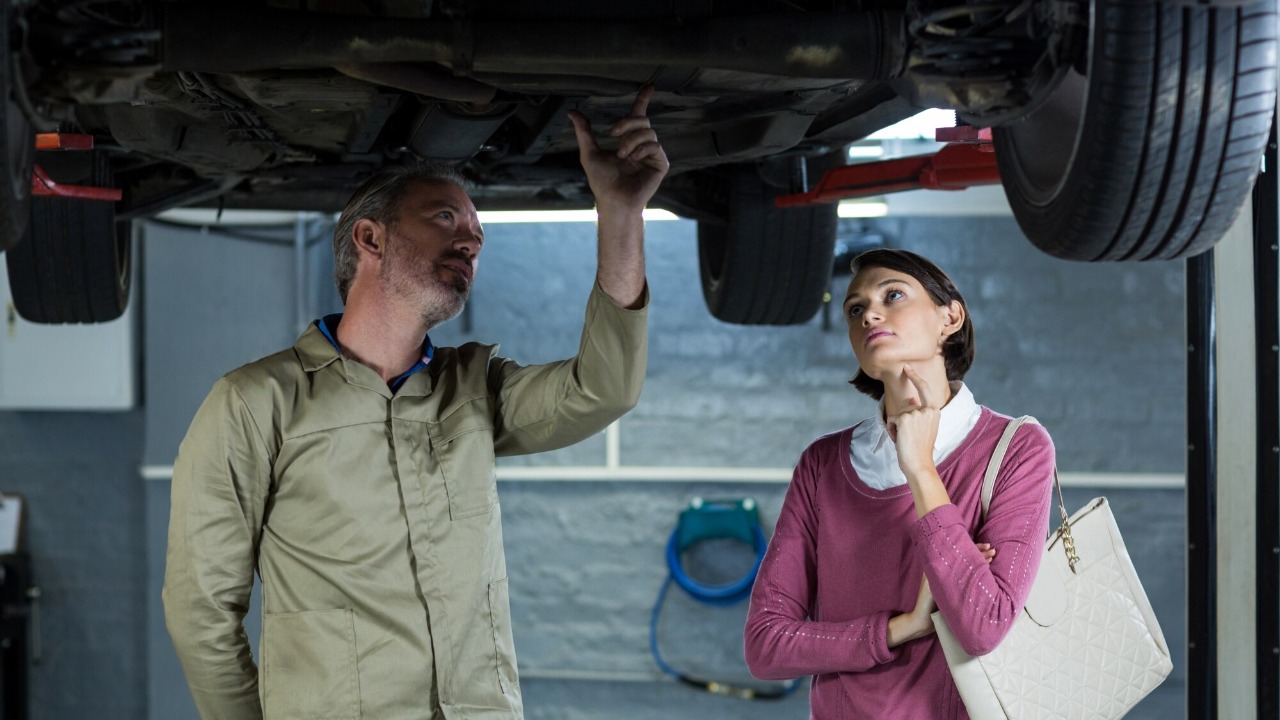
It’s the kind of sentence that makes your stomach drop: “I can’t let you drive this—it’s unsafe.” You picture a wheel passing you on the highway or your brakes turning into decorative accessories. And then you ask the obvious follow-up: “Okay… can you show me what’s wrong?”
That’s where things got weird for a growing number of drivers who say they’ve heard dire warnings at the service counter, only to be met with vague explanations, missing photos, or a tech who’s suddenly “not available.” It’s not that cars don’t break—of course they do. It’s that “trust me” hits differently when the stakes are high and the evidence is… invisible.
A scary claim, a simple request: “Show me”
Drivers describe a similar pattern: they bring their car in for routine maintenance, a noise, or a check engine light. The shop calls back with an urgent tone—something is “dangerous,” “critical,” or “ready to fail.” But when the customer asks to see the damage, the answer is fuzzy: the part’s already been removed, it’s in the trash, it’s “hard to show,” or the shop is too busy.
In a world where you can track a pizza from oven to doorstep, being told a major safety defect can’t be photographed feels… oddly old-fashioned. Many people aren’t trying to argue; they just want to understand. And when the explanation doesn’t come with something concrete—an image, a measurement, a cracked piece in your hand—confidence tends to leak out fast.
Why a shop might not be able to show it (and when that’s legit)
To be fair, there are situations where “showing the damage” is genuinely difficult. Some problems live inside assemblies that don’t reveal much until they’re disassembled, and putting everything back together just to demonstrate the issue can add labor. Rust can crumble when touched, and a “before” picture may not exist if the tech only noticed it mid-repair.
There’s also the fast pace of busy bays. A technician might spot a torn CV boot, a leaking strut, or a cracked bushing while the car is on the lift, then move on to keep the schedule moving. If the shop doesn’t have a habit of documenting, or if nobody’s assigned to communicate clearly, the customer can end up with a scary verdict and no visuals to match.
But “unsafe” is a big word—and it’s often used loosely
Here’s the catch: “unsafe” can mean several different things, and not all of them are immediate. A brake pad that’s thin is a problem, but it’s not the same as a brake hose actively leaking fluid. A worn tire is a concern, but it’s different from a tire showing cord or a sidewall bubble that could fail soon.
Some shops use “unsafe” as shorthand for “needs attention,” while others use it as a pressure tactic to speed up approvals. The word isn’t regulated in a meaningful way at the counter, so it can become a catch-all for anything from “don’t take a road trip” to “don’t leave the parking lot.” If a mechanic can’t—or won’t—clarify which one they mean, you’re right to slow the conversation down.
Common “you should see this” items that are easy to document
Most truly safety-critical issues are surprisingly easy to show with a photo, a flashlight, or a quick walk under the lift. Brake pads can be measured, and rotors can be shown with scoring, cracking, or severe rust. Tires can be photographed for tread depth, uneven wear, bulges, or exposed cords.
Fluid leaks are also typically visible: wet lines, puddles, residue trails, or low reservoir levels. Suspension problems like broken springs, leaking shocks, or separated ball joints can often be captured on a phone camera in seconds. If a shop says they can’t show anything at all, it’s fair to ask why—politely, but firmly.
What to say in the moment (without turning it into a showdown)
If you’re told the car is unsafe, ask one calm question: “What specifically is unsafe, and what’s the failure risk if I drive it today?” You’re listening for a clear scenario—loss of braking, steering control, or a high chance of a blowout—not just a general “it’s worn.” Then follow with: “Can you show me on the car, or send a photo with an explanation?”
If they can’t show it right away, ask them to pause work until you’ve seen it, unless it’s already disassembled with your approval. You can also ask for the old parts back, which many shops can accommodate if you request it before the repair. And if the answer starts sounding like a magic trick—“It was here a second ago!”—it’s okay to say you’d like a second opinion.
Second opinions: not an insult, just good adulting
Getting a second opinion doesn’t mean you think the first shop is shady. It means you’re making a decision that affects your safety and your wallet, and you want to be sure. A reputable shop will usually understand and may even offer to document the concern so another mechanic can verify it.
If you do seek another inspection, try to keep it apples-to-apples. Ask the second shop to check the same system and provide photos or measurements where possible. And if the first shop claimed an emergency, avoid long highway drives—just take local roads and use caution until you know what’s real.
The paperwork matters more than you think
Even if the shop can’t show you a dramatic picture, they should be able to write down what they found. Look for notes that include specifics: “Front brake pads at 2mm,” “Right front tire has sidewall bubble,” “Outer tie rod has excessive play,” or “Brake fluid leaking at rear hose.” Vague lines like “brakes bad” or “suspension unsafe” don’t help you make a decision.
Itemized estimates are also a clue. Legit repairs usually list parts, labor hours, and any related recommendations. If the estimate feels like a blur of bundled charges with no explanation, ask for the breakdown—nicely. You’re not being difficult; you’re being a person who would like to know what they’re paying for.
Why this keeps happening, even at decent shops
Some of this comes down to communication, not competence. Technicians are trained to diagnose and repair, not to deliver a mini-lecture with visual aids. Service advisors are juggling phones, approvals, parts delays, and a waiting room full of people wondering why an oil change is taking 90 minutes.
But good shops build systems that make transparency easy: inspection checklists, photos, short videos, and clear severity ratings. When those systems aren’t in place, customers end up stuck in the worst spot—being asked to trust a warning they can’t verify. It’s not surprising that “unsafe but can’t show me” has become a red flag phrase for many drivers.
How to protect yourself next time (without becoming a car expert overnight)
When you book an appointment, ask if the shop provides digital inspections with photos. Many do now, and it’s a simple way to avoid confusion later. You can also request, upfront, that any safety-related issues be documented before parts are replaced.
And if you’re shopping for a new mechanic, pay attention to the little things: do they explain in plain language, answer questions without getting prickly, and show you measurements when it matters? You don’t need a shop that talks down to you or one that speaks exclusively in torque specs. You need one that can say, “Here’s the problem, here’s the evidence, and here are your options,” like a normal human.
Cars will always break, and some repairs really are urgent. But if someone tells you your car is unsafe and can’t show you why, you’re not “being paranoid” for asking for proof—you’re being practical. A shop that’s confident in its diagnosis should be able to back it up, even if it’s just a clear photo, a worn part in your hand, and a straightforward explanation.
More from Fast Lane Only