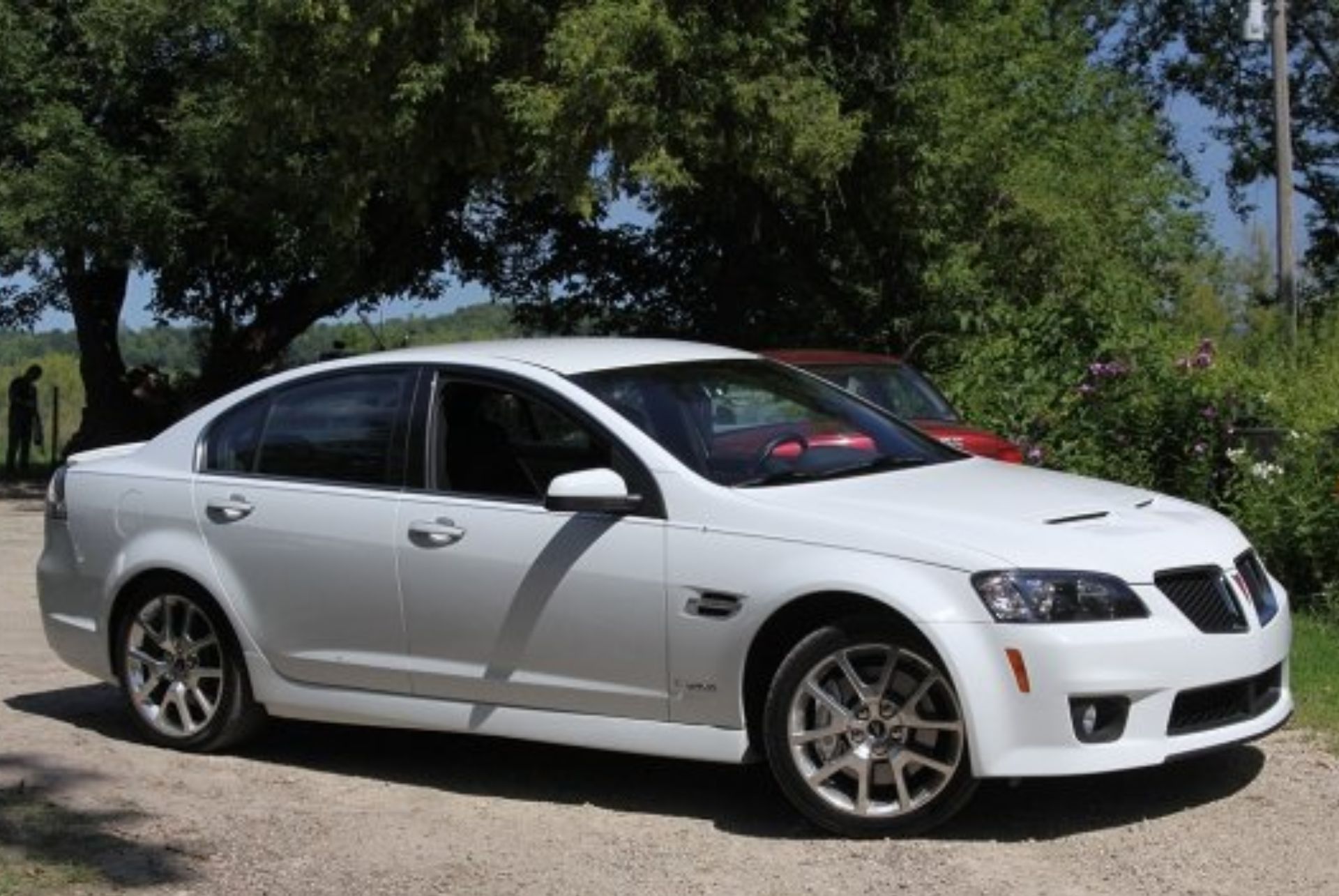
Pontiac’s glory years are usually summed up with a handful of greatest hits: early GTOs, screaming Trans Ams, maybe a Judge or two. Lost in that highlight reel is a later V8 that quietly matched or beat the legends on power, refinement, and everyday usability, then disappeared just as it hit its stride. Among collectors and track-day regulars, the engine in the Pontiac G8 GXP is starting to look like the one that got away.
Built around a modern small-block architecture and dropped into a rear-drive sedan with real back-seat space, this V8 delivered the sort of performance that once required a barely streetable muscle car. As nostalgia and values swirl around older Pontiacs, the G8 GXP’s powerplant stands out as the brand’s last and most sophisticated eight-cylinder, deserving far more recognition than it usually gets.
How Pontiac’s last performance V8 broke from its past
By the time Pontiac launched the G8 GXP, the brand had already spent decades trading on heritage. Earlier performance models mixed big torque with heavy bodies and dated suspensions. The G8 GXP’s V8 came from a different mindset, one that treated efficiency, reliability, and precision as seriously as raw power. In factory trim it delivered output that put it squarely into modern muscle territory while still meeting contemporary emissions and drivability standards.
The car wrapped around that engine was equally forward looking. The G8 line used a rear-wheel-drive platform with independent rear suspension, a major shift from the old live-axle formula that defined earlier Pontiacs. That layout let the V8 put its power down with far more control and gave the sedan the kind of balance usually reserved for European performance brands. When enthusiasts talk about the G8 GXP today, they often note that it felt more like a German sport sedan than a traditional Detroit muscle car, even though its heart was a very American V8.
Period reviews and later retrospectives describe the G8 GXP as a genuine performance bargain, with acceleration, braking, and handling that embarrassed some higher-priced rivals. The engine was central to that character. It paired a broad torque curve with a willingness to rev, so the car could lope along in traffic or launch hard from a stoplight without drama. That dual personality helped it stand apart from earlier Pontiacs that felt happiest only when driven flat out.
Enthusiast coverage has since grouped the G8 GXP alongside other underappreciated small-block-powered machines. Lists of overlooked muscle cars often highlight how this sedan’s V8 delivered serious performance without the visual flash or collector hype of 1960s icons. The engine’s blend of modern engineering and old-school displacement made it a natural candidate for that kind of reassessment.
Why this modern Pontiac V8 matters to enthusiasts now
The market is finally catching up to what early adopters saw in the G8 GXP’s powertrain. As clean examples of classic GTOs and Firebirds climb beyond the reach of many buyers, attention has shifted to later Pontiacs that still offer authentic V8 character. Coverage of forgotten Pontiac models repeatedly flags the G8, and especially the GXP variant, as a car whose engine and chassis combination was far better than its short production run suggests.
Several factors explain the renewed interest. The V8 itself has proven to be durable under both daily use and occasional track abuse, which makes it attractive to enthusiasts who want to drive rather than just display their cars. It also responds well to tuning. Owners routinely extract significant gains from intake, exhaust, and calibration changes, and the underlying hardware is capable of handling those upgrades without sacrificing reliability. That tunability has helped the G8 GXP develop a following among people who might otherwise gravitate toward more common domestic performance platforms.
The car’s relative rarity has also become part of its appeal. Pontiac’s shutdown froze the G8 GXP’s production numbers, and that limited pool of cars has created a small but growing niche in the used market. Articles focused on G8 GXP facts point out how few were built and how that scarcity, combined with the engine’s capability, has started to influence values. Buyers who once dismissed the car as just another GM sedan now see it as the last expression of Pontiac’s V8 performance ethos.
The engine also matters because it closes a historical loop. Pontiac made its name by pairing strong V8s with practical bodies, from early wide-track sedans to personal coupes. The G8 GXP’s powerplant brought that formula into the twenty-first century, proving that a family-friendly four-door could still deliver the kind of acceleration and sound that enthusiasts associate with classic American performance. In that sense, the engine connects directly to earlier, less remembered efforts like the big-bodied 2+2 models that combined comfort with serious power. Profiles of the Pontiac 2+2 show how the brand had been experimenting with that balance decades earlier, and the G8 GXP’s V8 can be seen as the polished endpoint of that line.
For collectors and historians, the engine also marks a technological pivot. It arrived at a moment when large-displacement naturally aspirated V8s were already under pressure from tightening regulations and shifting consumer tastes. Hybrid systems, turbocharged smaller engines, and later full electrification began to dominate the performance conversation. Against that backdrop, Pontiac’s final high-output V8 stands as one of the last mass-produced expressions of a traditional formula, executed with modern precision.
How recognition could reshape the future for Pontiac’s last V8
Growing respect for the G8 GXP’s V8 is likely to influence how the broader Pontiac story is told. For years, the brand’s narrative has leaned heavily on 1960s muscle, with later decades treated as a slow fade. As more enthusiasts discover the performance and usability of the G8 GXP, that timeline starts to look less linear. Instead of a simple rise and fall, Pontiac’s history begins to resemble a series of peaks, with the final one arriving just before the brand’s closure.
If that reinterpretation takes hold, the engine in the G8 GXP could become a reference point for how automakers balance heritage with modern demands. It showed that a company known for carbureted big blocks could build a sophisticated V8 that met contemporary standards without losing character. That lesson is relevant to current performance divisions wrestling with electrification and downsizing. Even if future powertrains rely on batteries or smaller turbocharged units, the way Pontiac integrated its last V8 into a practical sedan offers a template for keeping enthusiast appeal alive.
On a more concrete level, rising recognition is likely to affect parts support, aftermarket development, and preservation efforts. As values climb, owners gain more incentive to maintain originality, document production details, and share technical knowledge. That, in turn, helps keep the engine viable for long-term use. Specialist shops are already familiar with the underlying small-block architecture, and as the G8 GXP’s profile grows, those shops are more likely to invest in specific tuning packages, replacement components, and even crate-style builds that replicate the original configuration.
The engine’s reputation may also influence how future enthusiasts approach other underappreciated Pontiacs. If the G8 GXP’s V8 can move from obscurity to respected status, it opens the door for renewed interest in earlier V8-powered models that have lived in the shadow of better-known nameplates. That could include full-size coupes, sleeper sedans, or export variants that shared hardware but never achieved mainstream fame. The process of rediscovery tends to ripple outward, and Pontiac’s last great V8 is well positioned to serve as the catalyst.
Ultimately, the G8 GXP’s engine deserves more recognition because it proves that Pontiac did not simply coast on nostalgia in its final years. It delivered a thoroughly modern V8 that honored the brand’s performance roots while meeting the realities of contemporary driving. As enthusiasts continue to reassess late-model performance cars, this powerplant stands out as a rare combination of speed, usability, and historical significance. For a brand that built its identity around the promise of excitement, there is no more fitting final chapter.
More from Fast Lane Only
- Unboxing the WWII Jeep in a Crate
- 15 rare Chevys collectors are quietly buying
- 10 underrated V8s still worth hunting down
- Police notice this before you even roll window down
*Research for this article included AI assistance, with all final content reviewed by human editors