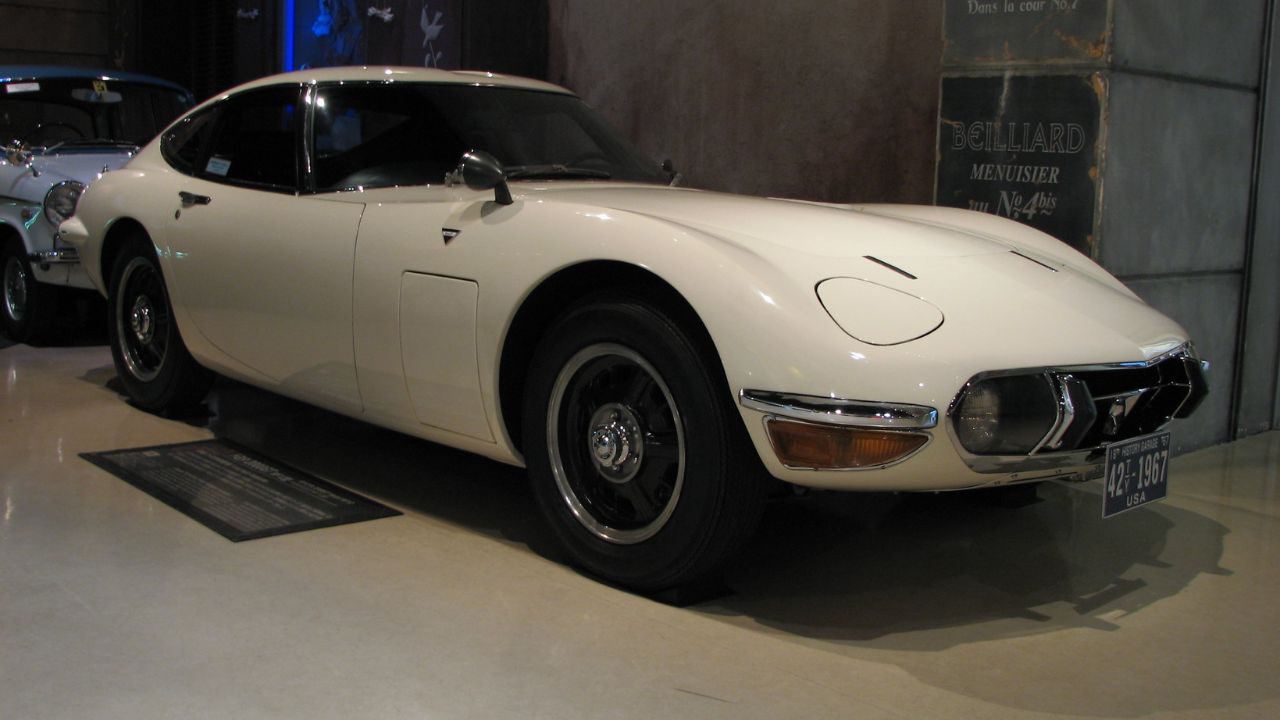
The 1967 Toyota 2000GT arrived as a shock to European sports car makers and buyers who still viewed Toyota as a builder of sensible sedans. With its long nose, jewel-like cabin and motorsport pedigree, it looked like a Japanese E-Type yet hid engineering decisions that did not follow any obvious template. Those choices, from a Yamaha-built twin-cam straight-six to a semi-exotic backbone chassis, explain why the 2000GT remains one of the most technically intriguing Japanese cars ever sold.
How Toyota and Yamaha created an unconventional halo car
The 2000GT grew out of a collaboration between Toyota and Yamaha that began with contract engine work and soon expanded into a full sports car project. Yamaha, already experienced in high performance motorcycle engines and small sports cars, contributed both engineering muscle and production capability. Toyota provided the corporate backing and the ambition to prove that Japan could build a world class grand tourer.
Rather than adapting an existing sedan platform, the team developed a central spine chassis that ran down the middle of the car, with boxed sections tying into front and rear subframes. This backbone layout, more often associated with specialist European makers, gave the 2000GT impressive rigidity relative to its size and weight. It also allowed designers to keep the body extremely low, with a roofline that sat significantly below many European rivals of the period.
Under the hood sat a 2.0 liter inline six that started life as a Toyota sedan engine but was reworked by Yamaha with a new aluminum twin cam head, higher compression and triple carburetors. Period road tests highlighted its willingness to rev and its smooth delivery, traits that reflected Yamaha’s background in high speed engines. The combination of that powerplant with the stiff central spine and compact proportions produced a car that felt more like a hand built European coupe than a mass market Toyota, a contrast that contemporary observers found striking and that later analysis in automotive history has emphasized.
Design decisions that broke Toyota’s own rules
The bodywork of the 2000GT was as unconventional inside Toyota as the chassis beneath it. Its flowing nose, covered headlights and tapering tail were shaped with clear reference to European grand tourers, yet the surfacing and details carried a distinct Japanese sensibility. The cabin sat far back on the chassis, giving the car a long dash-to-axle ratio that was rare among Japanese cars of the era and technically demanding to execute on a short production run.
Inside, the car featured a dashboard wrapped in rosewood veneer, a bank of aircraft style gauges and a steering wheel that would not have looked out of place in a contemporary Italian exotic. This emphasis on craftsmanship contrasted with Toyota’s reputation for functional, durable interiors and highlighted how far the company was willing to stretch for its first serious sports car. Later commentary on how Toyota can get has often pointed back to the 2000GT as an early example of the brand experimenting with form and feel.
Even the dimensions were unusual. The roofline was so low that taller drivers struggled to fit, which limited the car’s practicality as a global product but helped it achieve a dramatic stance. The low center of gravity, combined with independent suspension at all four corners, gave the 2000GT handling that contemporary testers praised as precise and neutral. While many rivals still relied on live rear axles, Toyota and Yamaha opted for a more complex setup that aligned with the car’s engineering-first brief rather than cost savings.
What changed in the perception of the 2000GT’s engineering
At launch, the car was admired but not fully understood. Production numbers were low, pricing was high and the global market was still adjusting to the idea of a Japanese luxury sports coupe. Over time, however, the technical package that once seemed like an outlier began to look like a blueprint for later Japanese performance cars.
Motorsport played a key role in that shift. The 2000GT competed in endurance events and set speed and endurance records, which validated the durability of its high revving straight-six and backbone chassis under sustained stress. Those efforts helped reposition Toyota in the eyes of enthusiasts from a conservative manufacturer to a company willing to engineer a car around performance targets, even if that meant low volumes and high costs.
As collectors and historians revisited the car, the collaboration with Yamaha gained more recognition. The twin cam head, the careful balancing of the inline-six and the attention to noise and vibration control all pointed to a level of engineering ambition that had been easy to overlook when the car was new. Later profiles have described the 2000GT as Toyota’s most unusual early sports car, a label that reflects both its mechanical distinctiveness and its divergence from the company’s mainstream products of the time.
Why this 1960s experiment matters to enthusiasts now
Modern interest in the 2000GT is driven by more than rarity or styling. The car’s engineering choices have become a reference point for how Japanese manufacturers approached performance as they moved into the global premium market. The twin cam inline-six foreshadowed the engines that would power later icons, while the focus on chassis rigidity and balanced handling anticipated the priorities of later sports coupes.
The collector market has responded accordingly. A notable auction saw a 2000GT sell for approximately 2.5 million dollars, a result that analysts framed as a kind of revenge for Toyota against decades of underestimation. That figure placed the car in the same financial conversation as European exotics that once overshadowed it and highlighted how the market now values its technical and historical significance.
Pop culture has also kept the 2000GT in the public eye. The model’s appearance in a James Bond film, where a special convertible version was built to accommodate the actor’s height, reinforced its image as a technological showcase from Japan. Coverage of the car’s Bond connection has pointed out how its gadgets and bespoke modifications played into its reputation as a forward looking machine, a theme revisited in modern lists of interesting facts about the model.
For current enthusiasts, the 2000GT offers a different narrative from the turbocharged, electronically managed performance cars that dominate today’s market. Its engineering is analog and relatively simple by modern standards, yet it was applied with a level of care that still resonates. The backbone chassis, the mechanical feel of the gearbox and the naturally aspirated straight-six provide a driving experience that enthusiasts describe as connected and communicative, qualities that many feel are increasingly rare.
How the 2000GT shapes Toyota’s future sports cars
The legacy of the 2000GT can be seen in how Toyota approaches halo products and partnerships. The decision to work with Yamaha on engines and chassis development set a precedent for later collaborations, including joint projects with other manufacturers where Toyota has been willing to share platforms and technology to achieve specific performance goals.
Within Toyota’s lineup, later sports cars have carried echoes of the 2000GT’s formula. The focus on a balanced front engine, rear wheel drive layout, the pursuit of a low center of gravity and the willingness to accept limited practicality in exchange for driving dynamics all trace back to lessons learned from the 1960s coupe. Engineers have cited the importance of creating cars that feel special in their controls and responses, not just in their on paper performance, a philosophy that aligns closely with the 2000GT’s character.
Looking ahead, the car’s mix of advanced engineering and artisanal build quality offers a template for how Toyota might approach limited run electric or hybrid sports models. A modern interpretation could use a lightweight structure and carefully tuned power delivery to recreate the sense of mechanical intimacy that defined the original, even if the propulsion system changes. The key idea, drawn from the 2000GT, is that a halo car can justify unconventional engineering if it tells a clear story about what the company stands for.
More from Fast Lane Only
- Unboxing the WWII Jeep in a Crate
- 15 rare Chevys collectors are quietly buying
- 10 underrated V8s still worth hunting down
- Police notice this before you even roll window down
*Research for this article included AI assistance, with all final content reviewed by human editors