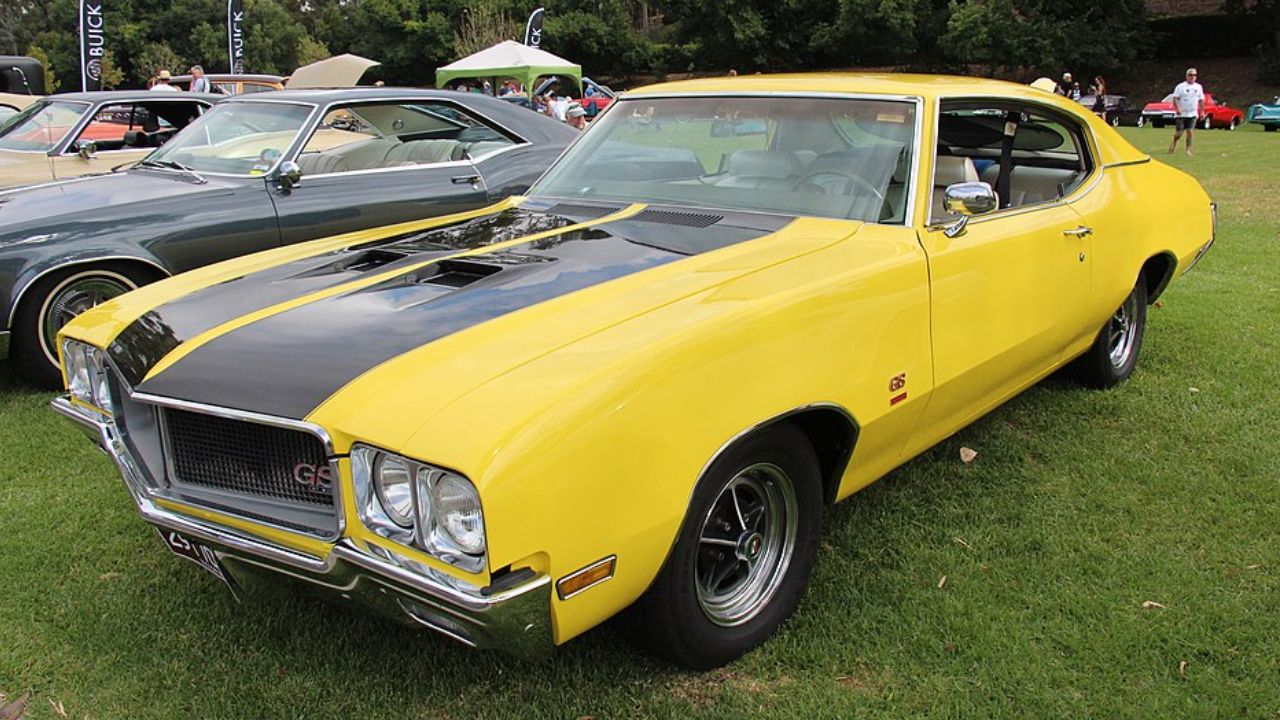
Buick’s Wildcat 455 occupies a brief but fascinating moment in American muscle history, when a full-size cruiser could still be ordered with serious big-block power even as the market was shifting away from heavyweight performance. The Wildcat nameplate had been around for much of the 1960s, but the arrival of the 455 cubic inch V8 in its final model year created a short run that collectors now treat as a distinct chapter, with values that remain relatively approachable compared with better known muscle cars.
To understand which years actually offered the Wildcat 455 and what those cars sell for today, I need to trace the model’s production timeline, look closely at how the last-year specification evolved, and then connect that history to current valuation data. The result is a picture of a big Buick that peaked just as the nameplate disappeared, leaving a small pool of surviving cars that now trade as bargain muscle cruisers rather than blue-chip collectibles.
When the Buick Wildcat 455 was offered
The Wildcat badge did not begin with the 455 at all, but as a performance-flavored offshoot of the Invicta line in the early 1960s. Period histories describe the 1962 Buick Wildcat as a mid‑year addition to the Invicta lineup, and enthusiast documentation notes that “the buick wildcat was a full-size automobile produced by the buick division of general motors from 1962 to 1970,” with that phrasing tied directly to the span “FROM 1962” through its final model year. Over that run the car evolved through multiple body styles and engine options, but the 455 cubic inch V8 only arrived at the very end, when Buick was chasing peak torque in a shrinking performance window.
In its last season, the Wildcat received the division’s largest displacement engine, a 455 cubic inch V8 that enthusiasts on dedicated forums simply refer to as the “Wildcat 455.” One detailed discussion of a 1970 example notes that “In 1970” the car was still a full-size model sharing much with the Lesabre, but with the big engine and higher output that set it apart from more ordinary Buicks. Another enthusiast summary, posted on Oct 27, 2006, repeats that the Wildcat “WAS” a “FULL” size car that ran through its “last year in 1970,” which aligns with broader histories that cap the production run at that point. Taken together, those accounts make clear that the Wildcat 455 is a one‑year phenomenon: the Wildcat nameplate existed from 1962 through 1970, but the specific 455‑powered Wildcat was offered only for the 1970 model year before the badge disappeared.
How the final‑year Wildcat evolved into a 455 muscle cruiser
By the time the 455 arrived, the Wildcat had already been repositioned several times in Buick’s full-size hierarchy, and its final specification reflected both performance ambitions and market headwinds. Coverage of the model’s late‑1960s sales trajectory notes that after a strong early showing, volumes slipped badly, with one retrospective pointing out that “After sales sagged by 30,000 cars the following year, the newly styled ’67 Wildcat was cut back to seven separate choices.” That contraction in the 1967 lineup shows how Buick was already trimming the range even before the 455 era, responding to softer demand for big performance coupes and convertibles as buyers drifted toward other GM divisions and smaller muscle cars.
Despite that pressure, Buick pushed the Wildcat harder in its final season. A modern performance overview describes how, in its last year of production, the Wildcat had “evolved into a full‑size muscle car” with a 455 that was dropping “510lb‑ft of torque,” a figure that put it squarely in the heavyweight performance conversation. Another enthusiast piece, filed on Apr 2, 2022 under the banner “The Wildcat Vanished At The Height Of Its Performance,” underscores that paradox: the car reached its most potent specification just as the nameplate was about to be retired. That same theme appears in a Jun 30, 2024 feature that notes, “Ironically, the sportiest of the full-size Buicks met its demise in the year when it got the biggest and most powerful” engine, a 455 that finally gave the Wildcat the sort of slant‑block, high‑torque personality enthusiasts now prize.
Body styles, rarity and what survives of the Wildcat 455
Within that single 1970 model year, the Wildcat 455 could be ordered in several body styles, but the open‑air version has become the poster child for rarity. A detailed look at a surviving 1970 convertible, published on Jun 30, 2024, calls the car a “Dead Droptop” and emphasizes how unusual it is to find a Wildcat 455 with a folding roof still intact. A separate enthusiast listing dated Dec 1, 2023 spells out just how scarce these cars are, noting that “For Those who don’t , know this is a 1970 Buick Wildcat, the performance full sized Buick in its last year. Only 1244 were built,” with that “Only” 1,244 figure referring specifically to the convertible production run. When you combine that limited build with the attrition that naturally hits big, thirsty convertibles over five decades, it is easy to see why a surviving Wildcat 455 droptop now draws outsized attention.
Sedans and hardtops are more common, but they occupy a different place in the collector hierarchy. In a long‑running forum thread that began on Oct 27, 2006, one “Well, Known Member” jokes that the four‑door Wildcat has “no exceptional talents over the Lesabre,” before conceding that “In 1970” it still offered the same big‑block torque and full‑size comfort if a buyer simply liked the look. That tension between shared hardware and unique trim helps explain why two‑door hardtops and convertibles command more interest, while four‑doors remain entry‑level ways into Wildcat 455 ownership. Even so, the same discussion makes clear that all 1970 Wildcats share the core ingredients that matter to enthusiasts: full‑size proportions, a 455 cubic inch V8, and the last‑year cachet of a model that would vanish from Buick’s lineup just a few seasons before the division’s big cars were reshuffled again in 1974.
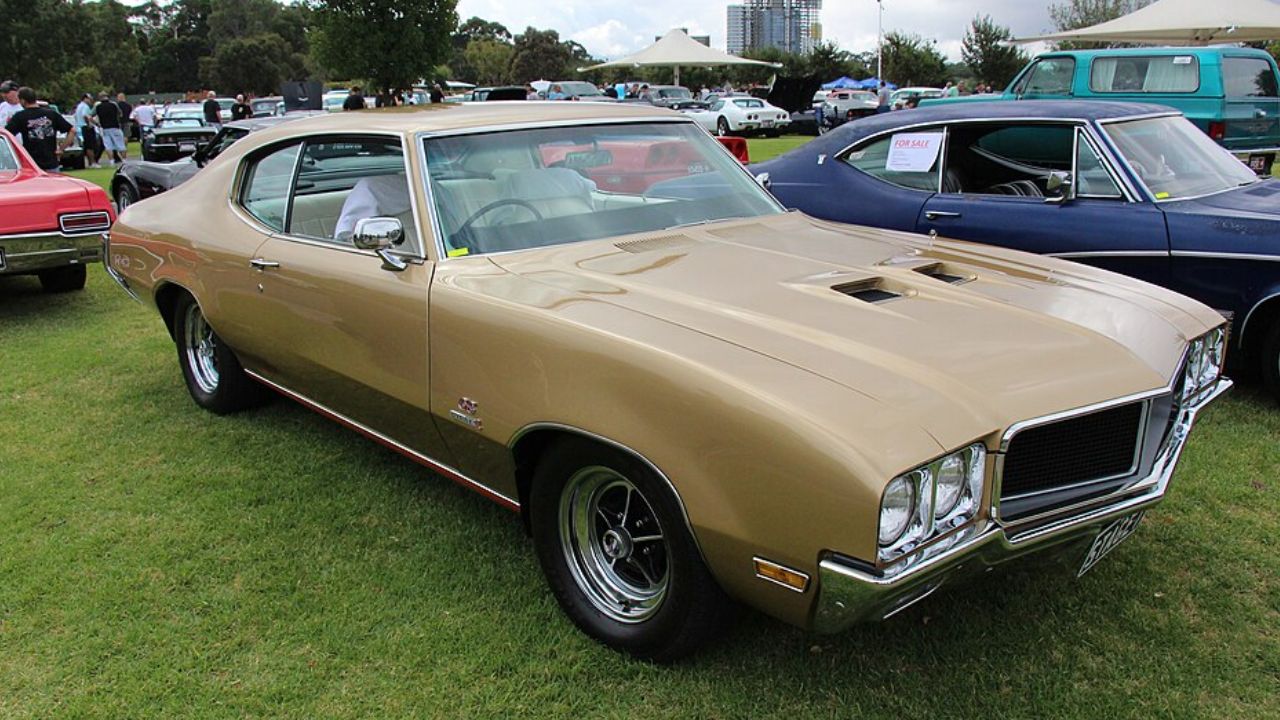
Market perception: from overlooked full‑size to bargain muscle
For years, the Wildcat 455 sat in the shadow of more famous Buicks, particularly the Riviera and the GS‑badged intermediates, but recent coverage suggests that gap is narrowing. A Dec 5, 2018 analysis of late‑era Wildcats frames them as “bargain muscle cruisers,” explicitly comparing their trajectory to the way collectors “Earlier” in that year had finally caught on to the boattail “Buick Riviera.” The argument is straightforward: as headline cars appreciate, attention spills over to related models that offer similar performance and style at lower prices, and the last Wildcats, with their 455 torque and full‑size presence, fit that pattern neatly. That same piece highlights a 1970 Buick Wildcat that crossed a major auction block, using it as evidence that the market is starting to recognize the car’s blend of comfort and muscle.
Enthusiast commentary reinforces that perception shift. The Apr 2, 2022 feature that declared “The Wildcat Vanished At The Height Of Its Performance” also notes that, on the bright side, the final‑year car’s 455 and 510lb‑ft output give it enduring appeal even if sales “nosedived considerably” at the time. A Jun 30, 2024 deep dive into a neglected 1970 convertible echoes that sentiment, describing how “In the” broader history of “Buick” and “Buicks” that made “Americans” proud, the Wildcat 455 stands out as a last gasp of full‑size performance that never quite got its due. When modern writers single out a rusty droptop as a “rarity” worth saving, they are effectively signaling to the market that these cars deserve more attention, which tends to translate into firmer prices as awareness spreads.
What a Buick Wildcat 455 sells for now
Pinning down exact prices for Wildcat 455s is tricky because condition, body style and originality vary widely, but valuation tools and recent sales provide a useful range. A dedicated pricing guide for the 1970 Buick Wildcat Custom notes that the value of a “Buick Wildcat Custom” can “vary greatly depending on its condition, mileage, options, and history,” and adds that “Typically” buyers should expect a broad spread between driver‑quality cars and top‑flight restorations. That same resource lays out tiered estimates for different condition levels, which, when compared with auction results highlighted in the Dec 5, 2018 analysis of “bargain muscle” Wildcats, suggest that even strong examples still trade below the six‑figure territory occupied by the most coveted muscle machines. As always, the guidance is to treat those numbers as a starting point rather than a guarantee.
Specialist platforms and general market advice point collectors toward the same tools. A video buyer’s guide for another performance car reminds viewers that “valuations change over time” and directs them to “Haggerty.com slash valuation tools” for the latest figures, while a separate primer on selling classics online urges owners to “Utilize” resources like “Hagerty and Hemmings,” which provide valuation tools and market data to help set “the appropriate price range for your vehicle.” Applied to the Wildcat 455, that means checking current entries for the 1970 Wildcat Custom, then adjusting for body style and specification. A rare convertible with documented history and fresh restoration will sit at the upper end of the spectrum, while a tired four‑door project will fall near the bottom, even though both share the same basic 455 drivetrain.
Real‑world listings help fill in the gaps between guidebook numbers. The Dec 1, 2023 enthusiast post about a 1970 Buick Wildcat convertible 455 cubic inch car, which stresses that “Only” 1,244 were built and that it represents the “performance full sized Buick in its last year,” illustrates how sellers lean on rarity and final‑year status to justify asking prices. Meanwhile, the Dec 5, 2018 discussion of “The last Buick Wildcats” as bargain cruisers points to auction examples where clean coupes and convertibles changed hands for sums that, while not trivial, still undercut comparable big‑block Chevrolets or Pontiacs. The consistent thread across these sources is that the Wildcat 455 remains relatively undervalued: it offers authentic period torque and presence, but because it lacks the name recognition of a GSX or a GTO, it trades at a discount that informed buyers can exploit.
For anyone shopping or selling today, the practical takeaway is to combine that historical context with up‑to‑date data. I would start by using a modern valuation tool entry for the 1970 Buick Wildcat Custom as a baseline, then factor in whether the car is a two‑door hardtop, a four‑door sedan, or one of the “Only” 1,244 convertibles. I would then cross‑check those figures against recent auction and private‑sale examples highlighted in enthusiast coverage, paying close attention to originality, documentation and the presence of the correct 455 drivetrain. With that approach, the Wildcat 455’s brief production run from 1962 origins to its 1970 finale, and its status as a last‑year full‑size muscle cruiser, become assets that can be translated into realistic, defensible prices in today’s market.
More from Fast Lane Only