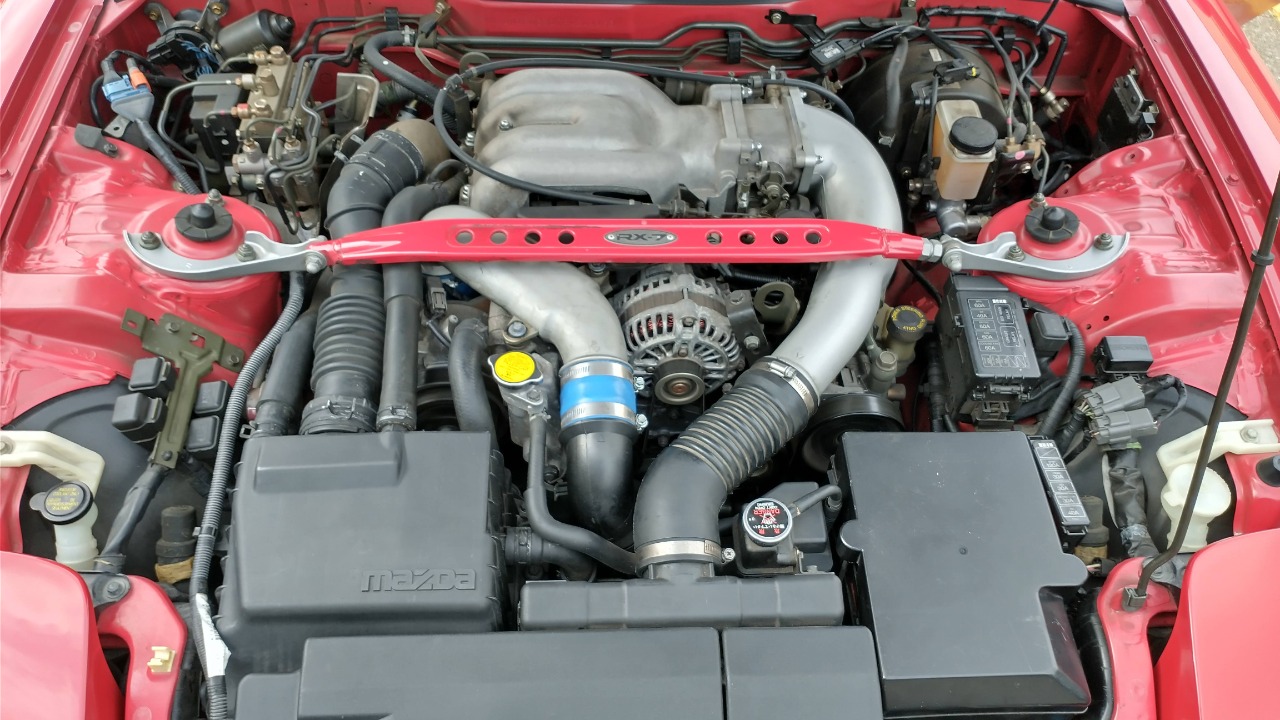
At one point in automotive history, engineers believed they had found a completely new path for internal combustion. The concept promised fewer moving parts, smoother power delivery, and compact packaging that could reshape vehicle design. For a brief moment, it seemed ready to replace the piston engine entirely before real-world challenges brought it down.
The engine that promised to replace pistons
The idea that came closest to changing everything was the rotary engine, most famously developed in its modern form by Felix Wankel. Unlike traditional piston engines that rely on reciprocating motion, the rotary design used a spinning triangular rotor inside an oval-like chamber to generate power.
In theory, this solved several long-standing engineering limitations. Fewer moving parts meant reduced mechanical friction, higher rev potential, and a smoother, vibration-free driving experience. Engineers initially believed it could become the next dominant engine architecture.
Early prototypes impressed manufacturers enough that multiple global companies began investing heavily in development programs.
Why the rotary engine felt revolutionary
What made the rotary engine so appealing was not just its novelty, but its simplicity in motion. A conventional piston engine constantly changes direction—up, down, stop, and reverse—creating stress and vibration at high speeds.
The rotary engine eliminated that entirely. The rotor moved in a continuous motion, producing power strokes in a smoother and more consistent cycle. This allowed for exceptionally high RPM capability compared to many piston engines of the era.
The design also offered a major packaging advantage. Compact size meant smaller engine bays, more flexible vehicle layouts, and lighter overall designs. For engineers in the 1960s and 1970s, this looked like the future of automotive efficiency and performance combined.
The manufacturers that believed in it
Several automakers explored rotary technology, but one of the most committed was Mazda Motor Corporation. Mazda invested heavily in refining the concept, eventually bringing rotary-powered production cars to market.
Earlier, German manufacturer NSU Motorenwerke AG also played a key role in early rotary adoption, most notably with the NSU Ro 80 sedan. The car was praised for its futuristic engineering but quickly became associated with reliability issues tied to early rotary development.
At the time, it genuinely appeared that rotary engines could coexist with or even challenge conventional piston designs.
The real-world problem: sealing the triangle
The most critical weakness in the rotary engine was not obvious on paper—it was mechanical sealing.
The rotor needed to maintain constant contact with the housing walls using apex seals. These seals were responsible for maintaining compression, which is essential for combustion. In early designs, these seals wore down quickly under real-world conditions.
As seals degraded, compression dropped, fuel efficiency worsened, and oil consumption increased. What looked elegant in theory became fragile under daily driving stress.
Mechanics often describe this as the point where the rotary engine’s promise began to unravel in practical ownership.
Fuel economy and emissions became a turning point
Even when rotary engines were functioning properly, they struggled with fuel efficiency compared to piston engines of the same era. The combustion chamber shape, while compact, was not ideal for complete fuel burn under all conditions.
As global emissions standards tightened in the 1970s and beyond, this weakness became increasingly difficult to ignore. Rotary engines tended to consume more fuel and produce higher levels of certain emissions unless heavily tuned or restricted.
At a time when regulations were becoming stricter, this placed rotary technology at a disadvantage that engineering alone could not easily solve.
Heat management created another hidden challenge
Rotary engines also produced significant heat concentrated in smaller combustion areas. This required robust cooling systems and careful thermal management.
When heat was not controlled effectively, it accelerated wear on seals and internal surfaces. Over time, this reduced engine lifespan compared to well-developed piston engines, which had already undergone decades of optimization.
The combination of heat stress and sealing limitations created durability concerns that manufacturers could not ignore.
Why the industry began to step away
As these issues became more apparent, automakers started reassessing the long-term viability of rotary engines. While the concept was innovative, it struggled to meet the increasingly important demands of durability, fuel economy, and emissions compliance.
Development costs were also high. Refining apex seal technology and improving efficiency required continuous investment, while piston engines were simultaneously becoming more refined and cost-effective.
Gradually, most manufacturers reduced or completely halted rotary development programs.
The exception that kept the idea alive
Despite widespread decline, Mazda continued to refine the technology rather than abandon it entirely. This persistence led to some of the most iconic rotary-powered sports cars ever produced.
Models like the Mazda RX-7 demonstrated that the engine could succeed in a more focused role. By optimizing performance use cases rather than general transportation, Mazda was able to showcase the rotary engine’s strengths: high revving capability, compact size, and smooth power delivery.
Even so, these successes did not reverse the broader industry shift back toward piston engines.
Why the idea still feels ahead of its time
The rotary engine remains one of the most fascinating “what if” stories in automotive history because its advantages were real. It was lighter, simpler in motion, and capable of extraordinary performance characteristics.
In a different regulatory environment—or with more advanced materials for sealing—it is possible the rotary could have played a much larger role in mainstream vehicles.
Instead, it became a specialized solution rather than a universal one.
The engineering compromise behind the downfall
At its core, the rotary engine’s fate came down to a balance of trade-offs. It delivered smoothness and compact design, but sacrificed efficiency and long-term durability.
Meanwhile, piston engines steadily improved in exactly the areas where rotary engines struggled. Better fuel injection, improved materials, and advanced engine management systems narrowed the gap while maintaining reliability advantages.
As a result, the industry chose evolution over replacement.
Why mechanics still talk about it today
Mechanics who have worked on rotary engines often describe them with a mix of admiration and caution. When properly maintained and driven within their intended range, they can perform exceptionally well. However, they demand precise upkeep and are less forgiving of neglect.
This combination made them memorable but difficult to recommend as a mainstream solution.
The legacy of a nearly revolutionary idea
The rotary engine did not disappear entirely, but it never achieved the dominance its early supporters envisioned. Instead, it became a symbol of bold engineering ambition—an idea that pushed boundaries but ultimately collided with real-world constraints.
Its influence, however, remains important. It proved that alternative engine architectures could work at a production level and inspired decades of engineering experimentation.
When innovation outpaced practicality
The story of the rotary engine is ultimately about timing. It arrived during an era of rapid innovation but was unable to keep pace with shifting priorities in emissions, efficiency, and durability.
What makes it remarkable is not that it failed, but that it succeeded enough to reach mass production at all.
In the end, this abandoned engine idea nearly changed the auto industry forever—not because it disappeared without impact, but because it came close enough to replacing the norm that the industry had to evolve around it.
More from Fast Lane Only
- Unboxing the WWII Jeep in a Crate
- 15 rare Chevys collectors are quietly buying
- 10 underrated V8s still worth hunting down
- Police notice this before you even roll window down
*Research for this article included AI assistance, with all final content reviewed by human editors