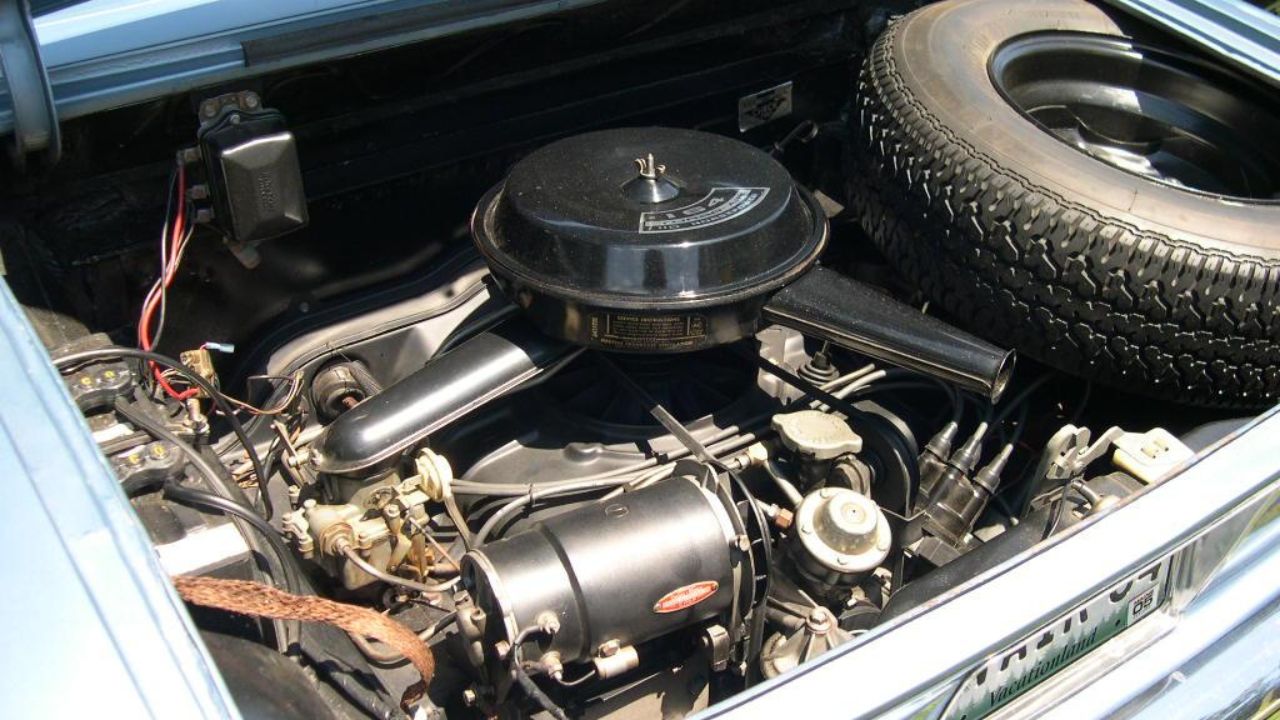
Chevrolet has built icons like the small-block V8 and the LS family, but one of its most surprising rising stars started life as a workhorse, not a halo engine. Once dismissed as disposable, this powerplant now attracts collectors, engine builders, and investors who see it as a rare bridge between the muscle era and modern performance. Its journey from junkyard staple to auction talking point shows how quickly the market can re-rate an overlooked piece of hardware.
This shift is unfolding alongside a broader run-up in enthusiast values, from air-cooled Porsches to 1970s American iron. As traditional blue-chip engines price out younger buyers, attention is drifting toward motors that used to be background noise in classifieds. The Chevrolet engine nobody expected to become collectible is suddenly the main act.
The unlikely rise of a once-ordinary Chevrolet V8
The engine turning heads in Chevrolet circles is not the headline-grabbing big-block or the latest LT-series V8. Instead, it is a mid-1970s small-block variant that spent most of its life powering family coupes, pickups, and fleet sedans. For years, enthusiasts treated it as a parts donor, stripping brackets and heads while leaving the short block to rust. That indifference is exactly what set the stage for its current appeal.
In the 1970s, tightening emissions rules and fuel economy pressure pushed manufacturers to detune engines that had been built for power. Chevrolet responded with lower compression ratios, restrictive exhausts, and conservative ignition curves. The result was a generation of small-blocks that carried classic displacement badges but delivered modest output. At the time, few owners saved these engines in original form, because the instinct was to upgrade or swap them out entirely.
As the muscle cars that preceded them climbed in value, collectors initially ignored the smog-era successors. Over time, though, the cars and trucks of that decade built a reputation. A 1970s Chevrolet coupe or pickup, once a cheap beater, gained charm as a period piece with square styling, bright colors, and analog simplicity. Reporting on how a seemingly ordinary 1970s machine built an unexpected following shows how nostalgia and scarcity can transform a platform that once sat at the bottom of the market into something enthusiasts actively seek out, especially when it still carries its original powertrain.
That same pattern is now playing out at the engine level. Surviving examples of this Chevrolet V8 in unmodified condition are far rarer than production numbers suggest. Many were rebuilt with aftermarket internals, converted to carburetors with more aggressive cams, or replaced wholesale with crate motors. Collectors who want a factory-correct 1970s Chevrolet now hunt for numbers-matching blocks, cylinder heads with the right casting codes, and untouched intake manifolds. The engine that used to be pulled and discarded has become the piece that makes a restoration legitimate.
What changed in the perception of this Chevrolet workhorse
Several forces converged to change how the market sees this engine. The first was the explosive appreciation of traditional performance icons. Air-cooled sports cars that once traded as used toys now command supercar money. Analysis of the classic market shows how a Porsche 911 that sold for the price of a new family sedan a decade ago can now reach about $350,000 in the right specification, a jump that pushed many buyers to look elsewhere for engaging, mechanical experiences.
As flagship models moved out of reach, enthusiasts began to reconsider second-tier hardware. For Chevrolet fans, that meant looking beyond the legendary 327 and 454 to engines that had been plentiful and cheap. The 1970s small-block suddenly looked attractive for three reasons: it retained the basic architecture that made earlier Chevy V8s easy to tune, it was still relatively affordable compared with high-profile engines, and it came attached to vehicles that offered period style without six-figure auction estimates.
The maturing of the restomod and pro-touring scene also played a role. Builders who wanted vintage sheet metal with modern drivability learned that starting with an original, numbers-matching engine gave them flexibility. They could store the factory short block and run a crate engine on the street, or they could subtly upgrade internals while keeping the casting codes correct. That practice increased demand for original cores, especially from specific plants and production runs that matched desirable models.
Information access further reshaped perceptions. Casting number databases, online forums, and social media groups made it easier to decode engine stamps and trace a block to a particular assembly plant or option package. What used to be anonymous iron gained a story: this block came from a mid-1970s Z/28, that one from a special-order half-ton pickup. Stories sell, and engines with verifiable backstories began to separate themselves from generic replacements.
Generational taste shifted as well. Enthusiasts who grew up riding in 1970s Chevrolets now have the means to buy and restore the vehicles that shaped their memories. For them, the slightly rough idle, the subdued output, and even the emissions plumbing are part of the experience. The engine is no longer judged solely on peak horsepower. It is valued as an authentic artifact of a specific automotive moment.
Why this Chevrolet engine matters in the collector market now
The newfound status of this Chevrolet V8 matters because it signals a broader recalibration in how collectors assign value. Instead of chasing only the highest-output versions, buyers are rewarding originality, context, and survivorship. An engine that spent decades as a placeholder is now a key part of a car’s identity.
This shift has concrete market effects. Auction listings increasingly highlight original powertrains, with catalog notes that spell out matching numbers and correct date codes. Cars that retain their factory engines can command a premium over similar vehicles with later crate motors, even if the swapped cars outperform them on paper. For sellers, that premium justifies the cost of rebuilding a tired original rather than replacing it outright.
Specialists are responding as well. Machine shops that once focused on performance builds now advertise factory-spec restorations, complete with period-correct finishes and hardware. Parts suppliers reproduce smog-era components that were once discarded, such as air injection rails and restrictive manifolds, because restorers want the engine bay to look exactly as it did on the showroom floor. What used to be scrap has become inventory.
The engine’s rise also intersects with environmental and regulatory conversations. Some regions restrict modifications that remove original emissions equipment, which makes a correct factory configuration more attractive. Owners who want to keep their cars road legal are incentivized to preserve or re-create the stock setup, rather than bolt on headers and aggressive cams that could complicate inspections.
For the broader Chevrolet brand story, the engine’s redemption helps fill in a narrative gap. The company’s performance heritage is often told as a jump from 1960s muscle to modern LS and LT engines, with the 1970s treated as a detour. Recognizing the collectibility of this V8 acknowledges that even constrained eras produced hardware that matters historically and emotionally.
What comes next for Chevrolet’s once-forgotten V8
The future of this engine’s collectibility will depend on how several trends play out. Electric vehicles are gaining share, and some cities are tightening rules on older internal combustion cars. At the same time, interest in analog driving experiences continues to grow, particularly among enthusiasts who value mechanical feel over outright speed.
If the broader classic market follows the pattern seen with high-end European sports cars, the Chevrolet engine that once sat at the bottom of the hierarchy could see further appreciation. As top-tier big-blocks and rare homologation specials climb, more buyers will move down the ladder, looking for authentic V8 character in a package they can still afford. That dynamic would support continued demand for original, correctly coded engines.
There is also a preservation challenge. Many remaining examples of this V8 are still in daily-driven trucks and sedans, where maintenance decisions are guided by cost rather than originality. As those vehicles age out of service, owners will choose between budget crate replacements and more expensive rebuilds. Each time a core is scrapped, the pool of restorable engines shrinks, which can accelerate the scarcity effect that feeds collectibility.
More from Fast Lane Only
- Unboxing the WWII Jeep in a Crate
- 15 rare Chevys collectors are quietly buying
- 10 underrated V8s still worth hunting down
- Police notice this before you even roll window down
*Research for this article included AI assistance, with all final content reviewed by human editors