The first Ford Mustang most Americans encountered wore a 1965 badge, yet enthusiasts insist on calling the earliest cars “1964½.” The nickname hints at a split personality within that first model year, when midyear engineering changes and marketing bravado combined to create a sub-generation that still fascinates collectors.
Sorting out what really separates a 1964½ Mustang from a 1965 goes beyond trivia. The answer reveals how Ford rushed a new kind of car to market, how owners have preserved those earliest examples, and why the debate over a half-year label still shapes values and stories in the Mustang community.
How a rush to market created the so-called 1964½ Mustang
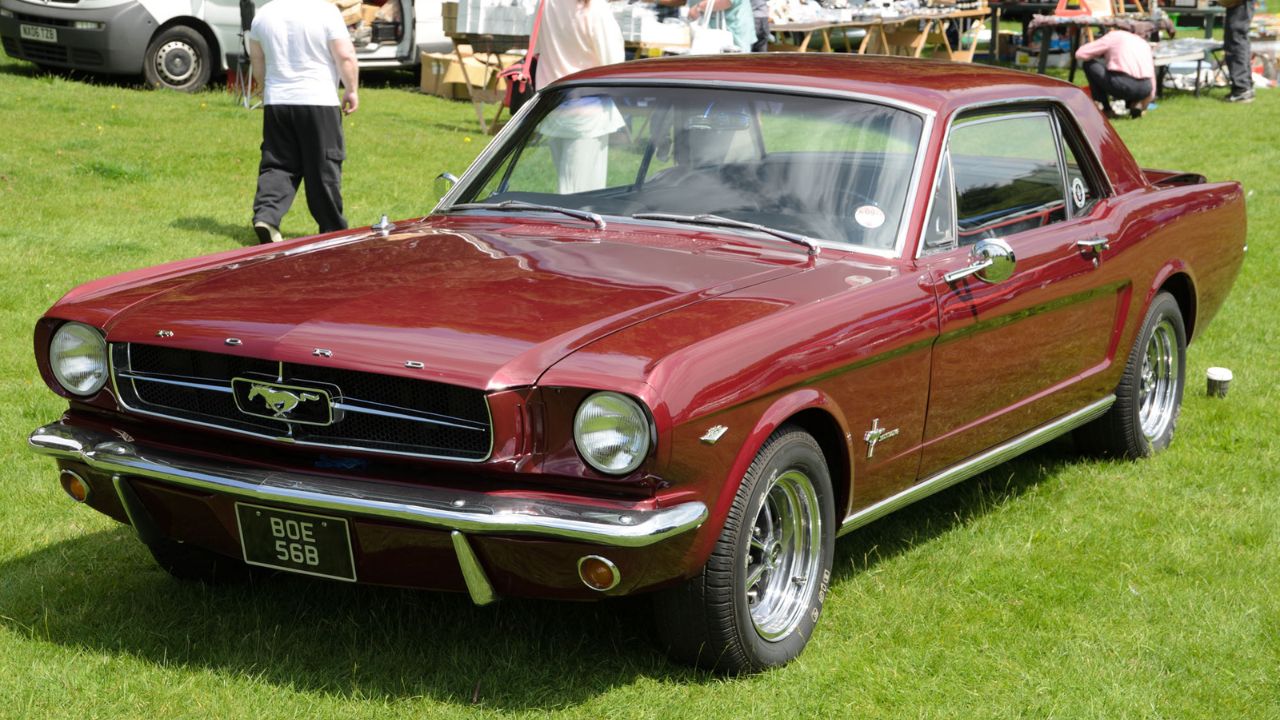
Ford’s Mustang debuted in the spring, not the fall, which was unusual for Detroit. The company wanted a sporty, affordable car in showrooms ahead of the summer selling season, so production began months before the traditional start of the 1965 model year. The cars that rolled out in that first wave carried 1965 on their titles and data plates, yet they were built to slightly different specifications than Mustangs assembled later in the year.
That compressed timeline meant engineering changes arrived quickly. Early cars used a generator instead of an alternator, a choice that tied them to older Ford electrical systems. Within the same nominal model year, Ford shifted to alternators, a change that affected wiring, brackets, and underhood details. Collectors began using “1964½” as shorthand for the generator-equipped cars, which could be identified under the hood without checking paperwork.
Other mechanical differences reinforced the split. The first Mustangs were offered with a 170 cubic inch inline-six and a 260 cubic inch V8, both carried over from earlier Ford compacts. Later in the model year, the six grew to 200 cubic inches and the V8 lineup moved to the 289, changes that altered performance and parts interchange. Early buyers who took home those smaller-displacement cars were, in effect, getting a slightly different Mustang than customers who walked into the same showroom a few months later.
Body and trim also evolved. Details such as hood stampings, interior hardware, and even some lighting components shifted as Ford refined the car and ramped up volume. None of these changes were enough for the company to declare a separate model year, but taken together they gave early-production cars a distinct technical fingerprint. Enthusiasts, more than Ford itself, turned that fingerprint into a label.
The role of owners and restorers in cementing the “half-year” identity
The half-year nickname stuck largely because owners of those earliest cars embraced it. For many, the label signaled that their Mustangs were not just first-year models but first-batch survivors. One of those owners, a New Hampshire man who bought his Mustang new and has kept it for decades, is described as one of the few original owners still driving an early-production car. His story, detailed in a profile of a local Mustang owner, illustrates how personal histories have intertwined with the technical quirks of those spring-built cars.
Restorers and judges at Mustang shows reinforced the distinction. Concours rulebooks began to list separate guidelines for early and late 1965 cars, specifying which engines, electrical components, and trim pieces were correct for each group. The term “1964½” became a convenient way to describe the earlier rule set, even if the official paperwork still read 1965.
Parts catalogs and price guides followed the same path. Listings for electrical components, engine parts, and body hardware often split 1965 Mustangs into early and late sections, with “1964½” appearing as a parenthetical label. Over time, that shorthand moved from the back pages of catalogs into mainstream car culture, where it now signals both a build period and a certain bragging right.
Why the half-year label carries weight for collectors today
Among collectors, the phrase “1964½ Mustang” signals scarcity and historical proximity to the car’s launch. Early-production examples represent the first wave of buyers who responded to Ford’s gamble on a sporty compact, and that connection to the debut has value. Cars that can be documented to that initial production window, and that still carry their original drivetrains and unique early parts, often command a premium compared with otherwise similar late-1965 Mustangs.
The distinction also matters for authenticity. A restorer who mis-matches parts, for example by installing an alternator on a generator-era car, risks losing points in judged competition and reducing the car’s appeal to knowledgeable buyers. The half-year label, in that sense, is a reminder that not all “1965” Mustangs left the factory the same way, and that careful research is required before sourcing components or repainting details.
For owners like the long-time New Hampshire driver, the label carries emotional weight as well. Keeping an early Mustang on the road for decades has meant navigating the quirks of those first-run parts, tracking down correct replacements, and resisting the temptation to update the car to later specifications. The pride in preserving that originality feeds back into the mythology around the 1964½ nickname.
Yet the term can also confuse casual buyers. Registration documents and insurance records will list 1965, which can lead to questions when an owner advertises a car as 1964½. Some sellers use the label loosely, applying it to any early Mustang without verifying the build date or technical details. That ambiguity has created a small cottage industry of decoding services and buyer’s guides that explain which features truly mark an early-production car.
How the nickname shapes Mustang culture and storytelling
The half-year idea has seeped into how enthusiasts talk about the Mustang’s origin story. Club presentations, museum displays, and anniversary events often highlight the earliest cars as a distinct chapter, with production cutoffs and option lists that differ from later 1965 models. The vocabulary of “1964½” gives fans a way to frame that chapter, even if it never appeared in a Ford brochure.
Media coverage of individual cars often leans on the label as a hook. A feature on a survivor Mustang is more likely to mention its status as an early-production example, especially if it has remained with the same owner since new. That narrative emphasis reinforces the idea that the first few months of Mustang production occupy a special place in automotive history, separate from the millions of cars that followed.
The nickname also influences how people remember the broader 1960s car market. By carving out a half-year for the Mustang, enthusiasts highlight how quickly Ford responded to demand and how aggressively it updated the car even within a single model year. The story becomes one of rapid iteration and customer feedback, rather than a static first-year design frozen in time.
What the “1964½” debate suggests about the Mustang’s future legacy
Looking ahead, the argument over what exactly counts as a 1964½ Mustang is likely to sharpen rather than fade. As more early cars pass from original owners to collectors, documentation and build data will matter even more. The market will reward examples that can prove their place in that first production run, down to engine codes and electrical details.
Clubs and registries are already cataloging early cars with increasing precision, tracking serial numbers, plant codes, and option combinations. That work will probably create an even finer-grained view of the first model year, with subgroups defined by specific engineering changes. The half-year nickname may remain the popular label, but behind it will sit a dense map of running changes that historians and judges use to evaluate authenticity.
The stories of long-time owners will also gain value as historical sources. Personal accounts of buying, driving, and maintaining early Mustangs help explain how the cars were used in period, not just how they are restored today. As those voices age, clubs and museums are likely to record oral histories and preserve original paperwork to keep the connection to the launch era alive.
More from Fast Lane Only
- Unboxing the WWII Jeep in a Crate
- 15 rare Chevys collectors are quietly buying
- 10 underrated V8s still worth hunting down
- Police notice this before you even roll window down
*Research for this article included AI assistance, with all final content reviewed by human editors