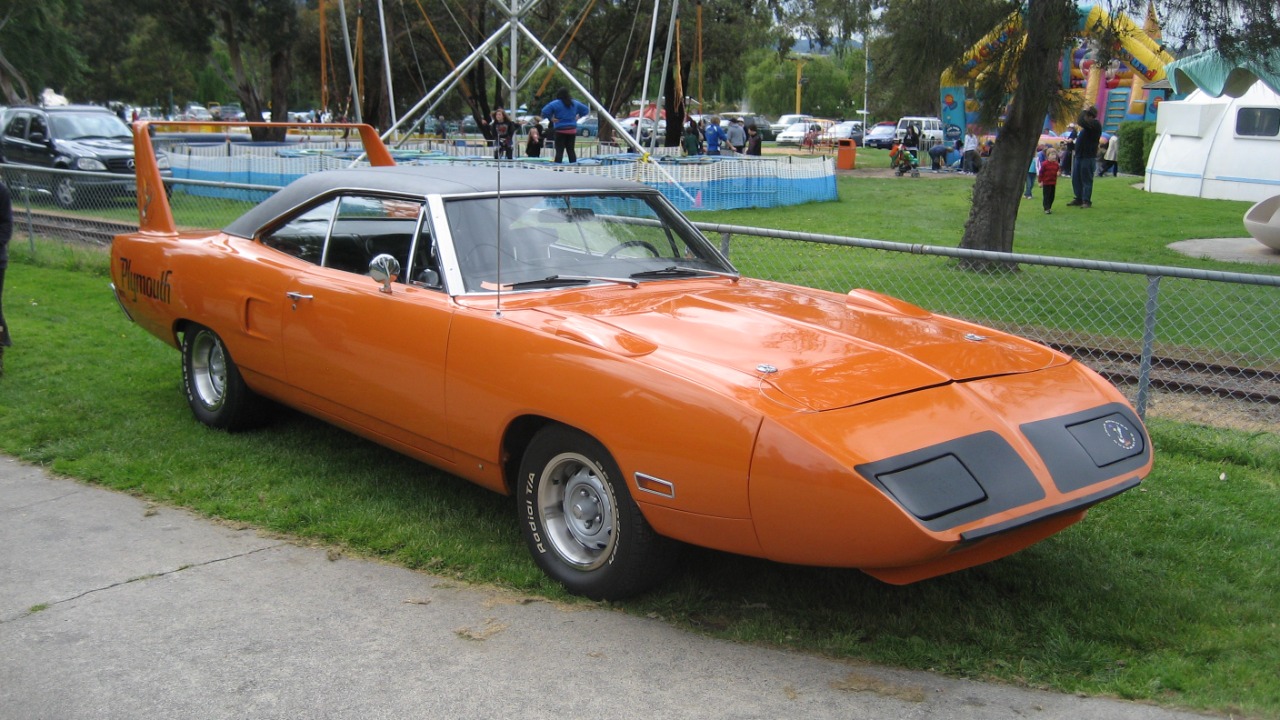
The Plymouth Superbird, a strikingly unique vehicle from the early ’70s, often elicits polarized opinions among car enthusiasts. Its combination of radical design and high-performance engineering makes it a subject of fascination and confusion. Delving into the Superbird’s misunderstood legacy reveals why it remains a classic favorite for some and a puzzling choice for others.
THE LEGENDARY ORIGINS OF THE SUPRBIRD
The Plymouth Superbird was born out of a need to comply with NASCAR’s evolving regulations in the early 1970s. To compete effectively, manufacturers had to produce a certain number of cars for the general public, which led to the creation of this extraordinary vehicle. The Superbird was essentially a modified version of the Plymouth Road Runner, featuring a distinctive aerodynamic design that would become its hallmark.
Key to the Superbird’s success was its engineering team at Chrysler, who worked tirelessly to create a car that could dominate on the racetrack. They implemented a long, pointed nose and a massive rear wing that not only gave the Superbird its iconic look but also significantly improved its aerodynamics. This design was not merely aesthetic; it was essential for achieving high speeds on the track, where every second mattered.
DESIGN: BEAUTY OR BEAST?
The Superbird’s design is one of the most polarizing aspects of this classic car. With its elongated nose and gigantic rear wing, it stands out among other muscle cars of its time, like the Chevrolet Camaro and Ford Mustang. While some enthusiasts admire its bold, aggressive styling, others find it too eccentric, leading to heated debates among car lovers. Its unique aesthetics have even inspired a cult following, with many considering it a piece of automotive art.
Automotive experts and fans alike have weighed in on the Superbird’s appeal. Some argue that its design was ahead of its time, predicting the future of performance vehicles. Others, however, see it as a gimmick—an over-the-top response to NASCAR’s demands that ultimately overshadowed its engineering prowess. This divide in perception is crucial in understanding why the Superbird is often misunderstood, as it challenges traditional notions of beauty in automotive design.
PERFORMANCE ON AND OFF THE TRACK
The Superbird’s performance on the racetrack is a testament to its engineering excellence. Powered by an array of potent engine options, including the legendary 426 Hemi and the 440 cubic inch V8, it was designed to leave competitors in the dust. The Superbird’s racing pedigree is impressive, with Richard Petty famously driving a Superbird to victory in the 1970 NASCAR season, securing seven wins and solidifying its status as a racing icon.
But the Superbird was not only about racing; it was also about the experience of driving. Many owners recount exhilarating stories of handling and acceleration that could rival any modern performance car. The Superbird’s lightweight construction, combined with a well-tuned suspension, offers a driving experience that is both thrilling and engaging. The roar of the engine and the sensation of speed create a connection between the driver and the vehicle that is hard to replicate.
CULTURAL IMPACT AND MISUNDERSTANDINGS
The Superbird has made its mark in popular culture, appearing in films, television shows, and even video games. Its unique design and racing history contribute to a mythos that continues to grow. However, this cultural presence often leads to misunderstandings about its purpose. Many view the Superbird strictly as a collector’s item, overlooking its rich history as a performance vehicle designed for the racetrack.
This misunderstanding is particularly pronounced among newer generations of car enthusiasts. While older fans may have fond memories of watching the Superbird compete, younger enthusiasts often see it as an oddity, failing to grasp the engineering brilliance that went into its creation. The divide among car enthusiasts highlights how perceptions can differ significantly across generations, fueling ongoing debates about what constitutes a classic vehicle. For more insights on this divide, check out this discussion on Quora.
COLLECTIBILITY AND MARKET VALUE
The market for the Plymouth Superbird has seen fluctuating trends over the years, but it has generally remained a sought-after vehicle among collectors. Recent auction results showcase the Superbird’s enduring appeal, with some models fetching impressive prices. For instance, a pristine 1970 Superbird was sold for $1.2 million at a recent auction, setting a new benchmark for the model.
Factors influencing the collectibility of the Superbird include its rarity—only 1,920 units were produced—and its association with NASCAR’s golden age. Collectors are particularly drawn to well-documented cars with low mileage, as these examples often represent the pinnacle of the Superbird’s performance and design. Recent sales can be tracked via platforms like Mecum Auctions, offering insights into current market trends and pricing strategies for potential buyers.
THE FUTURE OF THE PLYMOUTH SUPERBIRD
Looking ahead, the Plymouth Superbird’s legacy seems poised for a renaissance. As more enthusiasts discover the unique blend of style and performance it offers, there is potential for increased recognition and appreciation among new generations. Car clubs dedicated to preserving the Superbird’s history play a crucial role in this resurgence, organizing events and gatherings that celebrate its contributions to automotive culture.
Moreover, as the automotive industry shifts towards electrification and sustainability, the Superbird stands as a reminder of a bygone era of raw power and performance. Its distinctive design and racing heritage may inspire a new wave of vehicles that prioritize aerodynamics and speed, echoing the Superbird’s principles. With ongoing restoration projects and a dedicated community, the Superbird’s story is far from over. For those interested in the Superbird’s unique place in automotive history, further reading can be found in various publications, such as this one on Google Books.
More from Fast Lane Only
- Unboxing the WWII Jeep in a Crate
- 15 rare Chevys collectors are quietly buying
- 10 underrated V8s still worth hunting down
- Police notice this before you even roll window down
*Research for this article included AI assistance, with all final content reviewed by human editors.