Mat Watson has launched more cars in more configurations than most people will drive in a lifetime. Manual clutches, dual-clutch paddles, launch control systems from a dozen different manufacturers, he has seen it all. So naturally, the one time he climbs into a nearly 1,000-horsepower Lotus for the very first time, with cameras rolling and a Ferrari V12 waiting next to him, is exactly when he forgets to check if the car is even in drive.
It is the kind of moment every car reviewer dreads and every viewer secretly hopes for. The Lotus Eletre X had shown up with numbers that looked absurd for an SUV before anyone hit the strip. Two electric motors paired with a 2.0-liter turbocharged petrol engine combined for 952 horsepower and 935 Newton-meters of torque, all sent through all four wheels in a hybrid setup built to make a 2.6-ton hyper-SUV feel like something far smaller. That weight was the one asterisk next to an otherwise intimidating spec sheet, and with that much power on tap, it was supposed to be a footnote rather than a real disadvantage.
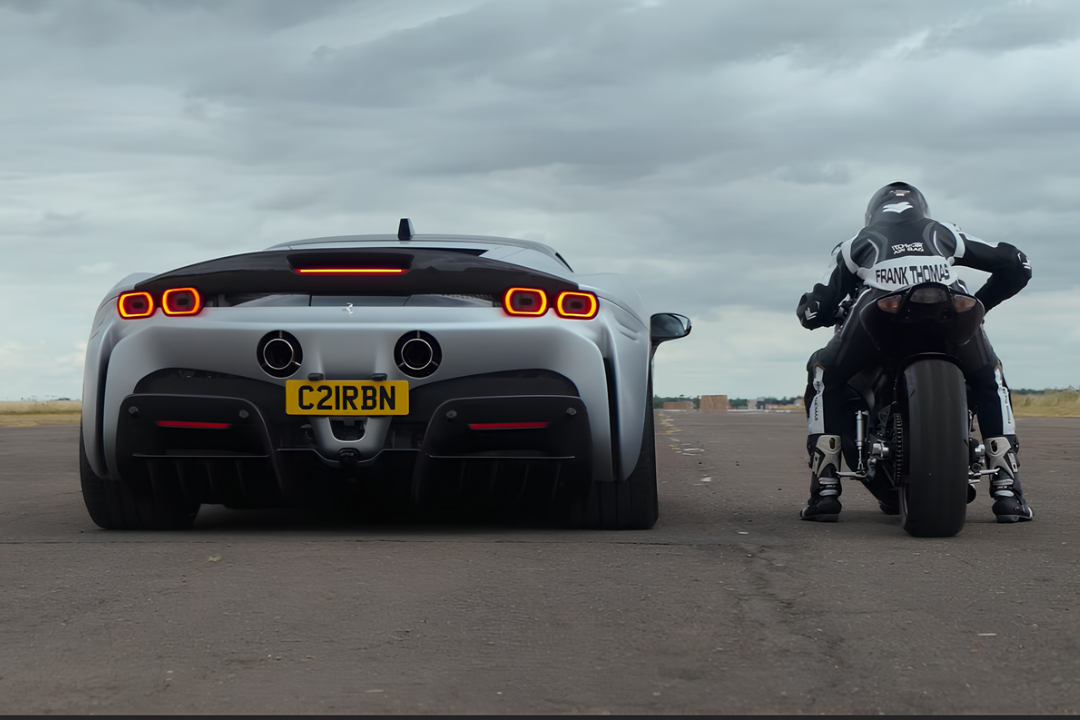
Standing in its way was a Ferrari Purosangue, Maranello’s first real swing at an SUV, running a naturally aspirated 6.5-liter V12 good for 725 horsepower and 716 Newton-meters through an 8-speed automatic with launch control. The Ferrari gave up more than 200 horsepower to the Lotus by spec sheet alone, but it also gave up half a ton of curb weight, and more importantly, it came with a driver who actually knew what he was doing off the line. Watson, sadly, did not.
A launch that never happened
The first standing quarter-mile race should have been the most straightforward moment of the entire session, two cars, one green light, first to the far cone wins. Instead it turned into a small comedy of errors. Watson had never driven the Eletre X before that day, and when the countdown hit zero, he was still glancing around the cabin trying to figure out whether he was actually in drive. By the time he sorted it out, the Ferrari was already gone, and the race was effectively over before the Lotus had moved an inch.
Cue the inevitable ribbing. “Wakey wakey, Matthew” is not the kind of line you live down easily, and it captured the moment perfectly, a car with a nearly 1,000-horsepower powertrain sitting dead still at the line while a V12 SUV disappeared down the strip without it. The second race went almost as badly, with the Lotus bogging down hard on launch and the Ferrari cruising to another easy win, no confusion involved this time, just a straightforward mismatch between a launch system that worked and one Watson hadn’t figured out yet.
Two races in, things looked simple, and not particularly flattering for the Lotus. A supposedly dominant hyper-SUV had lost twice to a car giving up serious horsepower, purely because its driver couldn’t get it off the line cleanly. That would have made for a perfectly good headline on its own. It just wasn’t the full picture.
The numbers finally show up
Once the format shifted away from a standing start, everything changed in a hurry. In a rolling race from 10 mph out to the half-mile mark, the Lotus finally got to use its power without a launch system standing in the way, and the difference was almost comedic in the other direction. Watson pulled away from the Ferrari decisively, crossing the line at an eye-watering 154 mph, and suddenly all that horsepower that had been useless sitting still counted for everything once both cars were already moving.
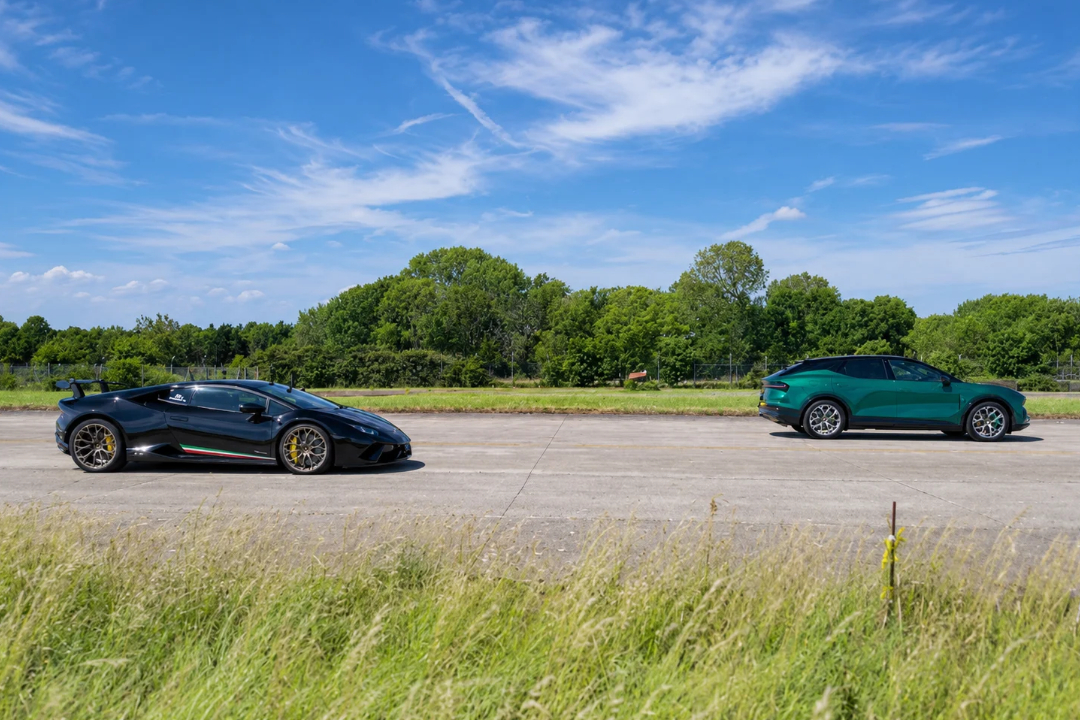
That single result completely flipped the script on the matchup. The Lotus hadn’t been slow. It had simply been mishandled at the one moment that decides everything in a standing-start drag race, and the rolling race proved the underlying machine was every bit as serious as its spec sheet promised. From there, the Ferrari stepped aside in favor of something built to actually test the Lotus: a Lamborghini Huracán Performante, all-wheel drive, launch control, and barely 1.5 tons to haul around.
A genuine rival changes everything
Against the Lamborghini, the launch mistakes disappeared and this finally became a real fight. The Lotus suffered another minor bog off the line in their first standing race, but this time it clawed back enough ground that the Huracán only won by the slimmest of margins right at the finish cone. The rolling races that followed flipped depending on drive mode, with the Lotus losing once in a more relaxed comfort setting before pulling away decisively once switched into something sportier, suggesting the car had simply been sandbagging itself the entire time.
A brake test from 100 mph briefly turned into some good-natured accusations of cheating, with Watson convinced the Lamborghini’s driver had hit the brakes early. Replay footage backed him up, confirming the Lamborghini braked before reaching the marker on the first attempt. Once redone fairly, the lighter Lamborghini still stopped in a shorter distance than the considerably heavier Lotus, which surprised absolutely nobody given the weight gap between the two.
The day ended with a winner-takes-all standing drag race, and the Lotus suffered one final ill-timed launch bog. The Lamborghini held on to win both the decider and the overall quarter-mile battle, crossing in 10.9 seconds against the Lotus’s 11.0. The Ferrari, its earlier wins built entirely on launch execution rather than actual pace, finished slowest of the three at 11.8 seconds once every car finally got a fair shot at the strip.
None of that changes how the day started, though. An electric hyper-SUV with nearly a thousand horsepower sat completely still at the line while its driver figured out whether the thing was even in gear, and a Ferrari V12 walked away with a win it barely had to work for. The rest of the afternoon proved the Lotus belonged in this company. The opening race just proved that even a car this capable still needs a driver who remembered to wake up first.
More from Fast Lane Only
- Unboxing the WWII Jeep in a Crate
- 15 rare Chevys collectors are quietly buying
- 10 underrated V8s still worth hunting down
- Police notice this before you even roll window down
*Research for this article included AI assistance, with all final content reviewed by human editors.