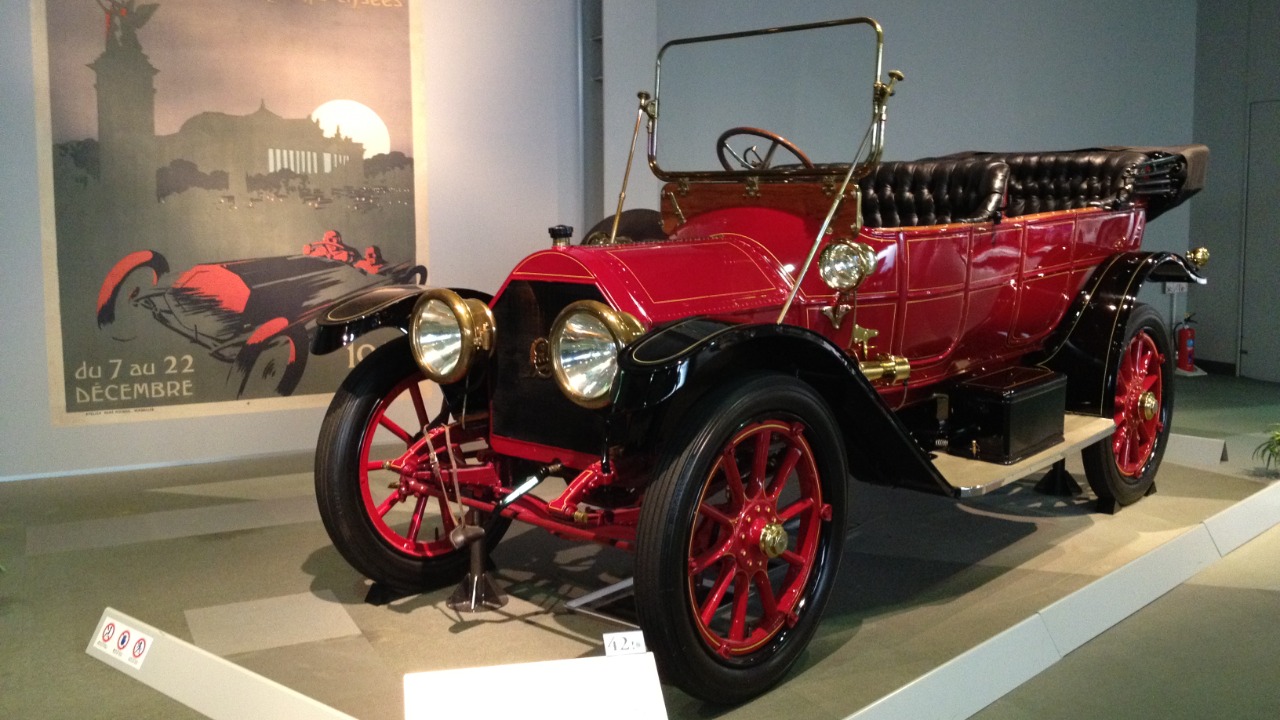
The Cadillac self-starter arrived on the 1912 Model Thirty, and it ended the age of the hand crank. Before it, every driver had to stand in front of the car and spin the engine to life by hand. After it, a driver could start the engine from the seat. Charles Kettering and his small Dayton company built the system, and Cadillac put it into production first.
That sounds like a small convenience today. In 1912, however, it changed who could drive a car and how safely they could do it. The crank was heavy work, and a kickback could hurt the person holding it.
The story runs from a cash register to a Detroit bridge and, finally, to a trophy. Here’s how a farm boy from Ohio and a demanding Cadillac boss made the starter button normal.
The cash register motor behind the Cadillac self-starter
Kettering was born in 1876 on a family farm near Columbus, Ohio. According to the Engineering and Technology History Wiki, he earned an electrical engineering degree from Ohio State in 1904. Then he joined National Cash Register in Dayton as its electrical inventor.
His first big job was an electric cash register. The key insight, in his own words, was that “the motor needed to operate only in short intense bursts, and not continuously.” In other words, a small motor could do a big job if it only had to work for a moment. NCR introduced the electric register in 1906, and it sold well.
That same idea later solved the car problem. After all, a starter only needs to turn an engine for a few seconds. Kettering just had to make it strong enough.
Delco and the first Cadillac order
Kettering first worked on ignition. He turned a relay from his cash register into an ignition device that fired one strong spark instead of a shower of them, which made batteries last longer. To sell it, he formed the Dayton Engineering Laboratories Company, or Delco, with NCR general manager Edward A. Deeds and others.
Cadillac was the first big customer. In July 1909, Cadillac bought 8,000 of the ignition units, according to the same engineering history. Soon after, Kettering left NCR to work on Delco full time. As a result, he already had a working relationship with Henry Leland, the engineer who ran Cadillac.
The crank that Leland wanted gone
Leland had his own reason to hate the crank. The story usually told involves Byron Carter, the founder of Cartercar and a friend of Leland. PistonHeads reports that in late 1907 Carter cranked a stalled Cadillac on the Belle Isle bridge in Detroit. The engine kicked back and broke his arm and jaw. Carter later caught pneumonia and died on April 6, 1908, at 44.
GM’s own heritage collection treats that account more carefully and calls it a legend. Still, both versions agree on the result. Leland pushed his company to find a way to start a car without a crank. PistonHeads quotes his reaction: “I’m sorry I ever built an automobile. Those vicious cranks; I won’t have Cadillacs hurting people that way.”
Cranking was also getting harder for everyone. Engines were growing heavier and more complex, and their compression was rising. So the problem was bigger than one accident.
One motor for starting, spark and lights
Leland ordered his engineers to find a way to end hand-cranking, and Delco already supplied his ignition. Kettering’s answer was one electrical system that started the engine, made the ignition spark and powered the lights.
The engineering history lays out the main moves. First, he dropped dry cells for a storage battery. Then he let the motor double as a generator to recharge that battery while the car ran. He also added a voltage regulator. According to PistonHeads, the system cranked the engine at 24 volts and charged the battery at a regulated 6 volts.
Kettering filed for a patent on an “engine-starting device” on June 15, 1911. Google Patents lists the patent, US 1,150,523, as assigned to Dayton Engineering Laboratories Co. The patent itself was not granted until August 17, 1915.
Leland orders 12,000 starters for 1912
Meanwhile, Kettering demonstrated the system in a Cadillac in 1911. PistonHeads says Leland tested a prototype in February 1911. Leland then ordered 12,000 Delco starters, and the engineering history dates that order to November.
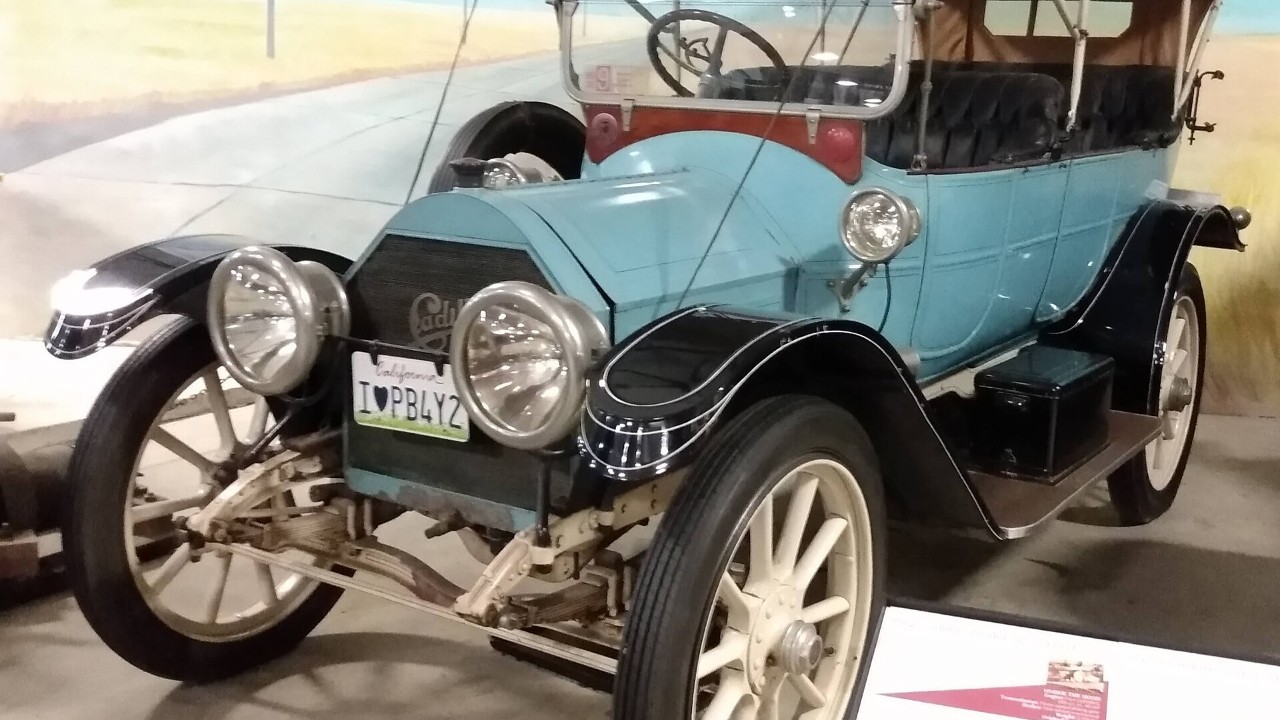
The car that got them was the 1912 Model Thirty. GM Heritage lists it with a 256-cubic-inch four-cylinder engine rated at 40 horsepower. Its base price was $1,800. GM says the electric starter debuted on that car.
Others had tried the idea before. For example, British engineer Herbert Dowsing tested a starter-generator in 1896, and Clyde Coleman patented one in 1901. However, PistonHeads says Coleman’s design appears to have been impractical and went no further. Cadillac was the company that put a working system into regular production.
A second Dewar Trophy for Cadillac
The starter earned Cadillac a major honor. According to GM Heritage, the Dewar Trophy had already gone to the 1908 Cadillac Model K for interchangeable parts. The 1912 Model Thirty then won it again, this time for its electric starter and lights.
After that, the rest of the industry followed. Kettering later said, “Inside of two years it was pretty hard to find someone who wasn’t thoroughly sold on the idea.” Bosch showed its own electric starter in March 1914. Even Ford came around, though slowly. Ford began offering the self-starter on the Model T in 1919, the engineering history notes.
What came after the Cadillac self-starter
Delco grew fast. By 1915 it had about 2,000 employees. In 1916, it became part of United Motors, which joined General Motors in 1918. When GM Research Corporation formed in 1920, Kettering became a GM vice president and board member. He also developed the Delco-Light generator for farms that had no power lines.
Kettering retired from GM in 1947. He died at his home in Dayton on November 25, 1958, at 82. Every time you press a start button today, you’re using the idea Cadillac first sold on its 1912 Model Thirty.
More from Fast Lane Only