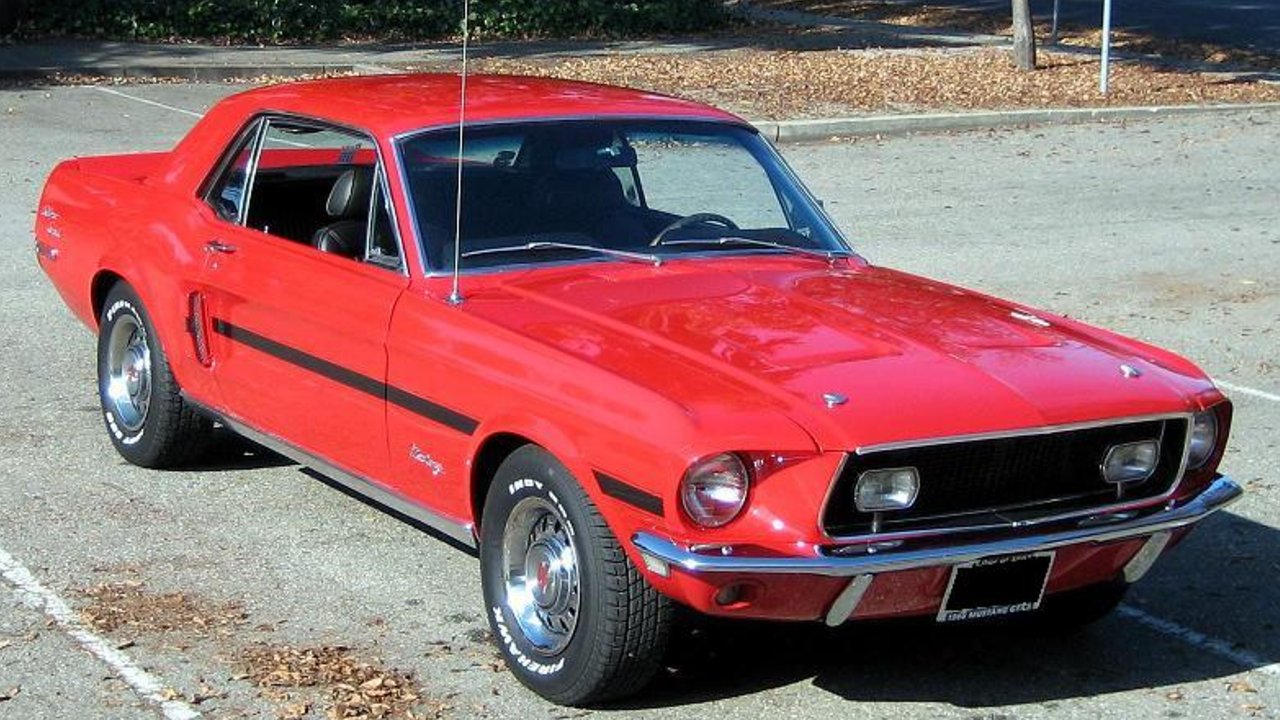
The Mustang California Special has never been a volume seller, but it has become one of the most recognizable appearance packages in Ford’s pony car history. From its late‑1960s origin to modern revivals, the California Special Mustang has appeared in distinct waves, and those production years now drive what collectors are willing to pay. Understanding when Ford actually built each generation is the first step to knowing what these cars are worth in today’s market.
Across classic and modern eras, values for the Ford Mustang California Special and Ford Mustang GT California Special now range from attainable driver cars to serious collector pieces. I will walk through each production run, then use current valuation tools and real‑world listings to show what buyers and sellers can realistically expect to pay.
How the original 1968 California Special set the template
The California Special Mustang story starts in the late 1960s, when Ford created a regional package aimed at West Coast buyers who wanted something more distinctive than a standard coupe. According to the history of the California Special, the original package made its debut in 1968, built off the first‑generation Mustang. The design borrowed heavily from Shelby styling cues, with unique side stripes, fog lamps and a revised rear treatment that set it apart from other 1968 cars, and that visual identity is what later revivals kept coming back to.
Because the 1968 Ford Mustang California Special was a one‑year run, collectors now treat it as a discrete sub‑model within the first generation. Valuation data for the Ford Mustang California Special shows that condition, mileage and originality have a major impact on price, with well‑kept examples trading at a premium over tired drivers. Market tracking for the first‑generation Ford Mustang California Special indicates that the highest sale price in this category has reached $41,741, which gives a clear ceiling for top‑flight cars while leaving room for more affordable drivers below that mark.
Every factory California Special run, from 1968 to the S197 era
After that first 1968 splash, the California Special name went quiet for years, then returned as Ford rediscovered the value of limited‑run appearance packages. Historical overviews of the California Special Mustang and later coverage of the package’s evolution show that Ford has treated it as a recurring theme rather than a continuous model line. A detailed timeline of the California Special Mustang notes that the modern revival began in the late 1980s, with a California Edition package offered from April to October 1987, and then the California Special branding reappearing on later generations. That pattern of short production windows is part of what keeps interest high today.
The fifth‑generation S‑197 Mustang brought the California Special back in a more systematic way. Market data for the Ford Mustang GT California Special in the S‑197 I period shows that this package was offered on GT models, pairing the V8 drivetrain with unique exterior cues such as lower body cladding, a nonfunctional hood scoop, vinyl side stripes, 18‑inch polished wheels and dual‑rolled exhaust tips. That combination of mainstream mechanicals and limited‑run cosmetics is exactly what defines the California Special formula across generations, and it explains why these cars now occupy a distinct niche in the used‑Mustang market.
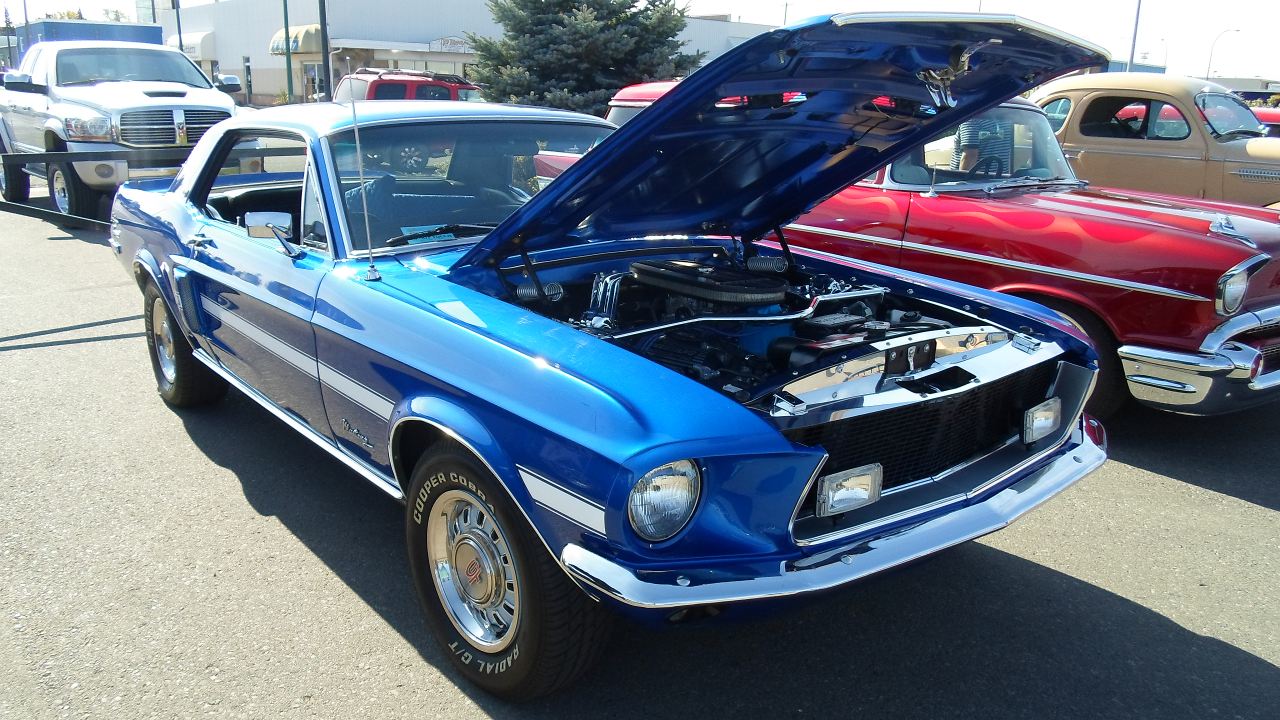
Sixth‑generation GT/CS and the jump to the 2026 Mustang Mach‑E
Ford did not stop with the S‑197. The sixth‑generation Mustang carried the idea forward with another GT‑based package that updated the California Special look for a more modern body. Listings and market tracking for the Ford Mustang GT California Special in the 2016 to 2023 range show that Like the standard GT of this period, the California Special was available in both coupe and convertible body styles, with cosmetic upgrades layered on top of the familiar 5.0‑liter V8. That means buyers today are not paying for unique hardware, but for a specific look and a nameplate that ties back to 1968.
Ford has now extended the California Special idea beyond the traditional coupe entirely. A factory Q&A on the 2026 Mustang Mach‑E GT California Special notes that the original package arrived in 1968 and that the new electric version is framed as a modern interpretation of that heritage, with the California Special name now attached to a battery‑electric crossover. A separate preview of the 2026 Mustang Mach‑E GT California Special, dated Oct 19, 2025, describes how designers used distinctive red and black accents and other visual cues to connect this new Mustang Mach to the original West Coast cars. While pricing for these 2026 models is still forming, their existence shows that Ford sees long‑term value in the California Special badge.
What classic and modern California Specials sell for now
On the pricing side, the market splits into two broad camps: the original 1968 cars and the later GT‑based revivals. For the first‑generation Ford Mustang California Special, valuation tools show a wide spread between driver‑quality and top‑condition examples. The dedicated page for the Ford Mustang California Special emphasizes that condition, mileage, options and history can swing values significantly, and that buyers should expect to pay more for documented, unmodified cars. Aggregated sales data for the first‑generation Ford Mustang California Special shows a highest sale price of $41,741, which suggests that very strong examples can push into the low‑forties while average cars trade lower.
Later GT/CS models sit in a more affordable band, reflecting both their newer age and higher production. For the 2009 Ford Mustang GT California Special, valuation guidance notes that the value of a Ford Mustang GT California Special can vary greatly depending on condition, mileage, options and history, but typical examples in good condition with average specifications sit well below the 1968 cars. Market tracking for the S‑197 I Ford Mustang GT California Special shows a highest sale price of $19,598, which effectively caps what collectors have been willing to pay for this generation so far. Sixth‑generation GT/CS models are newer still, and current data for the 2016 to 2023 California Special indicates that prices track closely with standard GTs, with only a modest premium for the package.
How to shop smart for a California Special today
For anyone considering a California Special Mustang, the key is to treat it as both a Mustang and a limited‑run trim, then research the market value of the specific model year before making an offer. General buying advice for used F‑series trucks stresses that shoppers should Research the market value of the specific model year they are interested in and compare prices to ensure they are getting a fair deal, and the same logic applies here. For a 1968 car, that means cross‑checking valuation tools and recent auction results for the Ford Mustang California Special, while for a 2009 or 2016 GT/CS it means looking at a wider pool of comparable GTs with and without the package.
Real‑world asking prices can also help calibrate expectations. Active listings for Ford Mustang California Special models show how sellers are pricing both classic and modern cars, and they reveal how factors like mileage, modifications and documentation affect those asks. Online appraisal tools suggest that shoppers look at prices set by owners on vehicles for sale on Autotrader and similar marketplaces to see what actual buyers have been paying, rather than relying on a single guide number. At the same time, valuation experts caution that values change over time and that buyers should revisit dedicated valuation tools, with one advisory noting that, as always, valuations change over time so shoppers should go to Haggerty.com slash valuation tools in order to get the most detailed and up‑to‑date information from Haggerty. Taken together, those steps give buyers and sellers a grounded view of what each California Special generation is really worth right now.