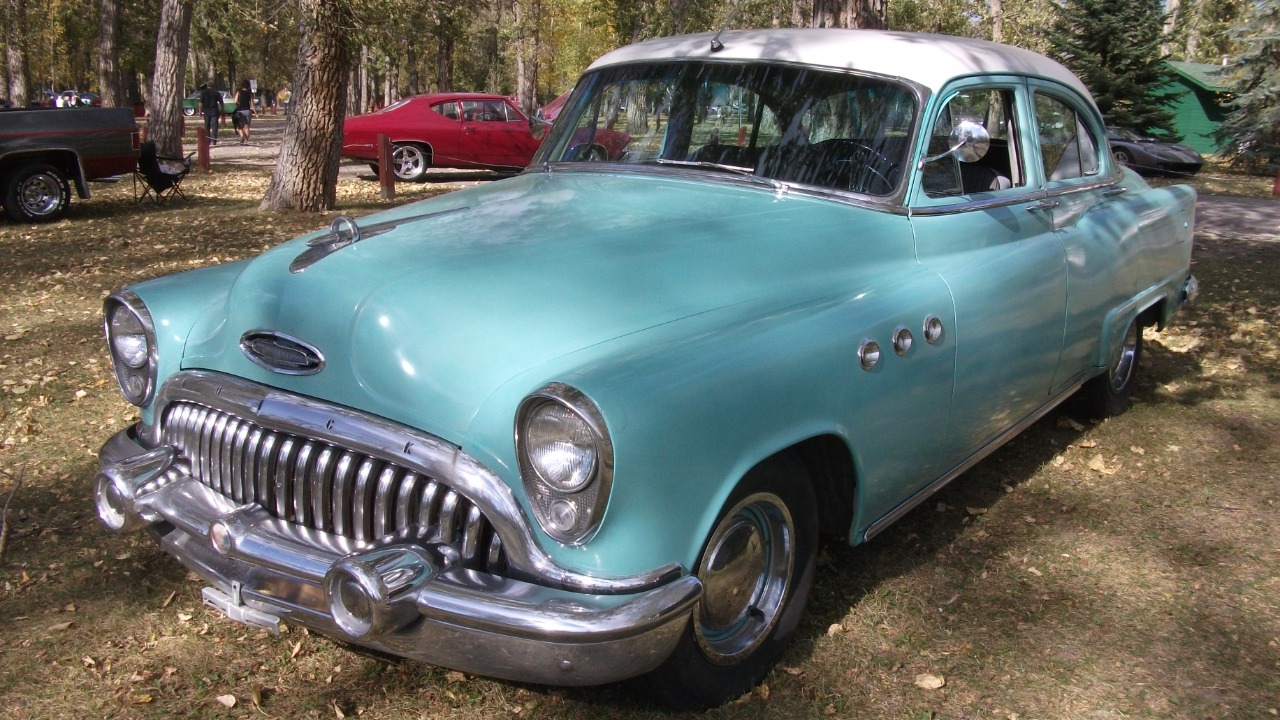
The 1953 Buick Special did not shout for attention so much as settle into the American driveway with a kind of quiet assurance. It arrived at a moment when chrome and tailfins were starting to get louder, yet this car’s real statement was how calmly it blended new power, smoother manners, and attainable price into one package. When I look back at that model year, I see a turning point where everyday buyers were invited into a more refined world without being asked to brag about it.
That is what makes the 1953 Buick Special feel so modern in hindsight: it treated confidence as something you could feel from behind the wheel rather than something you had to perform at the curb. The car’s engineering, its place in the lineup, and even its role in Buick’s own anniversary story all worked together to make understatement aspirational.
The Special’s place in Buick’s 1950s climb
To understand why the 1953 Buick Special mattered, I start with where it sat in the family. It was the entry point into Buick ownership, but it shared enough bones with pricier siblings that it never felt like a stripped-down compromise. Earlier in the decade, the 1950 Super had already shown how a midrange Buick could deliver what one period description called “Comfort for the Climb,” pairing the same wheelbase as the Special with an early straight-eight powerplant to give buyers a taste of big-car smoothness without the full big-car bill. That relationship between The Super and the Special set the stage for a strategy in which the least expensive Buick still carried the same basic stature and road presence as its more expensive siblings.
By 1953, that strategy had matured into something more deliberate. The Special was not just a cheaper badge, it was the gateway into a brand that wanted to be seen as a step up from the everyday without tipping into ostentation. When I picture a neighborhood street of the time, I imagine a Special parked next to a Chevrolet or Plymouth, its proportions subtly more substantial, its detailing a bit more polished, yet still grounded in the same middle-class reality. The fact that the 1950 Super had shared the Special’s wheelbase and early straight-eight layout underlines how Buick used common hardware to spread that feeling of “Comfort for the Climb” across the range, as described in period coverage of 1950s Buick cars.
Golden Anniversary, new V‑8, and a calmer kind of power
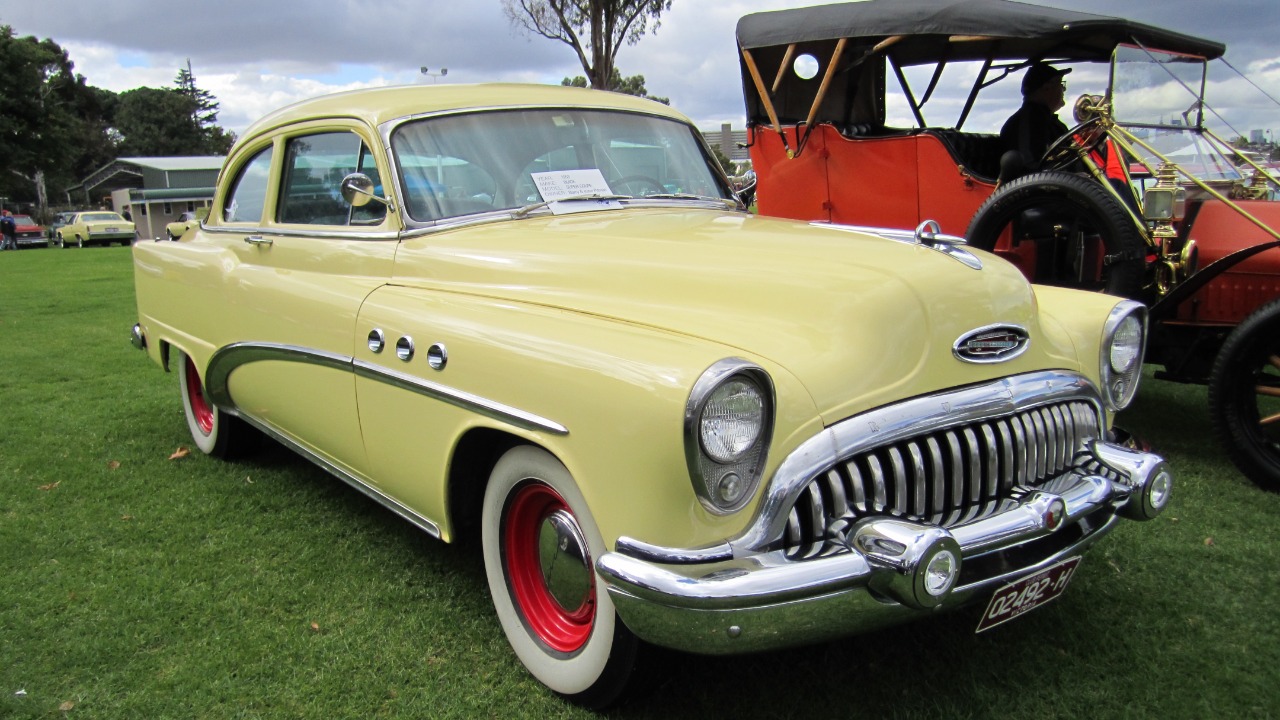
The timing of the 1953 Special was no accident. Buick marked its Golden Anniversary that year, and the company chose that milestone to introduce a new V‑8 engine that would define its postwar character. The Special benefited directly from that decision, trading the long-serving straight-eight for a more compact and efficient layout that promised better acceleration at reduced engine speeds. I see that as a very specific kind of confidence: the car did not need to rev itself into a frenzy to get moving, it could surge ahead with a low, steady hum that matched the brand’s mature image.
What fascinates me is how Buick framed this change. The new V‑8 was described as nearly identical across the lineup, which meant the Special’s buyers were not being handed a second-tier powerplant. Instead, they were invited into the same mechanical club as owners of pricier models, a subtle but powerful message about status. In the context of the Golden Anniversary, that shared engine made the Special feel like a full participant in the celebration, not an afterthought. Contemporary fact sheets emphasize that the new V‑8 arrived for 1953, Buick’s Golden Anniversary year, and that it delivered stronger acceleration at lower revs, a combination that suited the Special’s understated mission and is documented in a detailed 1953 Buick fact sheet.
From straight-eight tradition to Nailhead innovation
Under the hood, the 1953 Special stood at the crossroads between tradition and innovation. For years, Buick had relied on a straight-eight engine that delivered the kind of velvety torque owners associated with the brand’s prewar and immediate postwar cars. That layout had its charm, but it was long and heavy, and it limited how far designers could push styling and packaging. The shift to a compact V‑8 in 1953 was more than a spec-sheet update, it was a structural change that opened the door to lower hoods, shorter front overhangs, and a more modern stance, all while preserving the relaxed driving character buyers expected.
The new engine family that arrived in 1953 would become known to enthusiasts as The Buick Nailhead, one of the original postwar American V‑8 designs that earned a reputation for strong torque and durability. I think of it as the mechanical backbone of Buick’s midcentury identity, and the Special was one of the first cars to carry that DNA into everyday driveways. Technical histories point out that Buick’s first generation V‑8 was offered from 1953 through 1956 and that it replaced the long-serving straight-eight, a transition that is central to the story of the Special’s evolution and is clearly laid out in references on the Buick V8 engine.
How the Nailhead shaped the Special’s personality
When I think about the 1953 Special on the road, I picture the way that early Nailhead V‑8 would have changed the driving experience. Instead of the long, almost locomotive pull of the straight-eight, drivers now had a more compact engine that delivered its strength in a slightly different way, with a broad plateau of torque that made passing and hill climbing feel easier. The car did not need to roar to make its point, and that suited Buick’s image perfectly. The Nailhead’s relatively small valves and vertical orientation gave it a distinctive look and combustion character, but for the person behind the wheel, what mattered was the sense of effortlessness it brought to everyday trips.
That effortlessness is where I locate the Special’s “quiet confidence.” The car did not chase the highest horsepower numbers or the flashiest performance claims. Instead, it leaned on the Nailhead’s reputation as one of the best of the original postwar American V‑8s, a design that prioritized usable torque and reliability over headline-grabbing extremes. In my mind, that choice aligned with buyers who wanted a car that felt substantial and trustworthy rather than temperamental. Technical retrospectives on Secrets of the Buick Nailhead underline how this engine family balanced innovation with durability, and that balance is exactly what gave the Special its composed personality.
Everyday luxury without the spotlight
All of these elements, from shared wheelbases to common engines, added up to a car that made everyday life feel a little more special without demanding a spotlight. I imagine a 1953 Special pulling up to a modest suburban home, its owner stepping out after a long commute feeling less wrung out than they might have in a harsher, noisier car. The cabin would not have been opulent by the standards of the era’s true luxury machines, but the combination of smooth power delivery, solid road manners, and Buick’s attention to comfort would have signaled that this driver valued substance over show. That is a kind of confidence that does not need to be announced, it is simply lived.
Looking back from today, I find that ethos surprisingly contemporary. In a market now crowded with vehicles that shout their performance credentials and tech features, the 1953 Buick Special reads like an early template for the idea that real luxury can be quiet, and that confidence can be measured in how relaxed you feel at the end of the drive. By tying its entry-level model into the same mechanical story as The Super, by using the Golden Anniversary to democratize its new V‑8, and by embracing the calm strength of the Nailhead design, Buick created a car that let owners feel they had arrived without needing to prove it to anyone else. That, to me, is the lasting legacy of the Special’s introduction of quiet confidence to the American road.