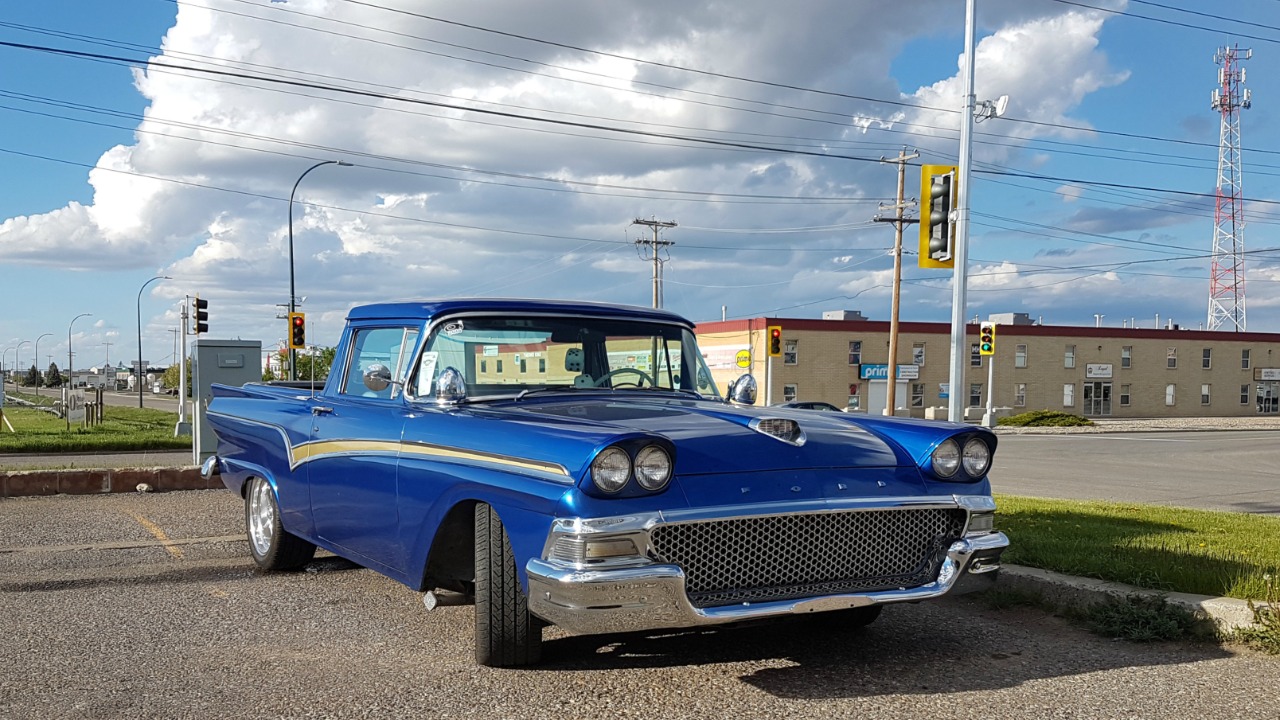
The 1958 Ford Ranchero arrived in American showrooms as a clever idea wrapped in mixed signals. It promised the comfort and style of a passenger car with the utility of a pickup, yet it landed in a market that was not quite sure what to do with a machine that blurred those lines so aggressively. Looking back, I see a vehicle that was both visionary and slightly out of sync with its moment, which is exactly why it puzzled buyers before the rest of the country caught up to its logic.
The car-truck “hybrid” nobody had language for
When Ford launched the Ranchero, it was selling something that did not fit neatly into the mental garage of 1950s buyers. The company pitched it as the first “hybrid” in the United States, not in the modern electric sense, but as a mashup of car and truck that was “More than a car … more than a truck.” That slogan captured the ambition, yet it also hinted at the problem: shoppers were used to choosing one or the other, not something that tried to be both. The Ranchero’s very identity required an explanation at a time when most people just wanted to know whether they were buying a family sedan or a work rig.
Even enthusiasts sometimes struggled to categorize it. One period description flatly called the 1957 Ford Ranchero “the first of its genre,” a hybrid of car and pickup that borrowed its styling from Ford’s passenger line and mimicked those body styles on a vehicle with a cargo bed. That novelty excited some buyers but left others wondering whether it was rugged enough for farm work or respectable enough for the front driveway. In 1958, when the second model year arrived, that basic confusion had not gone away, and the updated styling only added another layer of uncertainty.
Built like a wagon, sold like a truck, trimmed like a car
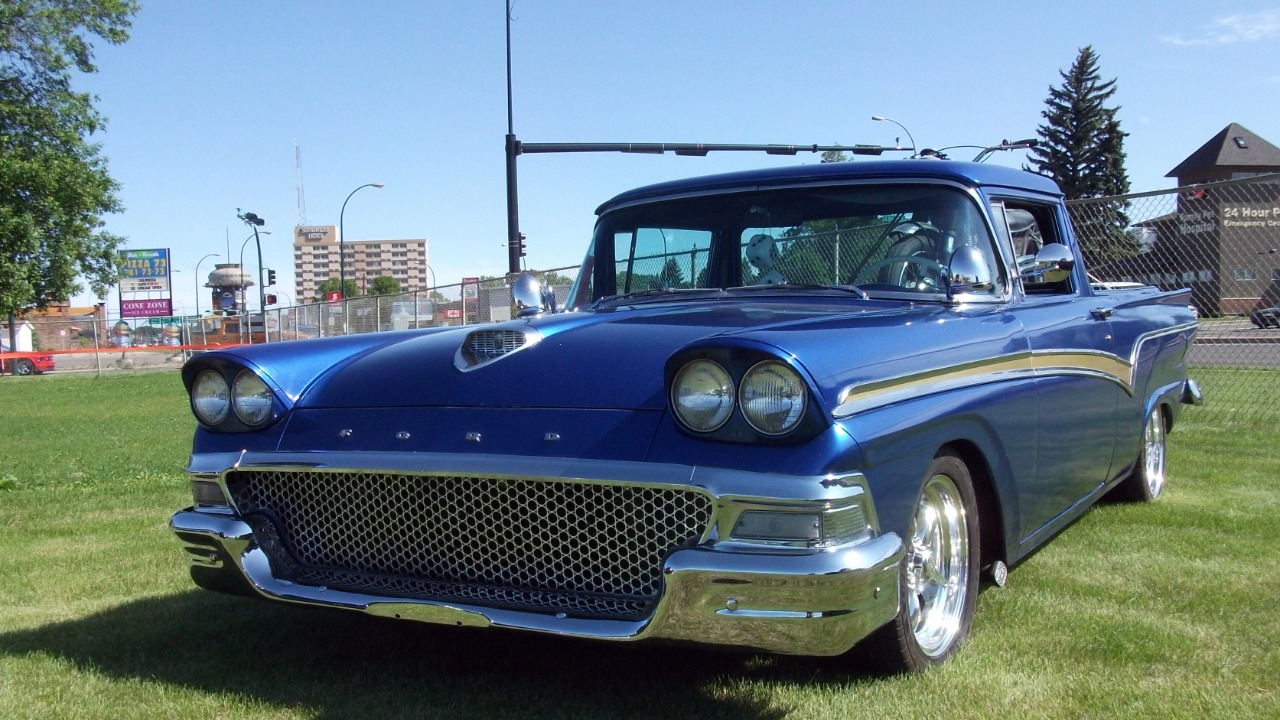
Under the sheetmetal, the earliest Rancheros were not trucks in the traditional body-on-frame, separate-cab sense. Structurally, the first Ford Ranchero was essentially a two-door Ranch Wagon with its roof cut short and a metal bedliner bolted over the rear floor. That meant it drove and rode like a car, which was a selling point for owners who were tired of bouncing around in traditional pickups. At the same time, the Ranchero’s bones tied it visually and mechanically to the wagon world, even as Ford’s marketing department tried to park it in the truck lineup.
Inside, the message was just as mixed. Contemporary accounts note that the cabin finish echoed Ford’s family haulers, with the rest of the inside trimmed like the Country Sedans and Ranch Wagons rather than bare-bones work trucks. The selling price of the Custom model reflected that more upscale positioning, which made sense for suburban buyers but could feel like overkill for someone who just wanted a cheap, dent-friendly hauler. In 1958, that tension between carlike comfort and trucklike purpose was still unresolved, and the Ranchero sat awkwardly between those expectations.
From promising debut to 1958 headwinds
On paper, the Ranchero’s first year suggested Ford was onto something. While While 21,695 units for the inaugural year may seem low by Detroit standards, it was still deemed a success at Ford, especially for a brand new body style. That early performance suggested there was a real audience among farmers, small business owners, and style-conscious tradespeople who liked the idea of a vehicle that could haul feed during the week and still look presentable at church on Sunday. The company had reason to believe that a second-year refresh would build on that foundation.
Instead, the 1958 model walked into an economic downturn that hit the auto industry hard. Buyers tightened their belts, and marginal experiments were often the first to feel the pinch. An analysis of the Ranchero’s production run notes that, over its 22-year life, How Many Ford Rancheros Were Produced is a question answered with a precise figure: Per Ford’s archives, a total of 508,355 units were built, with the best-selling model year arriving later, not in 1958. That context matters, because it shows the concept eventually found its footing, even if the second-year car struggled in the shadow of a softening market and a confused customer base.
Styling whiplash in a year of corporate misfires
The 1958 Ranchero did not exist in a vacuum. It shared its basic front-end styling with Ford’s full-size cars and wagons, which were themselves undergoing a rapid evolution. For 1958, the front and rear fascias of the Country Squire were revised to accommodate quad headlamps and a new taillamp design, changes that also affected the broader Ford family look, as detailed in the Ford Country Squire history. The Ranchero inherited that more ornate, heavier face, which made it look less like a simple working tool and more like a fashion-conscious cruiser with a bed grafted on the back. For buyers who had warmed to the cleaner 1957 shape, the new front end could feel like unnecessary drama on a vehicle that was supposed to be practical.
Complicating matters, Ford’s broader product strategy in the late 1950s was hardly a model of clarity. The company was simultaneously launching the Edsel, a separate brand that was meant to slot between Ford and Mercury but quickly became a symbol of corporate overreach. Internal documents and period coverage describe how Edsel production was rushed and factories were not fully ready, so Cars rolled off the line missing trim pieces and suffering quality issues. By November, By November 1957, Edsel sales were already lagging, and internal memos were asking, “Was price a problem?” That swirl of misfires and second-guessing at the corporate level did not help a niche product like the Ranchero, which needed clear, confident messaging to overcome its unconventional format.
Ahead of its time, but not in the right place
What makes the 1958 Ranchero especially fascinating to me is how closely it foreshadowed trends that would flourish elsewhere. In Australia, Though popular in Australia, where Ford was first with the vehicle type, the car-based pickup truck concept never quite became mainstream in the United States. Australian buyers embraced “utes” as everyday transport, while American truck shoppers gravitated toward body-on-frame pickups that grew larger and more capable. The Ranchero, including the 1958 version, was trying to sell an Australian-style solution to an American audience that was already drifting toward bigger, more overtly rugged machines.
Yet the idea clearly had staying power inside Ford. Per Ford’s archives, a total of 508,355 units were eventually built over the model’s 22-year run, a figure that underscores how the Ranchero slowly carved out a loyal following even if it never dominated the sales charts. Later generations would shift platforms and styling, but that core promise of carlike comfort with trucklike utility remained intact. When I look back at the 1958 model, I see a machine caught between eras: structurally tied to the Marketed idea of “More than a car … more than a truck,” visually swept up in late fifties chrome fever, and launched in the same corporate moment that produced the troubled Edsel.
In that light, the confusion buyers felt in 1958 makes a certain sense. They were being asked to embrace a new kind of vehicle, pay a bit more for carlike trim that echoed the Custom wagons, and trust a company that was simultaneously trying to convince them that the Edsel was the future. The Ranchero concept would eventually prove its worth, but in 1958 it was a half-step ahead of American tastes, a clever hybrid that arrived just a little too early and in just the wrong corporate moment to be fully understood.