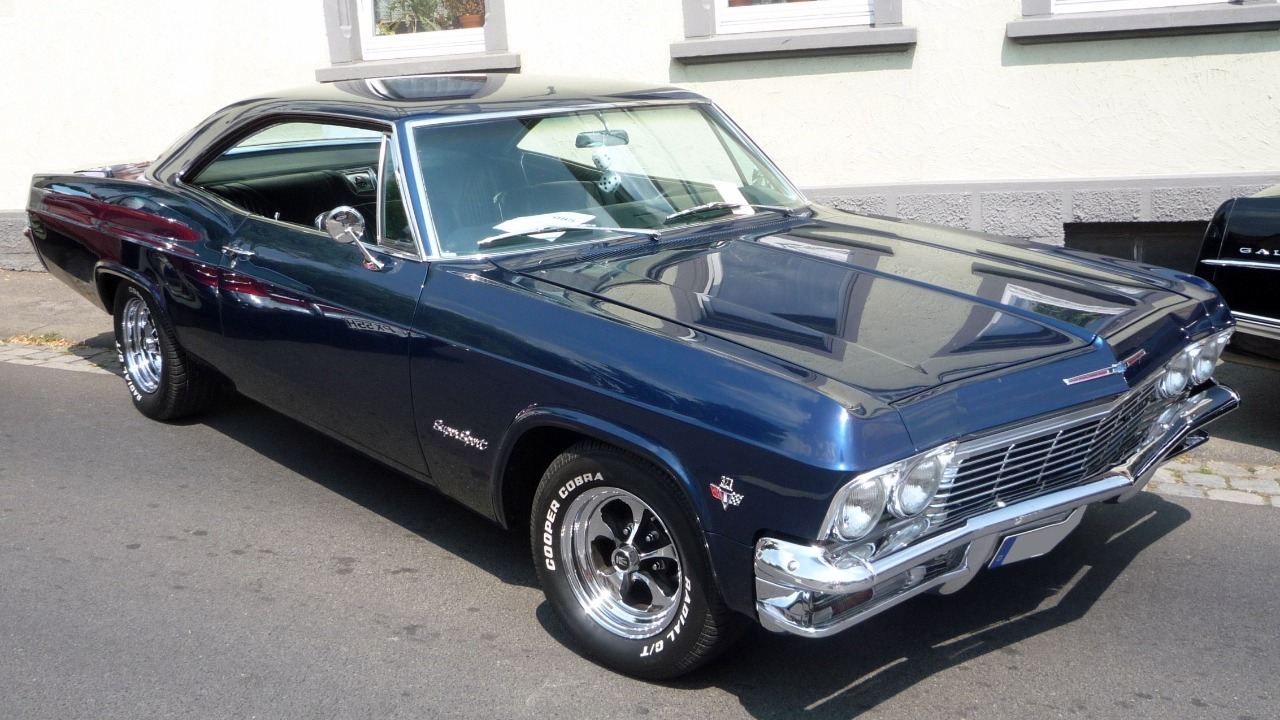
The 1967 Chevrolet Impala SS arrived at a moment when American highways were widening, speed limits were generous, and the family car was expected to look ready for a Saturday night street race. It was a full-size coupe that managed to feel both civilized and slightly dangerous, with long, flowing lines wrapped around serious V8 power. When I think about that era of open-road confidence, it is the 1967 Super Sport that comes roaring into focus.
The big Chevy that learned to look fast standing still
What made the 1967 Chevrolet Impala SS so striking was not just its size, but how gracefully it wore that size. The fourth-generation Impala had already moved into the so‑called Coke bottle era, and by 1967 the full-size Chevrolet body sharpened that theme with more pronounced hips and a pinched waist that made the car look like it was flexing even at a standstill. Dimensions stayed close to the previous year, so this was still a true full-size on a long wheelbase, but the surfacing and creases gave it the visual tension of a smaller, more athletic machine, especially in Super Sport trim with its badging and brightwork.
Underneath the styling, the Impala SS was still very much a family car, and that was part of its appeal. Buyers could have a roomy cabin, a big trunk, and the comfort of a full-size Chevrolet while enjoying the more aggressive look and feel of the Super Sport package. The 1967 full-size line also reflected a growing focus on safety, with features such as optional shoulder belts for closed models baked into the engineering of the Chevrolet platform. That mix of style, practicality, and emerging safety tech helped the Impala SS feel modern without losing its muscle-car swagger.
From Biscayne workhorse to Super Sport status symbol
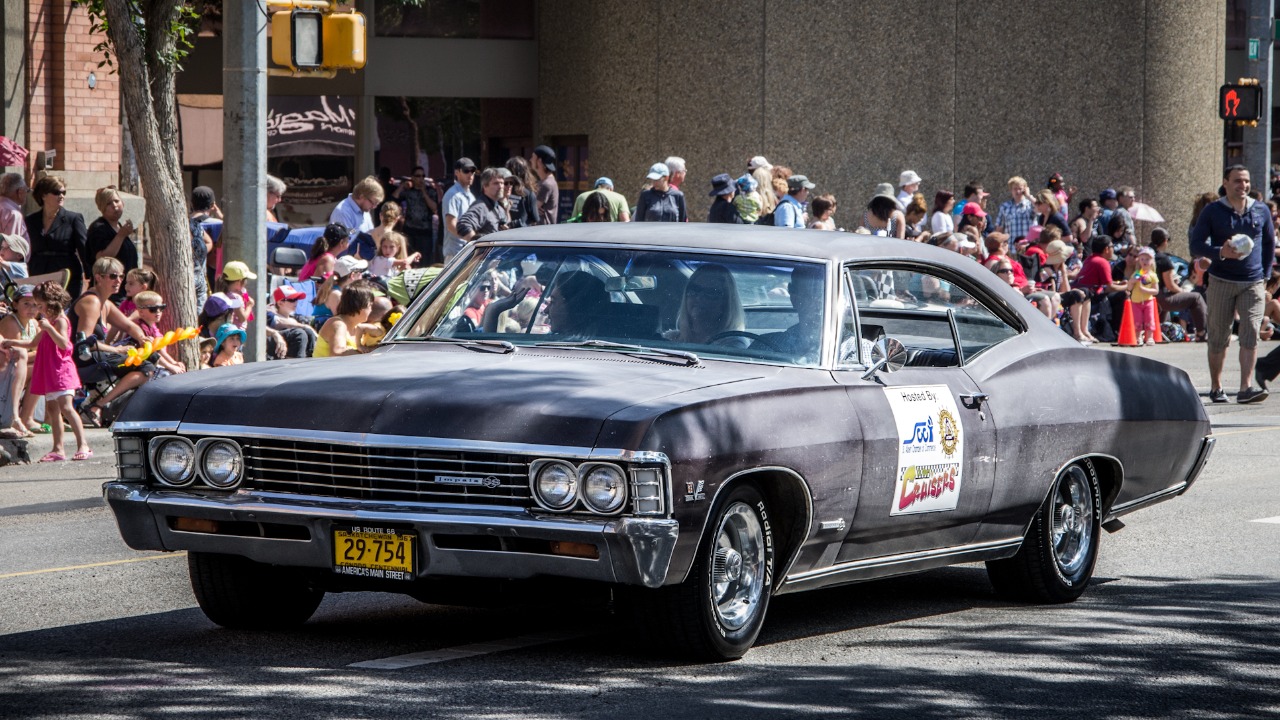
To understand why the 1967 Chevrolet Impala SS felt so special, I like to set it against the rest of the Chevrolet full-size lineup of the late sixties. In the same showroom, shoppers could look at the low-line Biscayne, a sparsely trimmed workhorse aimed at fleets and budget buyers, then walk a few steps and see the more upscale Bel Air and Caprice. The Impala sat in the sweet spot between those extremes, and the Super Sport package turned that middle child into a status symbol, with bucket seats, console options, and performance-oriented details that made it clear this was not just another family sedan. The hierarchy that ran from Biscayne to Caprice gave the SS room to stand out as the enthusiast’s choice.
What I find fascinating is how Chevrolet used the Impala SS to bridge two worlds. On one hand, it was still a full-size car that could haul kids, luggage, and groceries without complaint. On the other, it carried the kind of image that teenagers would tape to their bedroom walls. The Super Sport badge signaled that this Impala was closer in spirit to the emerging muscle cars than to the sedate sedans that shared its basic structure. That dual identity, grounded in the broader Chevrolet Impala family that had been evolving since 1958, is a big part of why the 1967 SS still feels like such a sweet spot in American car history.
427 reasons the SS ruled the fast lane
Power is where the 1967 Chevrolet Impala SS truly earned its reputation on the highway. While buyers could order more modest engines, the headline act was the big-block 427, a displacement figure that still makes enthusiasts sit up a little straighter. In SS 427 form, the car combined that massive V8 with the Super Sport’s visual cues, turning a comfortable cruiser into a serious high-speed machine. According to detailed production data, there were exactly 2,124 examples of the Chevrolet Impala SS 427 Sport Coupe There built, a small enough number to make the model coveted today but large enough that, in period, you could plausibly see one rumbling away from a stoplight.
When I picture those cars on the interstate, I think about how that 427 transformed the driving experience. This was not a lightweight pony car, it was a substantial full-size coupe, and yet with the big-block under the hood it could surge past slower traffic with ease and settle into a relaxed lope at speeds that felt almost decadent for the time. The SS 427 badge on the fender was a quiet promise that the car could back up its looks with real performance, and the fact that Chevrolet limited production to those 2,124 units only adds to the aura that surrounds the 427 today.
From everyday car to rare survivor
One of the ironies I keep coming back to is that the 1967 Impala was once an everyday sight, yet an original example is now incredibly hard to find. These cars were driven, often hard, through long commutes, family vacations, and winters that salted their frames. Over time, rust, accidents, and simple neglect thinned the herd. That is why a 1967 Impala in original condition is now described as extremely rare, with surviving cars that have been maintained or restored to stock specification considered special finds. Listings for a 1967 Impala often emphasize how over half a century of use has made unmolested examples very hard to find.
That scarcity has changed how enthusiasts interact with the car. Where an Impala SS might once have been just another used car on a dealer lot, today owners tend to treat them as rolling history, preserving original trim, factory colors, and period-correct details. The fact that the model started life as a mass-market Chevrolet only heightens the sense of wonder when I see a survivor with its original interior and drivetrain still intact. It is a reminder that the cars we take for granted today may be the rare collectibles of tomorrow, especially when they combine everyday usability with the kind of performance and style that defined the 1967 Super Sport.
Why the 1967 SS still captures imaginations
Even with its rarity, the 1967 Chevrolet Impala SS continues to inspire fresh builds and careful restorations, and that ongoing attention says a lot about its enduring pull. I am struck by how many owners aim to keep the car visually faithful to its era while making subtle personal choices. In one detailed restoration, Jul described taking a 1967 Chevy Impala and redoing the cabin with an all black interior, keeping everything stock as it would have come from the factory, just changing the color from white to black to suit his taste. That kind of project, captured in a Beautifully Restored 1967 Chevy Impala video, shows how the original design still stands on its own, needing only minor tweaks rather than radical customization.
Part of the car’s staying power comes from the long arc of The Chevrolet Impala story itself. The Chevrolet Impala line had been around since 1958, and by the time the 1967 Chevrolet Impala rolled onto showroom floors it carried nearly a decade of refinement, more muscle under the hood, and a reputation as one of the defining American nameplates. That heritage, documented in depth for the Chevrolet Impala, gives the 1967 SS a narrative that stretches far beyond a single model year. When I see one today, whether in a museum, at a local cruise night, or idling in a driveway, it still feels like the kind of car that could own the highway, a full-size coupe that turned everyday American roads into its personal stage.