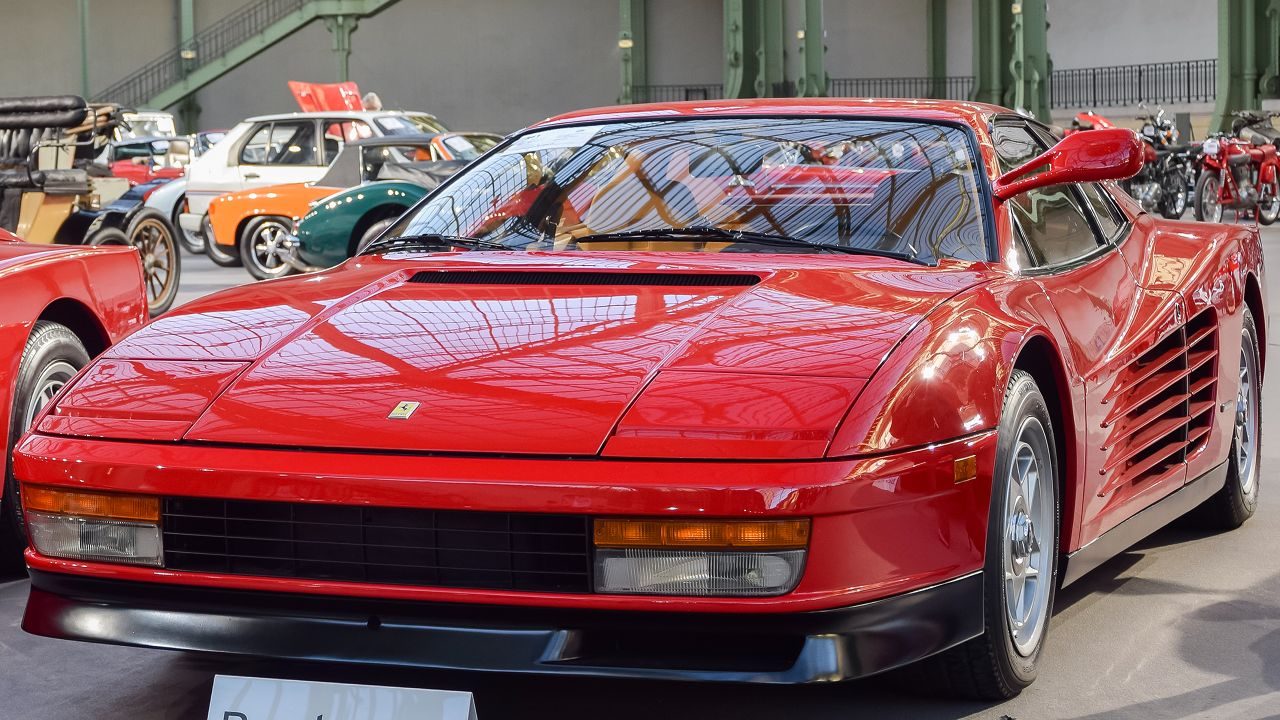
The 1985 Ferrari Testarossa did not simply replace the Berlinetta Boxer, it rewired how a generation imagined speed, wealth, and the future. With its wide stance, side strakes, and flat-12 soundtrack, it became the default supercar on bedroom walls and arcade screens, a visual shorthand for the excess and optimism of the 1980s. I want to trace how a single model, launched as a technical evolution, turned into a global poster icon that still shapes how people picture Ferrari today.
From Paris show stand to American dream
When The Testarossa first appeared at the Paris Auto Show, it was positioned as a clean break from the Berlinetta Boxer and a statement about where Ferrari wanted to go in the new decade. The car revived the historic “Testarossa” name, which had once referred to red-painted cylinder heads, and wrapped it around a mid‑engined flat‑12 that was both more powerful and more usable than its predecessor. According to detailed launch histories, the company dropped the Berlinetta Boxer badge and leaned into this revived name to signal a fresh era, one that would be easier to homologate and sell in key export markets.
That strategy mattered most in the United States, where the Ferrari Testarossa was engineered from the outset to meet safety and emissions rules that had kept the 512 BB in the shadows. Contemporary histories note that the 512 BB had reached American buyers only through gray‑market conversions, while the Ferrari Testarossa was the first Ferrari of its type created with the American market in mind once those regulations became a fact of life. By the time production cars reached customers in 1985, the wedge‑shaped coupe was not just a European showpiece but a legal, aspirational object for U.S. buyers, which set the stage for its leap from showroom to screen and, eventually, to bedroom walls.
Design that looked like the future
The Testarossa’s styling did as much work as its engineering in turning it into a poster phenomenon. The car’s extreme width, long rear deck, and signature side strakes created a silhouette that even a child could sketch from memory. Period and retrospective analyses describe how those strakes were not only a visual flourish but a functional solution to channel air to the side‑mounted radiators, allowing Ferrari to keep the cabin cooler and the nose lower. The result was a shape that looked like a concept car yet was grounded in real aerodynamic and cooling needs, which made it feel both futuristic and authentic.
That visual drama slotted perfectly into the 1980s appetite for bold, instantly recognizable objects. Commentators on The Ferrari Testarossa’s legacy point out that it became a quintessential 1980s Ferrari precisely because its design exaggerated the era’s taste for sharp angles, wide tracks, and theatrical proportions. The flat‑12 engine layout let the rear deck sit low and broad, while the pop‑up headlights and clean, unadorned nose gave the front a minimalist aggression. On a poster or a magazine cover, those cues read clearly even at a distance, which is why the Testarossa so often edged out more technically advanced rivals when it came to wall space.
Miami Vice, Sega, and the power of repetition

The Testarossa’s leap from desirable car to cultural icon hinged on how often audiences saw it in motion. In Miami Vice, the Ferrari Daytona Spyder and the Ferrari Testarossa became as central to the show’s identity as its pastel suits and neon skylines. When the white Testarossa replaced the earlier black Daytona replica on screen, it instantly aligned the lead characters with the newest expression of exotic performance. Week after week, millions of viewers watched the car streak through night‑time Miami, its side strakes catching the streetlights, which burned its profile into popular memory far more effectively than any print advertisement could.
Video games amplified that effect by putting the Testarossa directly under players’ control. Automotive historians note that the model was made famous not only by Miami Vice but also by Sega’s Out Run, the arcade racer that cast players as carefree drivers blasting along coastal highways in a bright red Ferrari with a passenger at their side. Even in pixelated form, the car’s wide rear and distinctive engine cover were unmistakable. That repetition, from television to arcade cabinets to home consoles, meant that a teenager who might never see a real Ferrari Testarossa in person could still recognize it instantly and want it on a poster above the bed.
From showroom brochure to bedroom wall
By the mid‑1980s, the Testarossa had become the Ferrari that most non‑enthusiasts could name, and that visibility translated directly into poster culture. Marketing analyses of Ferraris in that period explicitly single out 1985 as the moment when the Testarossa appeared on posters across the world, turning a high‑end sports car into a mass‑market fantasy object. The car’s bright colors, especially red and white, photographed well, and its low, wide stance filled horizontal frames that matched the aspect ratio of typical wall posters. For publishers and advertisers, it was the perfect subject: instantly recognizable, aspirational, and visually dense without being cluttered.
Collectors and commentators now describe the Ferrari Testarossa as a “hero from the bedroom posters,” a car that defined the stereotype of the 1980s supercar in the minds of young fans. That status was not just about looks. The Testarossa was Ferrari’s leading supercar in the mid‑eighties, with performance figures that backed up its image and a price tag that placed it firmly out of reach for most admirers. The gap between the car’s exclusivity and its ubiquity in posters, calendars, and scale models created a powerful tension: it was everywhere in representation and almost nowhere in reality, which only deepened its allure.
Fall, resurgence, and the enduring icon
Like many 1980s exotics, the Testarossa went through a period when fashion turned against it. Analysts of its market history describe a “rise and fall and rise” pattern, where the very traits that once made it desirable, such as its width and flamboyant styling, later felt dated as subtler designs took over. As newer Ferraris arrived with more advanced technology and different design philosophies, the Testarossa’s values softened, and some owners treated it as a used performance car rather than a blue‑chip collectible. That cycle is common when a model is strongly tied to a particular decade, and for a time it seemed as if the Testarossa might remain a nostalgic curiosity rather than a serious classic.
Yet the same sources now point to a resurgence of interest, driven in part by a broader reevaluation of 1980s culture and in part by the car’s renewed visibility in media and high‑profile sales. Auction listings for low‑mileage examples, including a 1991 Ferrari Testarossa associated with high‑visibility film appearances, emphasize how the model has become one of the most collectible Ferraris of its era. Enthusiast pieces marking the car’s 40th anniversary underline that if you grew up in the 1980s, the Testarossa was likely the Ferrari you knew best, and that emotional connection is now translating into serious demand. The car’s journey from cutting‑edge flagship to unfashionable relic and back to coveted classic only reinforces its status as a poster icon that never really left the collective imagination.
More from Fast Lane Only: