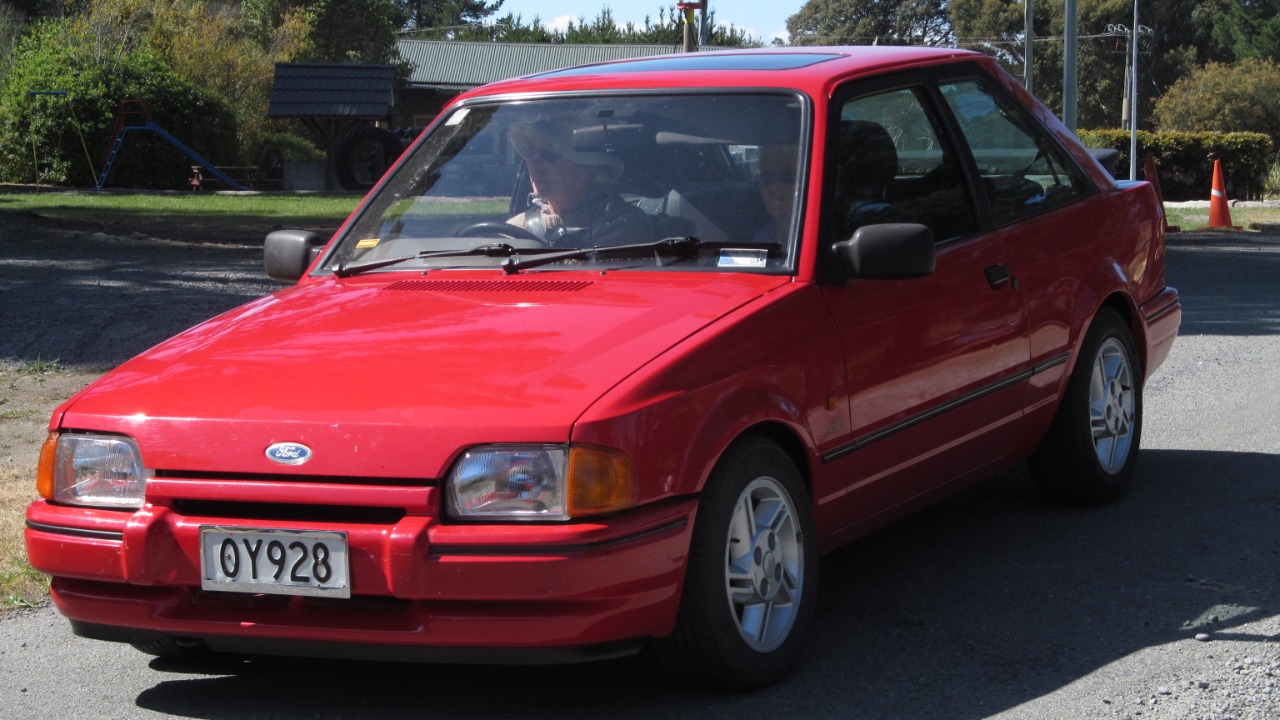
The 1986 Ford Escort RS Turbo was never meant to be a polite commuter. It was built as a small, sharp tool for a very specific job: to chase trophies on rally stages and to hunt bigger, more expensive performance cars on the road. When the Escort went turbocharged, it stopped being background traffic and started becoming the car that appeared suddenly in a rear-view mirror, spooled up and ready to pass.
I see that era as the moment when ordinary-looking hatchbacks learned to punch far above their weight, and the Ford Escort RS Turbo was right at the front of that charge. It took the humble Escort shell, added serious hardware and motorsport intent, and turned it into a compact predator that still feels purposeful decades later.
From shopping car to street hunter
What made the Ford Escort RS Turbo so effective as a hunter was how familiar it looked at first glance. Underneath, it was based on the three-door Ford Escort saloon, but engineers reworked the suspension, uprated the brakes and added forced induction so it could carry higher loads and make real use of a turbocharger. Period descriptions of the Ford Escort RS Turbo Series underline that this was not a cosmetic exercise, it was a structural rethink of a workaday platform so it could cope with real performance.
That transformation showed up clearly in the numbers. Regarding outright speed, contemporary figures make it clear that the Ford Escort RS Turbo was significantly quicker than a regular Escort, with the RS Turbo cutting the benchmark sprint and turning the car into something that could genuinely hassle larger machinery on a fast road. Enthusiast retrospectives on Regarding speed highlight how that extra urgency changed the Escort’s character from sensible to slightly menacing.
Homologation: built to qualify, tuned to chase
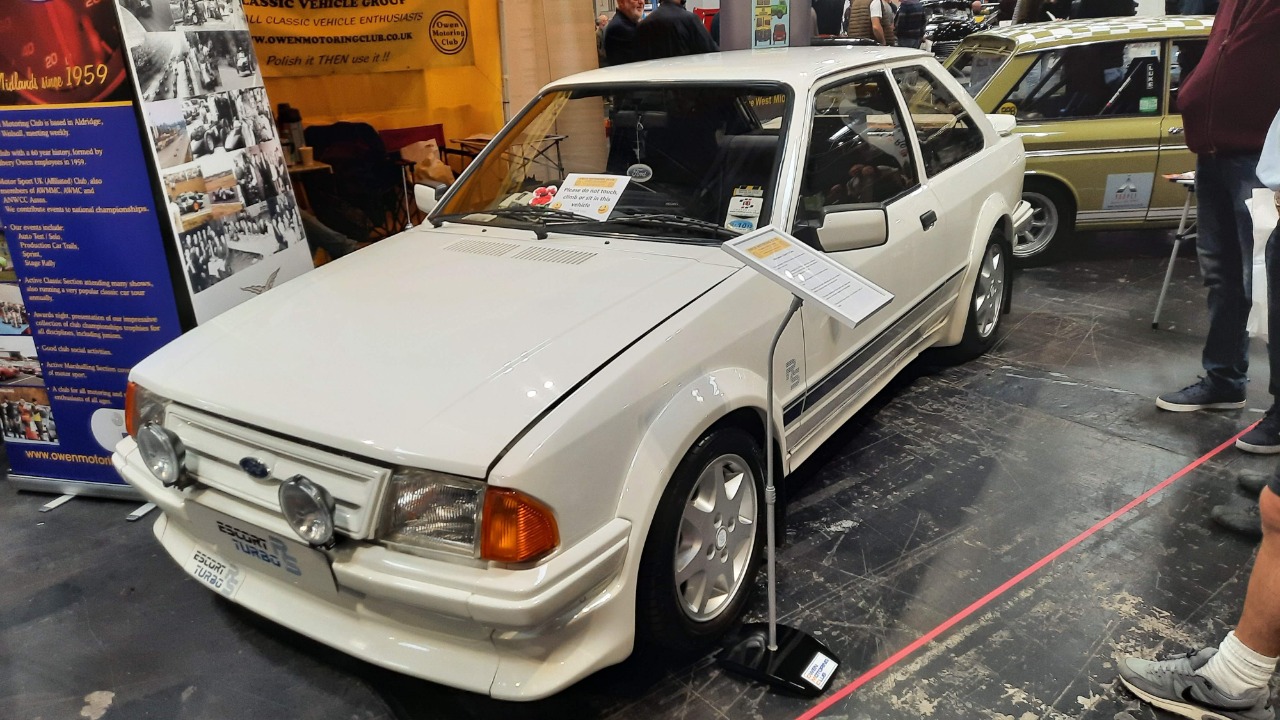
The Escort’s hunting instincts were not an accident, they were baked in by motorsport rules. Ford initially planned to build 5,000 RS Turbos, the minimum number required for homologation in Group A, which meant the road car had to be close enough to the competition version to qualify. However, demand and racing ambition pushed that total higher, with production eventually reaching 8,60 examples, almost all in Diamond White, according to auction records that trace how Ford initially planned the project. That link between showroom and special stage is what gave the RS Turbo its slightly aggressive stance even when parked.
Under the bonnet, the engineering brief was just as serious. Quoted output figures of 132 bhp from the turbocharged four-cylinder, combined with a close-ratio gearbox, gave the car a 0 to 60 dash of 8.2 seconds and a top speed of 128 mph, figures that put it squarely into hot hatch territory at the time. Period specifications for the ENGINE and TRANSMISSION make clear that these Quoted numbers were not marketing fluff but the foundation for a car that could genuinely run with more exotic machinery on a twisty road.
Series I, Series II and the white-hot image
The first-generation Ford Escort Rs Turbo, often referred to as the S1 mk3, set the visual template. Surviving footage of the Ford Escort Rs Turbo S1 mk3 (1984 to 1986) shows a compact hatch with boxy lines, deep front spoiler and distinctive alloys, and it notes that the S1 was only officially available in white, which helped cement its cult identity. That monochrome aggression is part of why the Ford Escort Rs Turbo still looks like a purpose-built street weapon rather than a dressed-up commuter.
By mid decade, Ford refined the formula with a second generation. The Series 2 RS Turbo appeared in July 1986, around six months after production of the Series 1 had ended, and Ford decided that the S1 was perhaps a little too raw for some buyers. Contemporary summaries of The Series explain that the Turbo Series 2 was tuned to sit a little closer to the lesser XR3i in comfort and usability, without abandoning the core performance that made the original such a feared presence on back roads.
Royal black and real-world values
For all the talk of homologation and lap times, the Escort RS Turbo’s hunting story also runs through its rarity and the way certain examples have become almost mythical. Only three cars were finished in black, one of them built especially for Lady Diana, and auction notes point out that we all know what that car sold for, a reminder that provenance can turn a humble hatch into a blue-chip collectible. That same record of how Only a handful of black cars existed underlines just how unusual it was to see anything other than a white RS Turbo in period.
Values today reflect that mix of motorsport pedigree and cultural cachet. In average condition, a Ford Escort RS Turbo is worth £18,440, a figure that would have seemed unthinkable when these cars were just used hot hatches changing hands in the classifieds. Market guides that answer the question of What the most expensive Ford Escort RS Turbo to sell in history is show how collectors now hunt these cars with the same intensity they once used to chase more traditional sports cars.
In the pack with the great 1980s hot hatches
The Escort RS Turbo did not hunt alone. It arrived into a fiercely competitive hot hatch scene where Stars included the Peugeot 205 GTI, Ford Escort RS Turbo, Renault 5 GT Turbo and the second generation Golf GTI, a group that defined what a fast hatchback should feel like. Period roundups of the best hot hatches of the decade, which single out the Stars of that era, make it clear that the Ford Escort RS Turbo was judged alongside the Peugeot, the GTI, the Renault and the Turbo and still held its own.
That competitive context is part of why the Escort had to be so focused. It was not enough to be quick in a straight line, the car had to feel alive on a B-road and tough enough for real-world abuse. Modern restorers understand that balance well, which is why projects like the Turles Classic workshop’s effort to revive an RS Turbo treat the car as something worth saving in detail rather than just another old hatch. Watching Jun footage of the Turles Classic team work through the mechanicals is a reminder that the Escort’s hunting days were built on solid engineering, not just nostalgia.
More from Fast Lane Only: