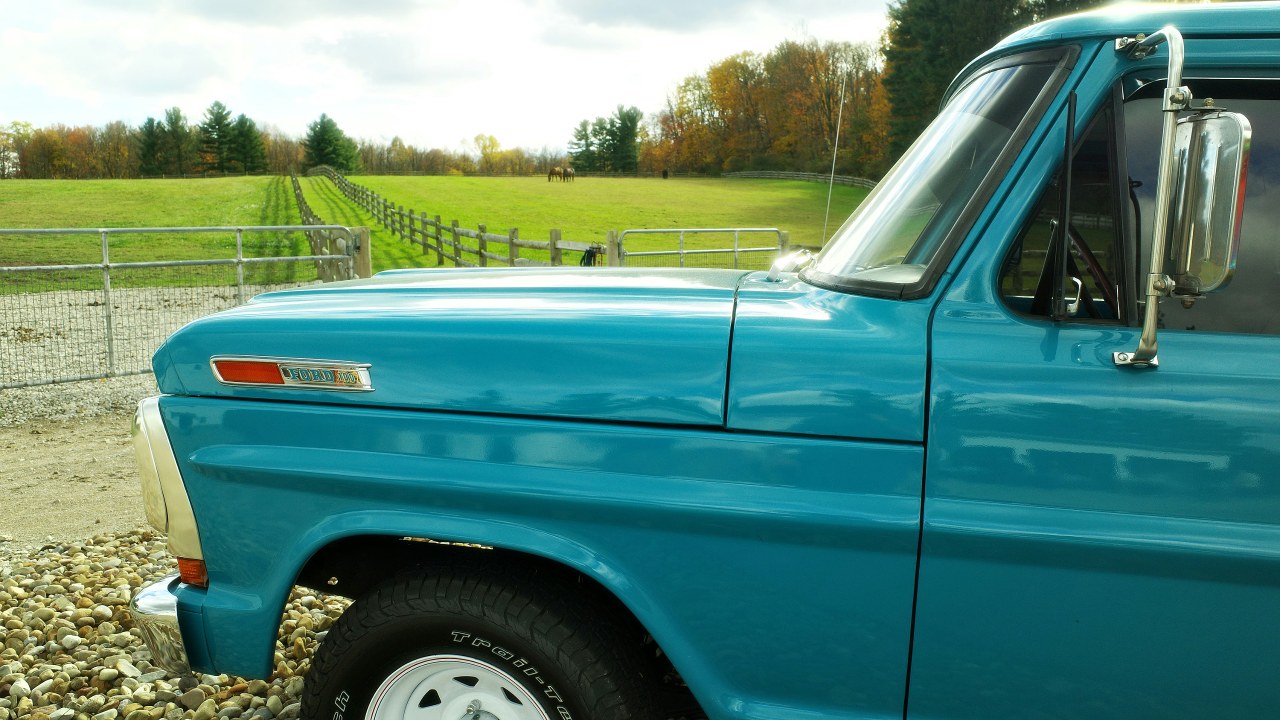
Classic trucks were once background players in American life, working quietly on farms, job sites, and back roads. Today they sit center stage, commanding auction premiums, filling social feeds, and pulling younger drivers away from the latest crossovers. Their sudden relevance is not nostalgia alone, but a reaction to how modern vehicles look, feel, and even behave.
From Gen Z buyers who see old metal as a quiet rebellion to investors who treat vintage pickups as rolling assets, the appeal of these machines cuts across age and income. Classic trucks promise something that feels scarce in a digital, software-updated world: mechanical honesty, visual character, and a sense that the driver, not the algorithm, is in charge.
The quiet rebellion against modern sameness
For a growing share of younger drivers, classic trucks have become a way to opt out of a new-car market that feels homogenous and overmanaged. Surveys of Gen Z drivers show that 60% want a classic car, explicitly because they consider new models too boring in both design and driving experience. Instead of yet another anonymous crossover with a tablet glued to the dash, a square-bodied pickup with vent windows and a bench seat offers a different kind of status, one rooted in individuality rather than the latest trim package.
That preference is not just aesthetic, it is experiential. Enthusiasts on forums describe older vehicles as having more “soul,” citing the raw smell of fuel, the mechanical clunks, and the steering feedback that demands attention rather than passive supervision. One Aug discussion framed it as the difference between actually driving and merely pressing pedals while electronics handle the rest. In that context, a classic truck is less a retro toy and more a protest against cars that feel like smartphones on wheels, with layers of driver aids and connectivity that some owners never asked for.
Durability, simplicity, and the appeal of “real trucks”
Beyond style, classic pickups are benefiting from a renewed respect for mechanical toughness. Owners of older trucks and SUVs frequently point out that the absence of complex infotainment and driver-assistance systems means fewer failure points and easier repairs. One Jan discussion about robustness contrasted “all of the fancy tech gadgets” in modern vehicles with the straightforward engineering of older trucks, arguing that every added connection and module is another opportunity for something to break. For drivers who prize reliability in harsh conditions, a simpler machine can feel like a safer bet.
That sentiment is echoed in the way people talk about old diesel trucks on social platforms, where comments celebrate rigs that can “go anywhere at any time” and shrug off abuse that might sideline a newer, more delicate model. References to “real trucks and women” in one thread, with users like Dreco Mumford Bro and Frank Byers trading stories about lifted rigs on 44 inch gumbo mudders and 12×15 inch rims, underline how durability and capability are woven into identity. The message is clear: a classic truck is not just transportation, it is proof of a certain toughness, both mechanical and personal.
Heritage, history, and the power of Americana
The renewed fascination with classic trucks is also a rediscovery of their historical roots. During World War II, Half ton and three quarter ton military trucks laid the groundwork for civilian workhorses, with the latter eventually evolving into the Dodge Power line that would shape postwar utility vehicles. That lineage gives many classic pickups a direct connection to national history, from the battlefield to the building of suburbs and highways. When enthusiasts restore or modify these trucks, they are not only preserving hardware, they are curating a tangible piece of the twentieth century.
Few models embody that story as vividly as the 1949 Dodge Power Wagon. Described by specialists as a testament to rugged durability and timeless design, it represents Dodge ingenuity in the years after the war, when civilian demand for capable, go-anywhere trucks surged. Contemporary builders such as Desert Power Wagons highlight these vehicles in “Dodge Truck Red,” positioning them as the truest examples of classic Americana and inviting buyers to “restore them dont crush them.” The continued demand among collectors and vintage truck enthusiasts for the Dodge Power Wagon, cited as one of the most popular old Dodge trucks, shows how heritage has become a selling point as powerful as horsepower.
From workhorse to asset class
What once started life as a farm tool or contractor’s rig is now, in many cases, a financial instrument. Guides on vehicle investing note that classic vehicles have been consistently increasing in value, with firms such as Hagerty building detailed valuation tools to track how much a classic car or truck is worth over time. That data driven approach has helped reframe certain pickups as long term stores of value, not just sentimental projects. When a model is identified as one of the classic pickup trucks that still hold their value on the market, it signals to buyers that they are not only purchasing a weekend toy, but also parking money in an asset that may appreciate.
At the same time, experts caution that becoming a collector of high end vehicles is a significant commitment, with costs for maintenance, storage, and insurance that can quickly add up. Hagerty emphasizes that staying on top of a classic car investment requires ongoing attention, from documentation to market monitoring. Guides to buying classics also stress the importance of due diligence, especially at auctions where You typically will not have a chance to inspect the truck in person and must rely on history files and third party services to transfer payments and titles. In this environment, the classic truck is both a passion purchase and a sophisticated financial decision, which only deepens its cultural weight.
Culture, customization, and the social life of old pickups
Classic trucks have also become social platforms in their own right, long before that term was associated with apps. Video creators such as Deadsid devote entire episodes to exploring why older pickups captivate audiences, focusing on the emotional pull of their proportions, the sound of their engines, and the way they invite hands on modification. Enthusiasts gather around specific models, from square body Chevrolets to early Ford F Series, trading tips on suspension setups, patina preservation, and period correct interiors. The truck is the centerpiece, but the real product is community.
That culture thrives online as much as at local meets. Builders like Desert Power Wagons market heavily customized Dodge Power Wagon projects with slogans such as “We Build the Hottest Trucks” and “You Dream It We Build It You Drive It,” blending restoration with modern performance upgrades like Cummins or Hellcat powertrains. Hashtags such as #ClassicTrucks, #FarFromStock, and #RestoreThemDontCrushThem turn each build into a shareable narrative, while phrases like “Life Is Too Short To Drive A Boring Truck” echo the same dissatisfaction with modern anonymity that drives Gen Z toward older vehicles. In this ecosystem, a classic truck is a canvas for self expression, a ticket into a like minded network, and a rolling argument that character and craftsmanship still matter.
More from Fast Lane Only