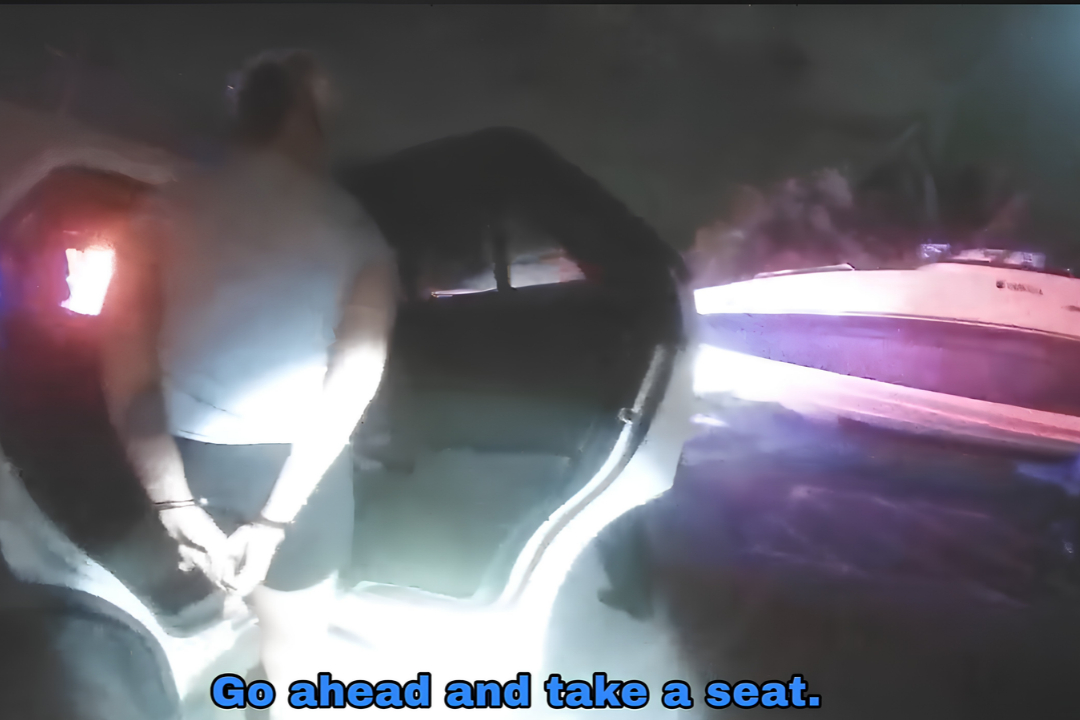
You might think a broken taillight or rolling through a stop sign should lead to a warning, maybe a ticket, and then you are back on the road. Yet minor traffic stops keep turning into searches, arrests and, in the worst cases, violence. Look closely at how these encounters work and it becomes clear why they turn serious much faster than you expect.
To understand your own risk, you have to see the stop from both sides of the window. You are dealing with money, time and fear. The officer is thinking about weapons, flight and policy. That mix, plus the way traffic laws are used, creates a fragile moment where small choices carry outsized consequences.
How a “minor” stop fits into a very big system
You are not alone when you see red and blue lights in the mirror. Civil rights advocates estimate that more than 20 million people are pulled over for alleged violations every year, and in 2024 police killed 152 people during traffic stops, with more than half of those deaths in situations that did not involve an immediate safety threat, according to Why Police Traffic.
On paper, these stops are about safety. In practice, they also serve as a gateway into the criminal system. One defense lawyer describes how traffic stops are and how something as basic as arguing on the roadside can turn a simple stop into a criminal case.
Research backs that up. According to Baumgartner, only about 3 percent of stops lead to a search, and the odds of finding drugs or weapons are of less than one percent, as summarized in According to Baumgartner. Yet those rare “big” finds are used to justify millions of low-level stops that mostly end with fines and frustration.
Why officers come in hot from the first 30 seconds
If you have ever watched an officer stride up to a car with a hand near the holster, you have seen what one civil rights firm bluntly calls the “When Cops Come in Hot, No Calm, Just Commands” style of policing. Their description of officers barking orders from the first moment and skipping any attempt at calm conversation matches what many drivers experience, and they warn that this pattern is often the start of police misconduct that.
Researchers at the University of Michigan, Virginia Tech University and Stanford University have tried to quantify those first moments. They found that in the first 27 seconds of a stop, the words an officer chooses strongly predict whether the encounter will escalate. In stops that later involved handcuffing, search or arrest, officers were less likely to explain why the driver was being stopped and more likely to issue immediate commands, according to research shows how.
Another analysis, summarized in a Quick Study, Listening, shows that when an officer opens with “license and registration” or “keep your hands where I can see them” without any greeting or explanation, your odds of a harsher outcome go up. When the officer instead starts with a simple greeting and a clear reason for the stop, the risk of escalation drops, especially for Black drivers.
How your fear and behavior feed the officer’s risk calculus
You bring your own worries to the side of the road. You may think about insurance hikes, missed work or a prior ticket. One commentator with an M.S. in Forensic Science and Advanced Criminal Investigation notes that drivers often panic because they fear higher premiums, license points or a warrant they forgot about, and that anxiety can lead to the kind of behavior that ups the offenses.
On the other side, officers are trained to see risk in almost every movement. In one recorded conversation, an officer interviewed in Dec explains that “nervous” behavior like shaking hands, avoiding eye contact or talking too much is treated as a sign that something more serious may be going on, based on Dec patrol experience. When you mix your fear with that training, even normal stress reactions can look like suspicious conduct.
Surveys of officers, such as the one described in Mar under the heading Non Compliance During Traffic Stops, The Main Concerns of Police Officers Regarding Their Safety, show that many officers rank non-compliance as their top fear. The Survey of officers reported that the highest levels of non-compliance tend to appear in stops that already feel routine, which means a simple argument over a lane change can suddenly look, to an officer, like the start of a dangerous confrontation, according to Non, Compliance During.
Why non-safety stops escalate more often
Not all stops are created equal. Safety stops target speeding, red lights or drunk driving. Non-safety stops focus on expired tags, tinted windows or air fresheners on the mirror. Civil rights advocates point out that police are more likely to use force in a non-safety stop than in a safety-related stop, and that this force often escalates into serious harm, with Black and Latino drivers making up a disproportionate share of those killed in these encounters, according to Police are more.
Those low-level stops also do not deliver much crime fighting. A national coalition that wants to modernize traffic enforcement reports that despite the perception that traffic stops lead to major arrests, the reality is that only approximately 0.3 percent of all traffic stops result in arrests for serious violent crimes, according to Despite the coalition.
Prosecutors are starting to react. In Feb, some local prosecutors announced that they would stop bringing criminal cases that stem only from minor equipment violations or similar low-level stops unless there is clear evidence of weapons, drugs or outstanding warrants, as described in Feb. You still face the risk of escalation on the roadside, but some jurisdictions are starting to question whether the stop should have happened at all.
How vague reasons and “pretext” stops raise the temperature
One of the strongest predictors of escalation is whether you are told why you were stopped. Researchers at the University of Michigan, Virginia Tech University and Stanford University found that officers were less likely to clearly state a reason in stops that ended in searches or arrests, according to Researchers. When you are left guessing, you are more likely to argue, and the officer is more likely to interpret that as defiance.
That pattern fits with what many people call “pretext” stops. State legislators, local officials, civil rights advocates and law enforcement personnel have debated for years whether officers should be allowed to pull you over for a minor violation when their real goal is to look for drugs or guns, a practice that studies show has little effect on crime, according to State debates.
When you sense that the stop is not really about your turn signal, your trust drops. At the same time, the officer may already be looking for reasons to expand the encounter. One criminal defense video explains that probable cause is more than mere suspicion and more than a traffic violation, and that officers often build it from small observations like smell, visible containers or inconsistent answers, as described in Feb. That legal threshold can feel invisible to you, which makes the escalation feel sudden even when the officer has been mentally stacking “clues” for several minutes.
More from Fast Lane Only