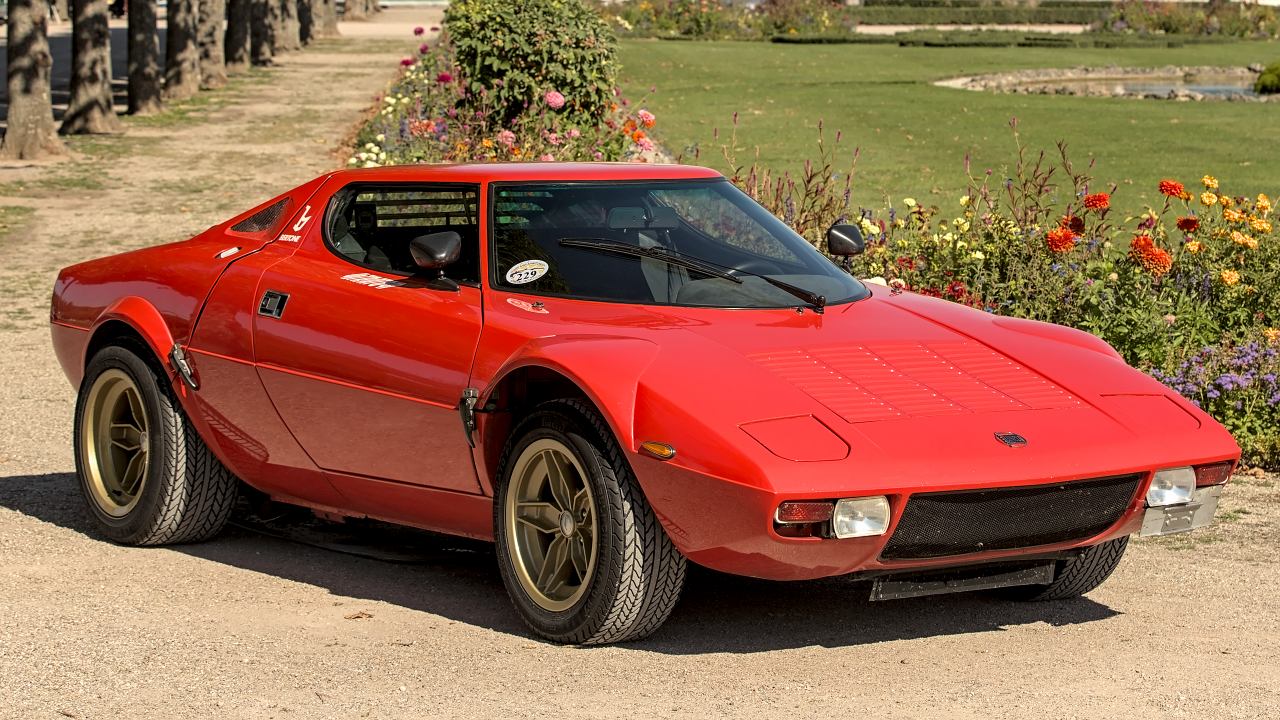
The Lancia Stratos HF Stradale exists because a rulebook said so. To race the Stratos in Group 4, Lancia had to build 500 road cars, and that one requirement put a wedge-shaped rally weapon in showrooms. Plenty of other makers played the same game over the next three decades.
Homologation was the price of entry. A maker built a set number of street cars, and in return it could race a version of that car on the world’s toughest stages. Some of those road cars were rough, loud and barely civilized. Even so, many of them turned out to be the most exciting cars their brands ever sold.
These are our picks for 12 vintage rally homologation cars that still stop traffic decades later. The verdict is our opinion. However, the production rules, engines and results behind each car come from maker, museum and reference sources, so you can weigh the case yourself.
1. 1975 Lancia Stratos HF Stradale
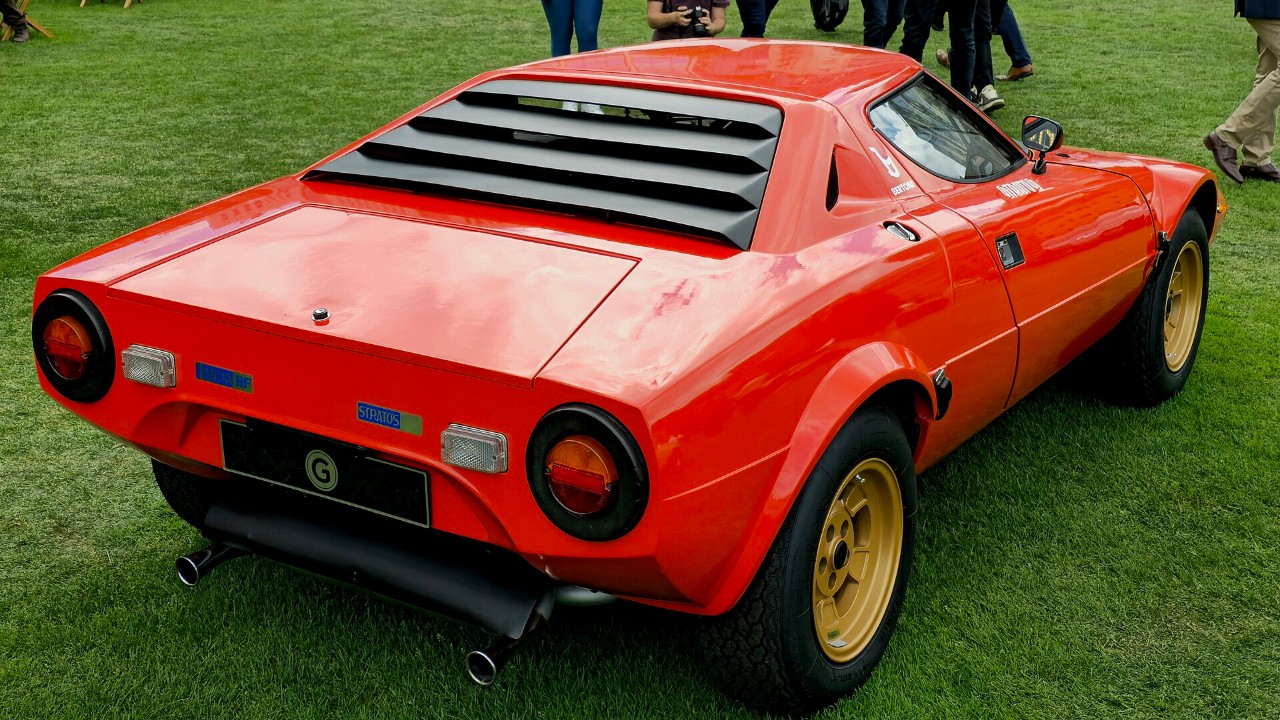
Marcello Gandini drew the Stratos at Bertone, and Bertone built the body. Lancia then handled final assembly at Chivasso. The shape is short, wide and almost all windshield, so it still looks like a concept car that escaped the show stand. That alone explains the crowd around any Stratos HF Stradale at a show.
The engine came from Ferrari’s Dino family. It was a 2,418 cc V6 rated at 190 PS, mounted behind the seats. Group 4 rules asked for 500 cars, although the commonly cited total is about 492, so Lancia may never have quite reached the number. The rule itself later dropped to 400 cars within 24 months for the 1976 season.
In our view, no rally car has a better claim to the word “homologation special.” Lancia built a race car first and a road car second. As a result, the Stratos won the World Rally Championship in 1974, 1975 and 1976. Few road cars have ever been such a thin disguise for a competition machine.
2. Peugeot 205 Turbo 16
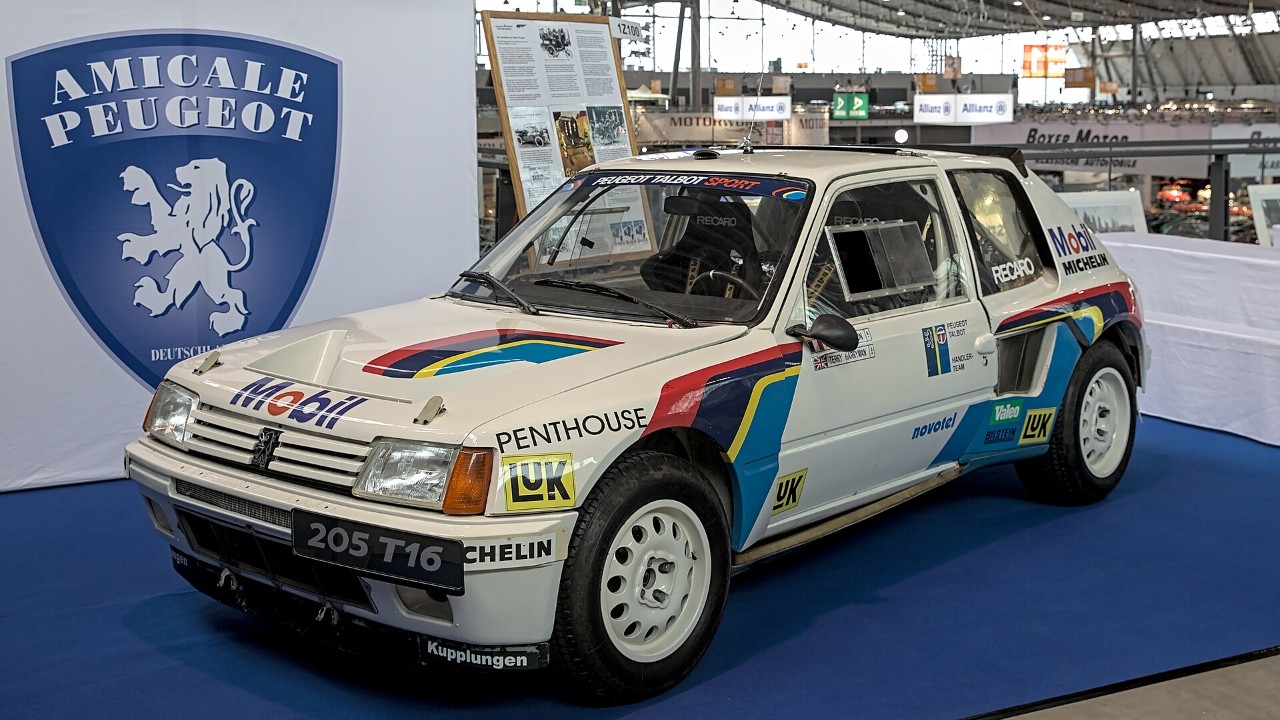
From a distance, the 205 Turbo 16 looks like a regular Peugeot hatchback with a body kit. Look closer, though, and nothing underneath matches the shopping car. The normal 205 had its engine up front and drove the front wheels. By contrast, the T16 mounted its engine sideways behind the seats and drove all four wheels.
Peugeot had to build 200 road cars to homologate the Group B rally car. Each one used a 1,775 cc turbocharged four with a 16-valve twin-cam head. Oddly, the block was cast iron and came from the diesel version of Peugeot’s XU engine family. In road trim, the engine made around 200 PS at 6,750 rpm, which is less than half of what the rally car produced.
The results backed up the engineering. Timo Salonen won the drivers’ title for Peugeot in 1985, and Juha Kankkunen did it again in 1986. Peugeot took the makes’ title in both years as well. Our take: this is the rare homologation car that looks ordinary in a parking lot and draws a crowd anyway, because enthusiasts know exactly what is behind the seats.
3. 1985 Lancia Delta S4 Group B
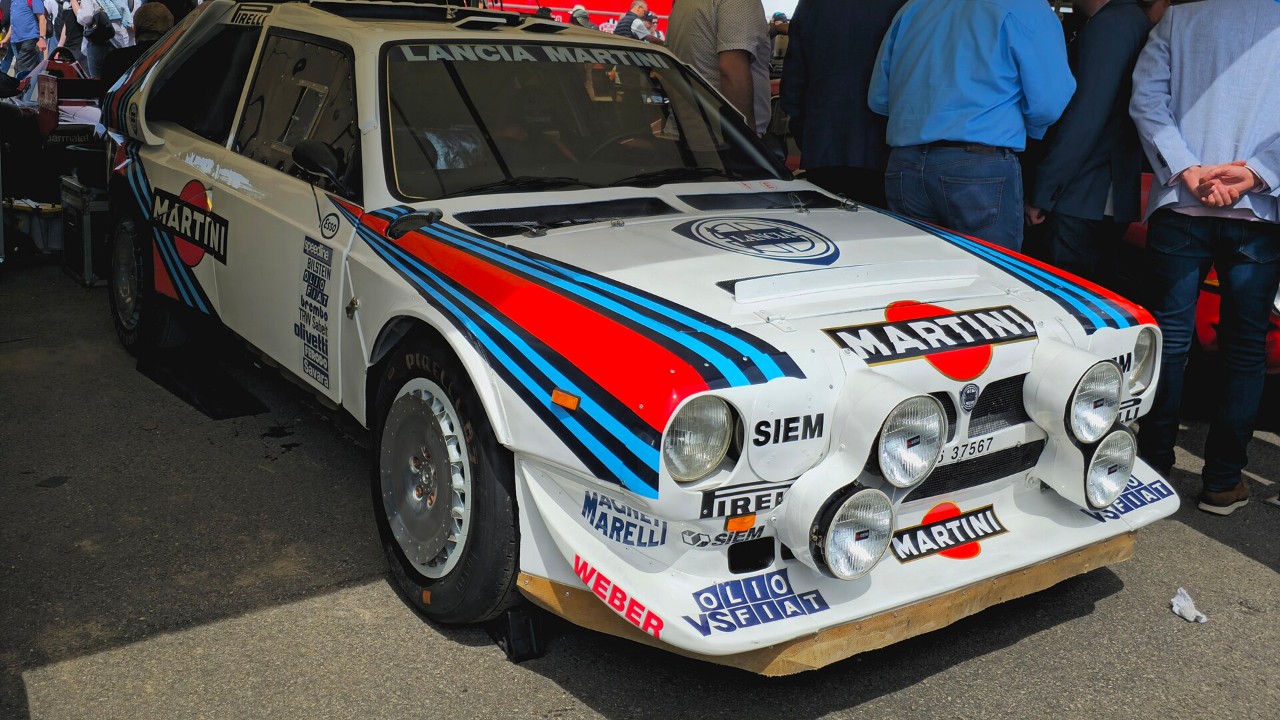
Lancia tried to solve turbo lag with a clever answer. The Delta S4 used a 1,759 cc four that carried both a supercharger and a turbocharger. The supercharger filled in the low end, then the turbo took over higher up. That “twincharged” setup was the heart of the car.
The Group B rules asked for 200 road cars. However, fewer than 100 road-going S4s were likely built. The street version made 250 PS at 6,750 rpm, while the rally car was rated at around 490 PS. Some accounts claim even 500 PS. Either way, the gap between the two cars is enormous.
The S4 started its career with a win. Henri Toivonen took it to victory on the 1985 RAC Rally, its first event. Then Group B was abolished after 1986, so the car had little more than one season at the top. In our view, that short career is exactly why an S4 still freezes people at a show. You are looking at a car that barely got to finish its story.
4. Lancia Delta HF Integrale Evoluzione II
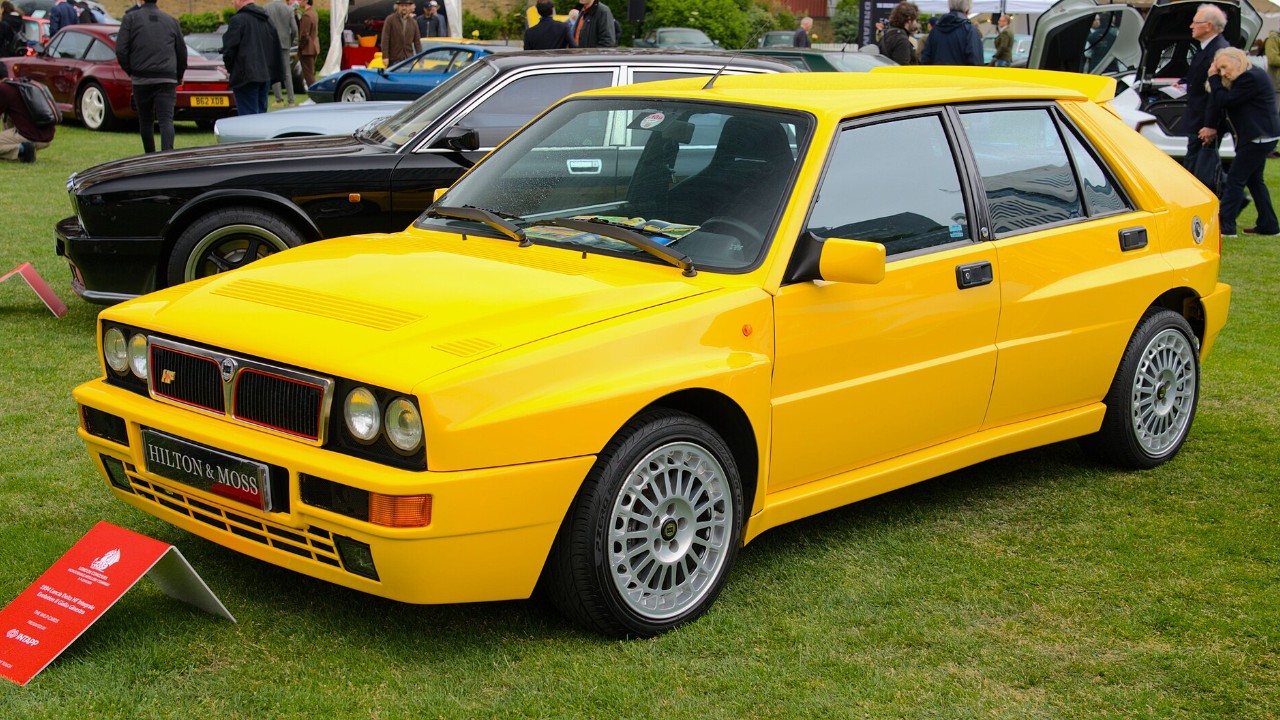
The Delta Integrale is a family of cars, and the Evoluzione II was its final road chapter. Lancia presented it in June 1993. It used an updated two-liter, 16-valve turbo engine with a three-way catalytic converter. Output rose to 215 PS, up from 210 PS on the earlier version.
The Evo II never became a factory rally car. Instead, it was the road-going farewell to one of the most successful runs in the sport. Lancia’s Delta won six straight World Rally Championship makes’ titles, from 1987 through 1992. After an unsuccessful 1993, Lancia withdrew from rallying altogether.
Lancia also sold the Evo II in small special editions. For example, the Giallo Ginestra run counted 220 cars, and the Dealers Collection counted 180. A final Edizione finale of 250 cars went to Japan only. Our take: the boxy fenders and the yellow, white or blue paint make this one of the best-looking hatchbacks ever built. Every one carries the badge of six championships, and that is why fans circle it.
5. 2000 Mitsubishi Lancer Evolution VI Tommi Makinen Edition
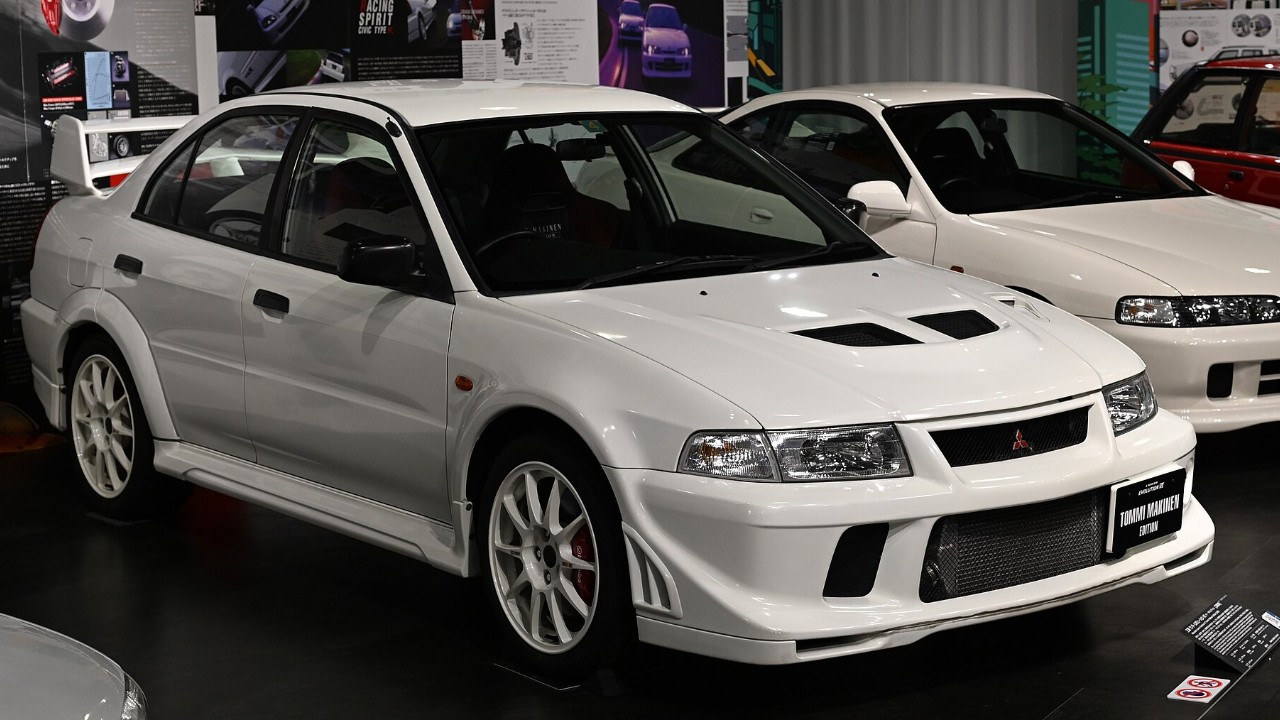
Few production cars carry a driver’s name the way this one does. Tommi Mäkinen won four World Rally Championship drivers’ titles in a row for Mitsubishi, from 1996 through 1999. To celebrate, Mitsubishi introduced a special Evolution VI in December 1999 and named it after him.
The changes were more than stickers. The Tommi Makinen Edition got a titanium turbine that spooled up more quickly and a different front bumper. It also sat lower, with tarmac stages in mind, and used a quicker steering ratio. Inside, there were red and black Recaro seats with an embossed T. Mäkinen logo. Outside, it rode on 17-inch white Enkei wheels.
Mitsubishi built 4,092 of them. The car came in red, which only the TME offered, as well as white, blue, black and silver. Buyers could also add decals that copied Mäkinen’s rally car. In our view, a red TME with those decals is the Evo that still turns heads in a lot full of newer cars. It is also proof that homologation culture carried on well after Group B ended.
6. Toyota Celica GT-Four
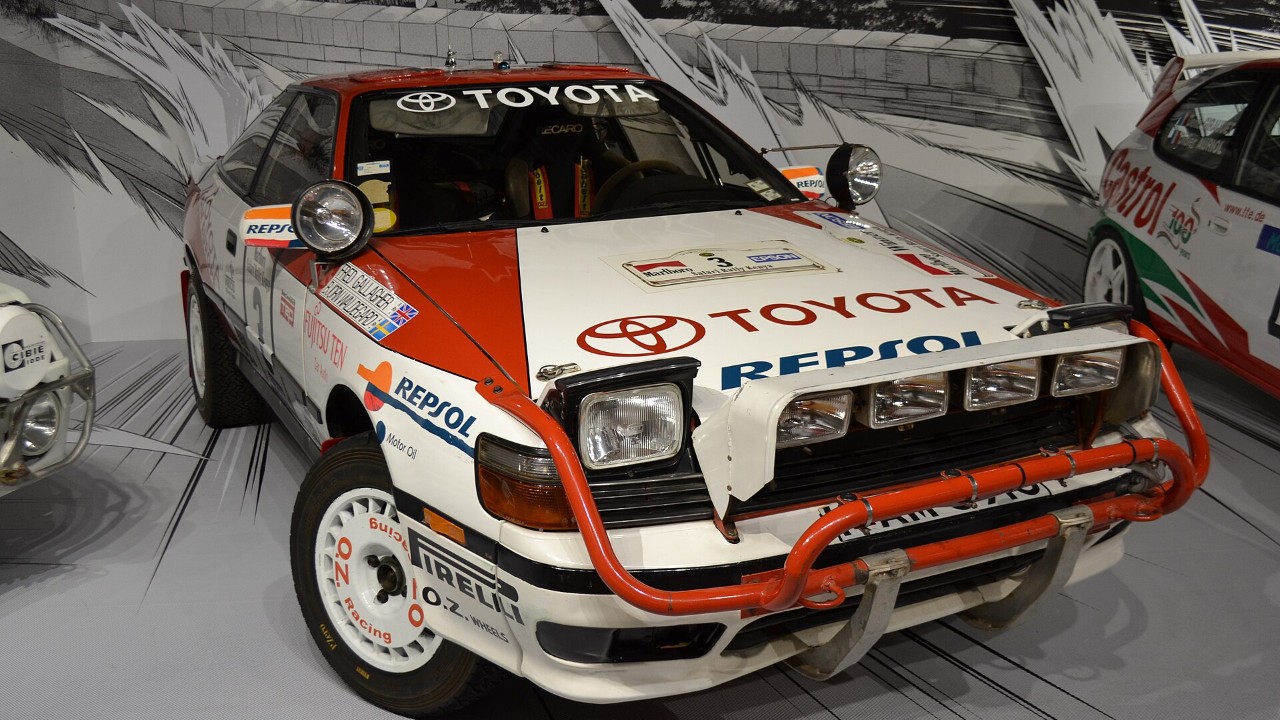
Toyota’s first Celica GT-Four took the ST165 chassis code, and it was built from October 1986 to August 1989. The car in this photo is a Japanese-market ST165 badged 2000GT-FOUR. It used the 3S-GTE turbocharged engine, and the ST165 was the only car sold with the first version of that engine.
Output varied by market and model year, from 182 to 190 hp. Torque came in at 249 Nm. However, the bigger story is what Toyota did with it in rallying. Juha Kankkunen gave the GT-Four its first World Rally Championship win at the 1989 Rally Australia. A year later, Carlos Sainz won the 1990 drivers’ title.
Our take: the ST165 is the GT-Four people forget, because the later cars won more. Still, this is the one that started Toyota’s run with a four-wheel-drive turbo Celica. Its pop-up headlights and wide liftback shape also look sharper today than they did in the late 1980s. That mix of rally history and period style is why it earns a spot here.
7. Skoda 130 RS
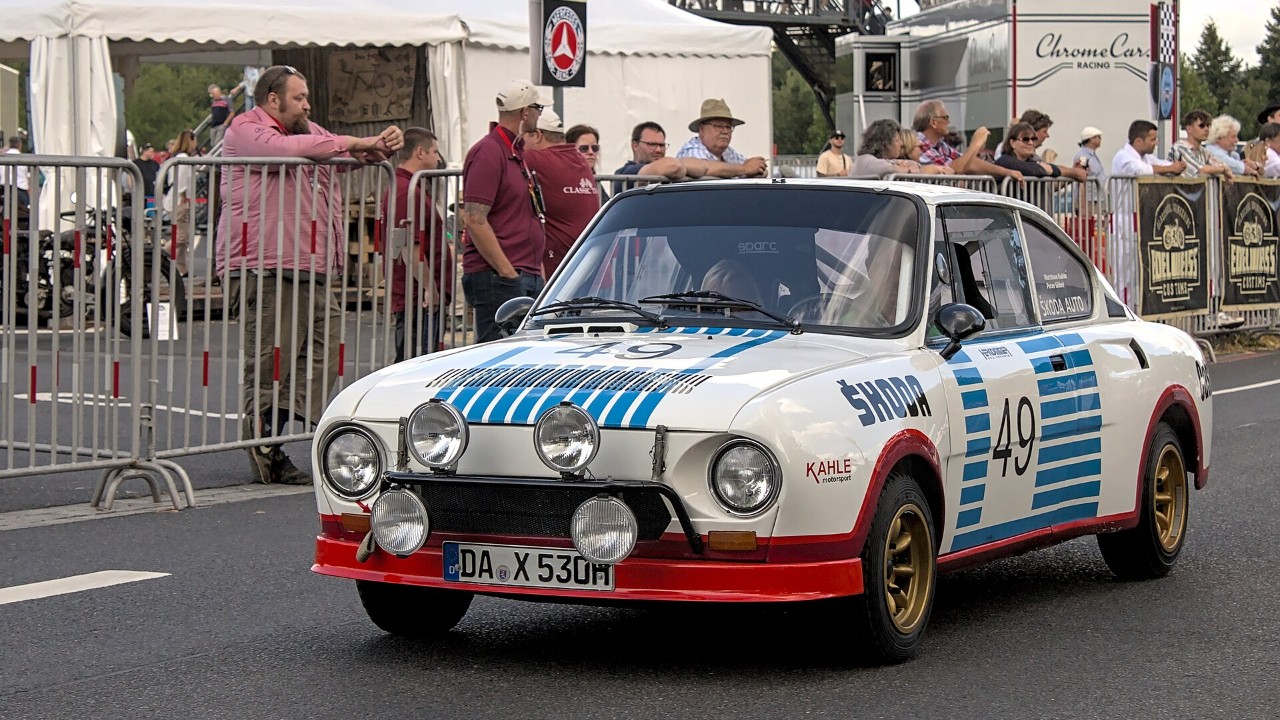
Skoda’s 130 RS made its public debut at the Most circuit in April 1975. It earned the nickname “Porsche of the East,” according to Hagerty’s 50th-anniversary story on the car, because its engine sat in the back. That engine was a 1.3-liter four, good for 113 hp in base form and 142 hp in circuit-racing tune.
The body used aluminum panels and fiberglass parts, so the racing car weighed just 720 kg. In the official Skoda history marking the car’s 50th birthday, the maker says it built nearly 200 cars to factory specification. Dozens more were built privately with factory-supplied parts.
The results were bigger than the engine. The 130 RS won its class at the 1977 Monte Carlo Rally and finished 12th overall. Then, in 1981, it won the European Touring Car Championship outright. It also introduced the RS name that Skoda still uses today. In our view, nothing in this list draws more “what is that?” questions at a show. That is part of the fun.
8. 1979 Opel Kadett GT/E
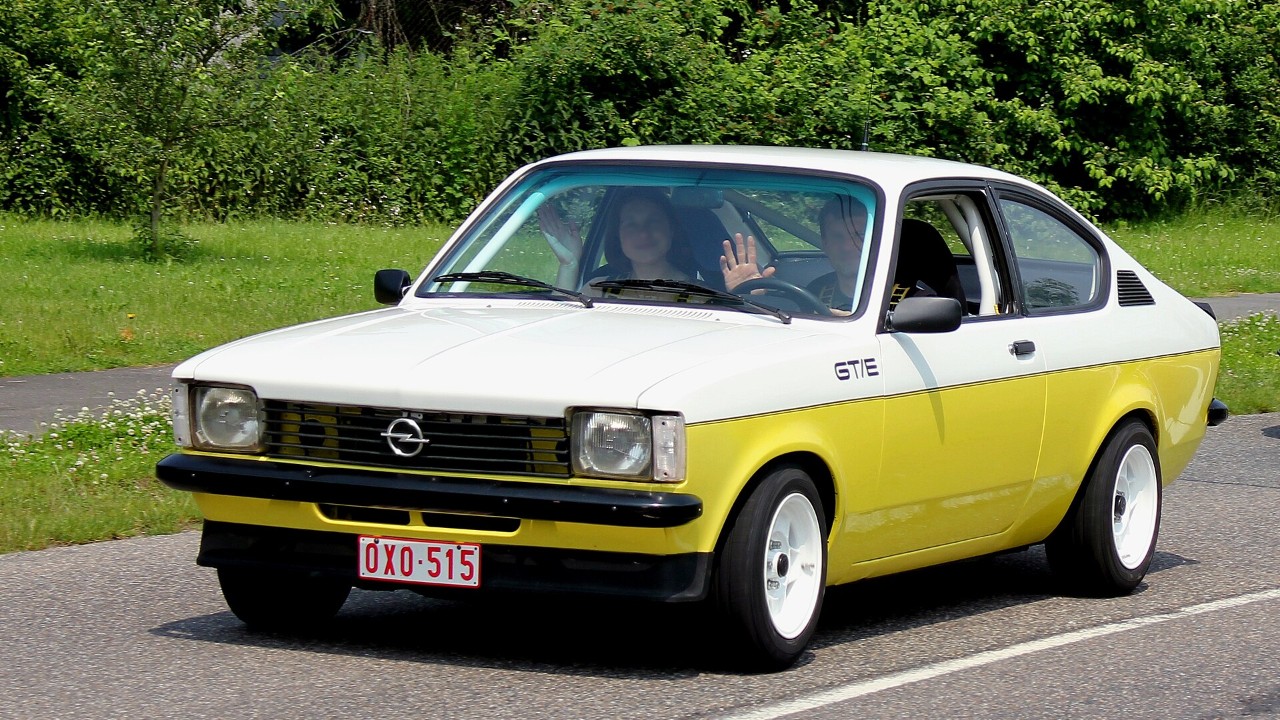
Opel’s Kadett C was a rear-wheel-drive family car, and it was the last small Opel built that way. The GT/E turned it into something sharper. The coupe arrived in 1975 with a 1,897 cc engine and Bosch L-Jetronic fuel injection, rated at 105 PS. Later cars switched to a 1,979 cc engine with K-Jetronic injection and 115 PS.
The production numbers tell you why these are hard to find now. Opel built 8,660 of the first GT/E between 1975 and 1977. Then it built just 2,254 of the GT/E 2 from 1977 to 1979. That is a tiny share of a range that ran past 1.7 million cars when Kadett C production ended at Bochum in July 1979.
The fuel-injected coupe gave Opel a basis for competition cars, and that is where it earned its place. For more cars from this era built to meet racing rules, see 7 forgotten homologation cars built only to satisfy racing rules. Our take: with so few built, a clean GT/E now draws more interest at a show than its humble Kadett roots would suggest.
9. Nissan BS110 240RS
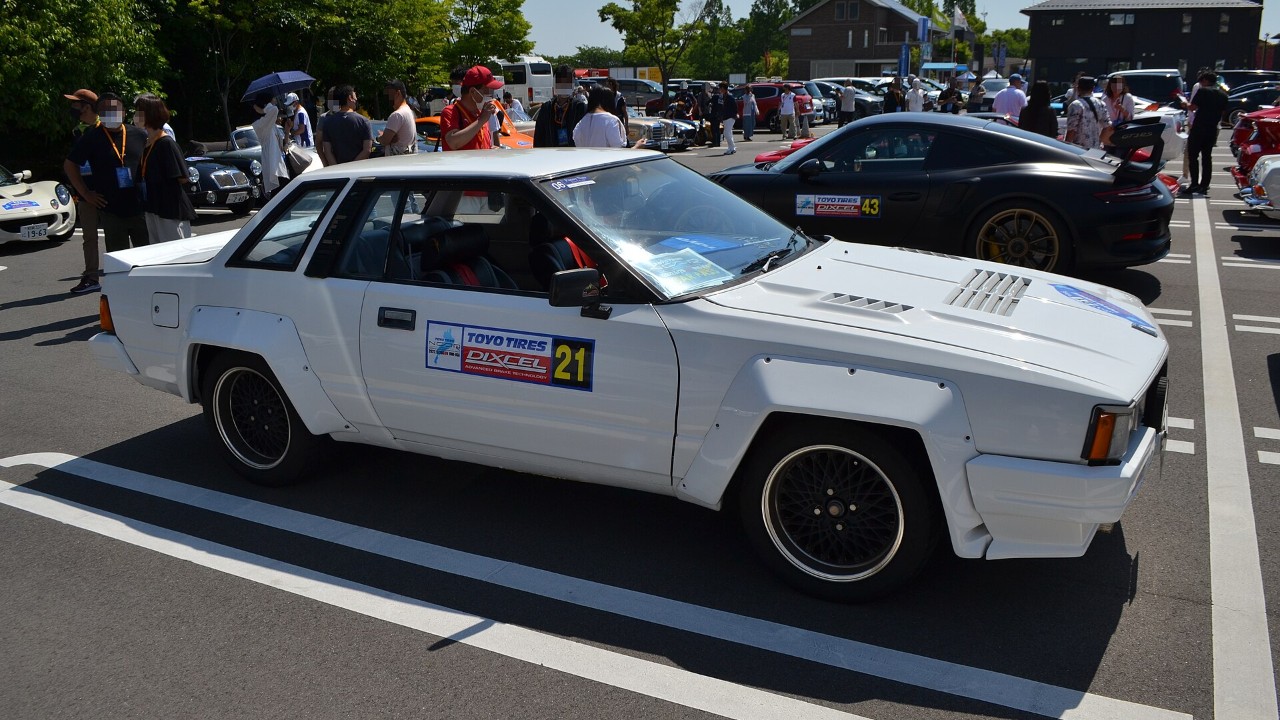
Nissan built the 240RS for the World Rally Championship, and it competed between 1983 and 1986. The car was based on the S110 Silvia coupe. Under the hood sat the FJ24, a 2,340 cc four rated at 240 PS in the homologation and customer road cars.
Group B certification called for 200 cars. Production of the 240RS is said to have run to about 200, just above the line. That makes it one of the rarer Japanese homologation cars of its era. Its best World Rally Championship finish was second place.
Here is the twist. The 240RS kept its engine up front and drove only the rear wheels. Meanwhile, the naturally aspirated FJ24 ran on carburetors while Audi raced a turbocharged four-wheel-drive car. So the Nissan was outgunned from the start. Even so, that old-school layout is exactly why fans love it now. In our view, a 240RS in rally trim looks like the last of a breed, because it was.
10. 1984 Audi Quattro A2
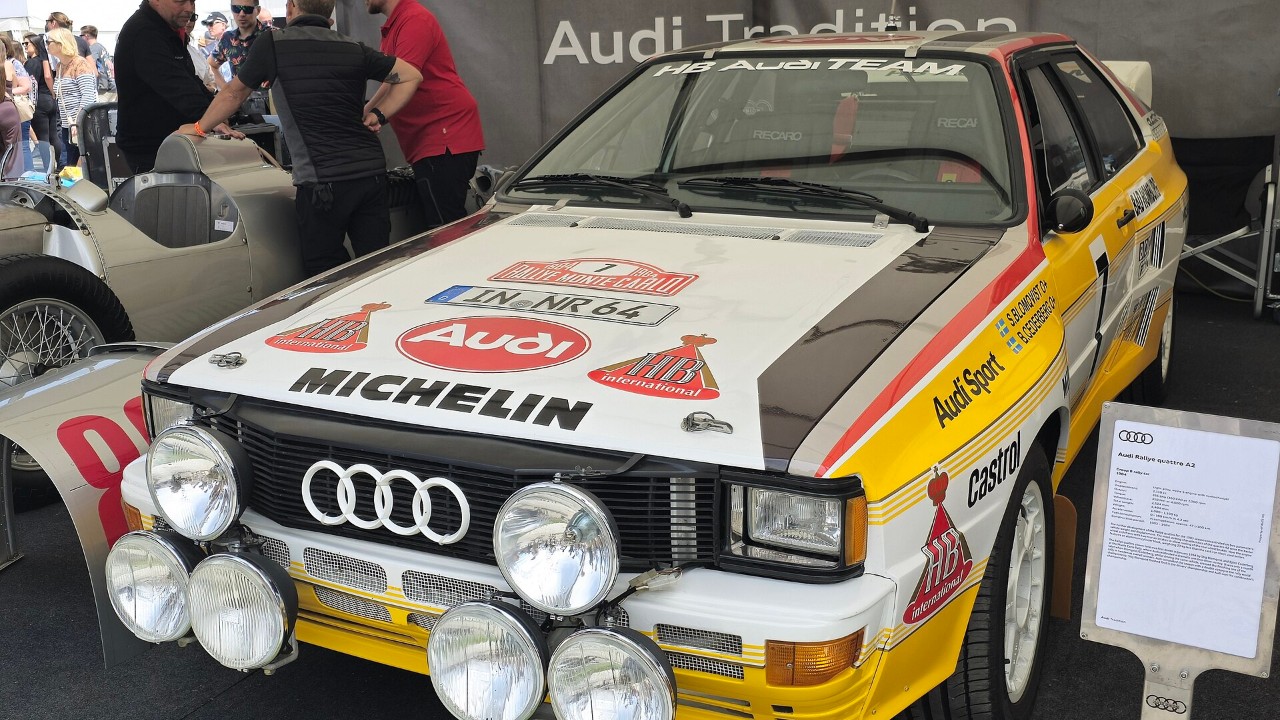
The road-going Quattro taught the rally world about all-wheel drive. Its 2,144 cc turbocharged five-cylinder made 200 PS in street form. Audi built 11,452 road Quattros from 1980 to 1991, which makes it the most common car on this list by far.
The A2 was the rally version that did the winning. Audi raised the five-cylinder to around 355 PS for competition. The A2 won eight world rallies in all, three in 1983 and five in 1984. Hannu Mikkola won the 1983 drivers’ title, and Stig Blomqvist followed in 1984. In 1981, Michèle Mouton had already become the first woman to win a world championship rally in a Quattro.
Our take: the Quattro changed rallying more than any other car here. For a closer look at how it did that, read 10 Group B rally cars that redefined performance. Meanwhile, the boxy shape and the warble of that five-cylinder still pull people over at historic events. An A2 in period livery is the real thing, not a tribute.
11. 1979 Ford Escort RS1800
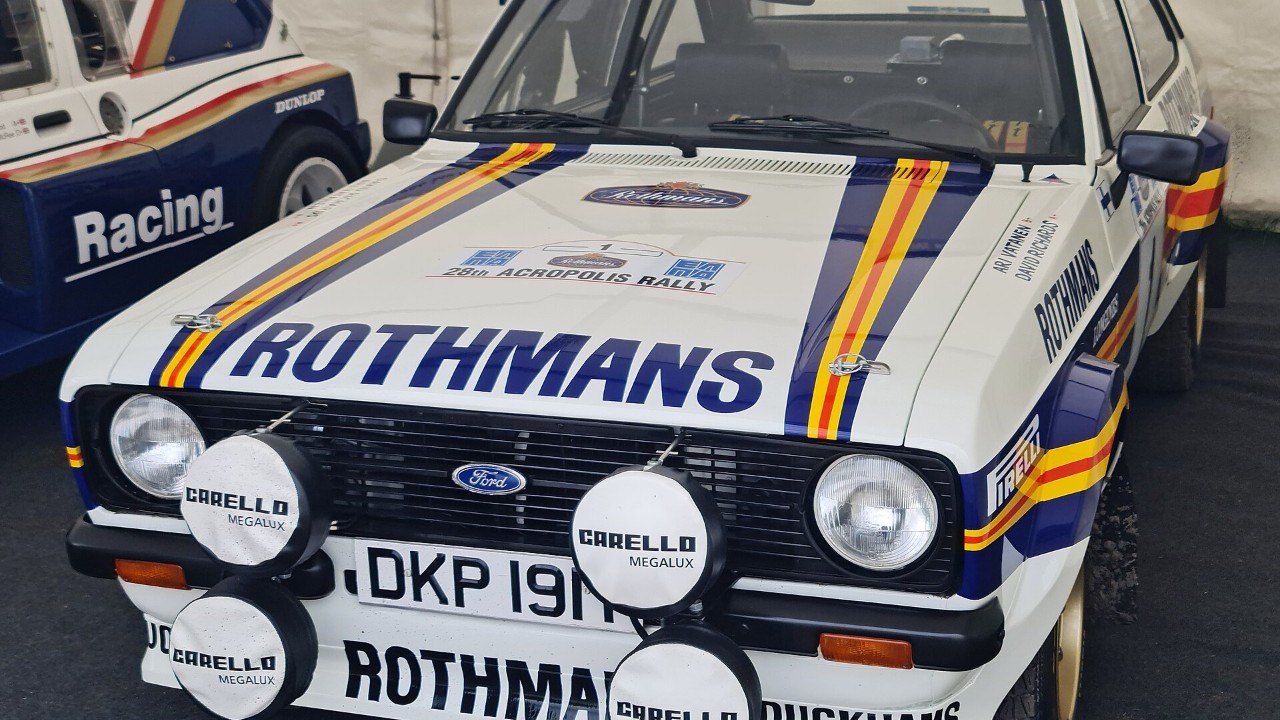
The second-generation Escort was a simple car, and that was its secret. It had its engine in front, drive at the back and a body that was easy to fix in a forest. In RS1800 form, it used a 1.8-liter Cosworth-developed twin-cam four. Then Ford’s rally team turned it into a winning machine.
The record is long. The Mk II Escort won Britain’s RAC Rally every year from 1975 to 1979, five times in a row. In 1979, Ford won the World Rally Championship makes’ title. Björn Waldegård also won the drivers’ title that year. Later, Ari Vatanen took the 1981 drivers’ title in an RS1800 as well.
That 1981 title is worth noting. By then, the Quattro had arrived with four-wheel drive. Still, a rear-drive Escort was good enough to win the drivers’ crown. In our view, this is why the RS1800 remains so popular in historic rallying. It looks plain, sounds great and slides beautifully on gravel. A real RS1800 is now a serious collector car, so check the paperwork closely if you are shopping.
12. 1966 Ford Lotus Cortina
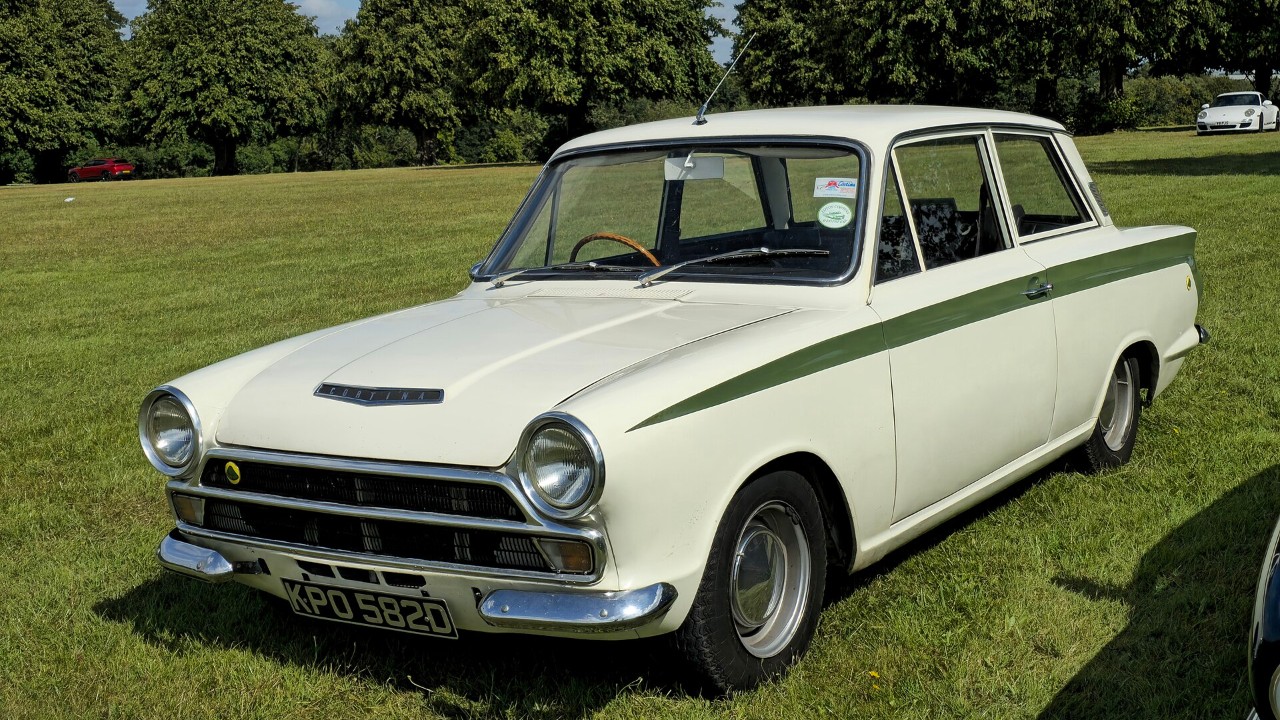
Ford needed 1,000 cars to homologate the Lotus Cortina for Group 2, and the car gained approval in September 1963. Lotus supplied a 1,557 cc twin-cam four. Early cars also used lightweight alloy panels for the doors, hood and trunk lid. From 1964, Ford switched to steel panels, although buyers could still order alloy.
The car changed under the skin too. In mid-1965, Lotus replaced the original A-bracket rear suspension with the leaf springs and radius arms of the Cortina GT. A 1966 car like this one has that later setup. It was also the year of a major win, because Bengt Söderström and Gunnar Palm won the 1966 RAC Rally by 13 minutes.
On circuits, Jim Clark had already won the 1964 British Saloon Car Championship in one. Ford built 3,306 first-generation Lotus Cortinas in total. Our take: a Lotus twin-cam in a plain Ford sedan body is still one of the great sleeper ideas. It stops traffic today because people know what that badge means.
More from Fast Lane Only