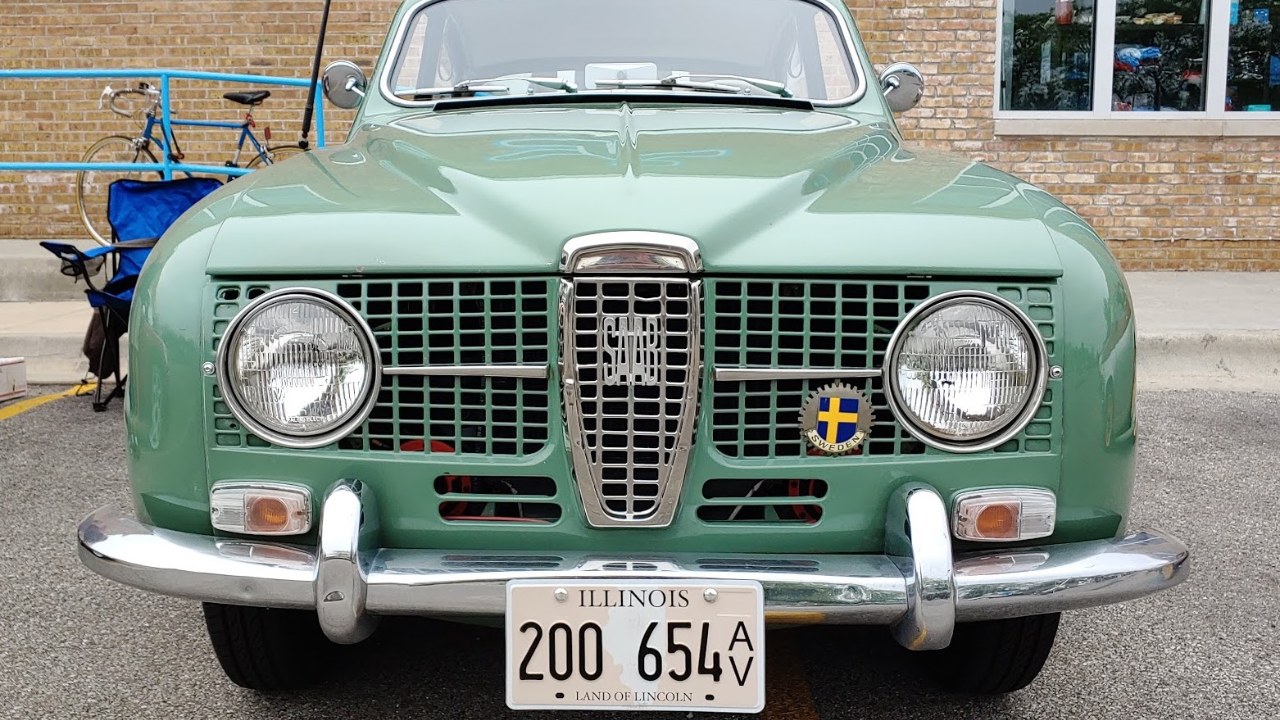
The 1968 Mercury Montego spent decades in the shadow of louder nameplates, yet it quietly packed the looks, hardware, and pedigree that muscle fans now chase. As collectors search beyond the usual Chevelle and Road Runner suspects, this mid‑size Mercury is finally being recognized as a serious late‑sixties performance player with real substance behind the nostalgia.
What I see driving that shift is a mix of design maturity, underrated factory power, and a growing appreciation for Mercury’s particular blend of Bold Luxury and Muscle Edge. The Montego was never just a rebadged Ford, and the more closely you look at its details and history, the clearer it becomes why its stock is rising in the muscle‑car conversation.
From quiet mid‑sizer to muscle family centerpiece
Mercury launched the Montego in 1968 as a mid‑size line positioned above Ford’s bread‑and‑butter intermediates, giving it cleaner sheet metal and a more formal profile that echoed the full‑size Mercury flagships. Period fact sheets note that Mercury’s mid‑sized models received new sheet metal and styling that resembled the bigger cars, and that All of that work was aimed at giving the Montego a more upscale presence. In the showroom, it sat alongside the Cougar, Cyclone, and Monterey, part of a 1968 Mercury lineup that enthusiasts now describe as Bold Luxury with a clear Muscle Edge.
That broader family context matters, because the Montego shared DNA with some very serious hardware. The same corporate thinking that produced the Mercury Cyclone, a classic American muscle car, also shaped the Montego’s chassis and drivetrains. A separate fact sheet on the Montego‑Cyclone range notes that Mercury’s mid‑size models were engineered together, with the Cyclone and Cyclone GT offered as part of the same Mercury package. In other words, the Montego was not an afterthought, it was the more refined face of the same muscle‑capable platform.
Design that finally looks as sharp as it always was
One reason the 1968 Montego is aging so well is that its styling has caught up with modern tastes. Contemporary enthusiasts looking back at the late sixties praise the 1968 Mercury lineup as very attractive, with the Cougar in particular described as a car that “stood out with its sleek lines and aggressive stance” and was built to be admired, a sentiment echoed in a fan post urging readers to Get ready to celebrate the 1968 Mercury. That same design language, with crisp body sides and a formal roofline, carried over to the Montego, giving it a more mature look than some of its flashier rivals.
Compared with Ford siblings, Mercury models were deliberately stretched and smoothed, and later analysis of classic muscle notes that Mercury muscle cars often featured longer wheelbases, more spacious interiors, and improved sound insulation. You can see that philosophy in the Montego’s cabin, which leaned into comfort and quiet even when paired with serious V‑8s. Enthusiast retrospectives on 1968 Mercury models talk about Story lines of Bold Luxury and Muscle Edge, and the Montego’s restrained sheet metal fits that brief perfectly, which is exactly the kind of subtle aggression that resonates with today’s collectors.
Under the skin, real muscle credentials
For all its polish, the Montego’s growing respect ultimately rests on what sat between the fenders. Mercury’s mid‑size performance story in 1968 is usually told through the Cyclone, which enthusiasts remember as a classic Mercury Cyclone with 230 to 335 horsepower on tap, depending on configuration. The Montego shared that engine family, and period advice to owners makes clear how potent the right combination could be: one columnist noted that Had a Montego been ordered as a two‑door with a 428 Cobra Jet engine, 4‑speed, and Cyclone Ram Air package, its value would be dramatically higher.
Even the “smaller” V‑8s in Mercury’s 1968 stable were stout. A fact sheet on the Cougar lists a 302 CID 2‑Barrel V‑8 with Overhead valves, a Cast iron block, and Five main bearings, with a bore and stroke of 4.00 inches by 3.00‑plus. Those same small‑block and big‑block families were available across the Montego‑Cyclone range, as confirmed by a dedicated 1968 Mercury Montego‑Cyclone fact sheet that details the shared mid‑size platform and hydraulic valve lifters. In practice, that meant a Montego could be ordered with the same heart as a Cyclone GT, only wrapped in a quieter suit.
Racing pedigree and the “alternative muscle” halo
Another factor lifting the Montego’s reputation is its competition history, which enthusiasts are rediscovering. In the 1968 NASCAR Grand National season, a Mercury Montego fielded by Wood Brothers Racing carried the brand’s colors at the top level of stock‑car racing. That program, highlighted in the “Use in competition” section of the Montego’s history, underscores that this was not just a boulevard cruiser, it was a chassis trusted at 190‑mph superspeedways. When a car has that kind of background, even the street versions gain credibility in the muscle‑car world.
On the street side, the Montego also benefits from a broader reappraisal of Mercury’s late‑sixties performance catalog. A feature on alternative muscle cars points to the 1968 Cyclone Coupe When redesigned the Cyclone for that year, noting that the division dropped the convertible but added a contemporary fastback that ran through the end of the model year. That same appetite for slightly off‑beat choices is now spilling over to the Montego, especially as collectors learn that the later Montego Cyclone Is The Rarest Mercury Muscle Car Ever Produced, a point made in a deep dive on how Montego Cyclone Is. Once a nameplate gains that kind of halo, earlier versions like the 1968 cars tend to rise with the tide.
Values, survivorship, and the comfort factor
Market data is starting to reflect this newfound respect. A listing for a 1968 Montego on a valuation and auction tracker describes an Original and Highly Original example with 14k mi TMU, Automatic transmission, and LHD configuration in Plainfield, Indiana, offered at $18,900. That kind of ask would have raised eyebrows a decade ago for a mid‑size Mercury, but it now looks reasonable to buyers who see the car’s rarity and specification. Valuation tools focused on the 1968 Mercury Montego MX echo that the value can vary greatly depending on condition, mileage, options, and history, which is exactly the language used for more established muscle staples.
Part of the appeal is that the Montego delivers muscle‑era character without the punishment. Analyses of classic Ford versus Mercury muscle point out that Jun era Mercury models often rode better and felt more refined, thanks to those longer wheelbases and extra insulation. That philosophy carried into the early seventies, when As Mercury’s mid‑size performance model, the Montego GT combined aggressive design cues with comfort and practicality. That same balance is what makes a 1968 Montego such an appealing driver today: it has the stance and soundtrack enthusiasts want, but it is also a car you can comfortably take on a weekend trip.
More from Fast Lane Only: