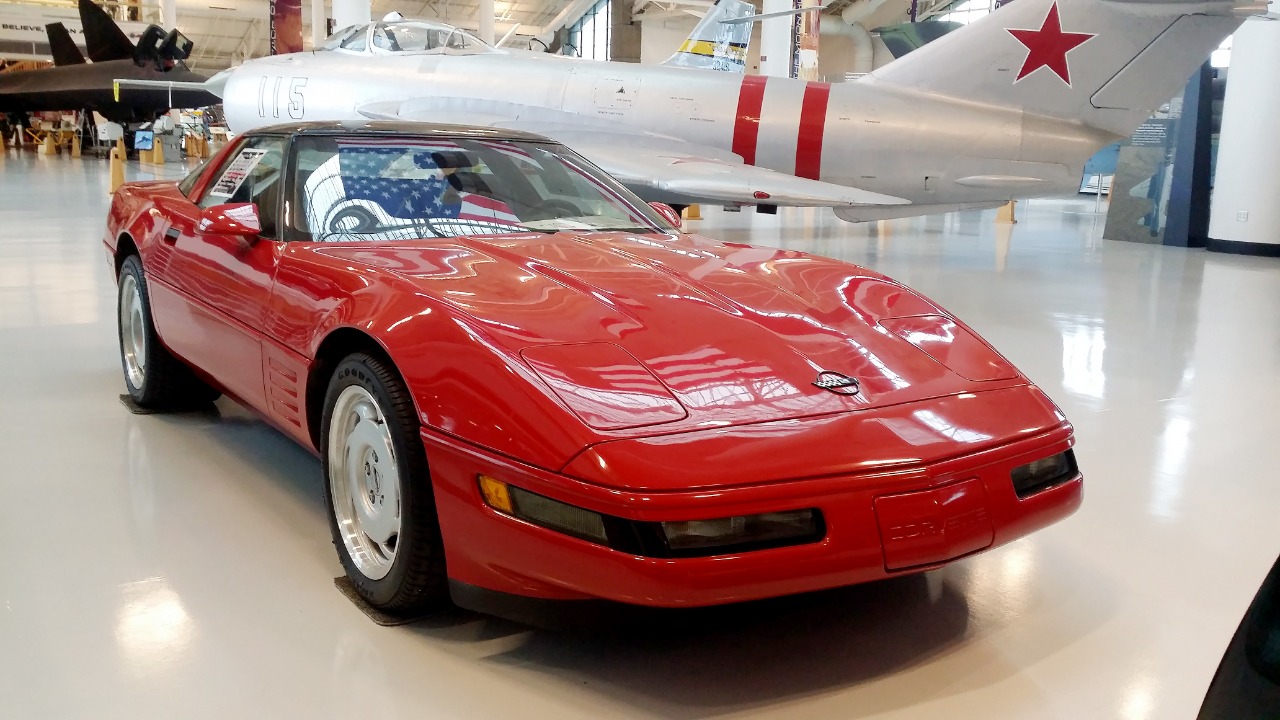
When Chevrolet unveiled the 1990 Corvette ZR-1, enthusiasts immediately realized it was unlike any Corvette that had come before. Although it shared the familiar C4 body, the ZR-1 featured an advanced engine, upgraded chassis, and engineering philosophy that pushed the Corvette into territory normally occupied by Europe’s finest performance cars. Rather than simply being a faster Corvette, it represented a dramatic shift in how Chevrolet approached high-performance engineering.
A Revolutionary Engine Changed Everything
The biggest difference between the ZR-1 and previous Corvettes was its engine. Instead of the traditional pushrod V8 that had powered Corvettes for decades, Chevrolet introduced the all-new LT5—a 5.7-liter, dual overhead cam, 32-valve V8 developed with engineering assistance from Lotus and manufactured by Mercury Marine.
The LT5 was designed to deliver high-revving performance while maintaining everyday reliability. Its advanced cylinder heads, four valves per cylinder, and sophisticated electronic controls allowed it to produce substantially more power than the standard Corvette engine of the time.
This was a level of engine technology rarely seen in American performance cars, instantly setting the ZR-1 apart from its predecessors.
It marked a bold step into a new era of Corvette engineering.
The Chassis Was Built to Match the Power
Chevrolet understood that additional horsepower alone would not create a world-class sports car. Engineers extensively upgraded the ZR-1’s suspension, braking system, and cooling hardware to ensure it could fully exploit the capabilities of the LT5 engine.
The wider rear body accommodated larger tires that improved traction and cornering grip, while revised suspension tuning enhanced stability during high-speed driving. Stronger components throughout the drivetrain ensured the car could reliably handle its increased performance.
These changes transformed the ZR-1 into a more balanced machine, capable of excelling not only in straight-line acceleration but also on demanding road courses.
Its handling matched the sophistication of its engine.
Technology Became a Defining Feature
The ZR-1 reflected a broader shift in automotive engineering during the late 1980s. Electronic engine management systems, advanced fuel injection, and precision manufacturing allowed Chevrolet to pursue performance through technology rather than engine displacement alone.
One of the ZR-1’s unique features was its selectable power mode, which allowed drivers to limit engine output using a special ignition key. In full-power mode, the LT5 delivered its complete performance potential, while the reduced-power setting offered a more restrained driving experience for everyday use.
The car also demonstrated impressive refinement, combining high-speed capability with the reliability and comfort expected of a production Corvette.
It showed that advanced technology and everyday usability could coexist.
A Corvette That Changed Future Expectations
Although the ZR-1 remained a low-volume, premium model, its influence extended far beyond its production numbers. It proved that Corvette could compete with elite European sports cars through engineering innovation rather than simply relying on traditional American V8 performance.
The lessons learned during the ZR-1 program influenced later Corvette generations, encouraging greater investment in sophisticated engines, improved chassis development, and advanced electronics. Subsequent high-performance Corvettes built upon the foundation established by the LT5-powered flagship.
Today, the 1990 ZR-1 is widely respected as one of the most important Corvettes ever produced. Collectors value it not only for its performance but also for the technological leap it represented.
Looking back, the 1990 Chevrolet Corvette ZR-1 became radically different from earlier Corvettes because it embraced an entirely new engineering philosophy. By combining cutting-edge engine technology with a comprehensively upgraded chassis, Chevrolet demonstrated that America’s sports car could compete on the world stage while redefining what a Corvette could be.
More from Fast Lane Only
- Unboxing the WWII Jeep in a Crate
- 15 rare Chevys collectors are quietly buying
- 10 underrated V8s still worth hunting down
- Police notice this before you even roll window down
*Research for this article included AI assistance, with all final content reviewed by human editors