A one-day truck rental is a simple transaction. Sign the paperwork, move your things, bring it back. Whatever happens after that day is over is supposed to be a phone call to the rental company, not a decision the renter makes on their own. That basic premise is what an Illinois woman ran into when Penske Truck Rental reported one of its commercial moving trucks stolen, three months after she’d signed an agreement for exactly one day.
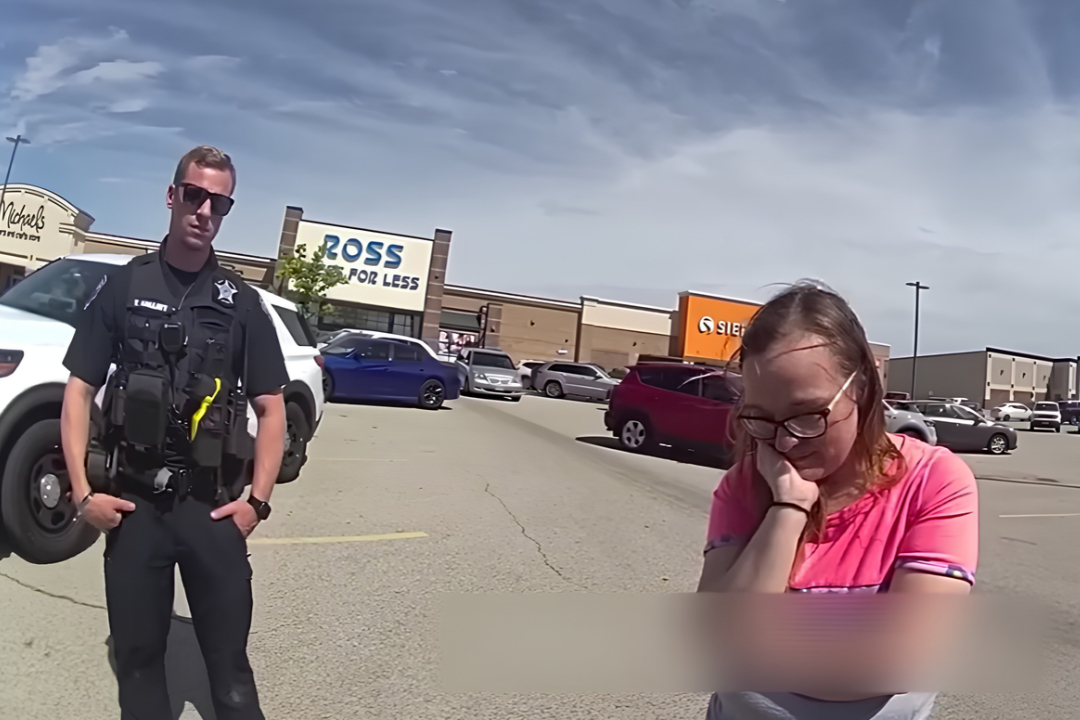
The confrontation happened outside a store in Illinois on May 8, 2024, when an officer approached the woman in a parking lot after dispatch confirmed the yellow Penske truck she was standing next to matched an active stolen vehicle report. Nearby, her significant other, identified as Harley, was already in handcuffs, not over the truck directly, but because of an unrelated active warrant, compounded by the fact that he’d hopped into the driver’s seat while she was inside shopping.
What followed was roughly eleven minutes of the woman explaining, in increasingly tangled detail, why she believed keeping a rental truck for three months was something she was allowed to do.
A one-day contract, reinterpreted
Her explanation centered on a conversation she said she’d had with the Penske employee at pickup. She told the officer she’d informed him she wasn’t sure how long she’d need the truck, since she was in the middle of moving, and that he’d told her it was fine as long as she kept paying and the deposit stayed on the account. In her telling, that exchange gave her permission to keep the truck indefinitely, paying $39.99 a day for as long as she needed it.
The problem was the paperwork. When officers had dispatch double-check the actual signed agreement, it confirmed a one-day rental, and the woman eventually admitted that when she signed, she’d told the employee “for now, one day.” That’s a meaningfully different thing than an open-ended verbal agreement to extend indefinitely, and it’s the gap the officer kept steering the conversation back toward.
The analogy that cut through the explanation
Rather than argue the legal technicalities, the officer used a simple comparison: if you loaned a friend your car for one day, when would you expect it back? The woman answered immediately, in one day. He followed by asking whether she thought Penske probably felt the same way about their roughly $40,000 truck. She agreed, admitting she hadn’t thought about it that way.
That exchange did more to establish the core problem than anything else in the conversation. She wasn’t disputing that a one-day agreement generally means the vehicle comes back in one day. She was arguing that her situation was different because she kept paying daily and no one had explicitly told her to stop. The officer’s response was direct: paying for something day by day doesn’t create permission to keep it indefinitely, and Penske reporting the truck stolen after three months was them exercising exactly the kind of concern that comparison implied they’d have.
The reasons kept shifting
As the conversation continued, her explanation for why she’d kept the truck evolved. She said she’d been moving slowly and wasn’t sure how long that would take. She said she thought paying the daily rate meant everything was fine. She said her phone was off and she hadn’t been able to check for messages from the company. Eventually, she connected the real reason more directly: her personal vehicle had been repossessed after she fell behind on a $7,000 payment to a dealership, and the Penske truck had become her daily transportation in the meantime.
That admission reframed the situation considerably. This wasn’t a slow-moving process that had simply run long. It was a rental truck being used as a substitute car, for months, by someone who needed transportation and didn’t have another option lined up. The officer acknowledged the difficulty of her circumstances without treating it as an explanation that changed what had happened with the truck itself.
What the law actually says about it
According to the case breakdown that followed the stop, Illinois treats this kind of situation under two possible statutes. Unauthorized possession of a converted vehicle is a Class 2 felony carrying three to seven years, and notably doesn’t require proof that someone intended to steal the vehicle at the time they rented it, only that their continued possession became unauthorized at some point. Theft by deception is a second possible charge, targeting the original rental transaction itself, applicable if someone signs a short-term agreement while already intending to keep the vehicle far longer.
The analysis also noted that her strongest potential defense, the claim that a Penske employee verbally authorized indefinite use, faces a serious evidentiary problem: she had no documentation, no email, and no witness to back it up, against a written one-day contract she admitted to signing. Most commercial rental agreements include integration clauses specifically designed to prevent verbal statements from overriding the written terms, which undercuts that defense before it can get very far.
A three-month debt, or a story that didn’t add up
The comment section underneath the video zeroed in on the math. At $39.99 a day for roughly three months, her claimed payments would total somewhere around $3,600, on top of a $150 deposit already on hold. Several commenters found that number hard to believe for someone who also described struggling to afford a car payment just weeks earlier.
That skepticism gets at something the officer’s own framing had already highlighted. Paying daily for a rental doesn’t turn a one-day contract into an open-ended one, no matter how consistent the payments are. Whether the money was really moving the way she described or not, the truck itself was never hers to keep past the day she signed for, and three months of “day by day” wasn’t a loophole. It was just unauthorized possession with a payment plan attached.
More from Fast Lane Only
- Unboxing the WWII Jeep in a Crate
- 15 rare Chevys collectors are quietly buying
- 10 underrated V8s still worth hunting down
- Police notice this before you even roll window down
*Research for this article included AI assistance, with all final content reviewed by human editors.