In 1940, Lincoln built 400 Continentals with body panels shaped by hand. That 1940 Lincoln Continental set the tone for a decade of style. Then the war came. American carmakers stopped building civilian cars, and many of their best ideas had to wait.
When production came back, the floodgates opened. Buyers had money saved and years of pent-up demand. Carmakers answered with step-down floors, wooden bodies, pillarless hardtops and new names that had not existed before the war.
These ten are our picks, the vehicles we think made the 1940s unforgettable. We chose a mix of luxury cars, family cars, a pickup and a few brave experiments. The choices are ours, while the dates, prices and production figures come from the sources linked along the way.
1. 1940 Lincoln-Zephyr Continental
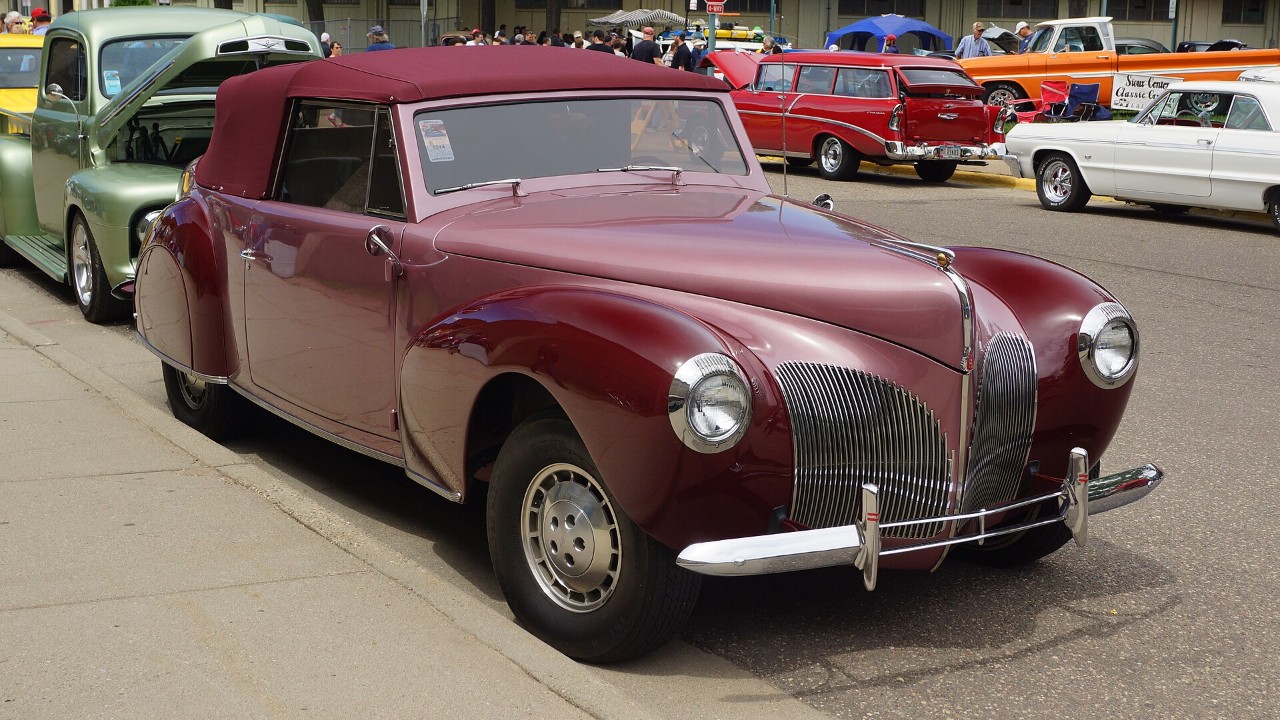
The Continental started as one man’s vacation car. Edsel Ford asked chief stylist Bob Gregorie for a one-off convertible to use on a trip in March 1939. Gregorie started from a Lincoln-Zephyr convertible and channeled and sectioned it to sit lower. Then he mounted the spare tire behind the trunk.
The name came from its European-inspired look. Soon the one-off became a production car. Lincoln built about two dozen in 1939 and 400 in 1940, all with hand-hammered body panels. Machine-pressing dies did not arrive until 1941. That means every 1940 Lincoln Continental carries the marks of skilled panel beaters rather than a stamping press.
In our view, few American cars have aged as gracefully. The low, long proportions look right even today. By 1948, the last year of this first generation, the coupe listed at $2,727 and the cabriolet at $2,778. Also, the rear-mounted spare became a signature that later Continentals carried for decades. If one car on this list shows how much style mattered before the war, it is this one. In short, a hand-built 1940 Lincoln Continental is a rolling sculpture, and we would rank it first among the decade’s luxury cars.
2. 1941 Chevrolet Special Deluxe
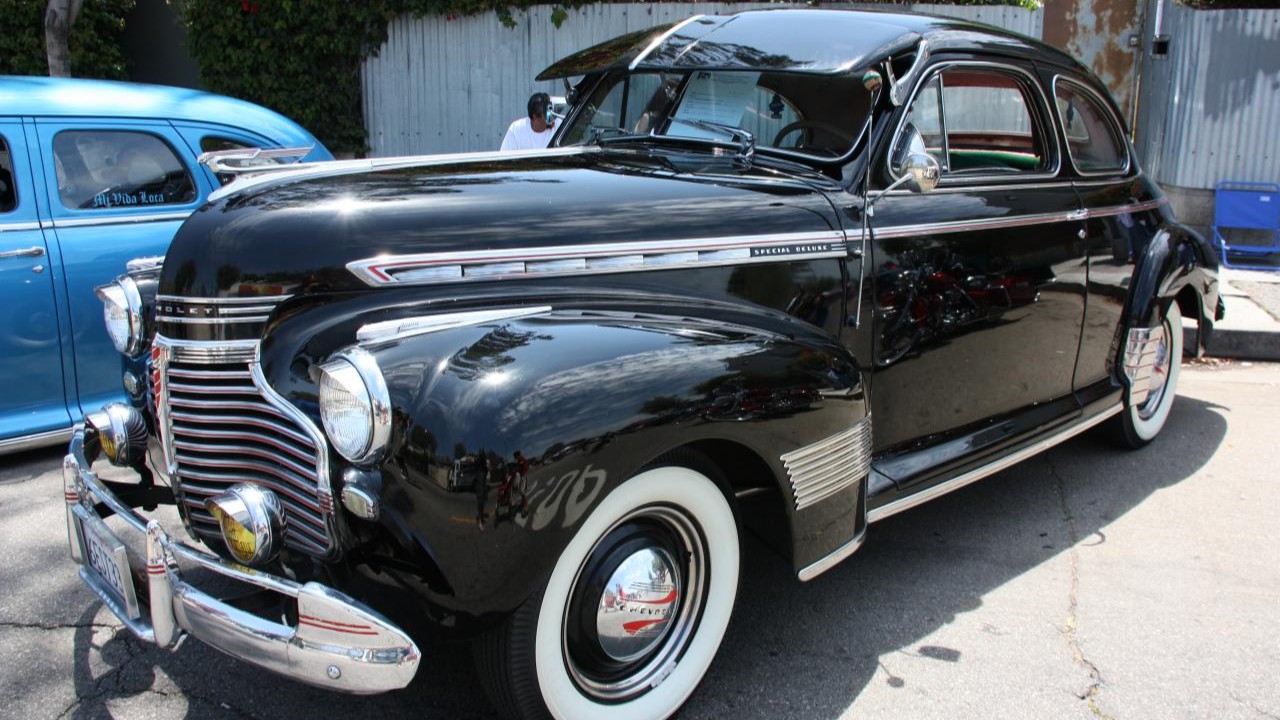
Chevrolet’s 1941 lineup did something no Chevy had done before. According to Old Autos’ history of the 1941 Chevrolet, the brand sold 1,008,978 cars that year. It was the first time Chevrolet passed one million. By comparison, Ford sold 691,455.
The Special DeLuxe carried most of that load, with 602,113 sales. Harley Earl’s team gave it a new grille, concealed running boards and headlamps blended into the fenders. In addition, the wheelbase grew to 116 inches, and the six-cylinder engine went from 85 to 90 horsepower. Prices ran from $769 to $995, and the eight-seat wagon sold for just under $1,000. By contrast, the cheaper Master DeLuxe sold 406,863 cars at $712 to $795. Clearly, buyers were happy to pay more for the nicer car.
Our take: this is the car that made modern styling affordable. It looked like a Buick for Chevrolet money, and buyers noticed. The timing makes it even more memorable. Civilian production stopped soon after for the war. So, in our view, the 1941 Special DeLuxe stands as the high-water mark for prewar Chevys.
3. 1946 Ford Super Deluxe Sportsman
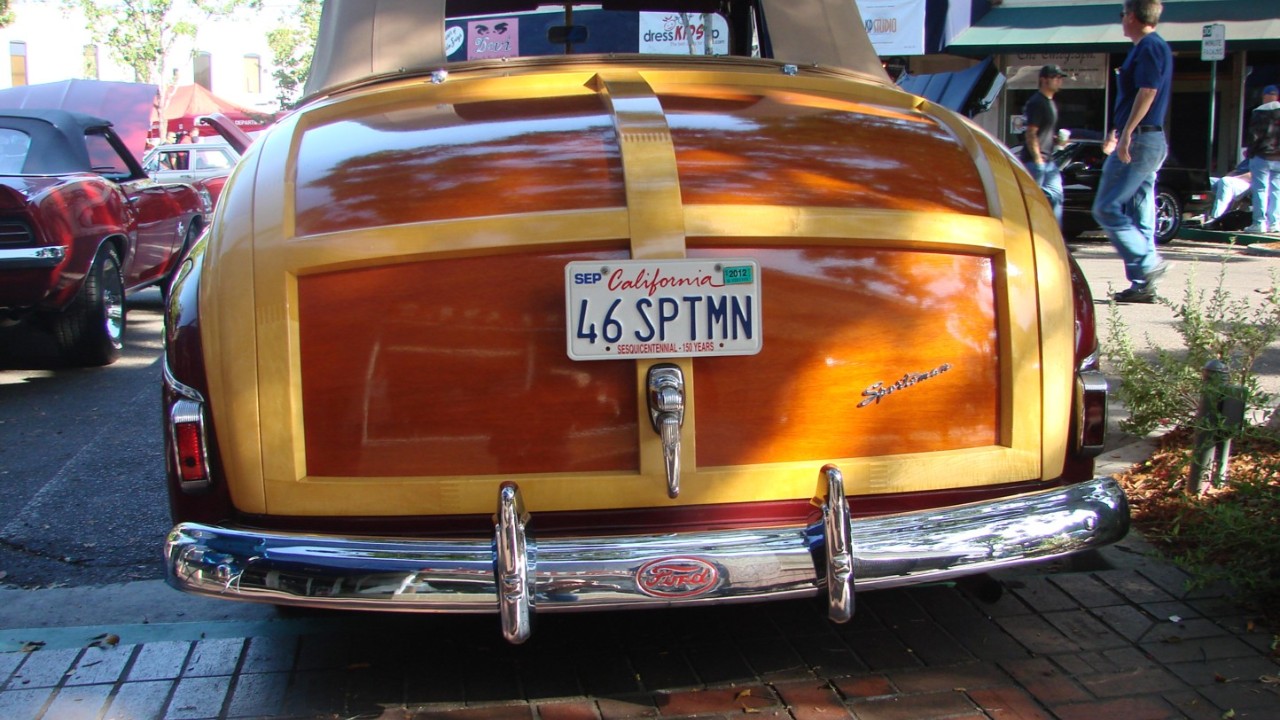
Ford’s first postwar statement used real wood. The Sportsman traced its roots to a wood-bodied Model A. Henry Ford II had designer Bob Gregorie build it for his beach house. Ford then built a prototype at its Iron Mountain, Michigan, plant.
According to RM Sotheby’s catalog for a 1946 Sportsman, Ford built only 1,209 during the 1946 model year. That model year ran a full 18 months, and 1947 production reached barely half that figure. Power came from a 239.4-cubic-inch flathead V8 rated at 100 horsepower, borrowed from Mercury.
We love this car because it was so clearly a gamble. Ford had restarted its assembly line on July 3, 1945, and it chose to lead with something flashy and labor-intensive. The wood framing made every Sportsman a showpiece. It also made each one a lot of work to build and to keep looking right. In our view, it remains one of the most charming Fords of the decade. Collectors clearly agree. RM Sotheby’s estimated the 1946 car in that catalog at $180,000 to $220,000.
4. 1947 Kaiser Special
The Kaiser Special was a brand-new car from a brand-new company. Kaiser-Frazer set up shop in the Willow Run plant in Michigan. Their first production cars rolled off the line on May 29, 1946.
According to Ate Up With Motor’s Kaiser-Frazer history, the cars reached dealers on June 22 and wore 1947 model-year registrations. The Special started at $1,868. Its Continental six made 100 horsepower, or 112 with an optional twin-carburetor setup. A fancier Custom joined midway through the year. In total, Kaiser sold 70,474 cars that model year, and Kaiser-Frazer had the best market share of any American independent.
Our take: few newcomers ever got off to a faster start. In our eyes, the Kaiser looked fresher than many of the warmed-over prewar designs around it. That gave buyers a real reason to walk into a showroom with an unfamiliar name over the door. Also, the base car did most of the selling, since the Custom made up fewer than 10% of 1947-48 sales. For that alone, the 1947 Kaiser Special deserves its place among the decade’s best stories.
5. 1948 Willys-Overland Jeepster
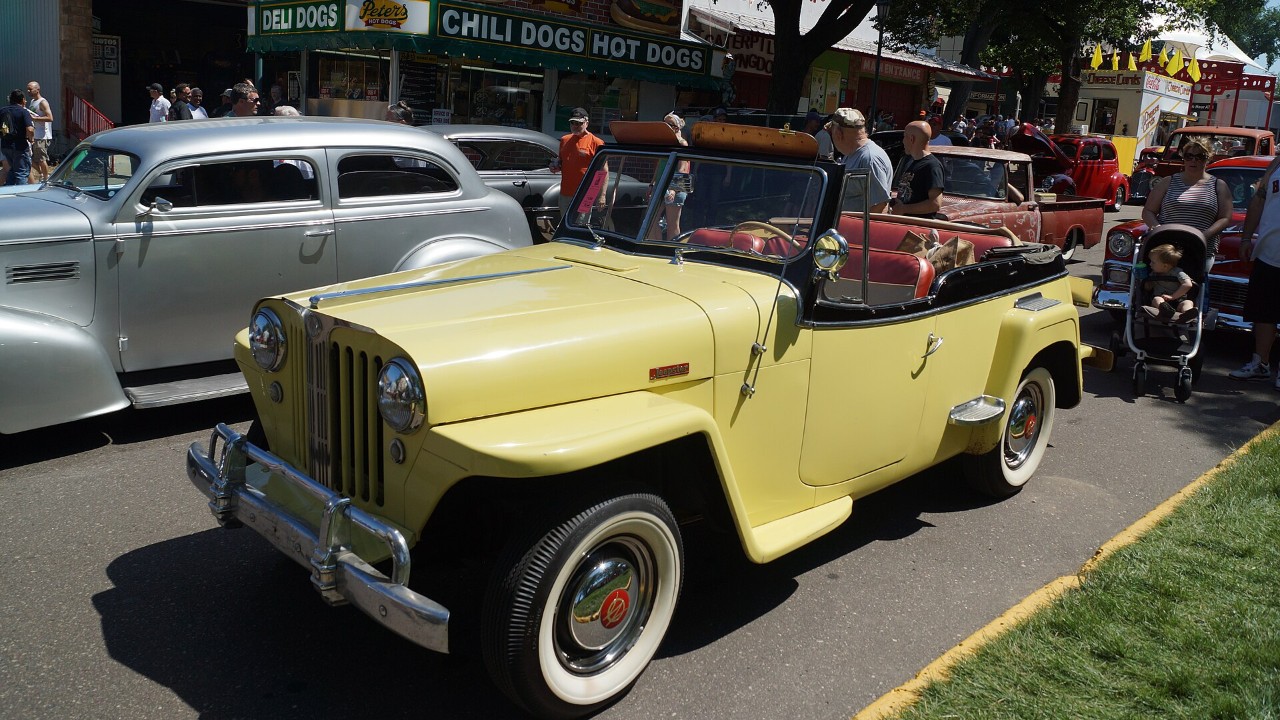
After the war, Willys had a hit with the Jeep and a problem. The company needed a vehicle that civilians would buy for fun. Its answer was the Jeepster, styled by industrial designer Brooks Stevens and introduced in April 1948.
At heart, the Jeepster was an open phaeton with Jeep looks. Surprisingly, it came with rear-wheel drive only. A 134-cubic-inch Go Devil four made 63 horsepower. The launch price was $1,765. Willys built 10,326 Jeepsters for 1948. For 1949, the price dropped to $1,495, and output fell to 2,960 before rising to 5,836 for 1950.
In our view, the Jeepster was decades ahead of its time. It mixed a rugged look with a car-like drive, which is the same recipe many modern crossovers follow. True, it did not sell in huge numbers. Even so, it showed that people wanted a vehicle that looked tough but felt friendly. We think that idea is the Jeepster’s real legacy. If you find one today, enjoy it as a summer cruiser, not a trail rig, because it was never built for the mud.
6. 1948 Cadillac Sixty Special
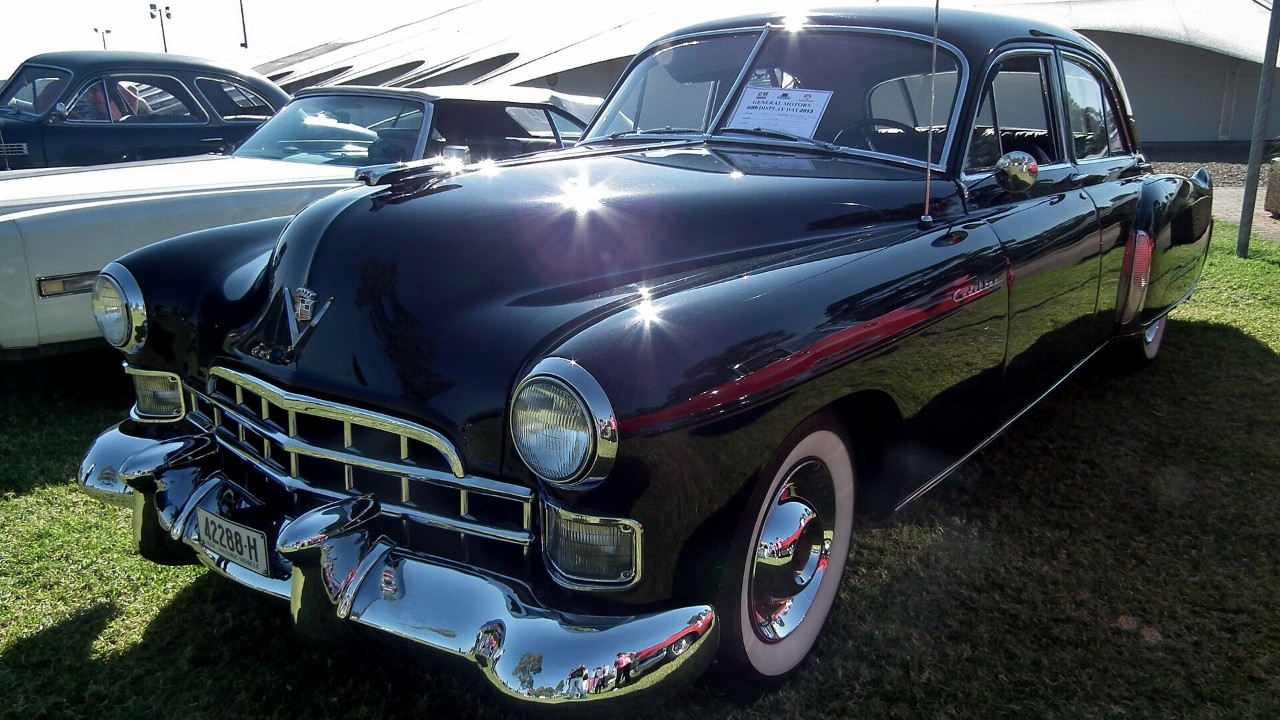
Cadillac’s 1948 redesign gave American cars one of their most copied features. The new Sixty Special wore small tail fins inspired by the Lockheed P-38 Lightning fighter plane. That detail looks modest now, but fins soon spread across Detroit.
Meanwhile, the Sixty Special rode on its own 133-inch wheelbase and cost $3,820. Through 1948, Cadillac advertised it as a five-passenger car, a sign of how roomy it was. By comparison, the 1947 car had used a 346-cubic-inch engine rated at 150 horsepower. The next year, Cadillac added its new overhead-valve V8, and Sixty Special sales hit a record 11,399. So the 1948 car set the stage for one of the brand’s best years.
Our take: the 1948 Sixty Special marks the moment when car design started to borrow from the jet age. It was elegant, long and confident. Without those first little fins, the wild designs of the late 1950s might look very different. We think that makes it one of the most important Cadillacs of the decade, not only one of the prettiest.
7. 1948 Ford F-1 Bonus-Built
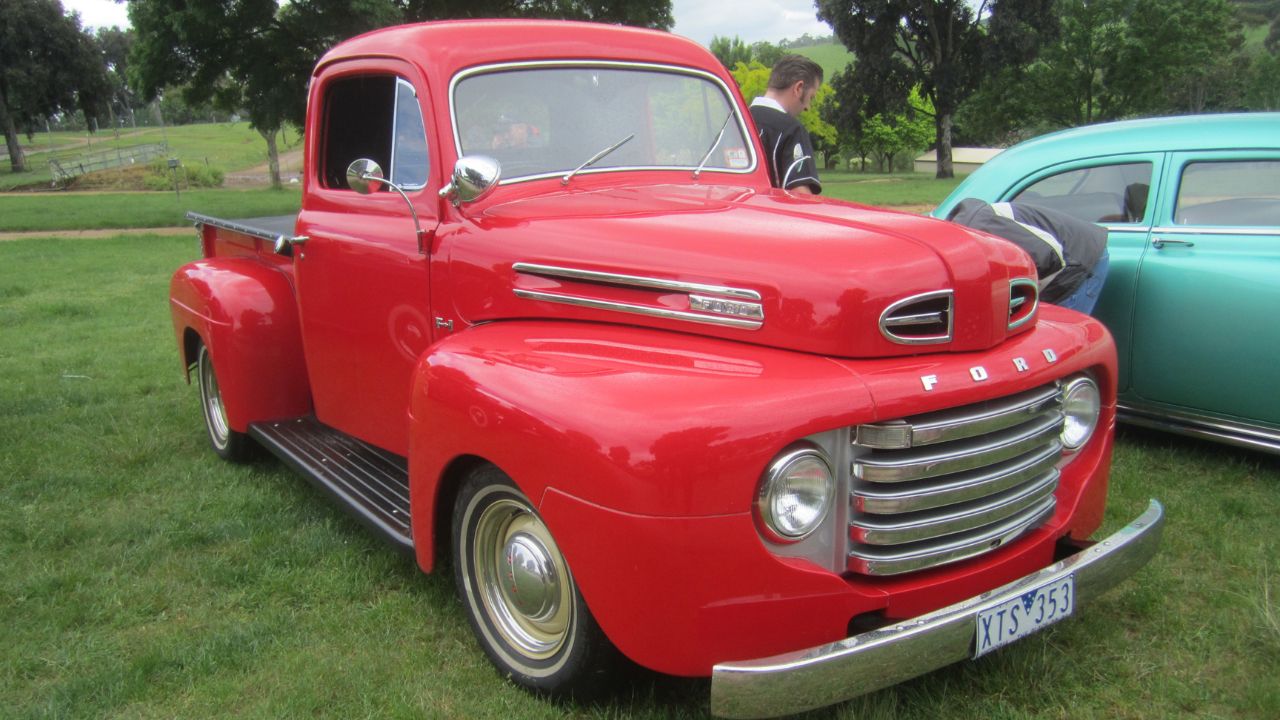
Ford’s first F-Series truck debuted on January 19, 1948, in Dearborn. The new Bonus-Built line ran from the half-ton F-1 to the three-ton F-8. The F-1 was the one most people would recognize today.
According to Mac’s Motor City Garage, the F-1 came standard with a 226-cubic-inch Rouge Six rated at 95 horsepower. A 239-cubic-inch flathead V8 with 100 horsepower cost extra. The cab was seven inches wider than before. Ford called it the “million dollar cab.” Meanwhile, the bigger trucks in the range used a 337-cubic-inch flathead V8. The F-1 ran through 1952, built at Highland Park, Michigan, and Richmond, California.
In our view, no truck on earth has a bigger family tree. The 1953 F-100 replaced it, and the first F-150 followed in 1975. Every one of them traces back to this simple, honest pickup. Want a 1940s vehicle you can use every week? A sorted F-1 is a great place to start. In our view, the design is simple and honest. The truck looks right with or without a load in the bed.
8. 1948 Hudson Commodore Eight
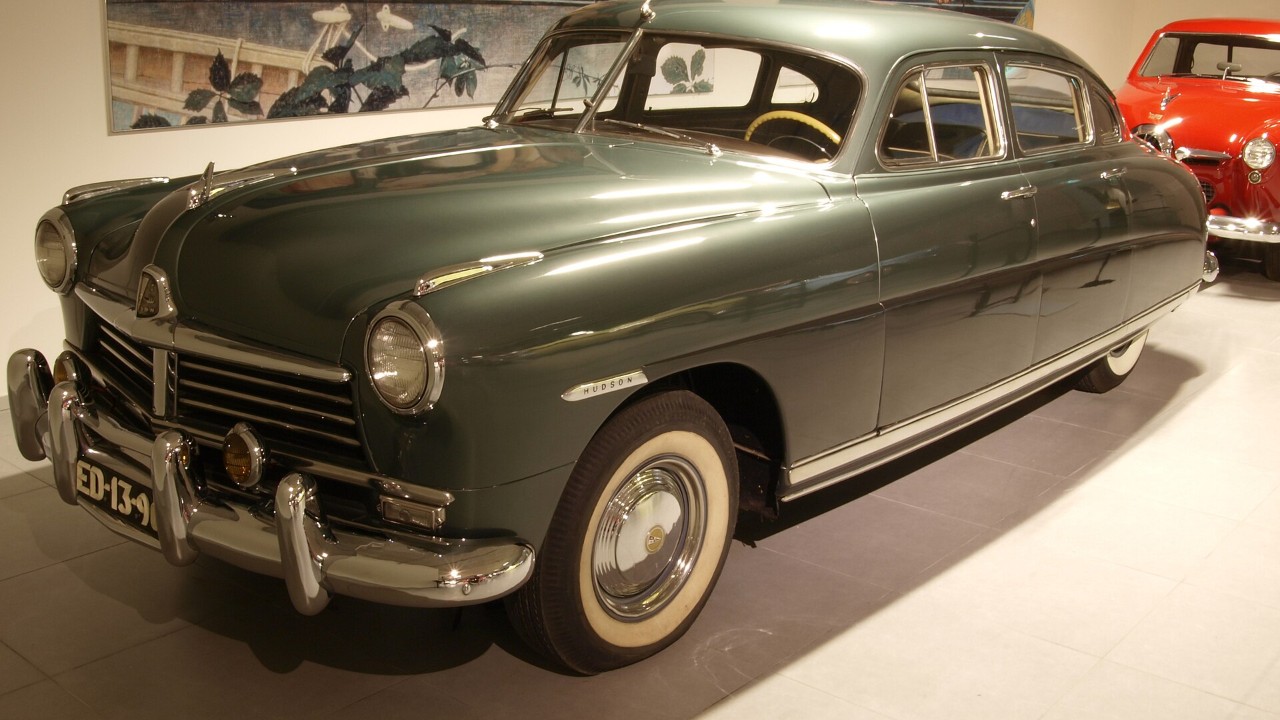
Hudson’s 1948 cars made passengers step down into them. Instead of climbing onto the floor, riders sat inside a perimeter frame. That semi-unit design lowered the floor and the roofline, which gave the car a long, sleek look.
According to the Audrain Automobile Museum, the Commodore Eight used a 254.5-cubic-inch inline-eight rated at 128 horsepower. It rode on a 124-inch wheelbase and weighed 3,825 pounds. The museum lists a 0 to 60 mph time of 15.8 seconds and a top speed of 91 mph. Better still for Hudson, the step-down body helped its sales jump 50% in 1948. The museum’s own car has covered just 27,000 miles since 1948.
Our take: this was the most advanced American sedan of its day in the way it was built. The low floor also gave it a planted, confident stance on the road. At 207.5 inches long, it was a big car, yet it looked lean. If you want one, the Eight is the version we’d chase, since it pairs the step-down body with Hudson’s smooth straight-eight. For more on the brand, see our list of forgotten Hudsons that outran everything in their class.
9. 1949 Buick Roadmaster Riviera
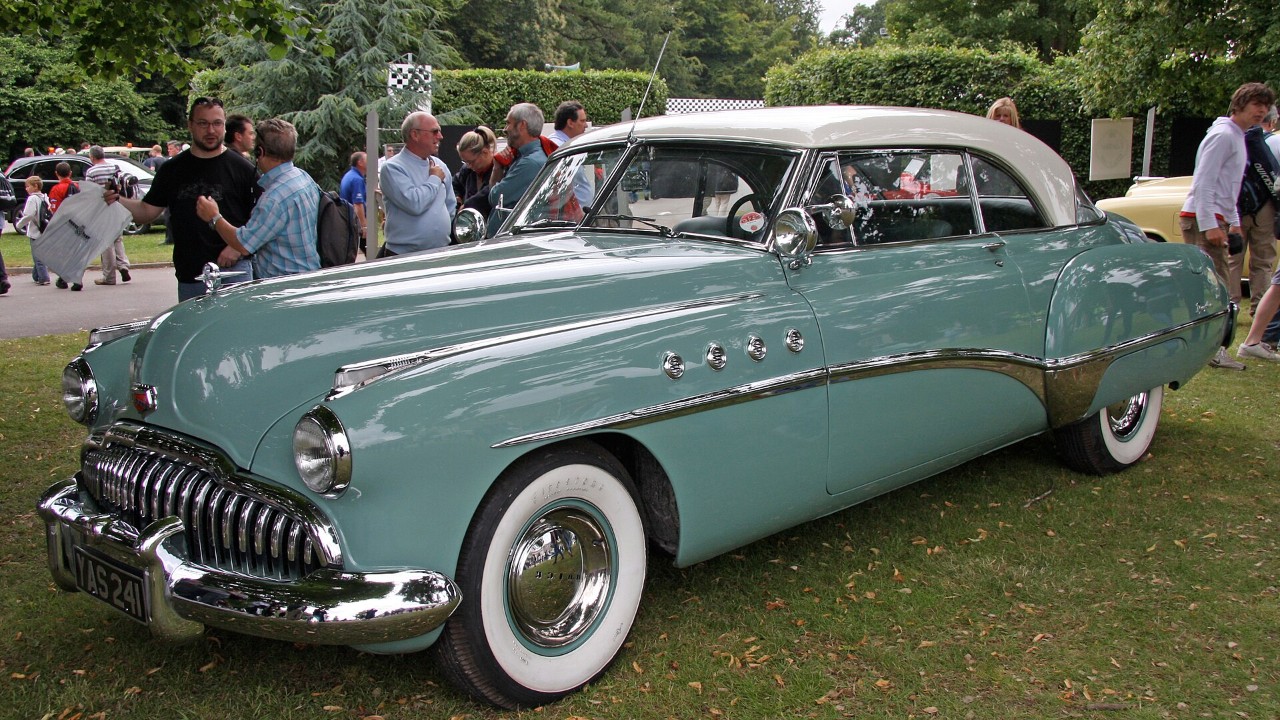
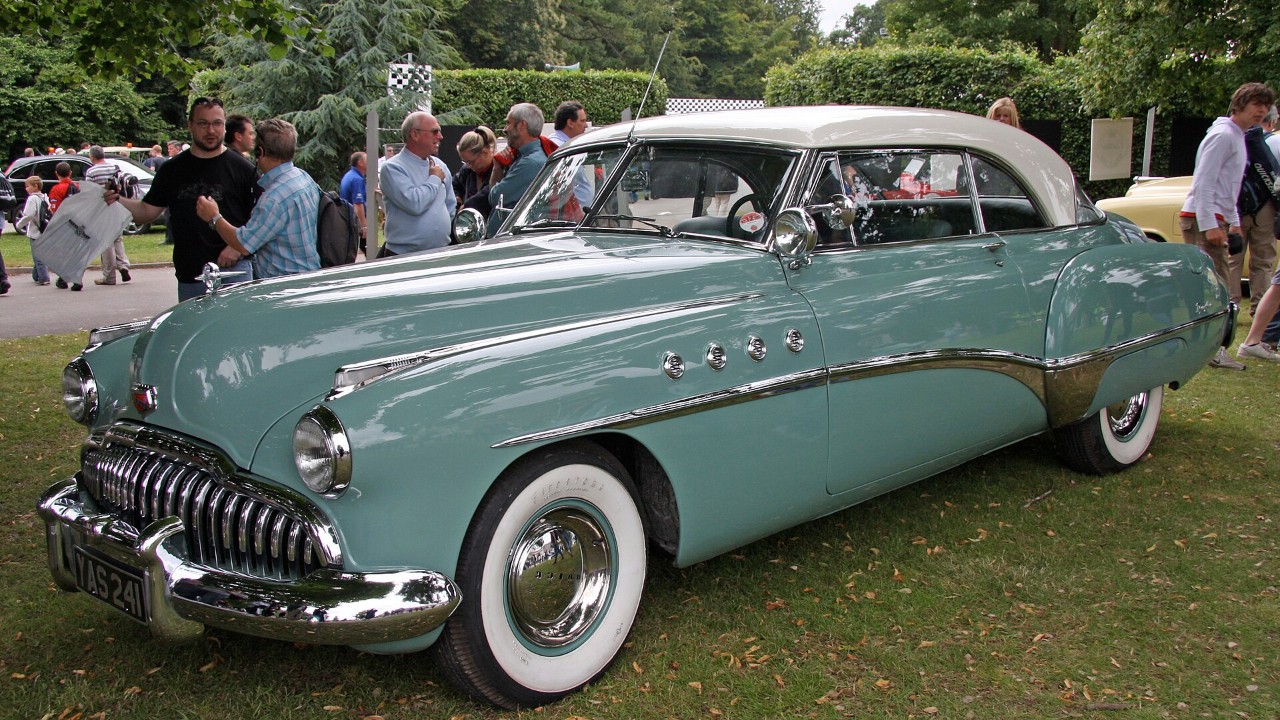
Buick’s Riviera brought a new shape to the showroom halfway through 1949. It had no pillar between the side windows, so it looked like a convertible with a steel roof.
The Riviera joined the Roadmaster line mid-year and sold 4,314 units. In addition, power windows came standard, which was rare luxury for the time. The 1949 Roadmaster also introduced Buick’s VentiPorts, with four on each front fender. Its straight-eight made 150 horsepower, and Dynaflow automatic transmission was standard. The VentiPorts started out with a purpose, but they became purely decorative partway through the model year. Even so, the portholes stuck around as a Buick trademark.
We think the Riviera changed how Americans pictured a personal luxury car. The pillarless hardtop went on to become a familiar shape in the decade that followed. That is a big legacy for a car that sold in modest numbers. We covered more cars that shaped the era in 8 automobiles that ushered in a new era during the late 1940s.
10. 1949 Nash Ambassador Airflyte
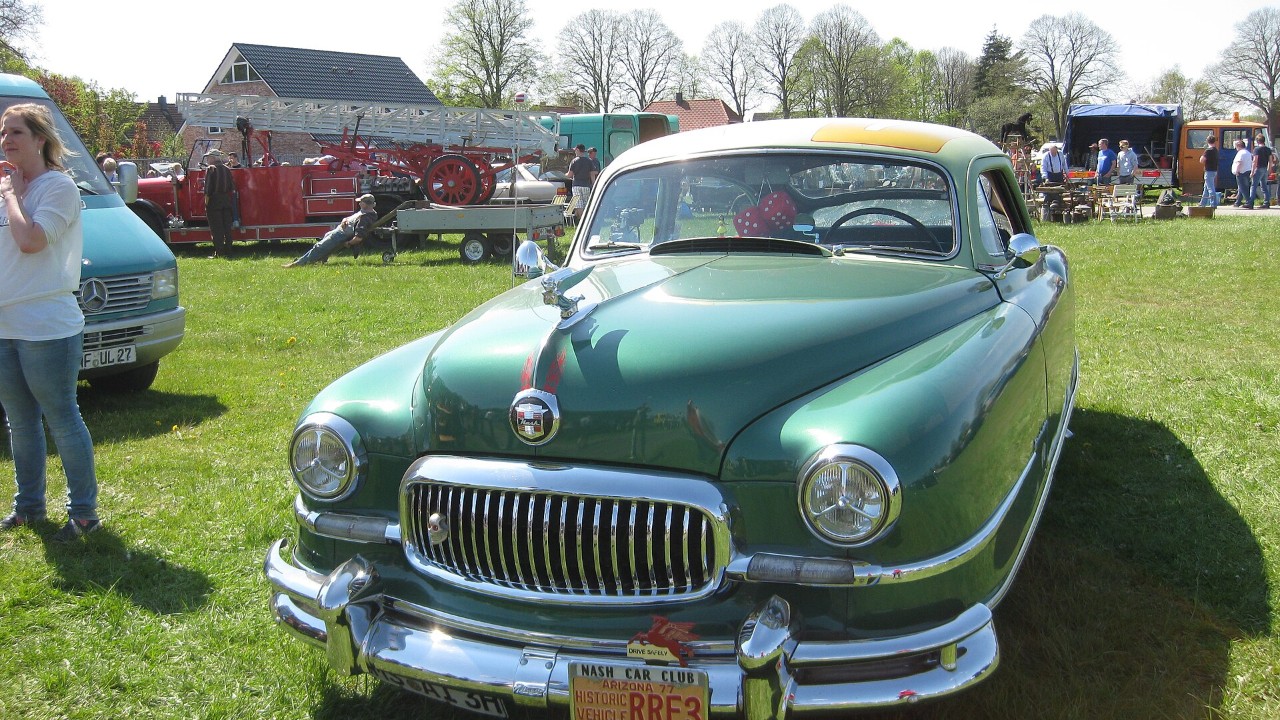
Nash ended the decade with a car shaped by the wind. The 1949 Ambassador Airflyte dropped the separate frame for unibody construction. Nash claimed its chassis, with 8,000 welds, was 1.5 to 2.5 times as rigid as conventional cars.
For its part, Nash called the car “the most streamlined form on the road.” Nash chief George W. Mason championed its enclosed front wheels as a bold feature. Inside, fully reclining seats could turn the cabin into a bed for three adults. Meanwhile, a 234.8-cubic-inch six rated at 112 horsepower moved it along. Its shape owed a lot to Nils Eric Wahlberg, Nash’s engineering vice president. He had access to a wind tunnel during the war and pushed for aerodynamic cars afterward.
In our view, the Airflyte is the most daring car on this list. Its rounded shape was not for everyone. However, its unibody structure pointed straight at how most cars are built today. It closes out the 1940s the way the 1940 Lincoln Continental opened them, with a design that refused to follow the crowd.
More from Fast Lane Only