The 1959 Austin Mini put a four-cylinder engine sideways and gave about 80% of its floor to people and luggage. As a result, that one idea went on to shape small cars for decades. It also arrived at a moment when car design was changing fast, and not only in Britain.
The late 1950s are usually remembered for tailfins and chrome. Yet the same few years produced tiny city cars, a plastic-bodied people’s car, Japan’s first small family cars of a new kind and a giant Lincoln with a body built a whole new way. Some were cheap and some were lavish, but each one pointed somewhere new.
These eight are our picks for the cars that opened a new chapter between 1957 and 1959. Of course, the “new era” verdicts are our opinion. The dates, engines and production figures come from maker records and published model histories.
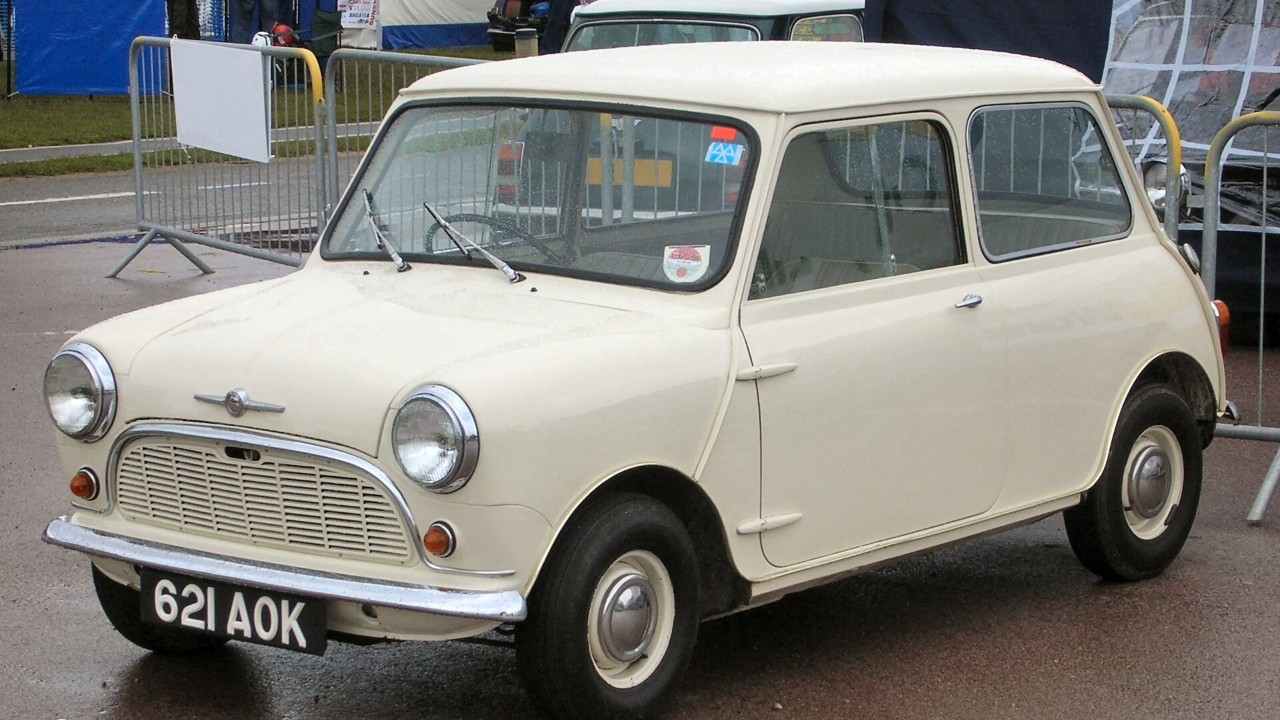
1. 1959 Austin Mini
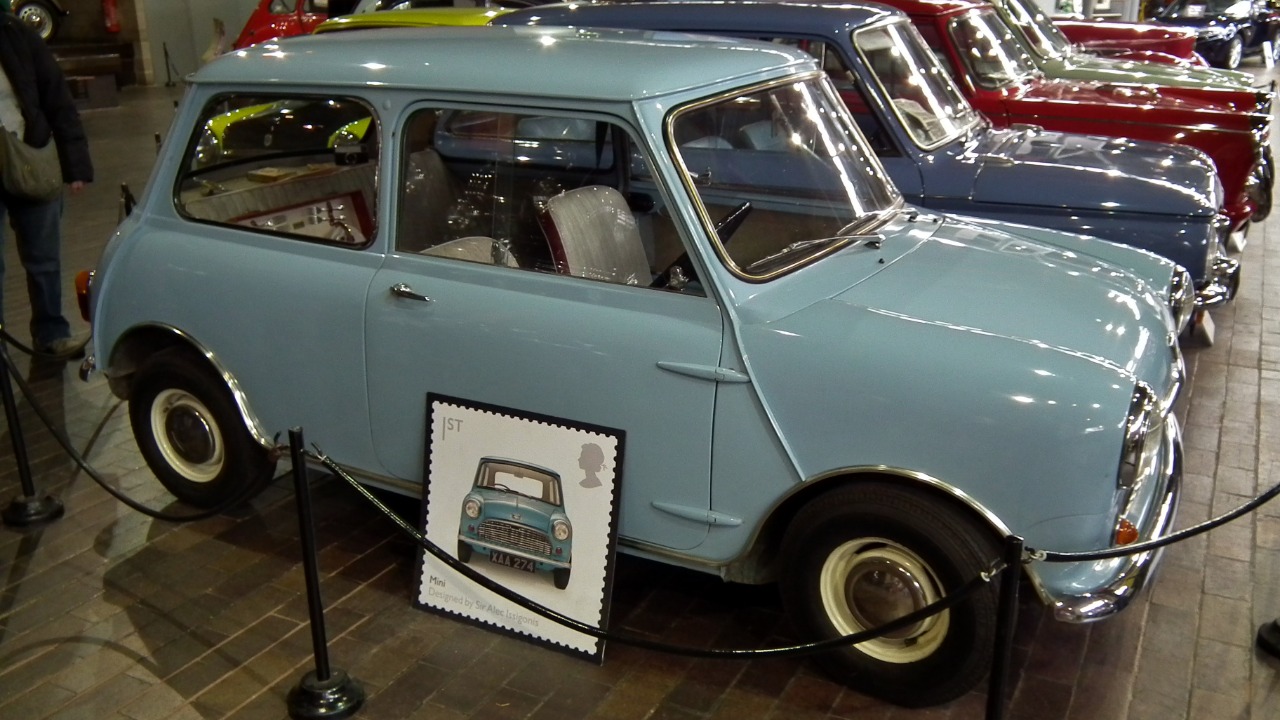
Fuel rationing after the 1956 Suez Crisis set the stage. German bubble cars were selling well in Britain, so BMC boss Leonard Lord asked for a proper small car. He wanted 6 feet of its 10-foot length given to passengers. Alec Issigonis and his team answered with the car announced on August 26, 1959, first sold as the Austin Seven and the Morris Mini-Minor.
The 1959 Austin Mini packaging trick was clever. Issigonis mounted the 848 cc A-Series engine across the car and placed the gearbox in the engine’s oil sump. Meanwhile, compact rubber cone springs, designed with Alex Moulton, took the place of steel springs and needed no maintenance. Later, the Mini Cooper S won the Monte Carlo Rally in 1964, 1965 and 1967.
Our take: no other car on this list changed as much as the Mini did. Front-wheel drive with a transverse engine is now the normal way to build a small car, and the Mini made it work in a package about 10 feet long. In the end, production ran from 1959 to 2000 and reached 5,387,862 cars. If you want to see where the modern hatchback began, start with a 1959 Austin Mini or one of its early siblings.
2. 1957 Fiat Nuova 500

Fiat launched the Nuova 500 in July 1957 as the successor to the 500 Topolino. Dante Giacosa designed it around a rear-mounted 479 cc air-cooled two-cylinder engine. That engine made just 13 horsepower, and the whole car measured 2,970 mm, or 9 feet 9 inches, long.
The car is often described as one of the first purpose-designed city cars. Its fabric roof folded back toward the rear, so its riders could enjoy open-air motoring on a tiny budget. In 1959, Giacosa won a Compasso d’Oro design award for it, the first of those awards ever given to a carmaker. Fiat built 181,036 Nuova 500s, including the Sport, between 1957 and 1960, and the 500 line stayed in production until 1975.
Our take: the Nuova 500 is the car that taught Italy to drive in the city. Admittedly, thirteen horsepower sounds absurd now. However, on narrow streets with tight parking, small size mattered more than speed. We think the Nuova 500 shows a new kind of car thinking, where the size of the town decides the size of the car. Few cars from the era feel this cheerful on a short drive.
3. 1958 Subaru 360

The Subaru 360 was Subaru’s first mass-produced car, and it stayed in production from 1958 to 1971. Japan’s kei car rules capped engine size at 360 cc for tax purposes. So the 360 used a 356 cc air-cooled two-stroke twin, mounted at the back and driving the rear wheels. As a result, curb weight came in under 450 kg.
The maker’s roots explain a lot. According to Silodrome, the company traces its history to the Nakajima Aircraft Company and built motor scooters after the war before it moved into cars. Silodrome also says early cars made 16 horsepower. About 392,000 were built, and Japanese owners nicknamed it the “ladybug.” Malcolm Bricklin later imported about 10,000 to the United States from 1968. In 1969, Consumer Reports rated it “Not Acceptable,” citing safety and a lack of power.
Our take: the 360 belongs here because it put Japanese families on wheels and gave Subaru its start as a carmaker. Clearly, it was never designed for American highways, and the Consumer Reports verdict proves it. Even so, the car’s rear-hinged doors and round body make it one of the happiest shapes of the era. For more cars of the decade with an unusual look, see our list of 1950s cars that looked like science fiction.
4. 1959 BMW 700
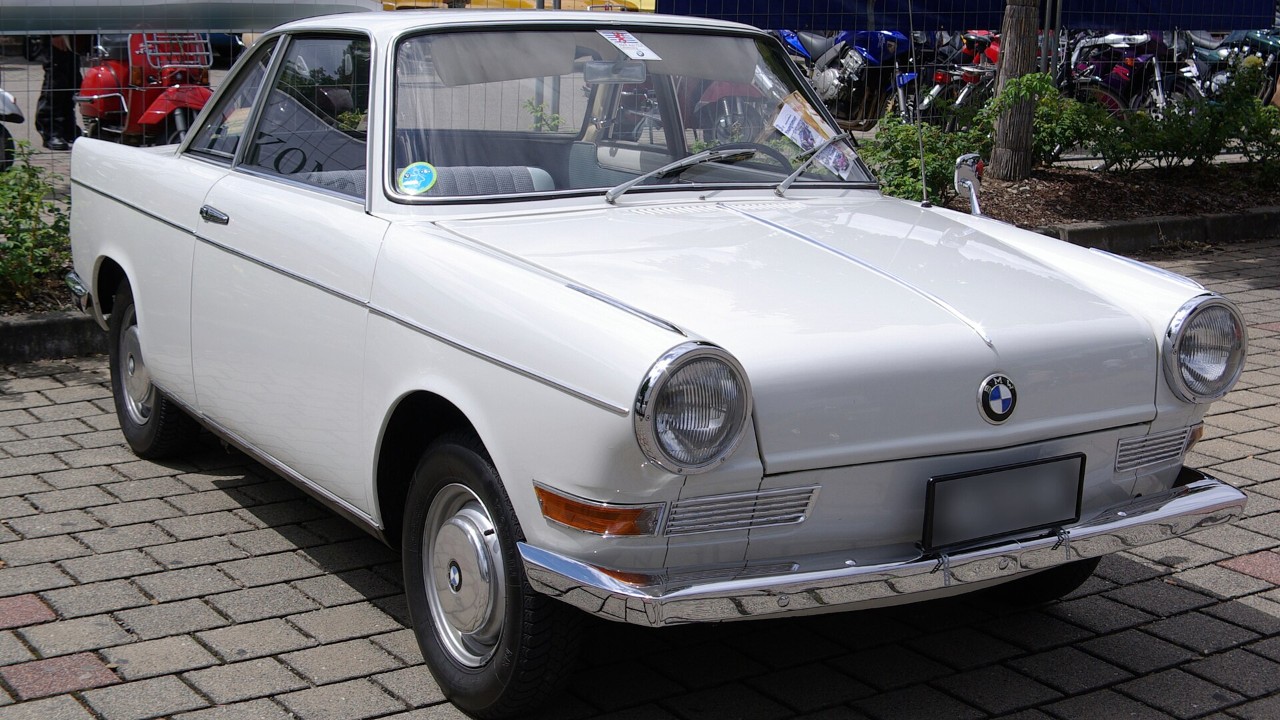
BMW needed a hit in 1959, and the 700 delivered. The company showed the 700 Coupé to about 100 journalists at Feldafing, near Munich, on June 9, 1959. It then priced the Coupé at DM 5,300 and the Saloon at DM 4,760 at that year’s Frankfurt show, according to BMW Group’s own history of the car.
Meanwhile, Turin coachbuilder Giovanni Michelotti designed both bodies. Under the skin, the 700 was the first BMW with a monocoque body, and its rear-mounted two-cylinder engine made 30 horsepower at 5,000 rpm. BMW says it sold more than 35,000 in 1960 and about 190,000 by 1965. In December 1959, shareholders had blocked a plan to sell the company to Daimler-Benz, so those sales arrived at exactly the right time. Hans Stuck also won the 1960 German hillclimb title in a 700 at the age of 60.
Our take: the 700 is the small car that bought BMW its future. In our view, the brand’s later sports sedans owe it a debt. A monocoque body and racing success turned a modest rear-engine car into a turning point. If you ever see one at a show, look past the size and remember what it saved.
5. 1959 Ford Anglia 105E
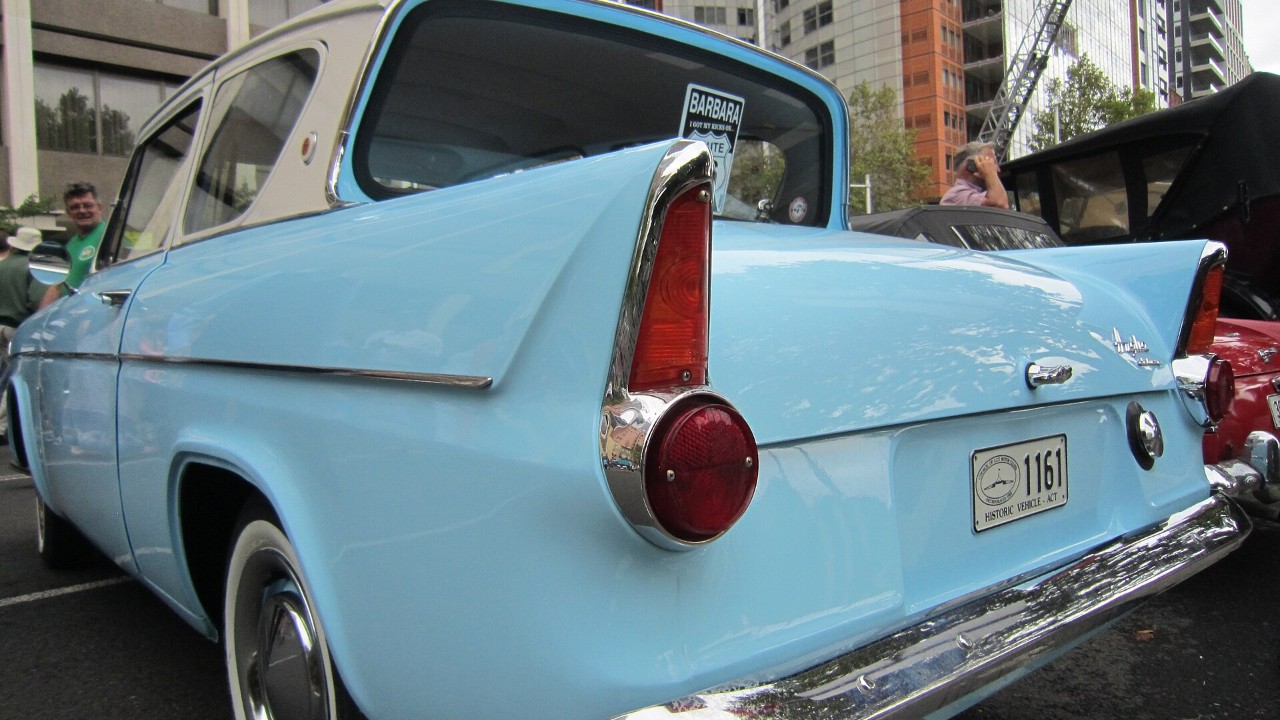
Ford of Britain introduced the Anglia 105E in 1959 with styling that leaned toward America. It had a sweeping nose and muted tailfins. Its most famous feature was a backward-slanting rear window, which Ford marketed as a window that stayed clear in the rain.
The engineering was new, too. A 997 cc overhead-valve four, known as the Kent engine, made 39 bhp and drove through a four-speed gearbox with synchromesh on the top three gears. Sales took off soon after launch. In 1960, its first full production year, 191,752 Anglias left the Dagenham plant, a Ford of Britain production record. By the end, the 105E series totaled 1,004,737 cars.
Our take: the Anglia matters because it gave ordinary British buyers a modern overhead-valve engine and a shape with real personality. That reverse-raked window also links it to the Lincoln later on this list, because Ford’s British designers borrowed the idea from the 1958 Continental. In our view, the 105E is the most charming family car Ford of Britain built in the period. It made a budget car look like it had a sense of humor.
6. 1959 Datsun Bluebird 310
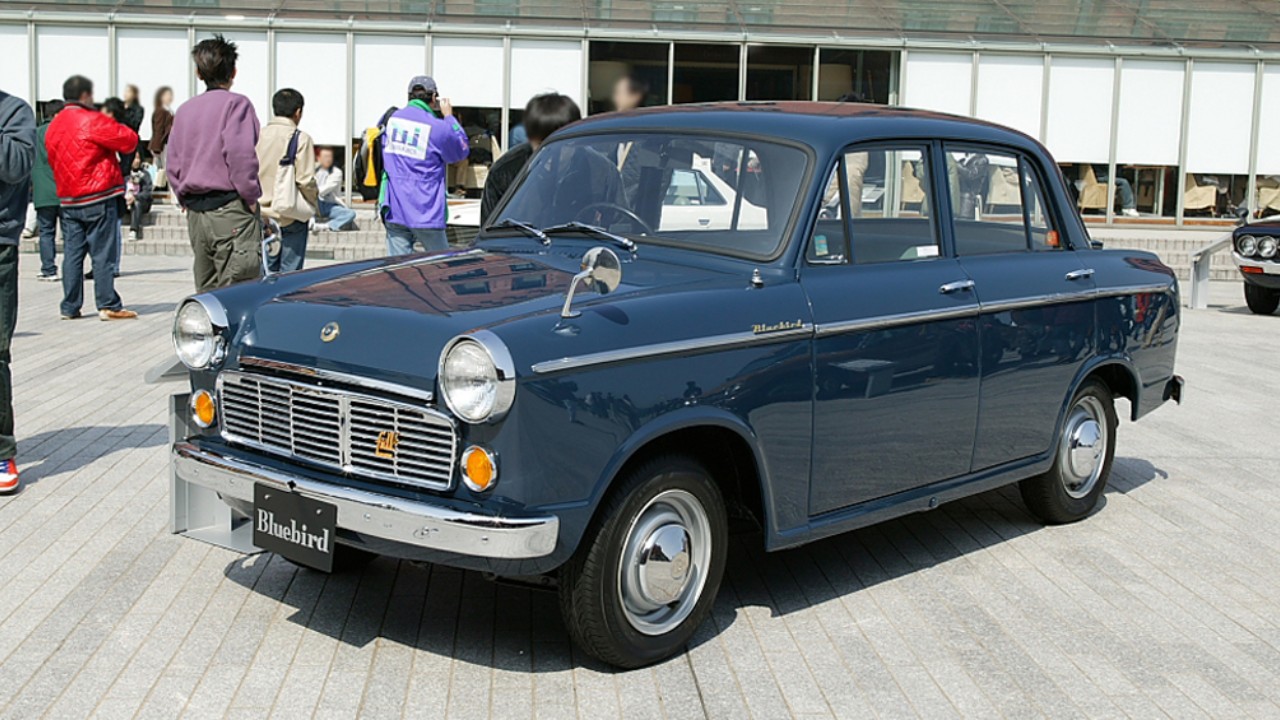
Nissan’s Datsun Bluebird debuted in August 1959 as an all-new car, and the 310 family stayed in production from 1960 to 1963. Its styling borrowed from larger American cars, while its lights earned the nickname “persimmon seed” in Japan. Engines included a 1.2-liter E unit and a smaller 1.0-liter C engine.
The Bluebird also set firsts at home. In October 1959, it became Japan’s first postwar five-seat automobile. In July 1960, a five-door wagon followed, described as the first station wagon to enter series production in Japan. Beyond Japan, the 310 went together in Taiwan, Korea and South Africa, and it reached New Zealand from May 1962. Only a very small number made it to the United States.
Our take: the Bluebird is the start of a long line of practical family Datsuns. It looks modest today, especially next to the Lincoln that follows. Still, a five-seat sedan and a series-built wagon were real milestones for Japan’s car industry. If you’re curious where Nissan’s export success began, the Bluebird 310 is a better place to look than any sports car.
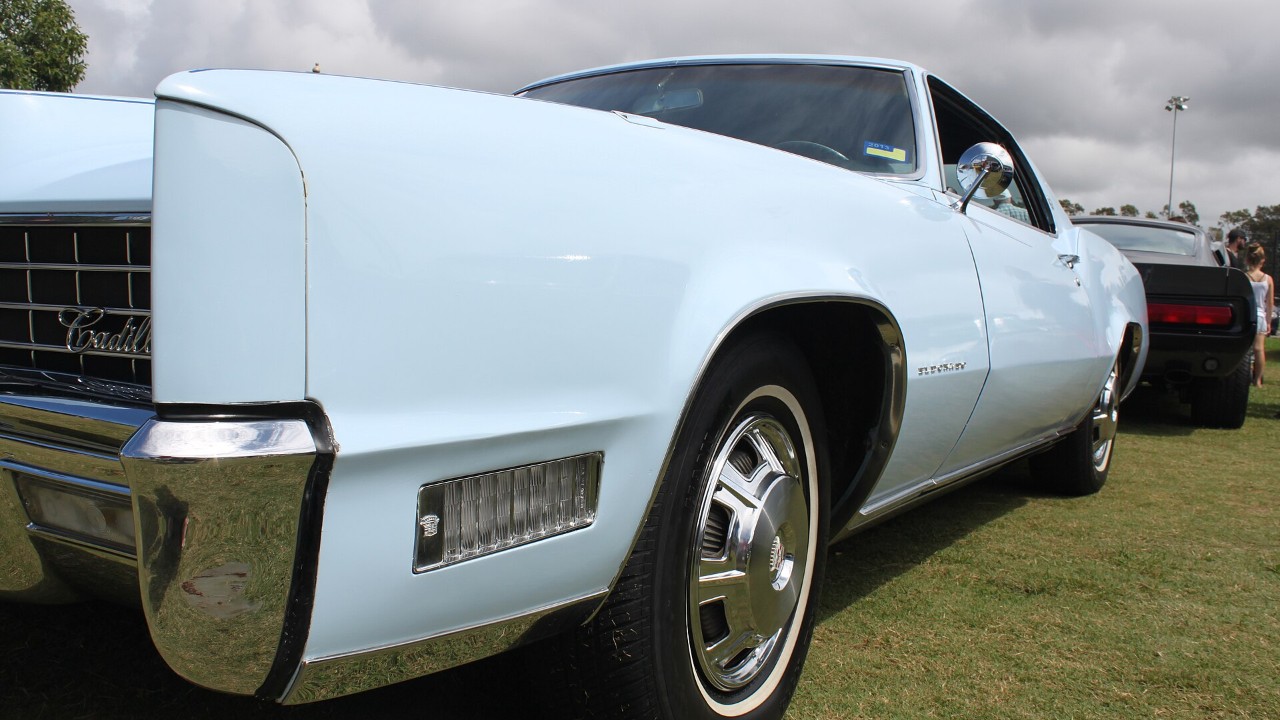
7. 1958 Lincoln Continental Mark III
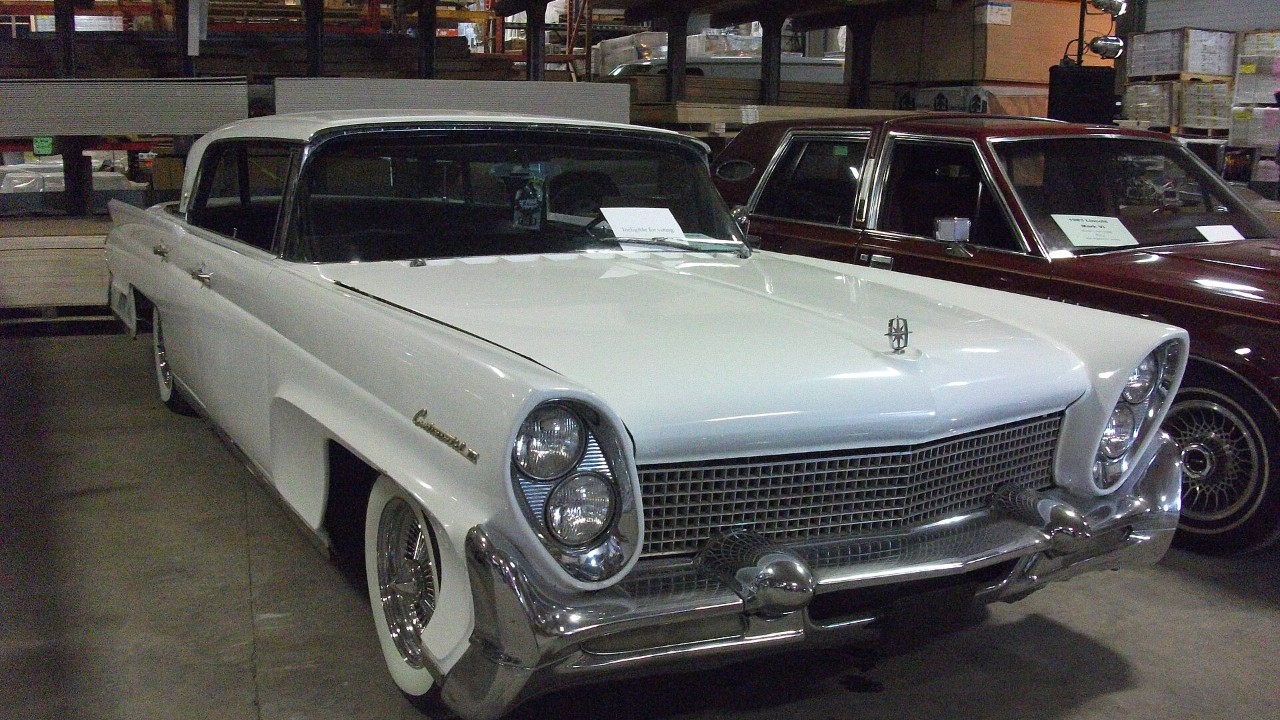
Lincoln went the opposite way from the small cars on this list, but it was just as bold. The 1958 Continental Mark III used a unibody structure, the first on a Lincoln since the Lincoln-Zephyr. It rode on a 131-inch wheelbase, the longest Ford ever used for a sedan.
Power came from a 430-cubic-inch MEL V8 rated at 375 horsepower for 1958, paired with a three-speed Turbo-Drive automatic. Lincoln then detuned the V8 to 350 horsepower for 1959, when the car also stretched to 227.1 inches long. The reverse-slant roof hid a retractable “breezeway” rear window for ventilation, an idea that came from the Mercury Turnpike Cruiser. In total, Lincoln built 12,550 Mark IIIs for 1958. That total included 5,891 Landau hardtops, 3,048 convertibles, 2,328 two-door hardtops and 1,283 four-door sedans.
Our take: building a car this big without a separate frame was a gamble, and it marked a real change in how large American cars came together. The breezeway glass is our favorite detail. For more of the brand’s finest shapes, see our list of rare Lincolns that look elegant today. In our view, the Mark III is the most daring Lincoln of the decade.
8. 1958 Trabant P50
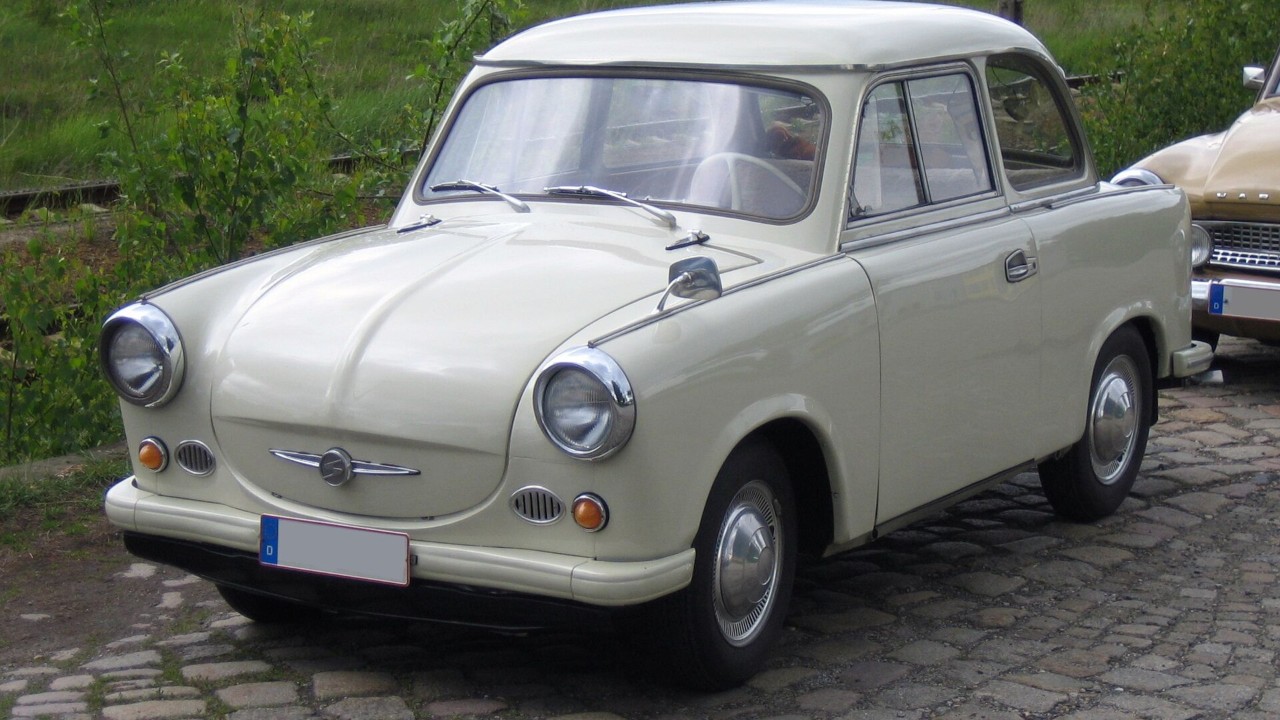
East Germany’s first series-production Trabant began with pre-series cars in November 1957. Series production then ran from August 1958 to September 1962. In all, 131,495 P50s were built, including pre-production cars, at VEB Sachsenring in Zwickau. That company was new, too. It formed in 1958 when VEB Automobilwerk “Audi” Zwickau merged with VEB Sachsenring Kraftfahrzeug- und Motorenwerke Zwickau.
The body was the headline. Duroplast panels, made from cotton waste and phenol resins, hung on a steel frame. In turn, that gave the car its famous plastic reputation. Up front, a 499 cc air-cooled two-stroke twin drove the front wheels through a four-speed gearbox. The P 50/Z version made 18 PS, and the later P 50/1 raised that to 20 PS.
Our take: the P50 opened the Trabant era, for better and worse. In fact, it showed how far engineers could stretch simple materials. We admire the engineering that came from making do with less. In our view, no car on this list did more with simpler parts. If you see a P50 today, take a look at those Duroplast panels, because they are the story of the whole car.
More from Fast Lane Only