The Cadillac Eldorado ran for nearly 50 years, from a limited 1953 convertible to a farewell edition in 2002. Along the way it went from rear drive to front drive, from fins to formal rooflines, and from a 500-cubic-inch V8 to the Northstar. Few American nameplates changed so much and kept their name.
That long run also means the market is uneven. Some Eldorados already trade like fine art. Others are priced like ordinary used cars, even though they carry real history, odd engineering or a tiny production run. However, not every one of them is a smart buy.
These nine are our picks: the Eldorados we’d be scooping up if we had the garage space. The verdicts are our opinion. The facts behind them come from auction records, published histories and reporting we read for this story, and where we couldn’t confirm a number, we left it out.
1. 1953 Cadillac Eldorado Special Sport Convertible
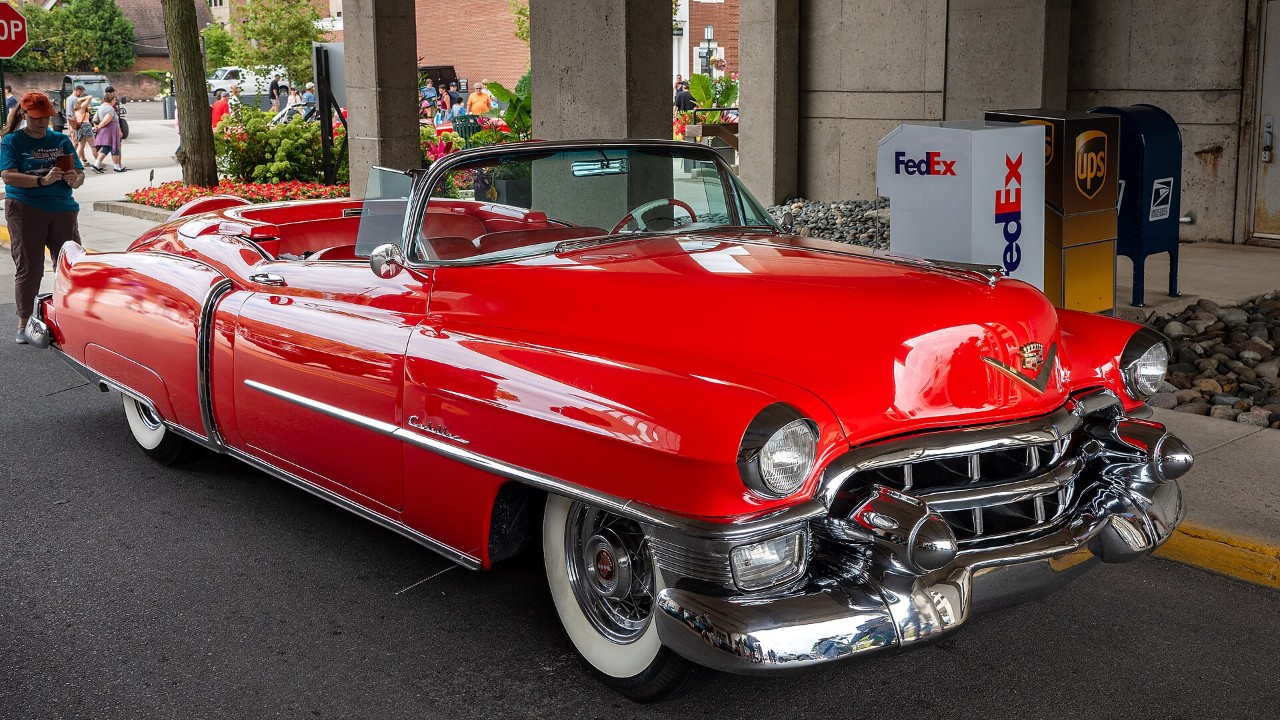
This is where the name began. Cadillac built the first Eldorado as a limited, top-of-the-range convertible, and it looked the part with a sweeping wraparound windshield. Instead of a boot over the folded top, a steel tonneau cover sat flush with the rear deck.
According to RM Sotheby’s, Cadillac built just 532 for 1953. The car started at $7,750, twice the price of a regular Series 62 convertible. Power came from a 331-cubic-inch V8 rated at 210 horsepower. Better still for buyers today, a numbers-matching example sold for $96,250 at the auction house’s Hershey sale in 2022.
Our take: that’s serious money, but it buys the founding car of a 50-year line. We’ve written before about how the 1953 Eldorado changed luxury expectations, and the scarcity hasn’t changed since. If you only ever own one Eldorado, in our view this is the one that makes the most sense to buy and keep. After all, every later Eldorado traces its name back to these 532 cars. That’s also why the 2002 farewell edition borrowed the number, as you’ll see at the end of this list.
2. 1959 Cadillac Eldorado Brougham Pininfarina

For 1959 and 1960, Cadillac handed its most exclusive sedan to Italy. Pinin Farina built the bodies in its Grugliasco works, and the chassis made a sea voyage from Detroit to Italy and back. The result was a four-door with styling of its own, priced far above any regular Cadillac.
RM Sotheby’s lot notes say just 99 were produced for 1959, describing each as hand-built. Power came from a 345-horsepower, 390-cubic-inch V8 with a Hydra-Matic. The car RM offered had every available power luxury, factory air included. There’s also a neat trick: its rear quarter windows slide back when a door opens. One example sold for $82,500 at the Auburn Fall auction in 2018.
In our view, that’s a striking price for an Italian-built Cadillac with only 99 siblings from its year. It is rarer than the better-known 1957–1958 Brougham. Even so, it gets less attention. Part of the reason is simple: few buyers today realize Cadillac ever sent bodies to Italy. As a result, a well-kept example can sit next to flashier fins at a show and draw fewer people than it deserves. If you want a rare Eldorado that few people recognize, this is the one we’d chase.
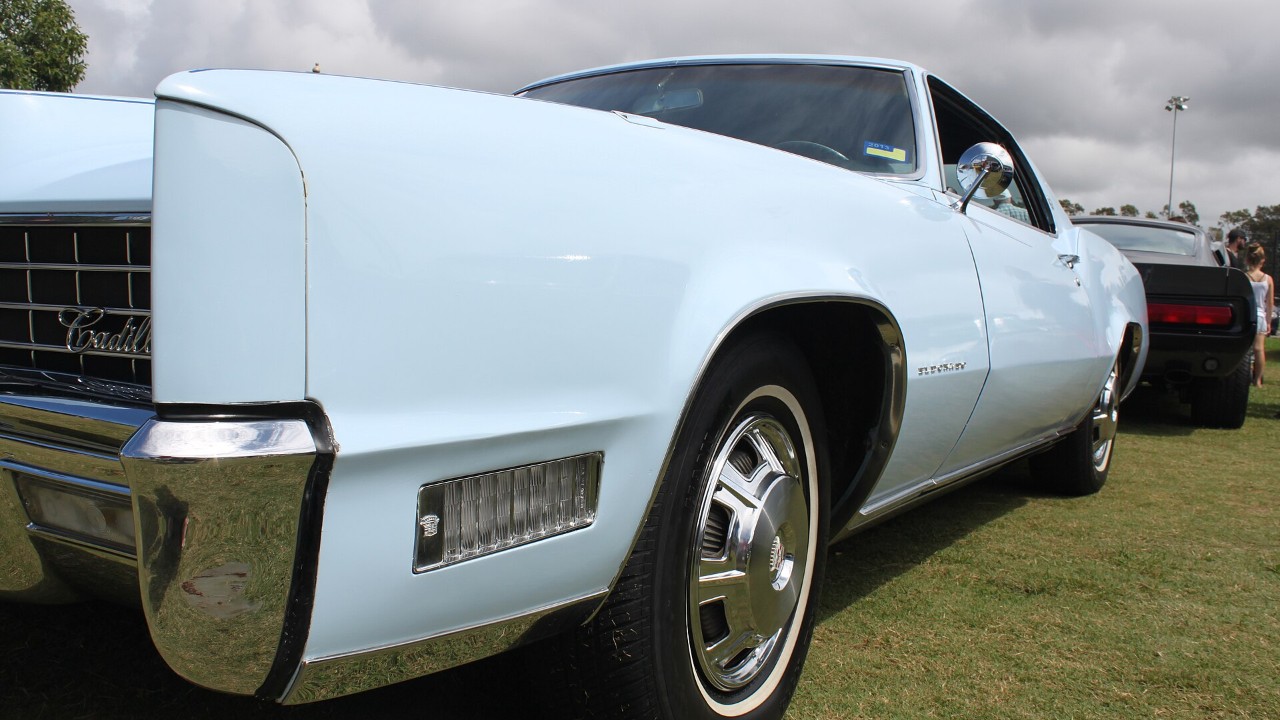
3. 1967 Cadillac Fleetwood Eldorado
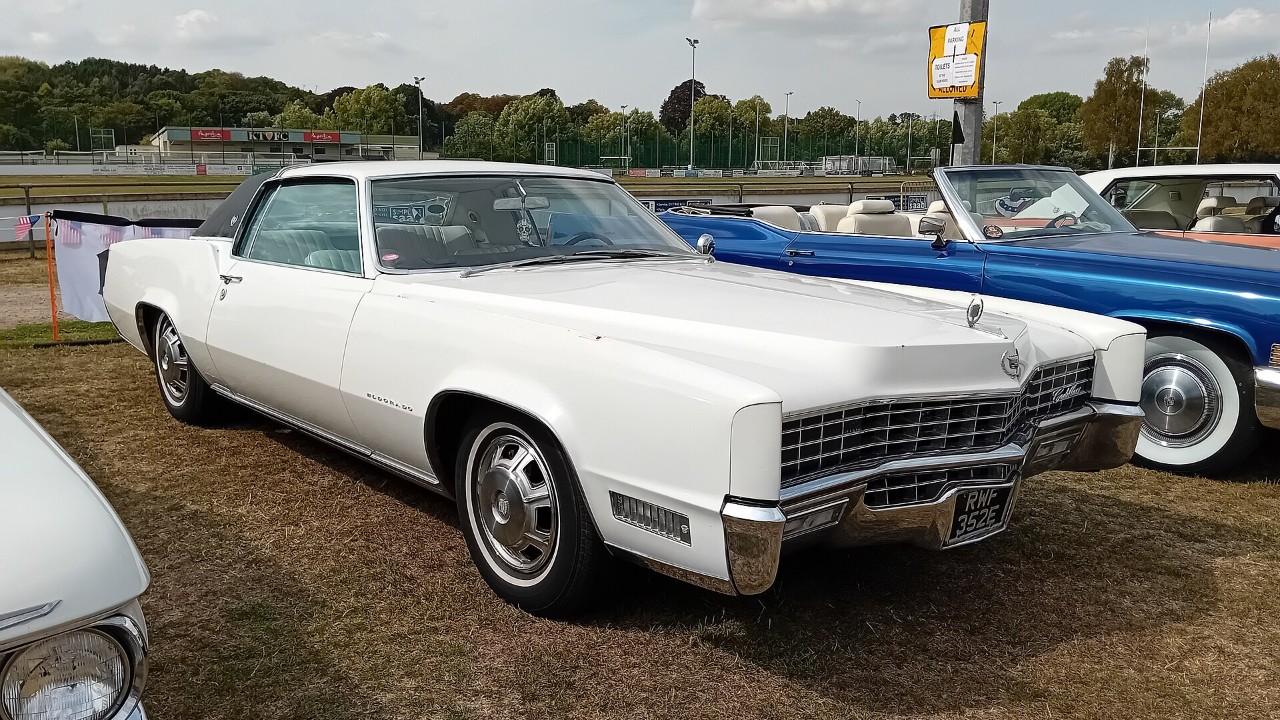
The 1967 car was a big change for Cadillac. It switched the Eldorado to front-wheel drive and turned it into a sharp-edged personal coupe. Underneath, it shared its E-body bones with the Oldsmobile Toronado and the Buick Riviera.
The front-drive layout was the clever part, and it was new territory for Cadillac, whose earlier Eldorados all drove their rear wheels. As the Times Colonist’s Bill Vance explains, Cadillac adapted its 7.0-litre, 429-cubic-inch V8 for the job. A separate transaxle and a two-inch-wide chain carried power to a three-speed Hydra-Matic. Vance calls the car a clone of the 1966 Toronado. He also notes that just under 18,000 first-year Eldorados were built, and they sold out quickly.
Our take: the 1967 is the Eldorado that proved a Cadillac could pull with its front wheels. To our eyes, it’s also the cleanest-looking of the big front-drive cars. We’d scoop one up for that sharp, formal profile alone. If you’re shopping, the first-year car is the purest version of the idea. Also, with close to 18,000 built, it’s far easier to find than most cars on this list.
4. 1970 Cadillac Eldorado 500
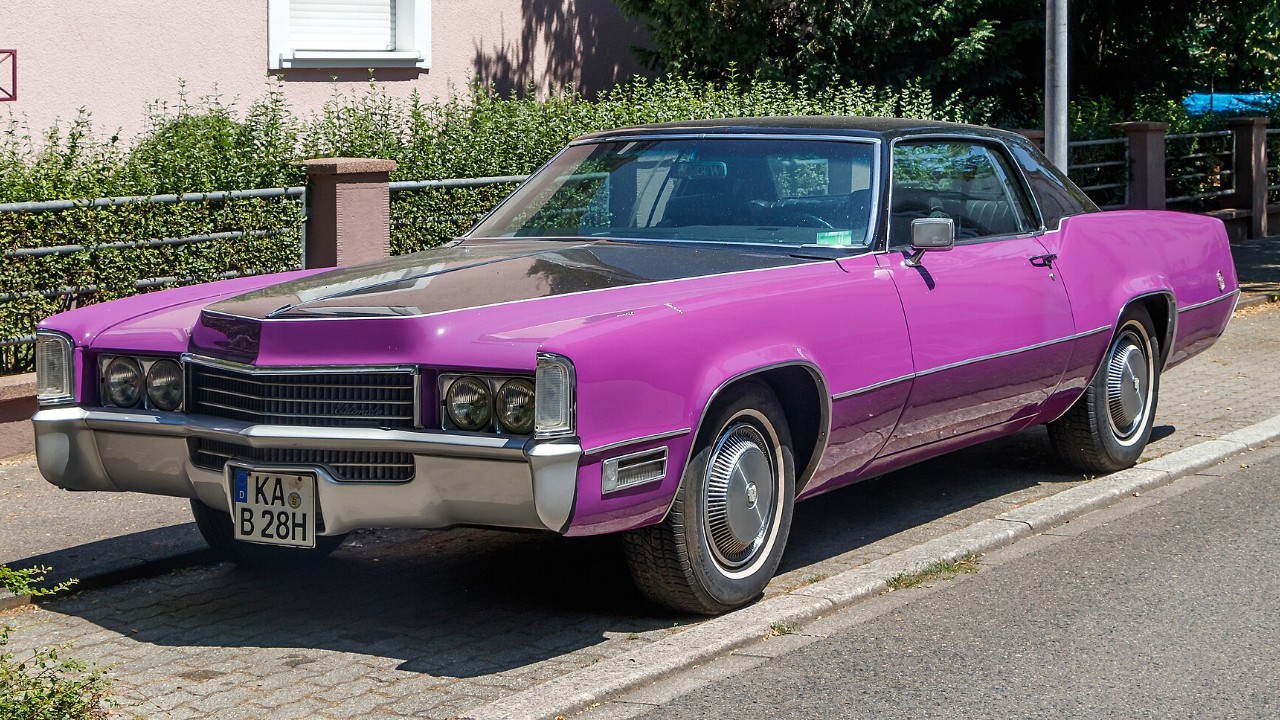
For 1970, Cadillac gave the Eldorado a new V8 of 500 cubic inches, or 8.2 liters. It was rated at 400 gross horsepower and 550 lb-ft of torque, all of it going to the front wheels. In other words, Cadillac paired a giant V8 with front-wheel drive in one luxury coupe.
That number became part of the car’s identity, and it gave the front-drive coupe plenty of effortless shove. We looked into why Cadillac built a 500-cubic-inch Eldorado in an earlier story. Meanwhile, our piece on why the 1970 Eldorado was unlike any Cadillac before it covers the rest of the story.
In our view, the 1970 is the sweet spot of the early front-drive cars. It pairs the giant engine with the first front-drive generation, and clean ones won’t stay overlooked forever. If you want the 500 in its cleanest suit, look for a 1970 coupe with its original drivetrain. Then budget for fuel, because an 8.2-liter V8 hauling a full-size coupe was never built to sip. For us, that’s part of the charm.
5. 1978 Cadillac Eldorado Custom Biarritz
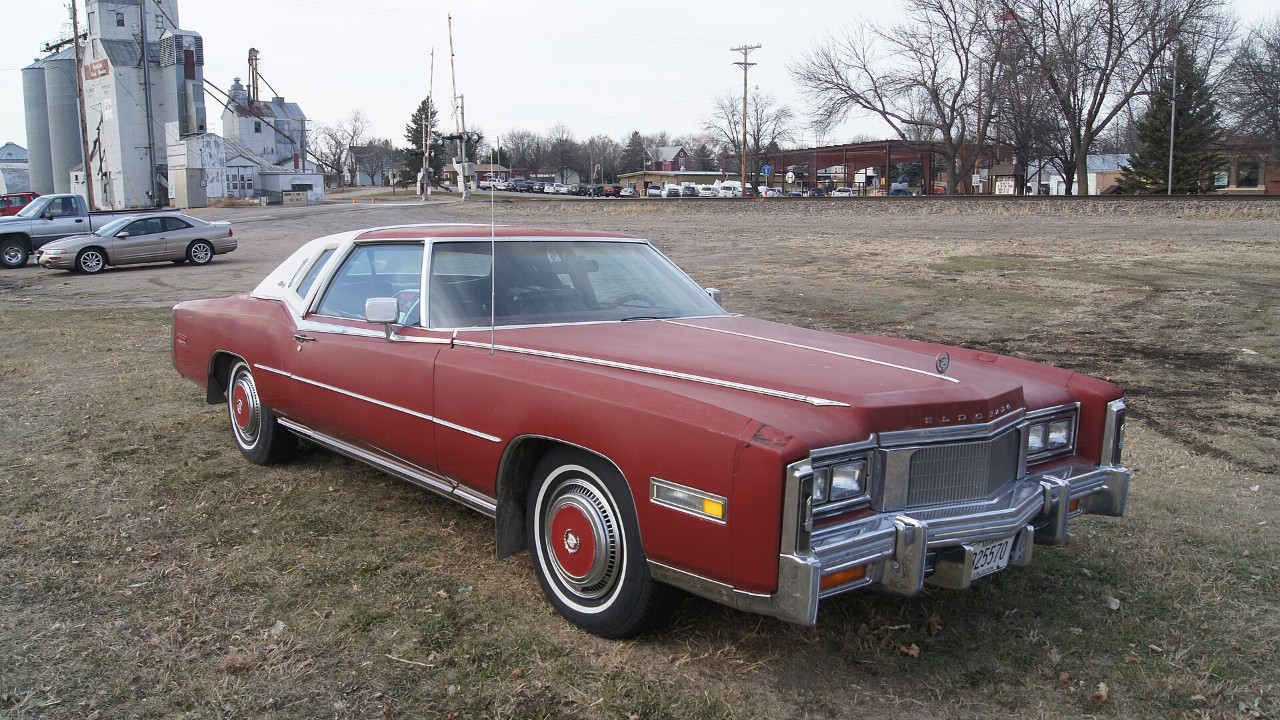
By 1978, the big front-drive Eldorado had a long list of dress-up options. The Biarritz package dressed it up with a padded landau vinyl roof, opera lights and tufted leather seats. In 1978, the Custom Biarritz option listed at $1,865. In short, it turned an already loaded coupe into something closer to a rolling lounge.
The version to hunt is the Custom Biarritz Classic, a two-tone car built only for 1978. RM Sotheby’s describes one as one of 2,000 produced, and one of 475 with the Astroroof. Its colors were Arizona Beige and Demitasse Brown over Saddle leather. Under the long hood sat a 425-cubic-inch V8 rated at 180 horsepower. That car sold for $22,000 at Fort Lauderdale in 2019.
Our take: $22,000 for a documented, 2,000-car edition is a lot of Cadillac for the money. It also captures late-1970s luxury perfectly. That car even came with a 40-channel CB radio and an 8-track player. We’d buy the Classic over a regular Custom Biarritz, because the limited run gives it a story to tell.
6. 1981 Cadillac Eldorado V8-6-4
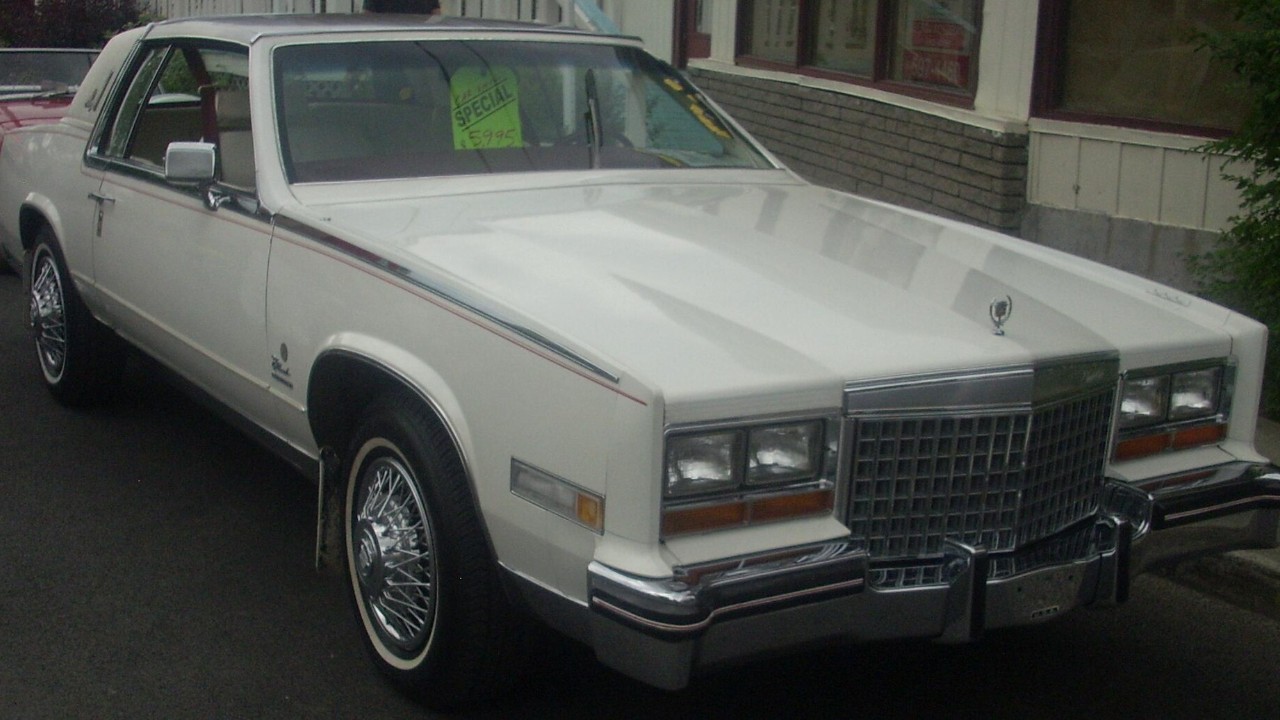
The 1981 Eldorado carried one of Detroit’s boldest fuel-saving experiments. Its V8-6-4 engine, based on a 368-cubic-inch (6.0-liter) V8, could shut down cylinders on the move. The idea was to run as a V6 or even a V4 when cruising. At the time, Cadillac fitted it as standard to all its gasoline cars for 1981, so the Eldorado got it too.
According to Mac’s Motor City Garage, Eaton developed the system. Electronic solenoids deactivated the rocker arms, and an engine control module decided when. A dash display called the MPG Sentinel even showed it working. However, the hardware wasn’t ready. The system hunted between modes, and drivers felt bucking and shaking. After more than a dozen revisions, Cadillac dropped it after 1981 and told dealers to disable it for owners with problems.
In our view, that history is exactly why an original V8-6-4 Eldorado is worth saving. It’s a rolling record of an idea Detroit tried before the technology was ready. If you buy one, check whether the system works, and budget to keep it original rather than chasing a fix.
7. 1984 Cadillac Eldorado Biarritz convertible
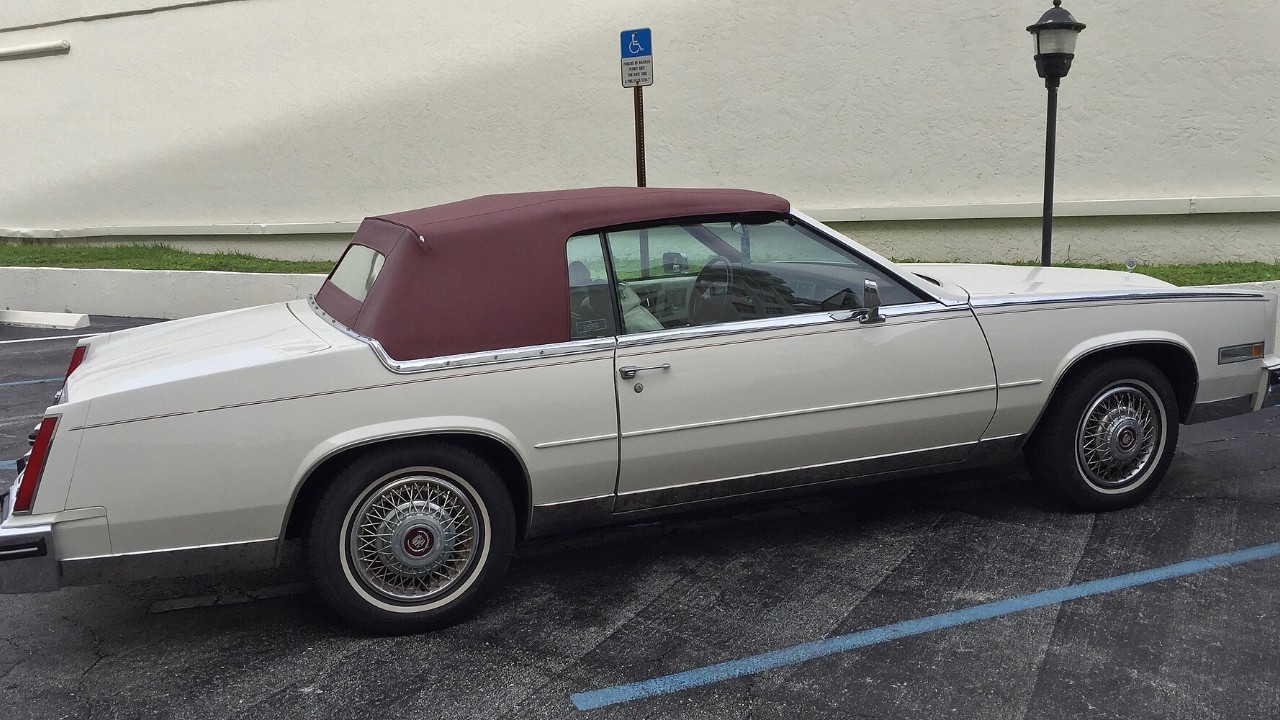
Cadillac had sold its 1976 Eldorado convertible as the last of its kind. Yet the open Eldorado came back for 1984 and 1985 as a Biarritz. Specialist coachbuilders did the cutting: the car Jalopnik looked at was an ASC conversion, while Hess & Eisenhardt converted others. Each carried a Cadillac VIN and full dealer support when new.
The numbers are modest. Jalopnik puts sales at about 5,500 across the two years. Power came from a 4.1-liter V8 rated at 135 horsepower, through a three-speed automatic. The convertible also weighed about 200 pounds more than the coupe, so it was never quick. Then again, speed was never the point of a Biarritz. Instead, it offered a power top, Cadillac comfort and a front-drive chassis that felt modern for its day.
Our take: you’re buying this one for the top, not the engine. It’s a factory-backed 1980s Cadillac convertible with a small production run, and that combination is uncommon. Buyer advice: get the conversion’s paperwork, check the top mechanism and plan on gentle cruising, not drag strips.
8. 1993 Cadillac Eldorado Sport Coupe
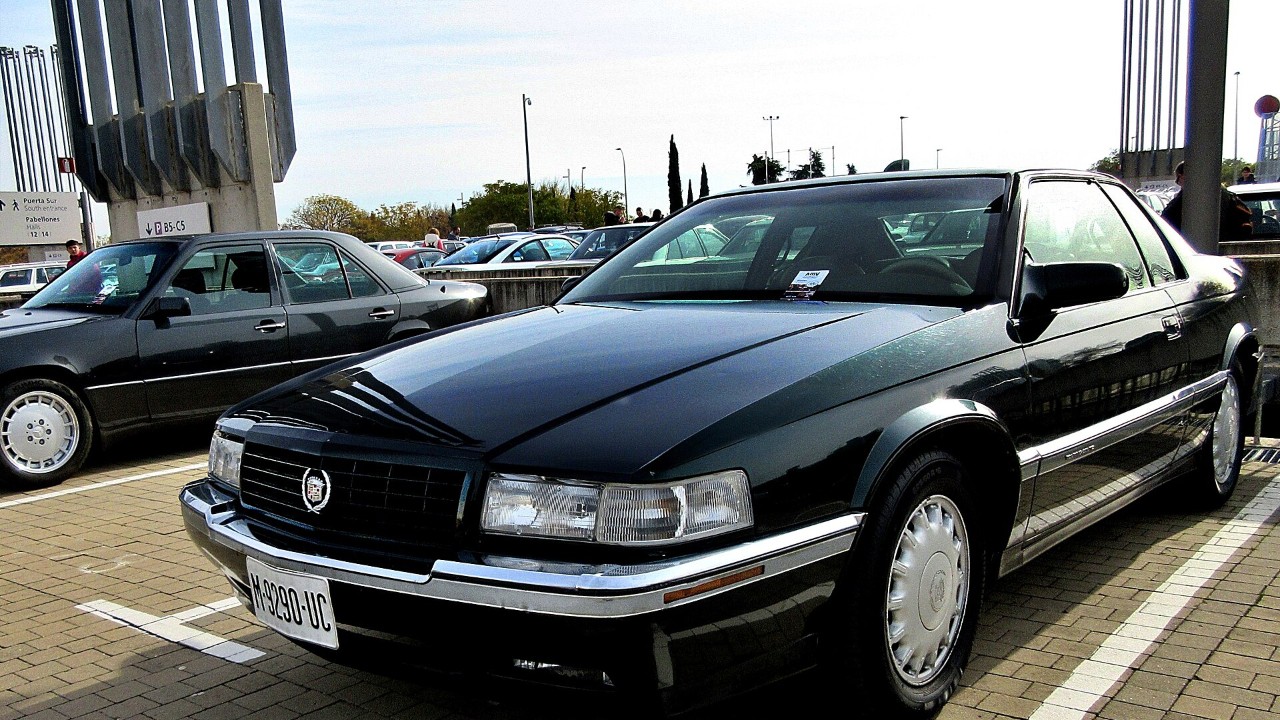
The 12th-generation Eldorado arrived for 1992, three inches wider and 11 inches longer than the coupe it replaced. Cadillac’s new Northstar V8 was delayed, so the first cars used the 4.9-liter V8. For 1993, the line split into two personalities. Buyers could pick a Touring Coupe or a Sport Coupe, and the two didn’t share an engine.
According to The Truth About Cars, the 1993 Touring Coupe got the 295-horsepower L37 Northstar as standard. The Sport Coupe, on the other hand, kept the 4.9-liter V8. Only for 1994 did the Sport Coupe switch to the LD8 Northstar, rated at 275 horsepower and 300 lb-ft.
That one-year quirk is why we like the 1993 Sport Coupe. It pairs the new 1990s Eldorado body with the older 4.9, a combination that ended after 1993. In our view, it’s an overlooked oddity of the 1990s lineup. If you’re shopping, confirm the engine before you buy, because the badges alone won’t tell the whole story. Also, ask for service records, since a well-kept 1990s Cadillac is far easier to enjoy than a neglected one. For the price of a used commuter, it’s a lot of coupe.
9. 2002 Cadillac Eldorado Collector Series
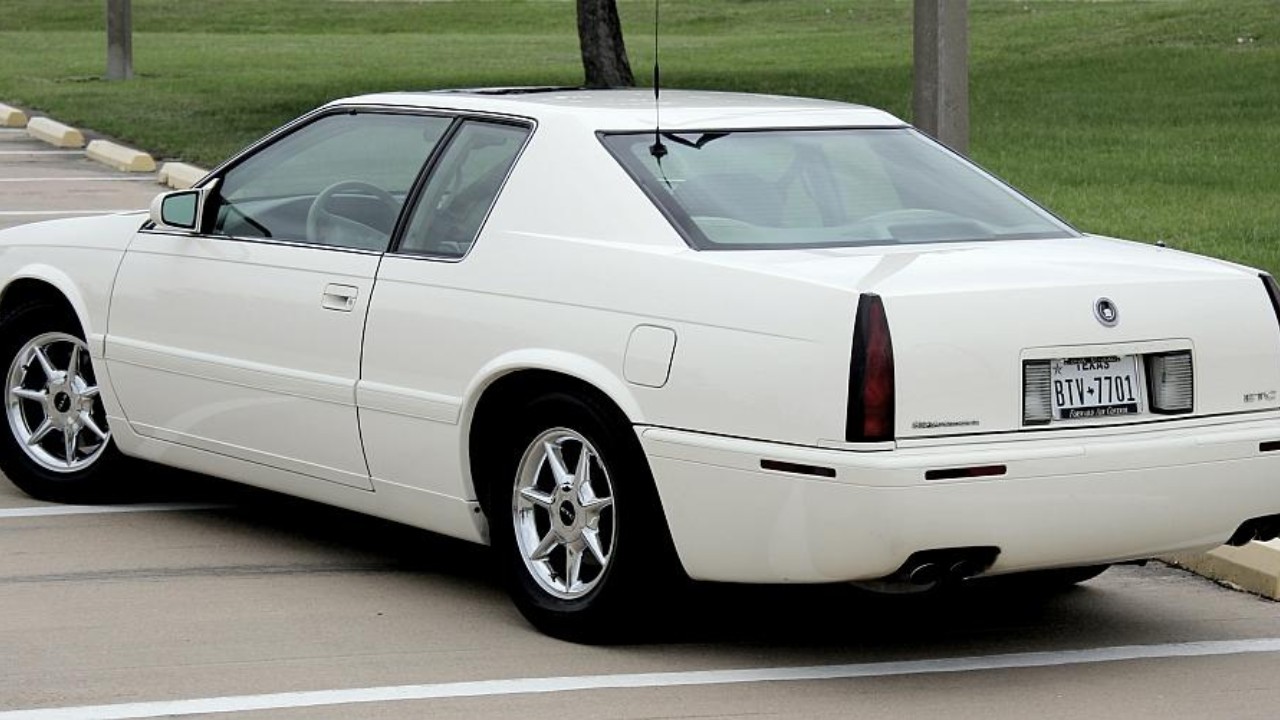
Cadillac closed the book on the Eldorado with a tribute to where it started. The Collector Series ran to 1,596 cars, three batches of the 532 built in 1953. They came in red or white, matching the debut car’s colors. Specifically, Auto123 names them as Alpine White and Aztec Red, both original Eldorado shades.
The Truth About Cars lists the details. Each got a two-tone interior and a numbered dash plaque, plus carbon-fiber-look trim in place of wood. Cadillac even tuned the exhaust to sound like a 1950s Cadillac. Auto123 reported that the final one rolled off the line at the Lansing Craft Centre in Lansing, Michigan, on April 22, 2002.
Our take: this is the easiest way into a numbered, limited Cadillac. In 2020, The Truth About Cars found No. 894 of 1,596 listed for $7,500. That’s why we’d scoop one up before more buyers notice the 1953 connection. Above all, it’s a rare chance to own a numbered Cadillac for used-car money. For the record, the last Eldorado of all went to the Cadillac Museum.
More from Fast Lane Only