Walk any car show on a sunny Saturday and you’ll see it happen. A Chevrolet convertible with the top folded draws a crowd, and so does a finned Mopar or a big Buick with its windows down. Open cars have a pull that hardtops rarely match, because you can see the whole interior from ten feet away.
Detroit knew it, too. For decades, the convertible was often a model line’s showpiece. However, open cars cost more to build and buy, so many came in small numbers.
These 12 are our picks for drop-tops that still win over a show crowd, from a 1958 Edsel to a 1973 Buick. The verdict on each is our opinion. The facts come from auction records, club and model histories, and reporting we read for this story, and where we couldn’t confirm a number, we left it out.
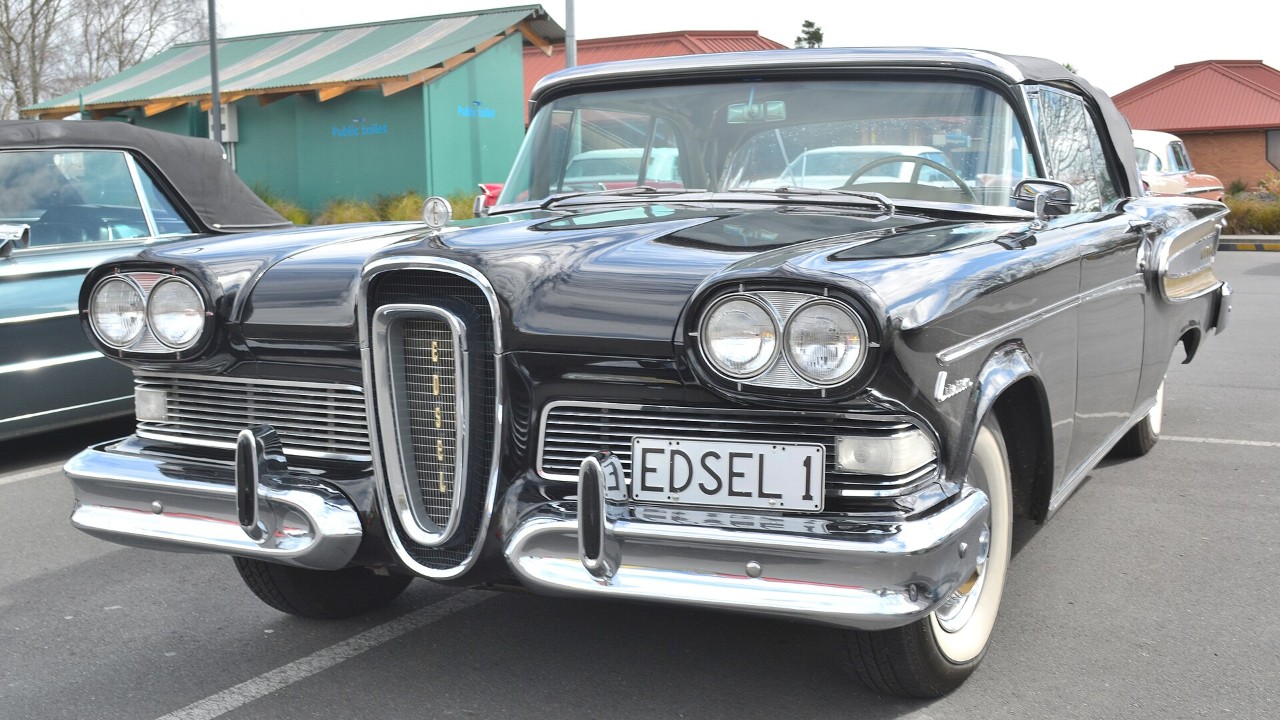
1. 1958 Edsel Citation convertible
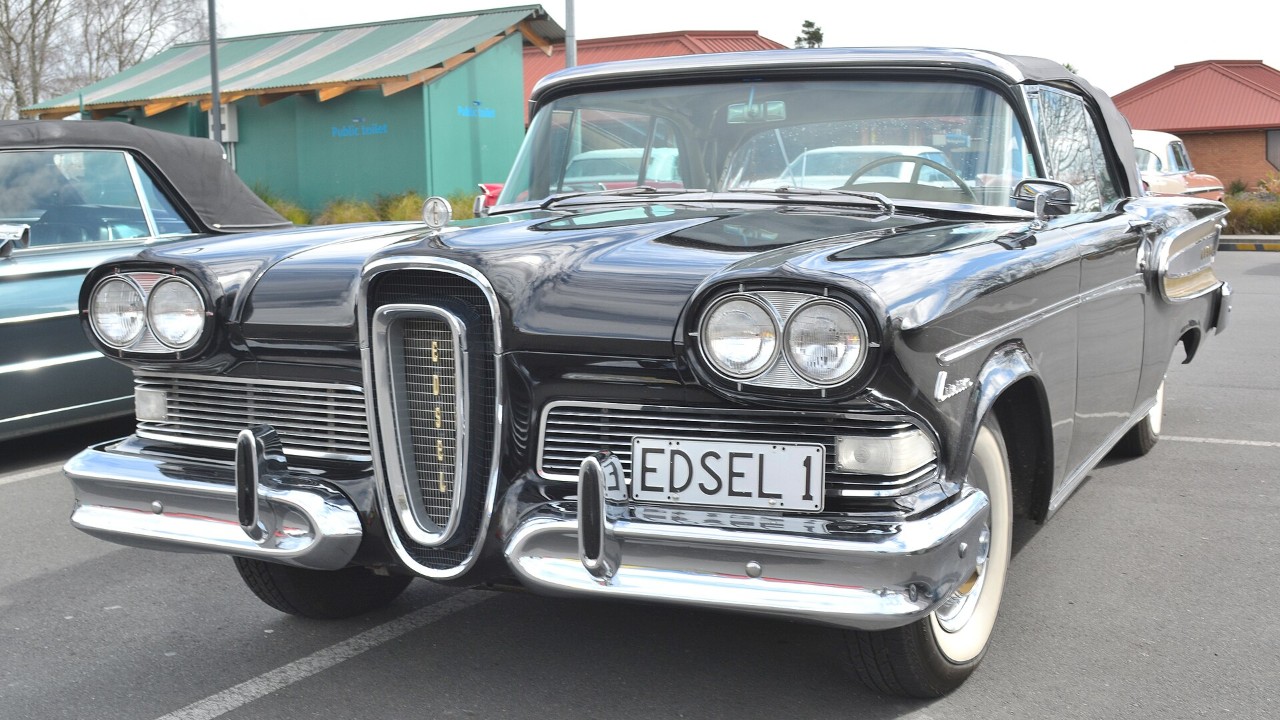
Edsel’s Citation was the top model for 1958, and the convertible was its showpiece. It rode on a 124-inch wheelbase and carried the famous horse-collar grille up front. Inside, the Teletouch system put the transmission controls in the hub of the steering wheel. As a result, drivers changed gears with push buttons where the horn would normally be.
Edsel built only 930 Citation convertibles that year. That made it the second-rarest 1958 Edsel, behind only the Bermuda wagon. Under the hood sat the E-475, a 410-cubic-inch V8 rated at 345 horsepower and 475 lb-ft of torque. In fact, the engine’s name matches that torque figure.
Our take: the Edsel’s reputation as a flop works in its favor at a show. People walk over to see the car they’ve heard jokes about, then stay to look at the push buttons and the trim. Few cars spark that many conversations, and that’s what a good show car does. If you want one, find a car with working Teletouch, because the buttons are the part everyone asks to see. After all, a 930-car convertible from a brand remembered as a flop is a rare thing to stand next to.
2. 1959 Chrysler 300E convertible
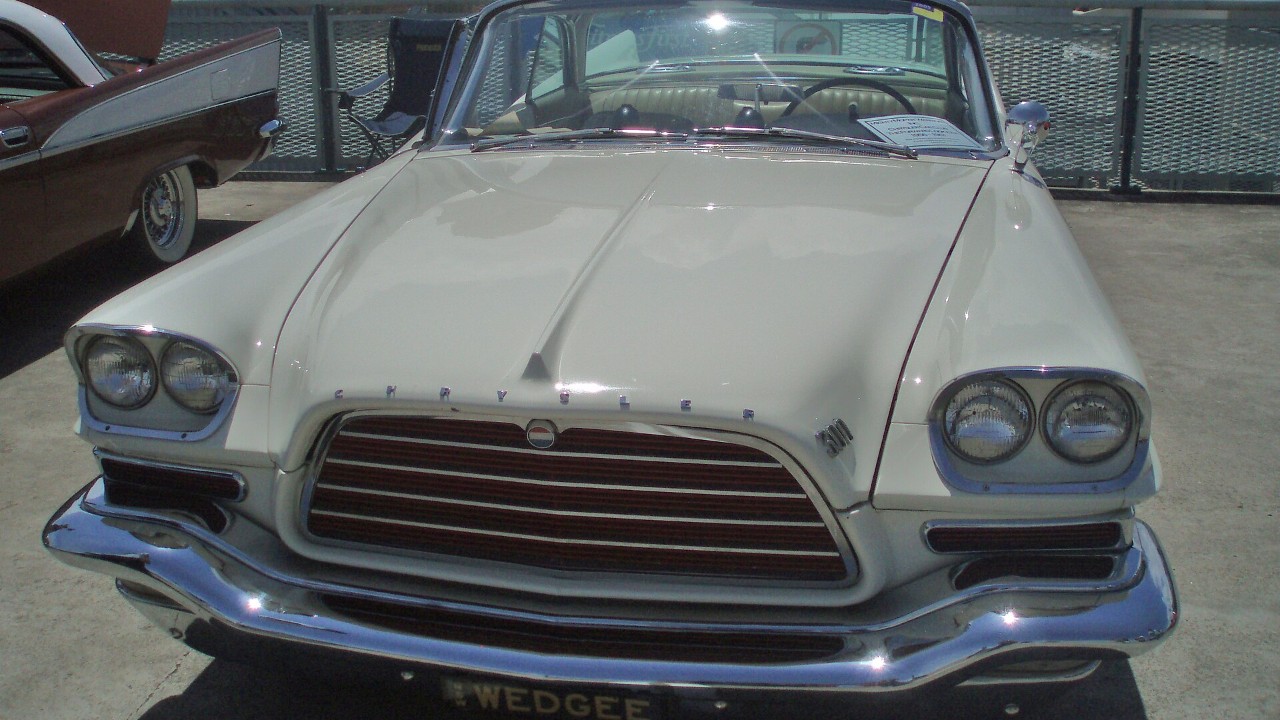
The 300E was the 1959 entry in Chrysler’s “letter series,” its line of full-size performance cars. It used the 413-cubic-inch “Golden Lion” wedge V8, an engine reserved for the 300 and Imperial. Output was 380 horsepower, about the same as the year before.
The convertible is the rare one. Chrysler built 647 300Es in all, and only 125 of them were convertibles. Each one came with power swivel front seats that turned toward the door as it opened. The convertible listed at $5,749, against $5,319 for the hardtop. We’ve covered other Chrysler 300 letter cars before, but the 300E open car is a different kind of rare.
In our view, 125 cars is a tiny number for a car this big and this fast. It’s a full-size luxury convertible with a performance reputation, and that combination draws serious enthusiasts at any show. Also, the swivel seats give people a reason to lean in and look. If you find one, expect to pay for that rarity. Then again, few open cars from 1959 pair this much power with this much luxury, so the premium buys something real.
3. 1960 Plymouth Fury convertible
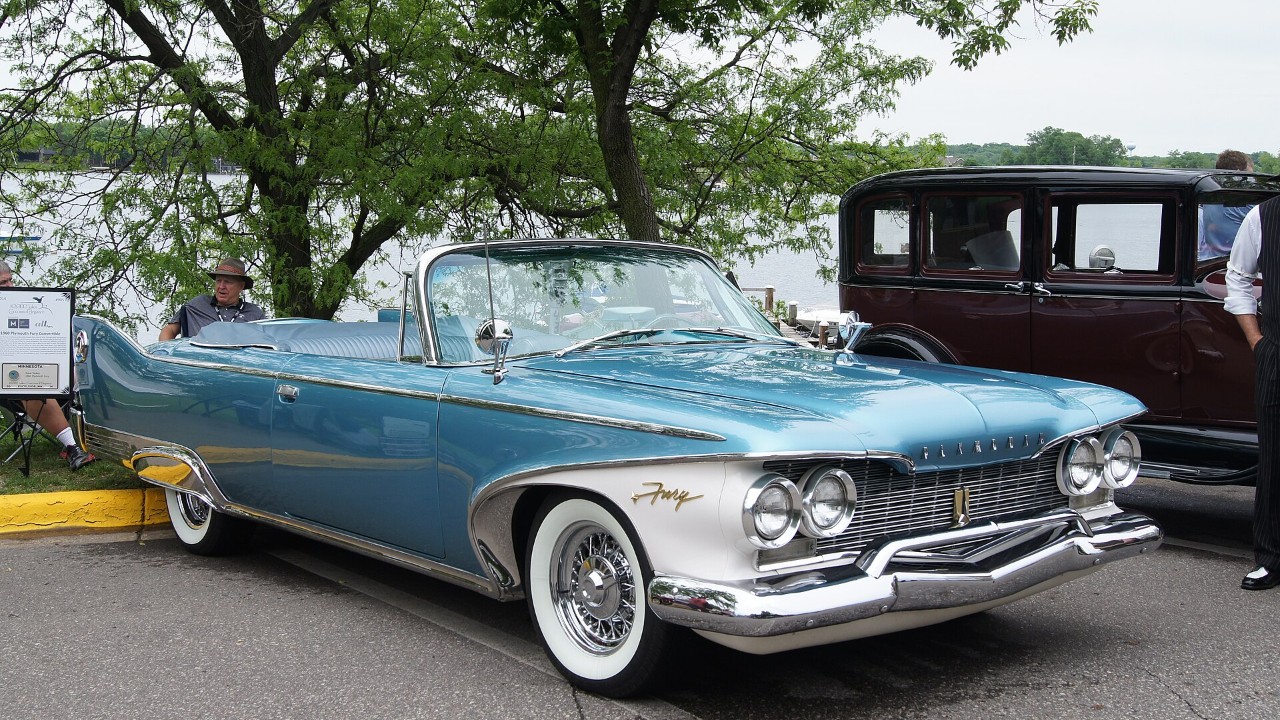
The 1960 Fury marked a turning point for Plymouth. According to Mopar Insiders, it was the first Fury with unibody construction. The same year also brought Chrysler’s ram induction system and the slant-six engine.
The top engine was the 361-cubic-inch SonoRamic Commando V8. It used a cross-ram intake with two four-barrel carburetors and was rated at 310 horsepower and 435 lb-ft. Power went through a push-button TorqueFlite automatic, another conversation starter for anyone peering into the cabin. Meanwhile, the cabin carried an odd square steering wheel. That car also had power steering, power brakes, chrome wire wheels and a sport deck with a faux spare tire. One restored gold convertible with factory air sold for $106,700 at Mecum’s Indy Fall Special.
Our take: the long ram tubes are the reason to open the hood at a show. Few engines from 1960 look so purposeful. Add the fins and the square wheel, and the Fury convertible delivers three talking points in one car. We’d look for a SonoRamic car with its original intake, because that’s the version people remember. Otherwise, you’re paying for fins without the engine that made the car special.
4. 1962 Oldsmobile Starfire convertible
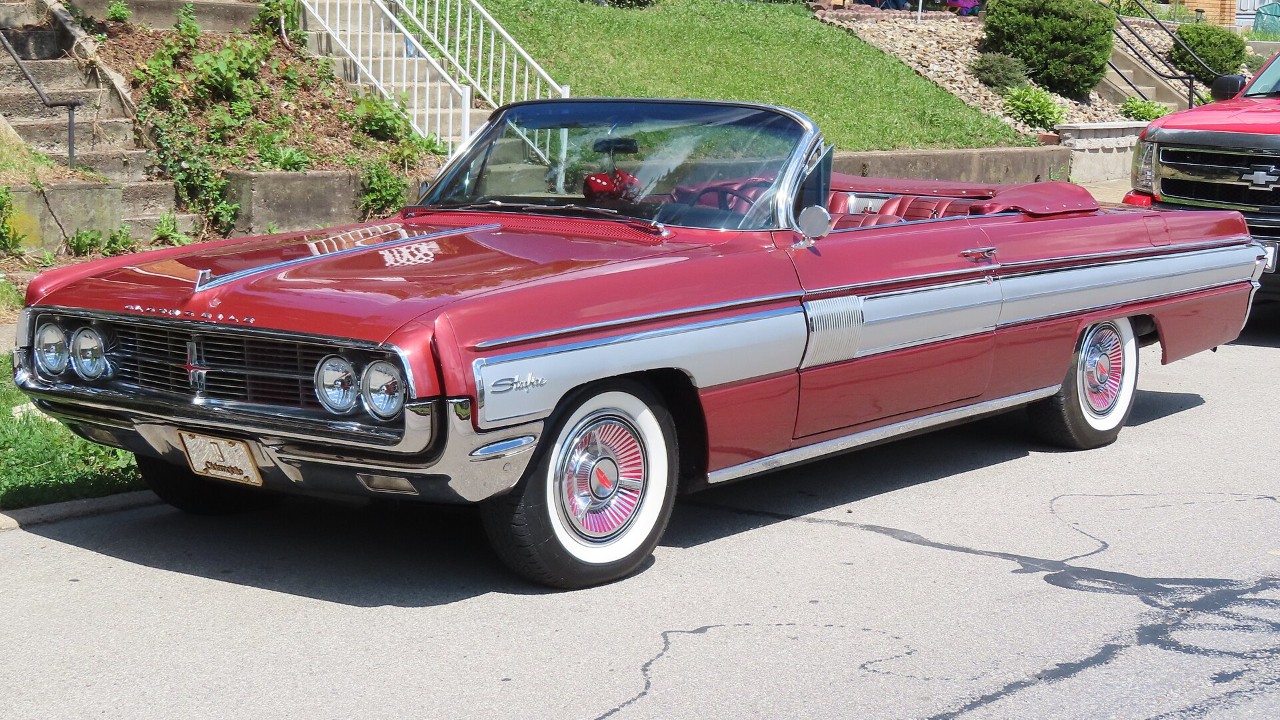
The Starfire was Oldsmobile’s full-size sporty luxury car for 1962. Under the hood sat a 394-cubic-inch Rocket V8 rated at 345 horsepower. For a big luxury convertible, that was plenty of muscle, and it gave the Starfire real punch to match its name.
RM Sotheby’s offered a Sahara Metallic convertible in 2020 and described it as one of 7,149 produced. That car had power steering, brakes, top, seats and antenna, plus a Bi-Phonic speaker system. It sold for $26,500 at the Auburn Fall auction. In other words, a buyer took home a 345-horsepower convertible for less than many restored small-block muscle cars bring.
In our view, that’s one of the best values on this list. You get a big, well-equipped convertible with a 345-horsepower V8 for the price of a nicely kept modern truck. Moreover, the Starfire name carries a jet-age flair that suits a sunny show field. If you’re shopping, check that the power accessories all work, because fixing several of them at once adds up. Then enjoy the attention, because a clean one rarely sits alone for long.
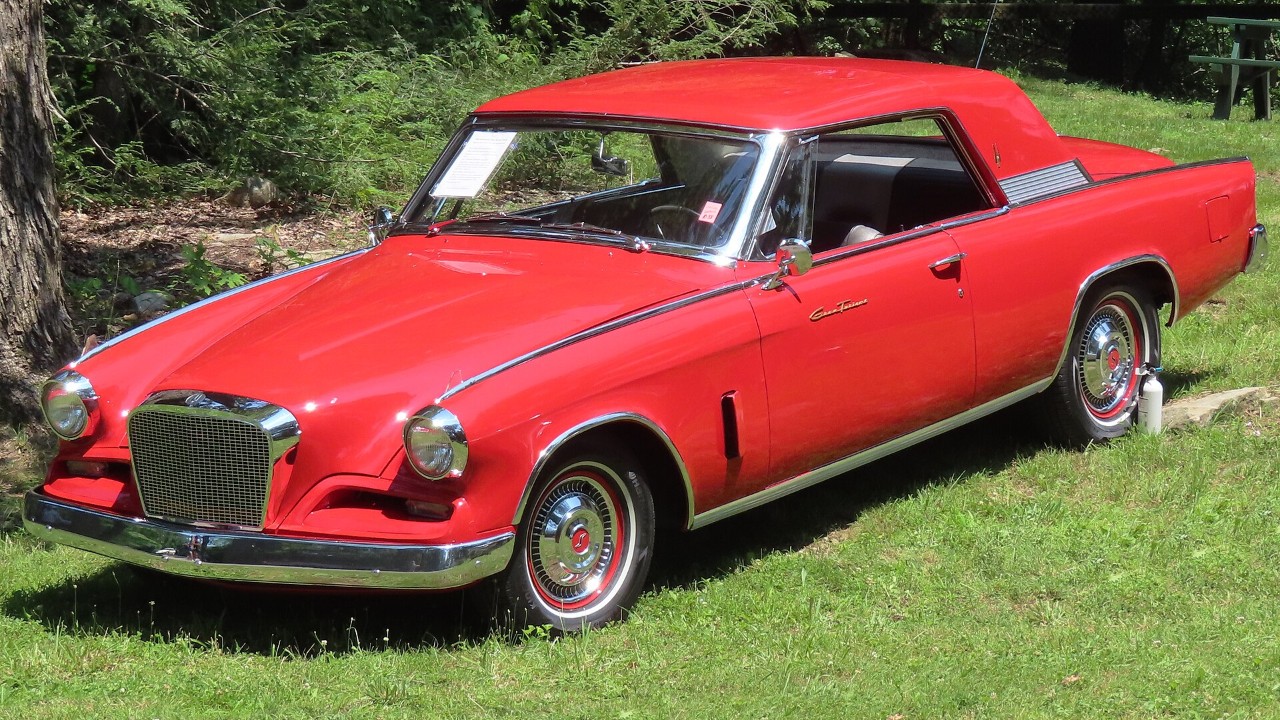
5. 1963 Studebaker Lark Daytona convertible
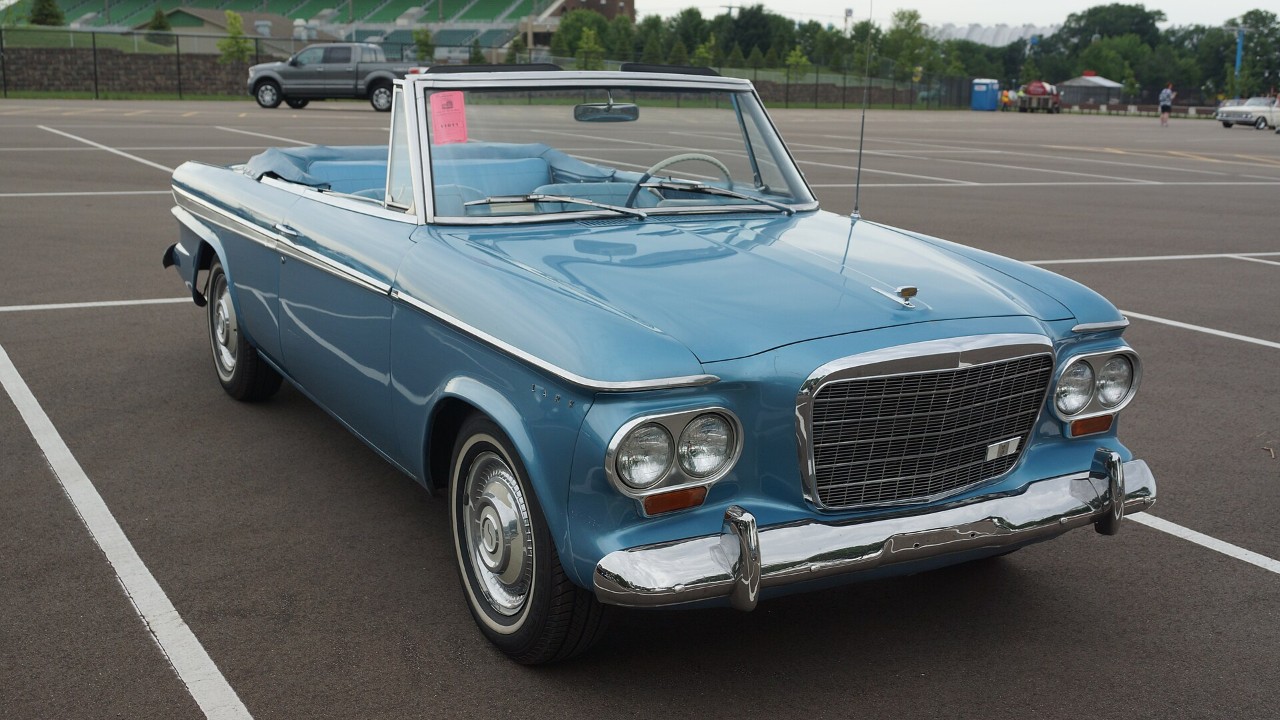
The Lark was Studebaker’s compact, and for 1963 designer Brooks Stevens gave it a careful update. He dropped the wraparound windshield, thinned the door and roof pillars and added a new instrument panel. The Daytona line, which included the convertible, got its own side trim that narrowed toward the rear. As a result, the small car looked longer and lower than its size suggests.
Under the hood, buyers had choices. For 1963, Studebaker added the Avanti’s 289 V8 in R1 and supercharged R2 forms. Not every Daytona got one, though. For example, a 1963 Daytona convertible Barn Finds featured had a 259-cubic-inch V8, bucket seats and a console. The site also notes that Studebaker closed its South Bend plant late in 1963, which gives every 1963 car a bittersweet backstory.
Our take: an orphan brand is always a show magnet. People see the Studebaker badge, remember a relative’s car and come over to talk. The Daytona convertible adds bucket seats and a clean, compact shape. We’d hunt for one with an R1 or R2 engine, but even a 259 car makes friends at a show.
6. 1965 Chevrolet Impala SS convertible
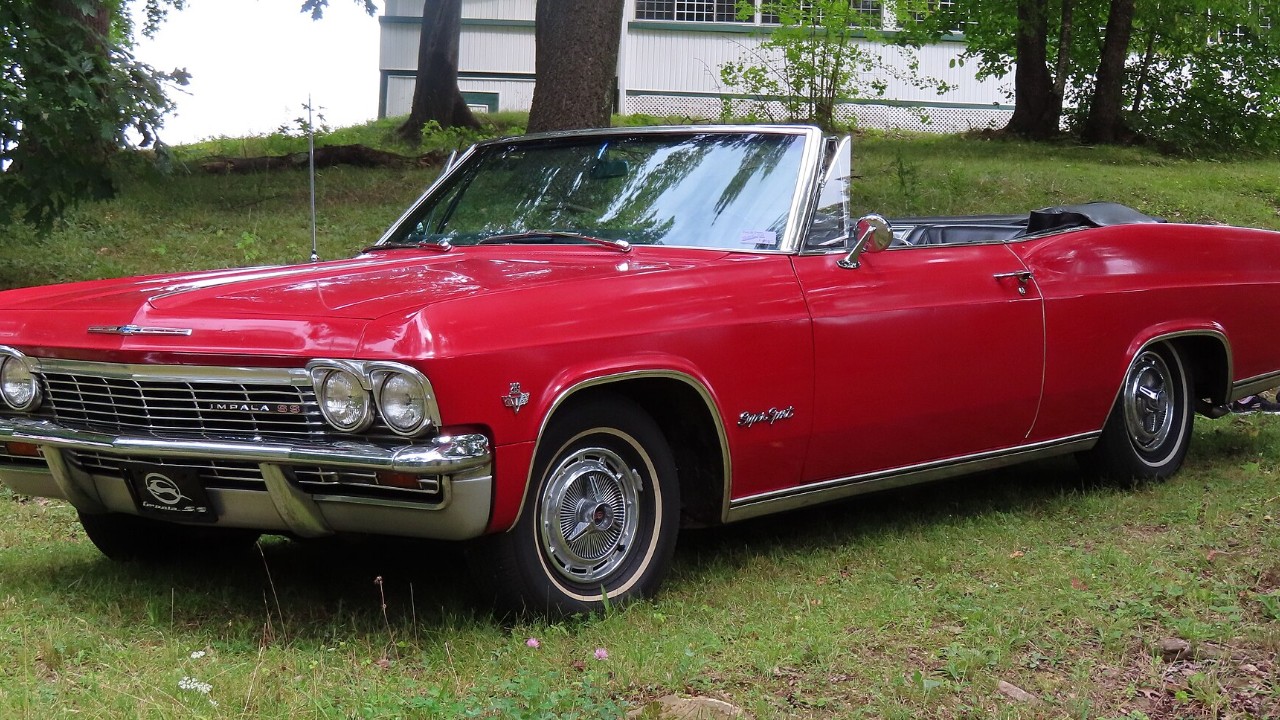
The 1965 Impala was Chevrolet’s big full-size car, and the SS was its sporty dress. As a Chevrolet convertible, it offered the SS look with the sky for a roof. On the RM Sotheby’s car, the Super Sport package added bright wheel-well moldings, special badges and front bucket seats. With the top down, the long, flat body lines show off well.
The engine choice matters. A 1965 Impala SS convertible RM Sotheby’s sold in London had the 396-cubic-inch Turbo-Jet V8, rated at a “conservative” 325 horsepower in the auction house’s words. It also had a four-speed manual with a console shifter. That car rode on a 119-inch wheelbase and sold for £28,000 in 2012. It also had a factory vacuum gauge on the dash, a small detail that show-goers love to spot.
In our view, a big-block, four-speed Chevrolet convertible is close to the perfect show car. It’s familiar, so people know what they’re looking at, and that familiarity pulls people in. However, the 396 and the stick shift turn a family cruiser into a performance car. If you find a four-speed 396 car, in our opinion it’s worth the extra money over a small-block automatic. That’s the version people stop to ask about.
7. 1967 Pontiac Grand Prix convertible
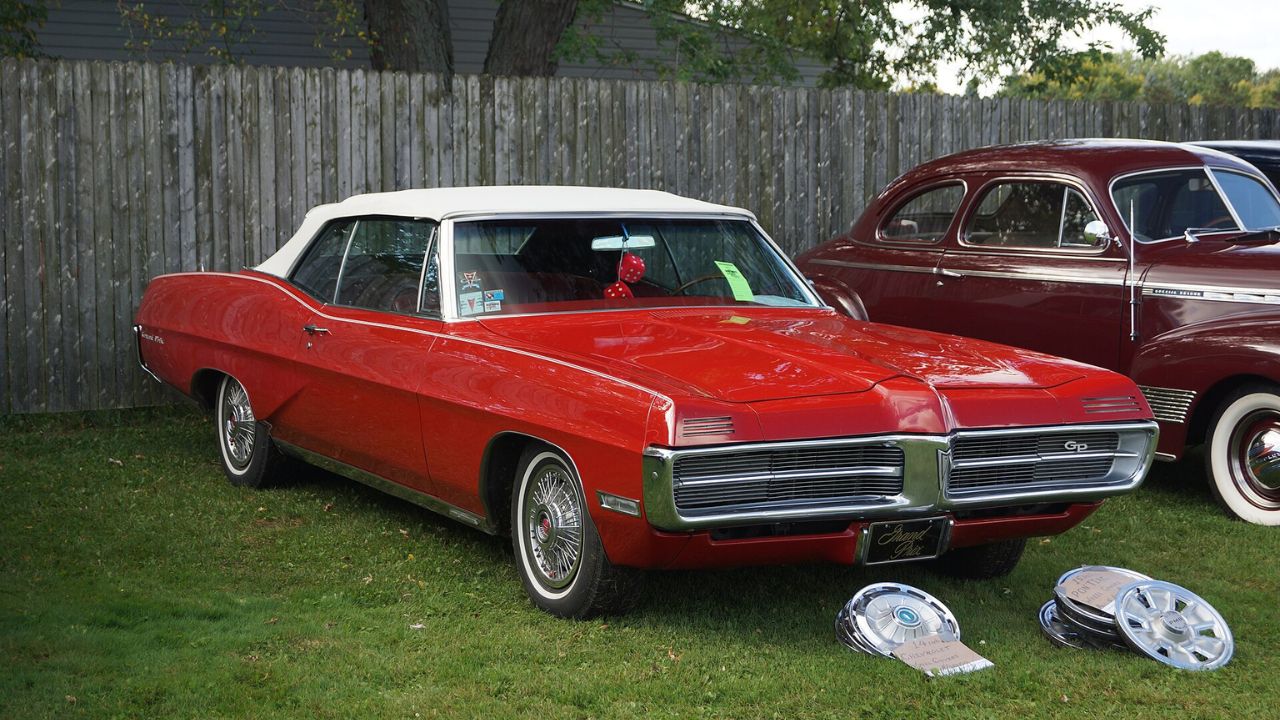
The Grand Prix was Pontiac’s big personal luxury car, and for one year it lost its roof. The 1967 model wrapped its nose around hidden headlights. Its turn signals sat partly hidden in triple slats above the grille.
According to IndieAuto, Pontiac built only 5,856 Grand Prix convertibles. It was the only year the Grand Prix came as a convertible. Sales trailed far behind the GTO and Firebird convertibles, even with heavy illustrated advertising, and the open car was gone for 1968. The site adds that its unique trunk lid and rear quarter panels were hard to justify for so few sales.
Our take: the one-year-only story is exactly what makes it a show favorite. Many people don’t know a Grand Prix convertible ever existed, so they stop and ask. Meanwhile, the hidden headlights give the car a clean, wide face. It’s a big Pontiac with real presence, and it looks best with the top down. We’d buy one with its trim complete, because those one-year body parts are the hard pieces to replace. Also, a hidden-headlight car with working doors makes a great show-and-tell moment when you flip the lights on.
8. 1967 Chevrolet Corvette 427 convertible
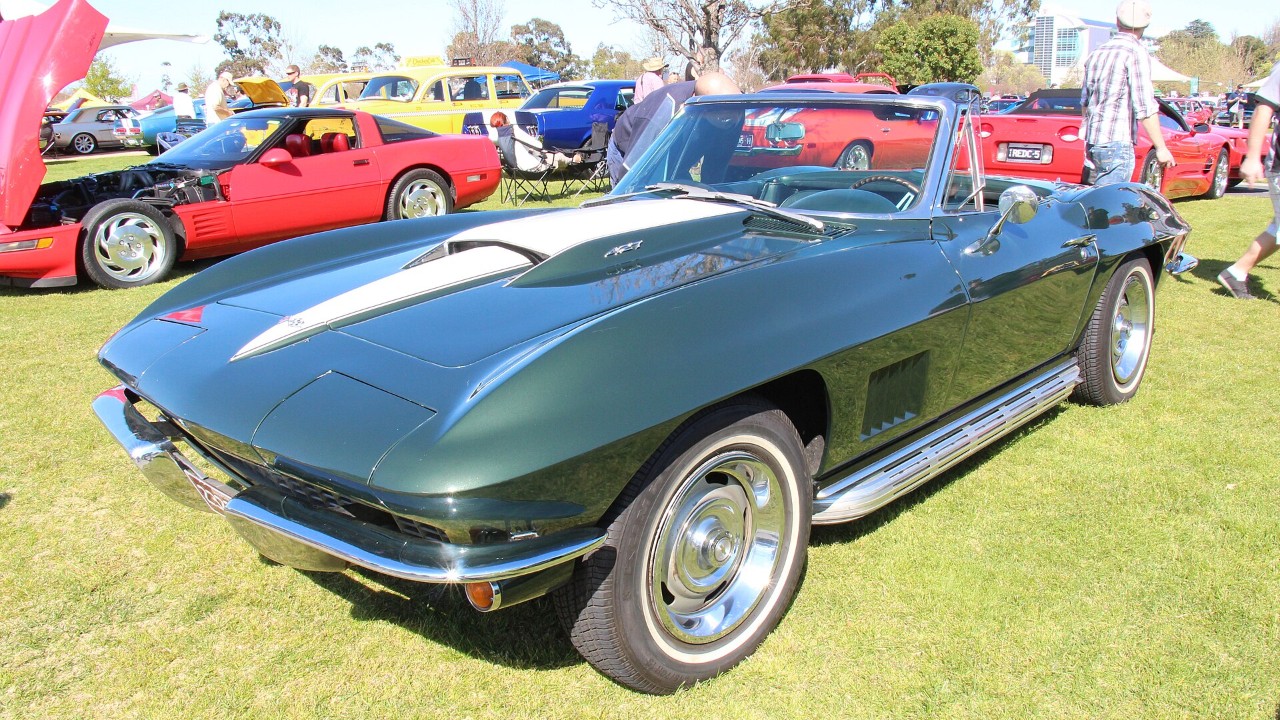
The 1967 Corvette was the final year of the second-generation Sting Ray, because Chevrolet held the new body until 1968. In our view, that timing makes it the most developed version of the shape, and the open Corvette is the Chevrolet convertible we’d most want to park at a show.
The top choice was the L71. According to RM Sotheby’s, this solid-lifter 427 used three Holley two-barrel carburetors and made 435 horsepower. The red-interior car RM sold at Amelia Island in 2013 also had the J56 heavy-duty brakes, ordered on only 1.2% of 1967 Corvettes. It brought $148,500. We’ve also looked at how the 1967 Corvette 427 stacks up against modern cars.
In our view, this is the car people walk across the field to see. It also helps that 1967 was the last year for this body, so the car reads as the end of an era. The big-block hood, optional side pipes and open cockpit make the point before the engine ever starts. If you’re buying, paperwork is everything, because documented 427 cars carry a big premium. For example, the Amelia Island car came with its tank sticker, Protecto-Plate and owner’s manual. It also wore an NCRS Top Flight award, the kind of proof that keeps buyers calm.
9. 1968 Mercedes-Benz 280SE convertible
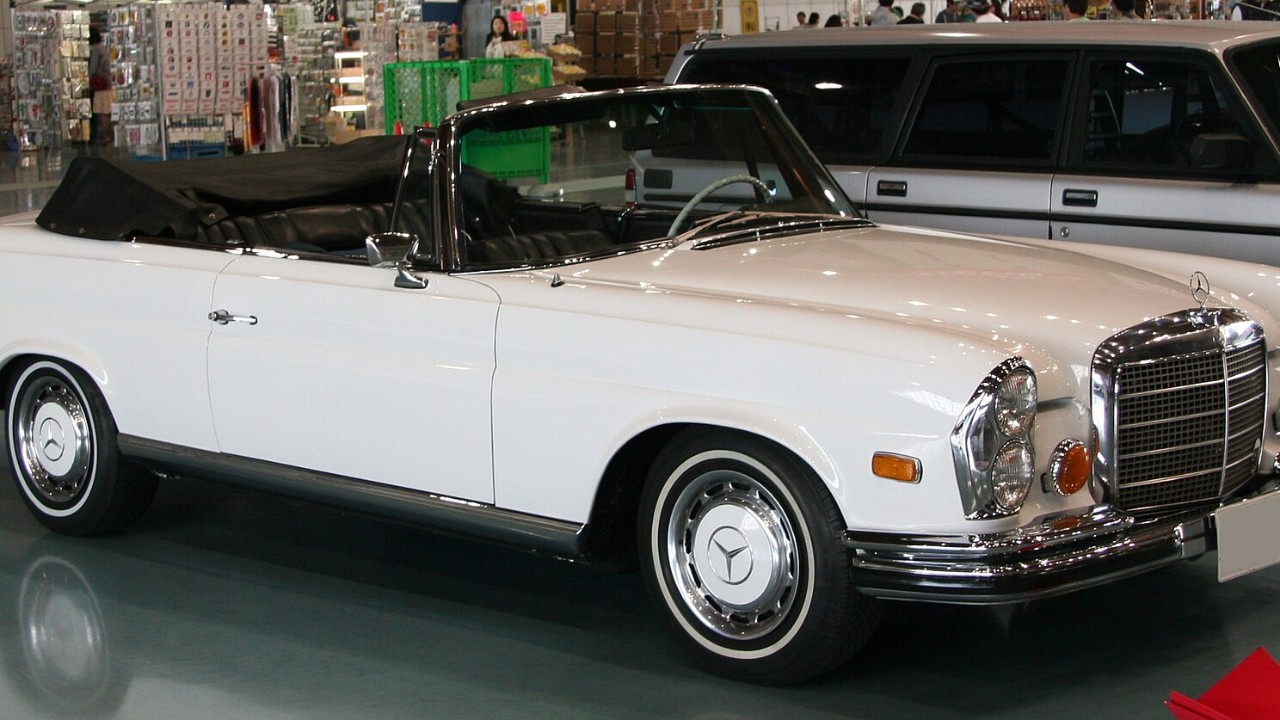
The 280SE cabriolet was Mercedes-Benz’s elegant convertible of the late 1960s. Its 2.8-liter six had 2,778 cc, and supercars.net lists it at 160 horsepower. So it was never about speed. Instead, it was built for long, unhurried drives with the top down. The shape is pure upright German luxury, with plenty of chrome.
It was never common. RM Sotheby’s describes the final-series car as hand-built and says only 1,390 were made from 1968 to 1971. A 1968 car sold for $173,600 at the firm’s Amelia Island sale in 2020. By comparison, supercars.net notes a 1968 car that brought $107,250 at Gooding’s Scottsdale sale in 2015. That’s a wide spread for the same model year, so condition and history clearly drive the price.
Our take: at an American-heavy show, the 280SE stands out by being different. It’s quieter in looks, but the quality of the wood, leather and chrome rewards anyone who leans in. We’d look for one with complete records, because a hand-built car is expensive to put right. In short, the cheapest 280SE cabriolet is rarely the best buy, and a sorted one is worth the wait.
10. 1969 Chevrolet Camaro SS convertible

To us, the 1969 Camaro is the best-looking first-generation shape, and the SS convertible adds a lot of flash. On the car RM Sotheby’s offered in 2022, the SS package brought a louvered hood, upgraded suspension and power disc brakes.
That Daytona Yellow RS/SS 396 convertible had the Turbo Jet V8, rated at 325 horsepower, and a three-speed Turbo Hydra-Matic. It also came with its original window sticker and GM of Canada paperwork. The estimate was $100,000 to $130,000, but it didn’t sell. Even so, that estimate shows how much a documented SS convertible is thought to be worth.
In our view, a big-block Camaro convertible in a loud factory color draws a crowd every time. Everyone knows the shape of this Chevrolet convertible. It also came with power steering, a power top and a console on the RM car, so it’s an easy cruiser too. Even so, the 396 badge and the open top move it a step above the average Camaro at the show. Buyer tip: insist on paperwork for any claimed SS 396 car, because a badge is easy to add. Then check the floors and the top frame before you commit.
11. 1971 Buick GS 455 convertible
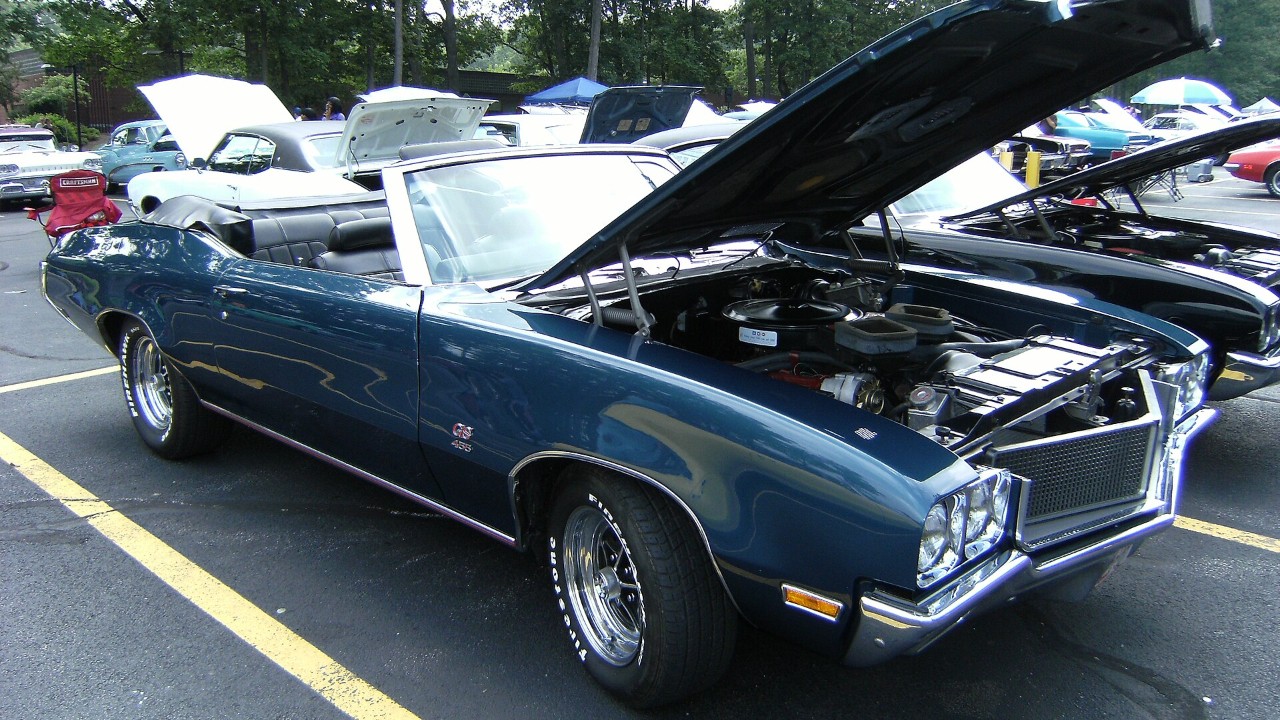
Buick’s GS was the gentleman’s muscle car, and for 1971 the 455 version sat at the top. It paired a 455-cubic-inch V8 with Buick’s quieter, more upscale style. We’ve written about how the GS 455 balanced civility with brute force.
An example from the Charlie Thomas Collection, sold by RM Sotheby’s, had a 350-horsepower 455 with Ram Air. It also had air conditioning, power steering and brakes and a tilt wheel. It sold for $29,700. That’s a fair price for a big-block convertible with comfort options, at least in our view. However, RM notes a buying trap: the VIN doesn’t distinguish between GS and GS 455 models.
Our take: a GS 455 convertible gives you big-block muscle without the shouting of some rivals. That makes it a refreshing sight at a show full of loud stripes. Buyer advice: because the VIN won’t prove it, get the build paperwork before paying 455 money. Also, check that any Ram Air parts are correct for the car, because those details separate a real GS 455 from a dressed-up GS.
12. 1973 Buick Centurion convertible
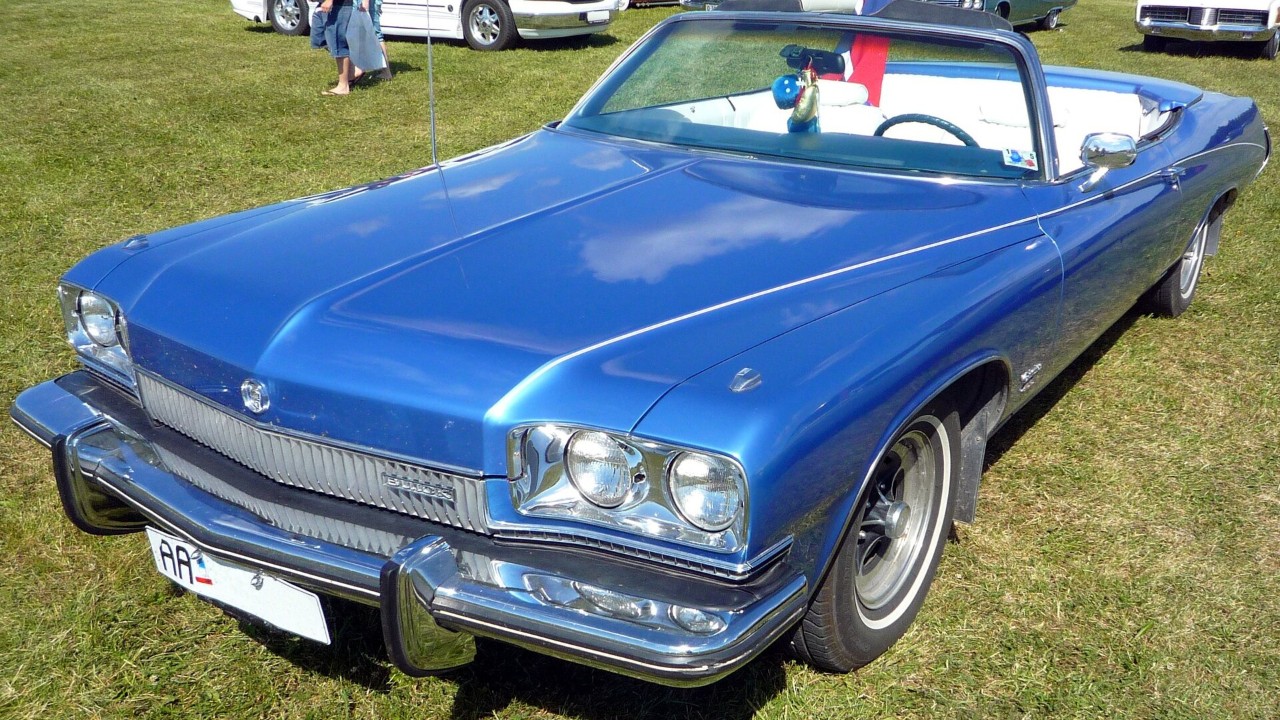
The Centurion replaced the Wildcat in Buick’s full-size line for 1971, and it lasted only three years. For 1973, the 350 V8 was standard and the 455 was optional. The convertible rode on a 124-inch wheelbase. Across all three years, Buick built 10,296 Centurion convertibles, so these cars were never common.
According to Curbside Classic, Buick built only 5,739 Centurion convertibles in 1973, and about half had the 455. The open car started at $4,534 before the bigger engine. Then the name disappeared, and the LeSabre Luxus took its place for 1974.
In our view, the Centurion is one of the last great full-size convertibles. It has a huge open cabin, a short three-year run and a name most people have forgotten. That’s a winning mix at a show. Better yet, a lot of people have never heard the name, so you’ll spend the day explaining what it is. If you’re shopping, the 455 cars are the ones to find, and Buick built about half of the 1973 convertibles that way. Finally, check the power top, since a big convertible top is the first thing a show crowd wants to see go up and down.
More from Fast Lane Only