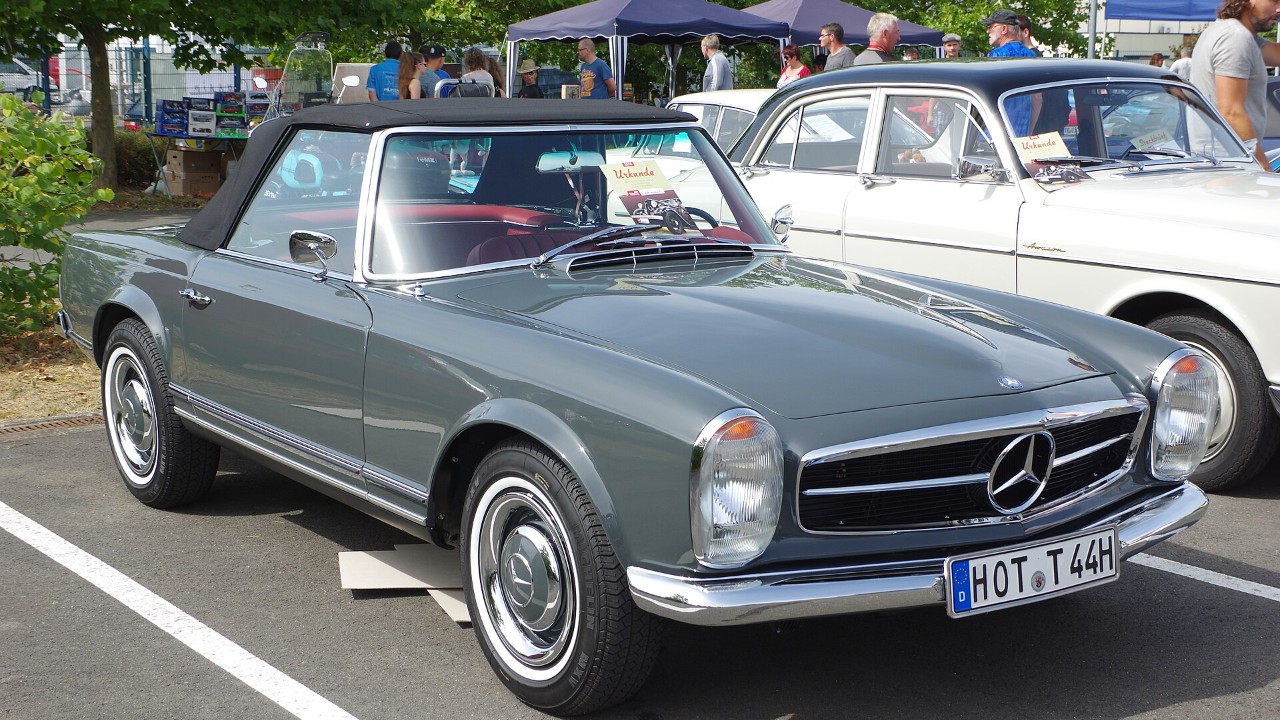
In March 1963, Mercedes-Benz rolled the 230 SL Pagoda onto its stand at the Geneva Motor Show. More than six decades later, that dished roof makes people stop on the sidewalk. Few cars age that gracefully, but Europe built a surprising number of them in the 1950s and 1960s.
Some came from famous houses like Lamborghini and Maserati. Others wore badges that most drivers never learned, such as Facel Vega or Abarth-Simca. Even so, they share a few traits. Each has a shape drawn by a gifted designer, mechanicals that live up to the looks, and production small enough that spotting one feels like an event.
These are our picks, so the verdict is our opinion. The years, engines and production numbers come from maker histories, auction records and reference sources we read for this story. We also left the British cars out this time, because they deserve a list of their own.
1. 1963–1967 Mercedes-Benz 230 SL Pagoda
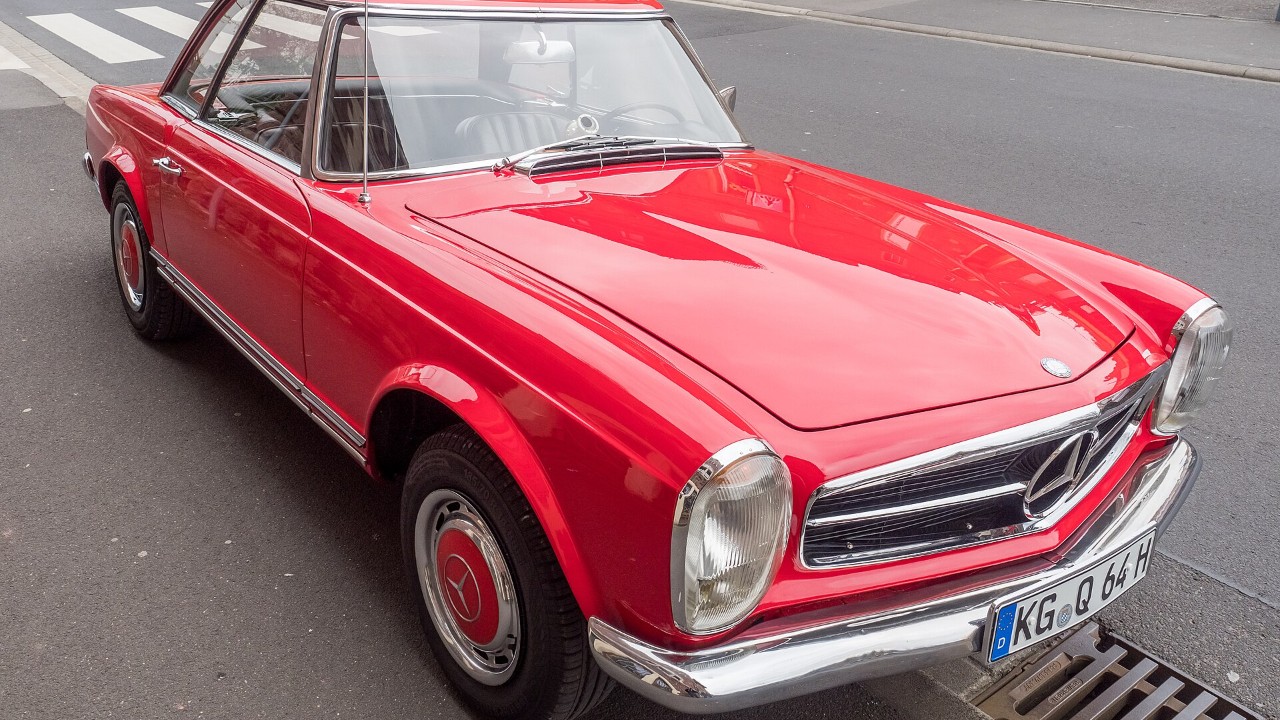
The 230 SL had a tough job from day one. According to Mercedes-Benz’s own history of the model, it replaced both the 300 SL Roadster and the 190 SL at once. Styling came from the team under Friedrich Geiger, while Paul Bracq drew the optional hardtop. Its inward-curving roof gave the car the Pagoda nickname.
The engineering mattered as much as the looks. Mercedes says the 230 SL was the first sports car with a rigid passenger cell and crumple zones at both ends. Its 2.3-liter inline-six made 150 PS, and the factory quoted 200 km/h flat out. In fact, the roadster proved itself in competition, too. Eugen Böhringer and Klaus Kaiser won the 1963 Spa-Sofia-Liège rally in one.
Mercedes built 19,831 cars of this first version before the 250 SL took over in late 1966. That isn’t rare by this list’s standards, but it hardly matters. In our view, the 230 SL Pagoda turns heads because its design is so calm. Nothing on it shouts, yet it looks right from every angle. For more background, see how the 1963 230SL introduced the Pagoda. Budget seriously, though, because a Classic Data survey cited by Mercedes put a top-condition car at €128,000.
2. 1963 Facel Vega Facel II
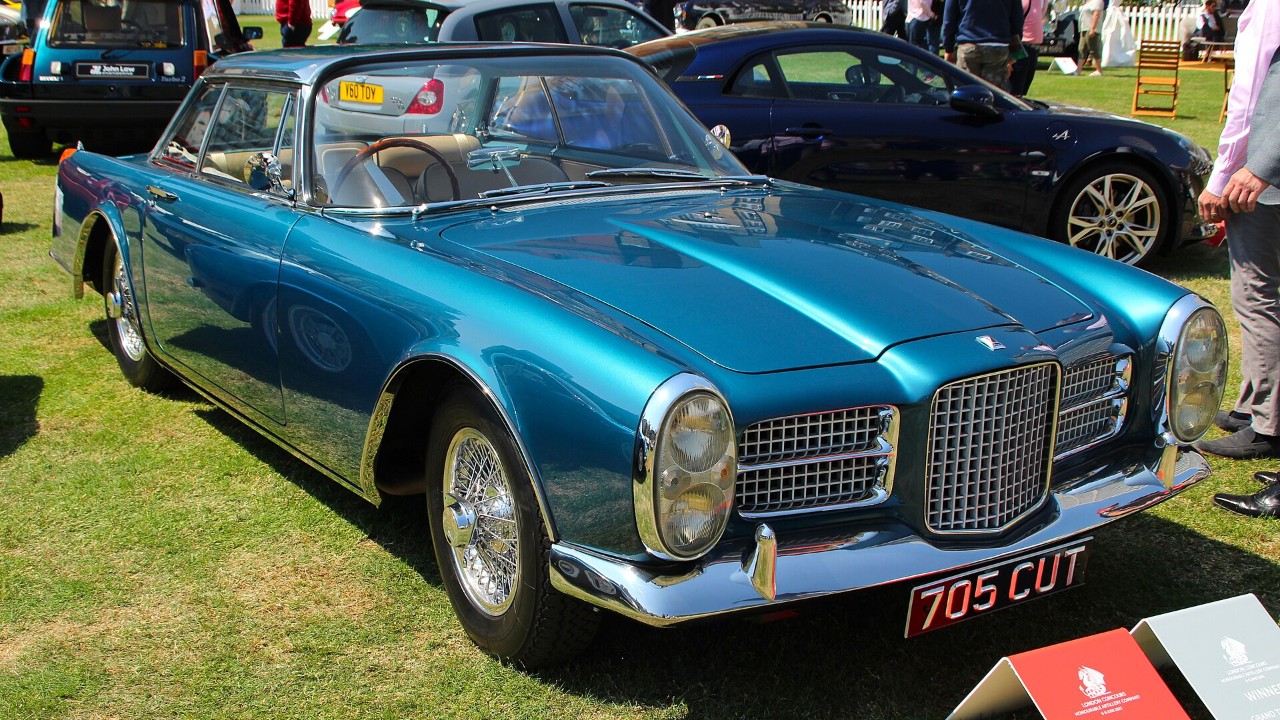
Facel Vega advertised this coupe as the fastest four-seater in the world. That was a bold line for a small Paris firm, but the numbers backed it up. Company boss Jean Daninos penned the body himself, and the car first appeared at the 1961 Paris Motor Show.
Power came from Chrysler. The original 6.3-liter “Typhoon” V8 made 355 hp with the TorqueFlite automatic and 390 hp with the optional French four-speed manual. Later cars moved to a 413-cubic-inch Chrysler wedge. Meanwhile, Dunlop disc brakes sat at all four corners. Sports Car Graphic timed a two-way average of 149 mph, which put the Facel II among the quickest cars of its day.
Daninos reckoned about 180 were built between 1962 and 1964. Then the company slid into receivership, largely because of warranty claims on its smaller Facellia. One right-hand-drive car belonged to Ringo Starr, and Bonhams sold it in London in 2013 for £337,500. We love the Facel II because it is so unexpected. Its long, crisp body looks like nothing else from France, and yet it rumbles like Detroit.
3. 1968 Lamborghini Islero 400 GT
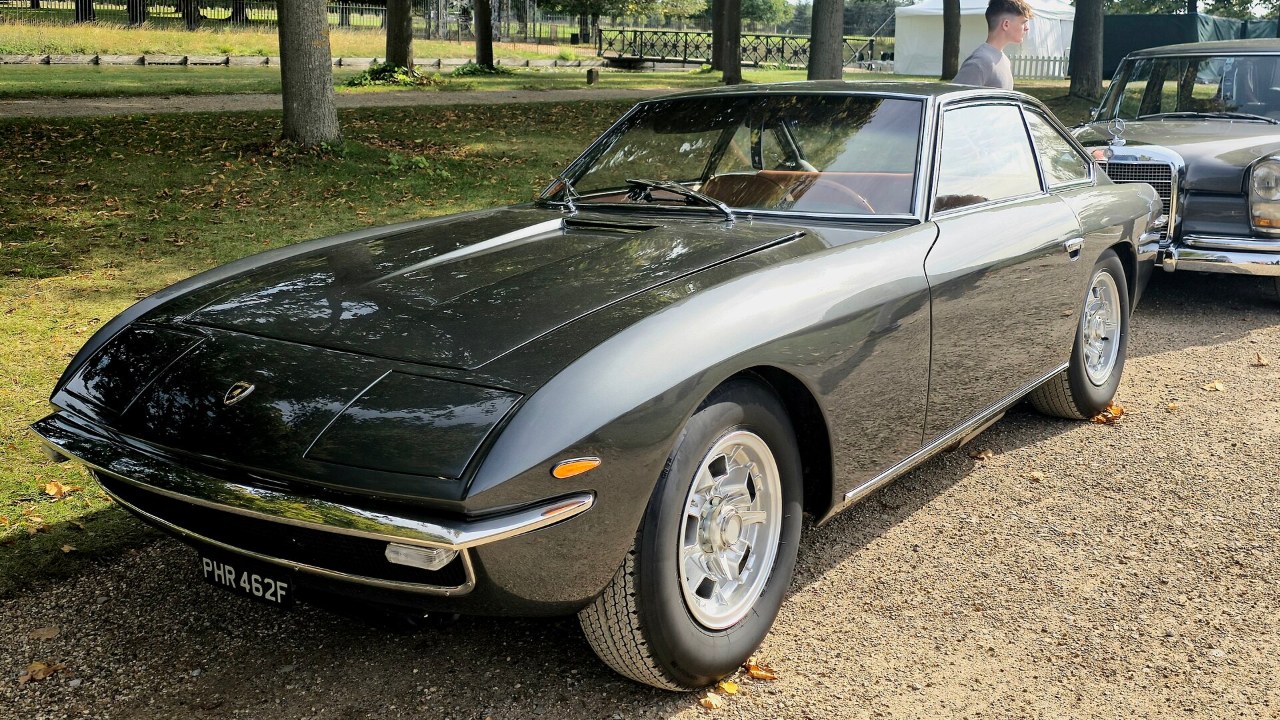
The Islero is the Lamborghini most people walk past at a show. That’s a mistake. It debuted at the Geneva Motor Show in March 1968, and Ferruccio Lamborghini drove one himself. Its name comes from the fighting bull that killed the matador Manolete in 1947.
The Islero exists partly because of a bankruptcy. Carrozzeria Touring had built bodies for the 350 GT and 400 GT, but it went under. So, as Lamborghini’s heritage page explains, Bertone produced the panels and Carrozzeria Marazzi handled final assembly. Underneath sat the front-mounted 4-liter V12 from the 400 GT, with six carburetors and four camshafts. The chassis was 11.5 cm shorter than before, and the headlights hid behind covers. Later, the Islero S added air intakes on the front fenders and a larger hood scoop, so it’s easy to tell the two apart.
The coupe also had a brief film career. Roger Moore drove one in the 1970 thriller The Man Who Haunted Himself. Lamborghini also lists an appearance in the Italian film Vedo Nudo. In our view, the Islero’s straight, crisp lines have aged better than many curvier 1960s shapes. It turns heads precisely because so few people know what it is, and that’s half the fun.
4. 1970 Maserati Ghibli SS
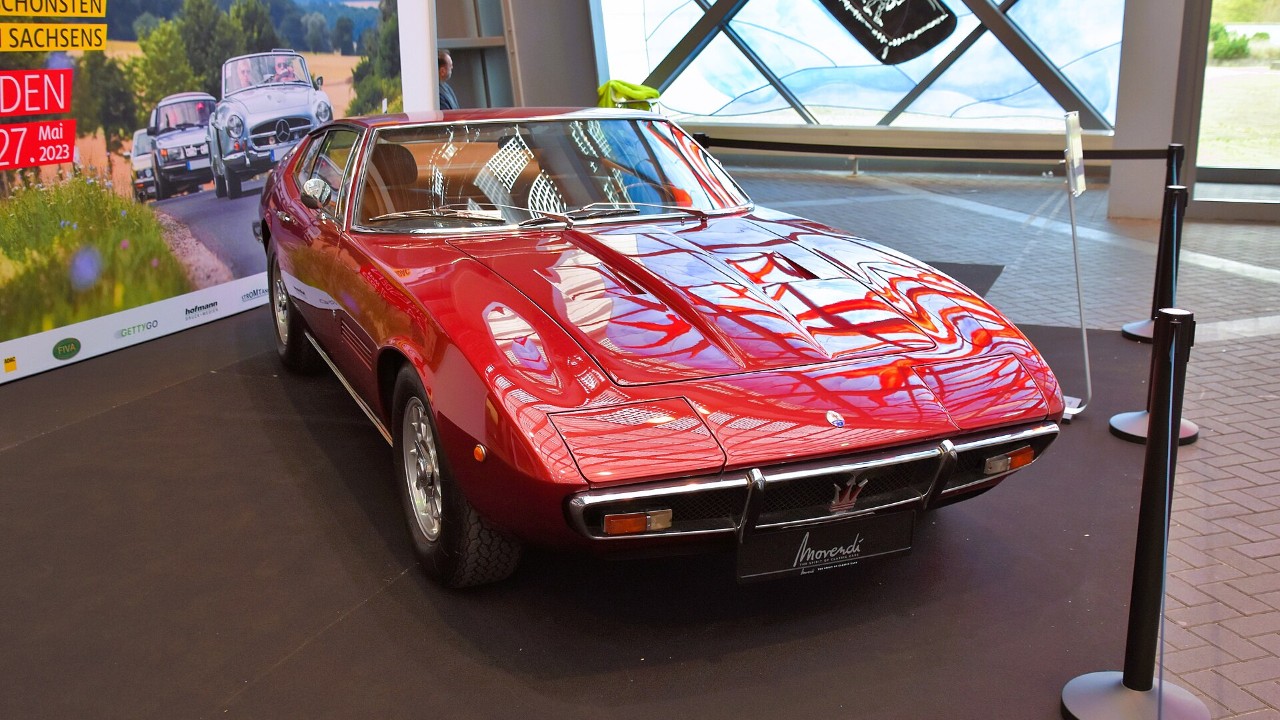
Giorgetto Giugiaro drew the Ghibli while he worked at Ghia. Maserati showed it at the 1966 Turin Motor Show, two years before Ferrari’s Daytona arrived. Its long hood, low nose and fastback tail made such an impression that, by one auction house’s account, it influenced Pininfarina’s own designers.
For 1970, Maserati added the SS. According to RM Sotheby’s catalog for a 1970 SS, the bigger engine displaced 4,930 cc and made 335 bhp. That V8 gave the Ghibli the muscle to match its looks. RM’s figures also show 1,190 Ghibli coupes across both the 4.7- and 4.9-liter versions, so an SS is a fraction of an already small run.
That same car sold for $330,000 at RM’s Arizona sale in 2016. Prices like that tell you collectors have caught on. We think the Ghibli SS earns its place for a simple reason. Park one next to almost any modern supercar, and many people will look at the Maserati first. The proportions do the work, without a single scoop or wing. If you want one, though, expect to compete with serious collectors, and budget for a specialist who knows these V8s.
5. 1962–1965 Abarth-Simca 1300
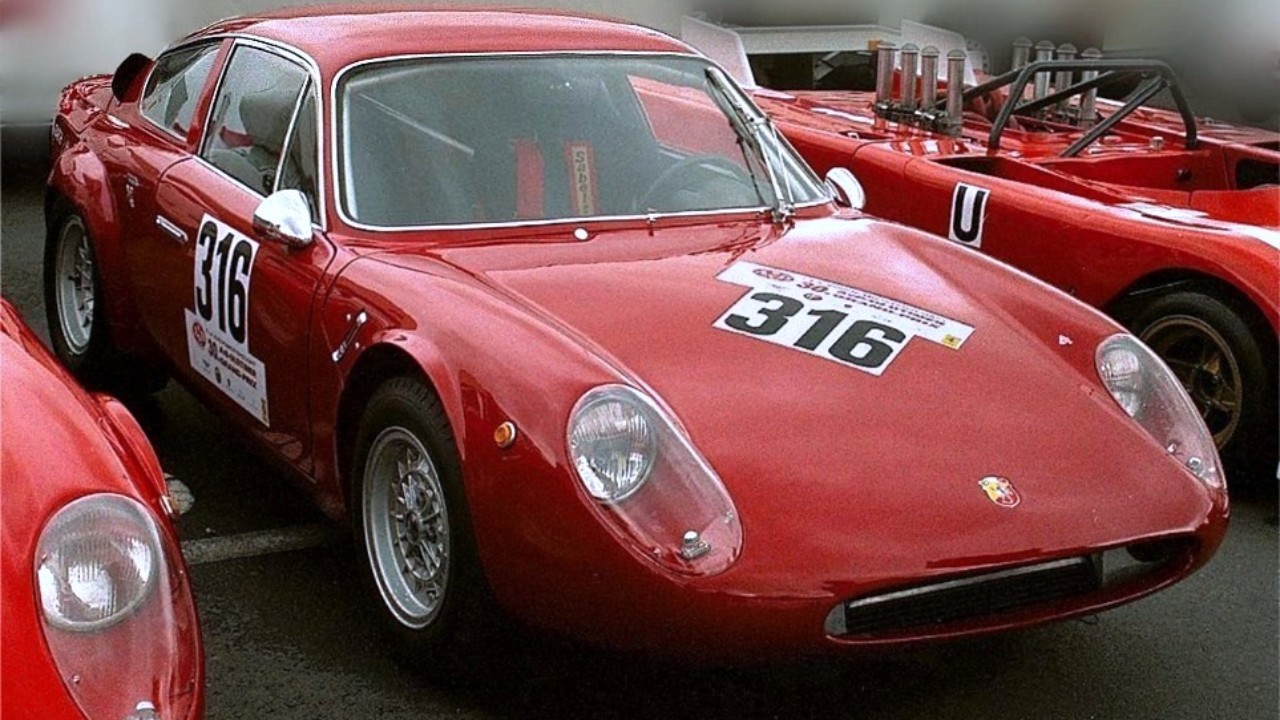
This tiny coupe began with a request from France. Simca wanted a quicker version of its rear-engined 1000, so it asked Carlo Abarth to develop one. Abarth built several prototypes, and Simca picked the one to produce. In effect, Abarth served as Simca’s racing department.
Abarth kept the 1000’s basic suspension and steering but threw out the engine. In its place went a new twin-cam unit of 1,288 cc with dry-sump lubrication, so it could sit lower in the car. Disc brakes went on all four wheels, too. According to one detailed history of the model, the finished car weighed a little over 600 kg, about 200 kg less than the Simca it came from.
The results came fast. In 1962, its first season, the 1300 GT won nine major races. By the end of that year, it was lapping as quickly as 2-liter cars. We’d put it on any list of cars that make people stop, because it looks like a scale model of a race car. That low, rounded body draws a crowd at every show it attends.
6. Lancia Flavia Sport Zagato
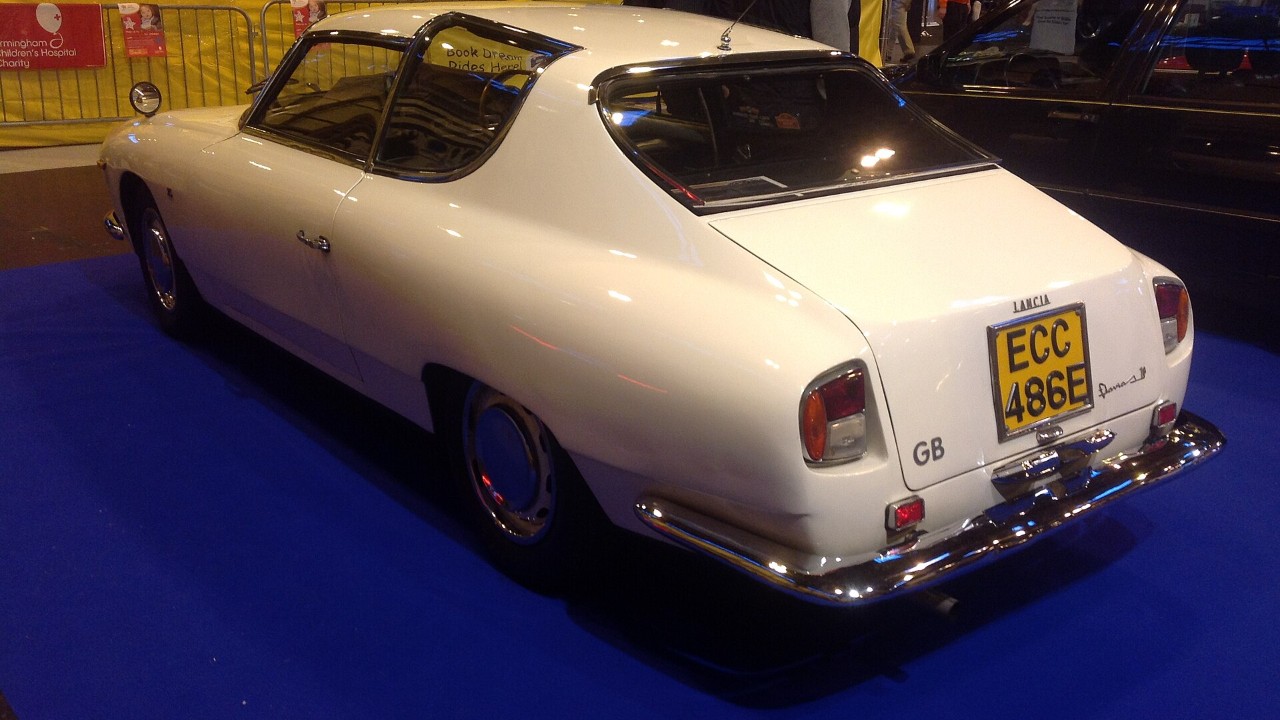
The regular Flavia was a serious, clever family car. Antonio Fessia developed it to slot between Lancia’s Appia and Flaminia, and it went on sale after the 1960 Turin Motor Show. It used front-wheel drive, Dunlop disc brakes on all four wheels and an aluminum flat-four engine. Reference sources call it the first boxer engine in an Italian production car.
Then Zagato got hold of it. Ercole Spada shaped a lightweight two-door body with a look unlike any other Lancia. Zagato bodied 626 of these Sport models, plus three prototypes. Most carried the 1.8-liter engine with twin carburetors, rated at just over 100 horsepower. By comparison, Lancia built 105,848 Flavias of all types between 1961 and 1971, so the Zagato cars are a tiny fraction of the total.
Not everyone loved the look at first, and that’s part of the appeal now. In our view, the Flavia Sport Zagato is the most daring shape on this list. Be aware, though, that the twin-carb engine had a reputation for being hard to keep in tune. If you buy one, find a specialist who knows its timing chain and cam settings.
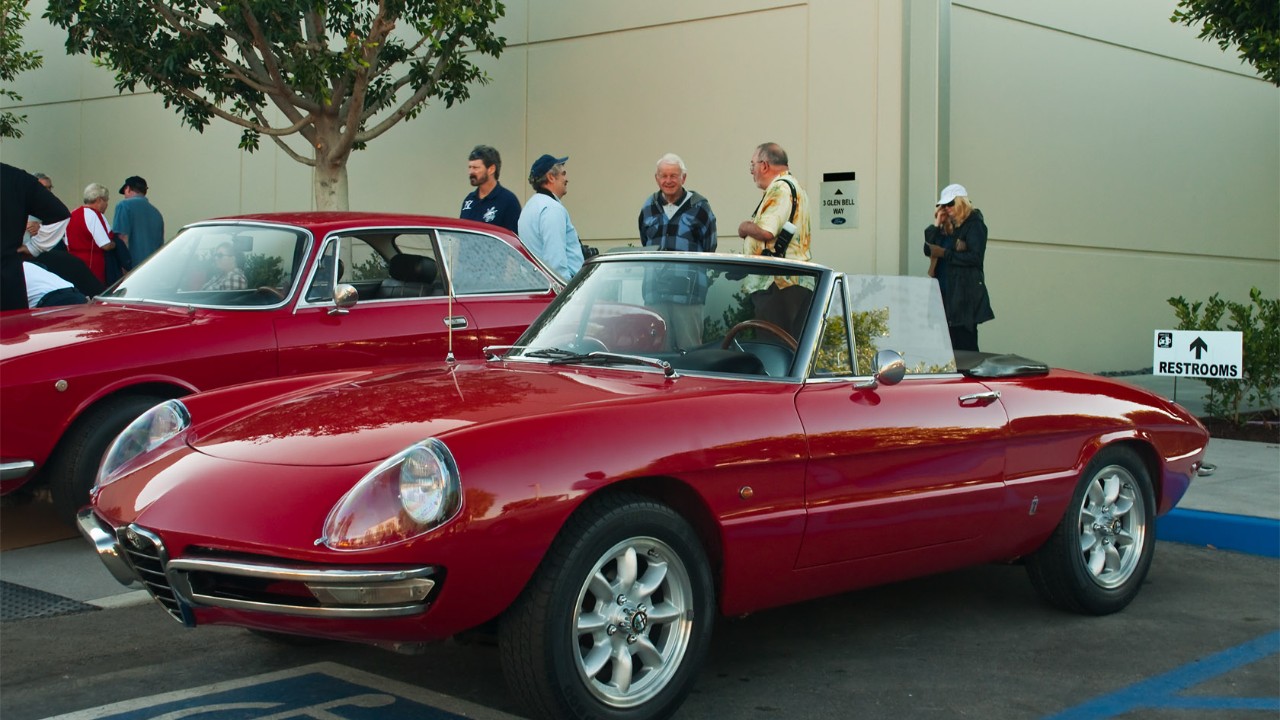
7. 1960 Alfa Romeo Giulietta Spider Veloce
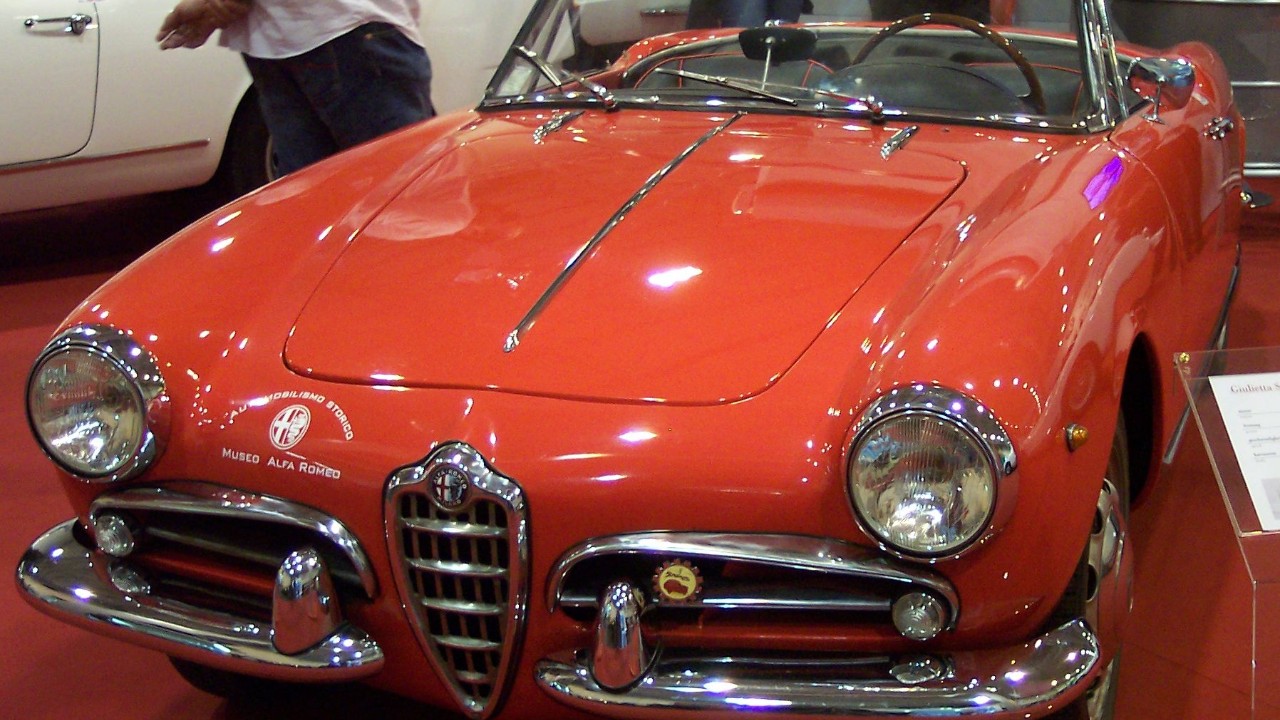
An American importer made this car happen. Max Hoffman, Alfa Romeo’s East Coast distributor, asked for an open version of the Giulietta Sprint and promised a large order. As a result, he received the first 600 Spiders, and buyers in the U.S. had them well before Italians did. The car made its official debut at the Paris Salon in October 1955.
Pinin Farina won the design job over a more radical Bertone proposal. Then, from 1956, Alfa offered the Veloce. Its 1.3-liter twin-cam four had higher compression and two twin-choke carburetors, good for 90 PS at 6,000 rpm. Top speed rose to 180 km/h, a strong figure for such a small engine. Alfa built only 2,796 Spider Veloces through 1962.
The Giulietta line as a whole totaled 177,690 cars, so the Veloce Spider is a small slice of it. We have praised the 1958 Giulietta Spider before. Even so, the Veloce is the one we’d chase. It pairs a sweet, high-revving engine with one of the prettiest small roadsters ever drawn, and that combination never goes out of style.
More from Fast Lane Only