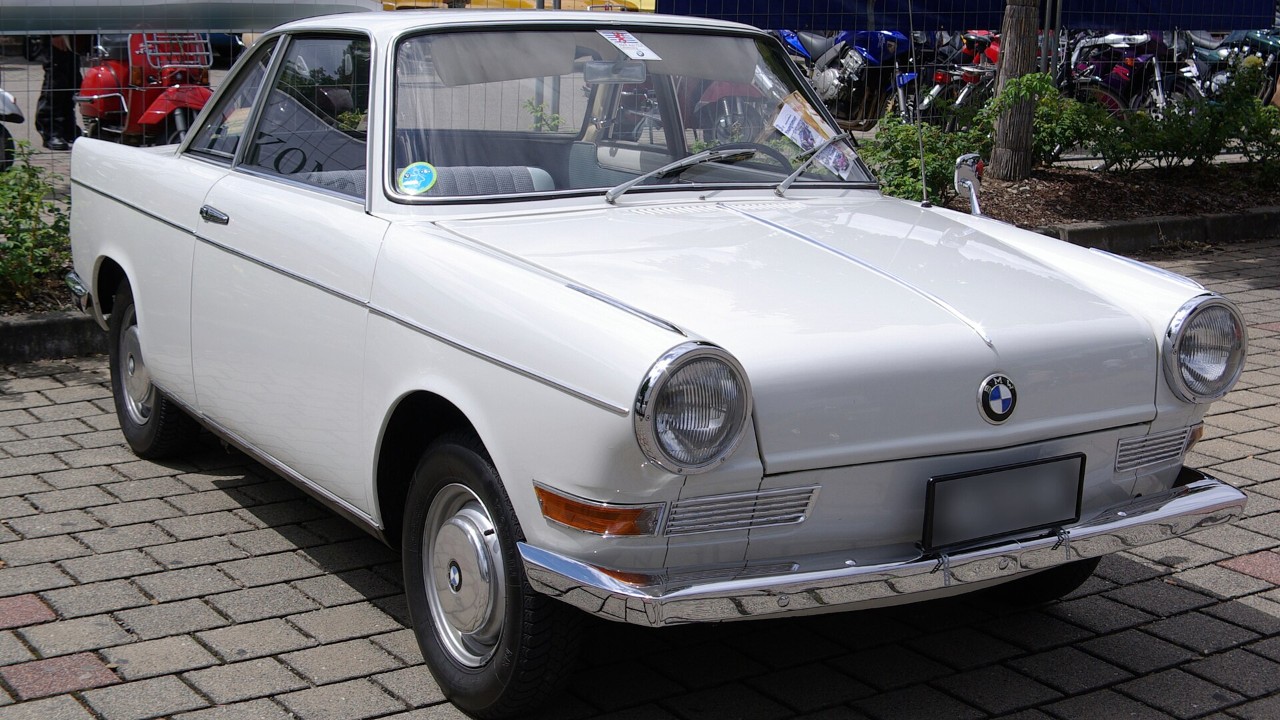
The BMW 700 LS coupe went out of production in 1965, yet one look at it still drops you straight into the early 1960s. Its engine sits behind the rear seat, and so does most of its character. In fact, for three decades, hanging the motor out back was one of the cheapest ways to build a small car that could seat four.
Fiat, Volkswagen, Renault, Skoda and even Mazda all bet on the idea. Then front-wheel drive arrived in force, and almost every maker walked away. As a result, the rear-engine cars that survive now feel like time capsules, from their tiny trunks up front to the way they sound at idle.
These are our picks: ten rear-engine cars that, in our view, feel completely frozen in another era. The verdict is our opinion. However, the years, engines and production figures come from maker histories, a museum record and reference sources.
1. 1965 BMW 700 LS Coupe
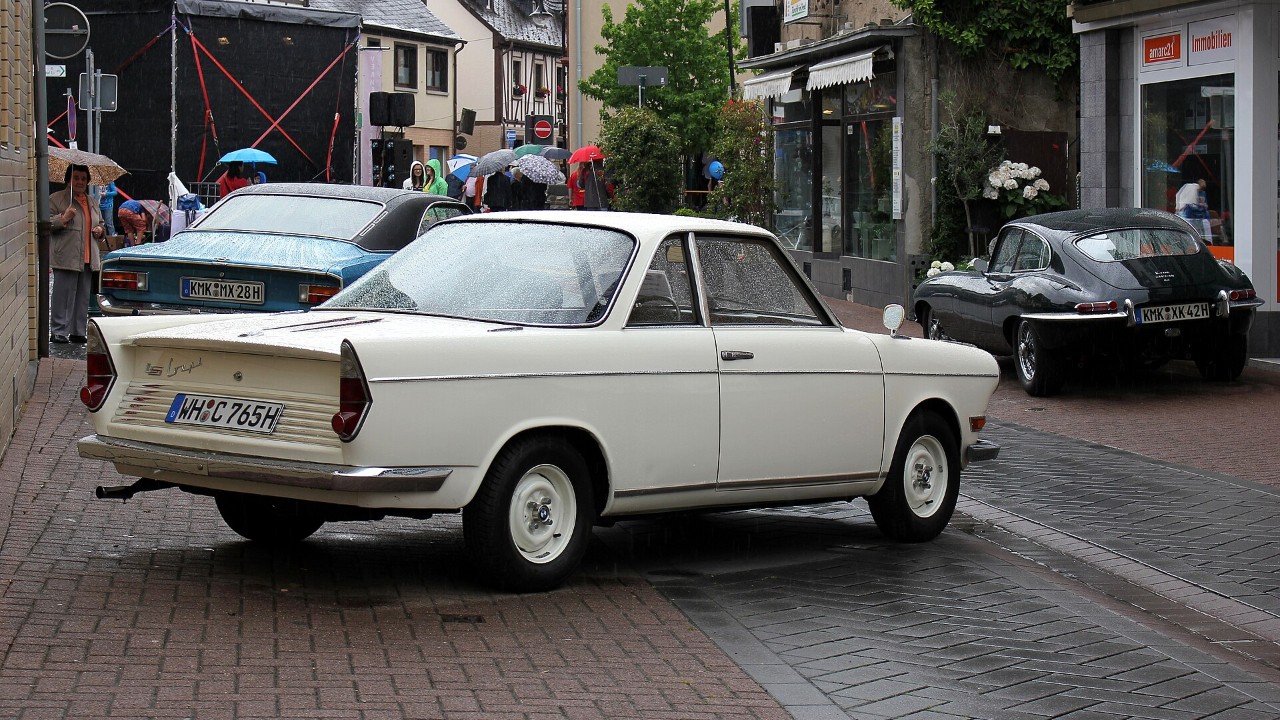
BMW was in real trouble when it showed the 700 coupe to about 100 journalists on June 9, 1959. Its motorcycle sales had peaked years earlier, and the BMW 600 had flopped. Giovanni Michelotti drew the shape, and the car became BMW’s first with a monocoque body.
Behind the rear axle sat a 700 cc flat-twin, derived from the company’s motorcycle engine. BMW rated it at 30 hp in base form. According to the BMW Group’s own history of the car, buyers took more than 35,000 cars in 1960 alone, about 58% of the company’s revenue that year. The LS Coupe arrived in autumn 1964, which made 1965 its final year.
That late timing is exactly why we picked the BMW 700 LS. By then, the coupe was a 1950s idea wearing early-1960s Italian clothes, with a thin-pillared roof and a twin-cylinder thrum. BMW built only 1,730 examples of the BMW 700 LS coupe. In December 1959, shareholders also blocked a plan to sell BMW to Daimler-Benz. So if you have ever wondered how BMW stayed independent, this little car is a big part of the answer.
2. 1973 Fiat 126
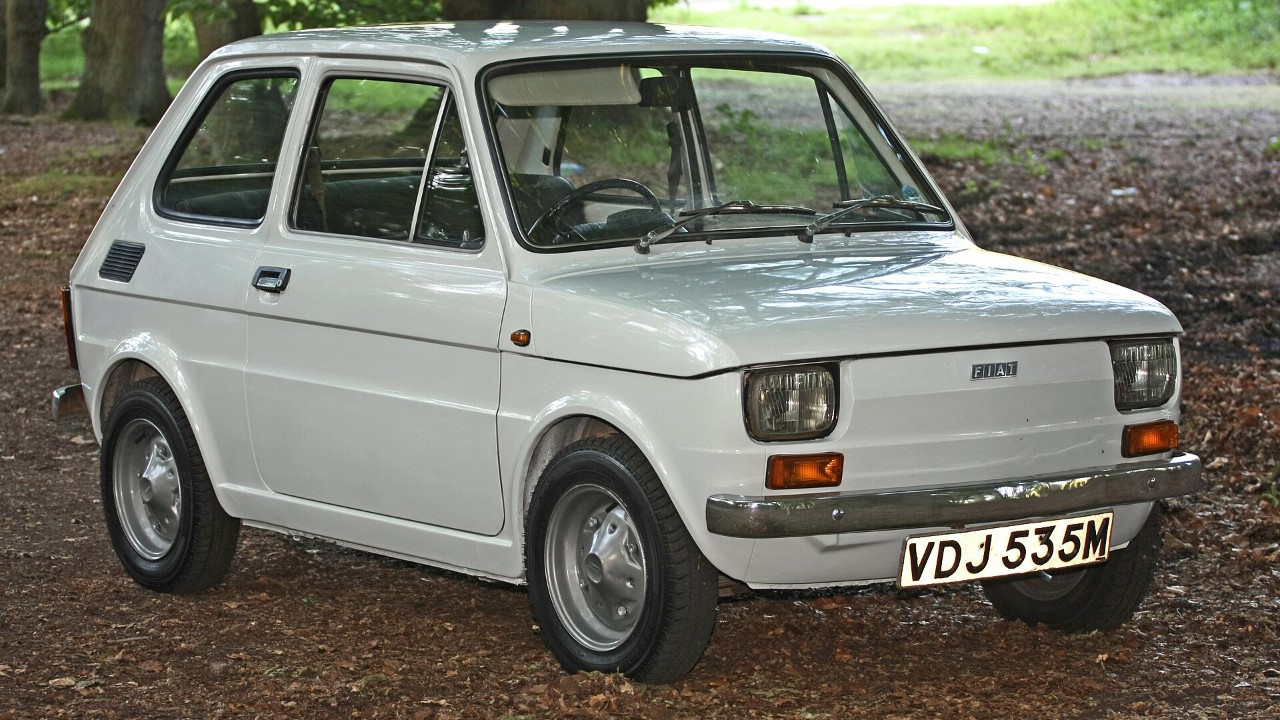
Sergio Sartorelli gave the Fiat 126 a crisp, slightly larger body than the old 500 it replaced. Underneath, though, it kept the same recipe. A 594 cc air-cooled two-cylinder sat in the tail, rated at 23 hp. That was enough for city streets, and not much more.
The 1973 model year matters for one big reason. On June 6, 1973, the first Polski Fiat 126p came together in Poland from Italian parts. Then the Polish plant simply kept going. It built the car until September 22, 2000, after a run of 3,318,674 units. Poles called it “Maluch,” or “the little one,” and the name became official in 1997.
In our view, that is the definition of a car frozen in time. Polish buyers could order a brand-new, rear-engine city car with roots in the 1950s right up to the new millennium. Worldwide, Fiat and its partners built 4,673,655 of them. A 1973 car is an early example today. So if you want the true first-year feel, look for original trim and the small original engine.
3. Fiat 850 Sport Coupe
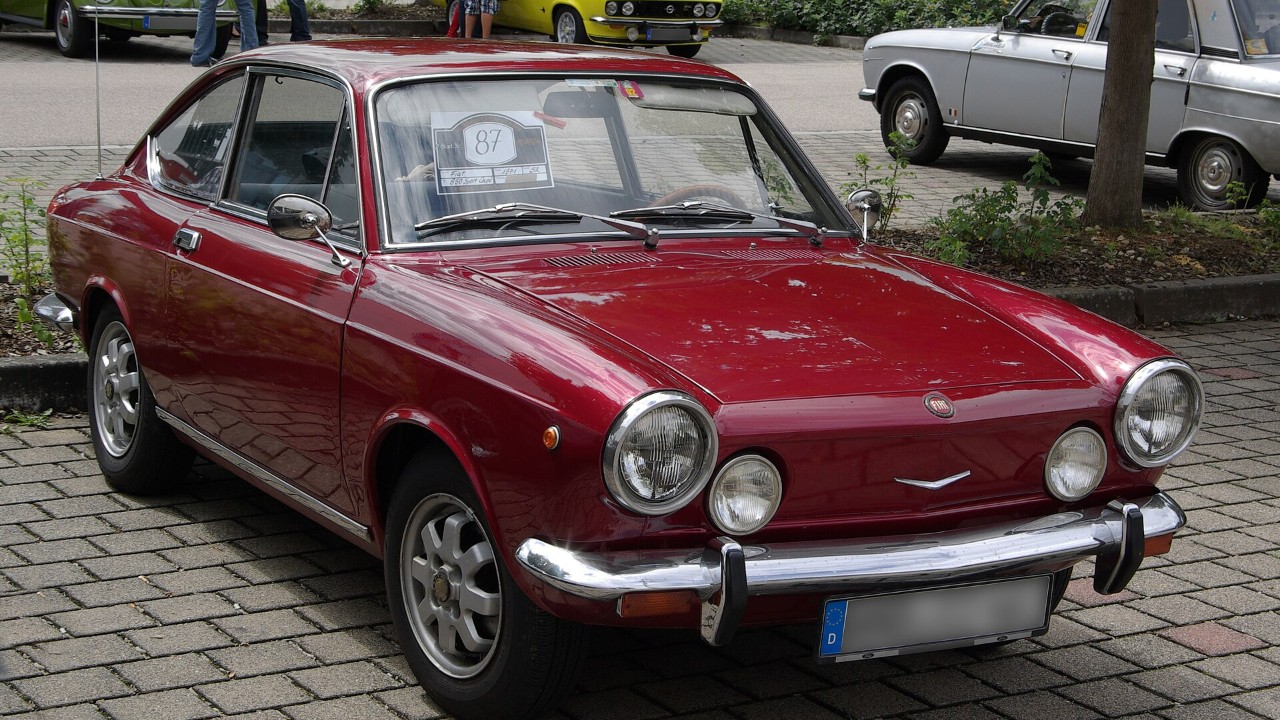
Fiat showed the 850 Coupe at the Geneva Motor Show in 1965. Felice Mario Boano and his son Gian Paolo shaped it at Fiat’s Centro Stile. The first cars used an 843 cc four, rated at 47 hp, mounted at the very back.
Then, in 1968, Fiat turned it into the Sport Coupe. The engine grew to 903 cc and 52 hp, which sounds tiny now. However, the car weighed so little that it felt lively on a twisty road. Fiat ended production of the coupes and the sedan in 1971, after selling nearly 2.3 million 850s of every type.
We love how this coupe captures late-1960s Italy in miniature. It has a sloping tail, a low nose with no grille to speak of, and a cabin that feels made for two people and a picnic. Meanwhile, the luggage has to live up front, because the engine claims the rear. In our opinion, it is one of the prettiest affordable coupes of its decade. Rust is the enemy, so check the floors and sills before you fall for one.
4. Mazda R360 Coupe

The R360 was Mazda’s very first passenger car, launched nationwide in Japan in May 1960. According to Mazda Australia’s own retelling, it cost 300,000 yen, roughly 20% below rival cars. Orders reached 4,500 before the official launch.
Its engine was a 356 cc air-cooled V-twin, a four-stroke at a time when many small Japanese cars used two-strokes. Mazda also used plenty of magnesium alloy to save weight. As a result, the whole car weighed about 380 kg, or 838 pounds. Buyers could even order a two-speed automatic, which was unusual for such a small car.
December 1960 brought a record 4,090 sales, and Mazda built 65,737 R360s in total. Still, the car looks like a toy next to anything modern, with its rounded nose and a roof that barely clears your head. We think that is the charm. Its four-wheel independent suspension, Mazda says, also gave it an unusually comfortable ride for its size. It is a snapshot of an era when a tiny, cheap car could launch a whole company into the passenger-car business.
5. 1968 NSU Prinz 1000 C
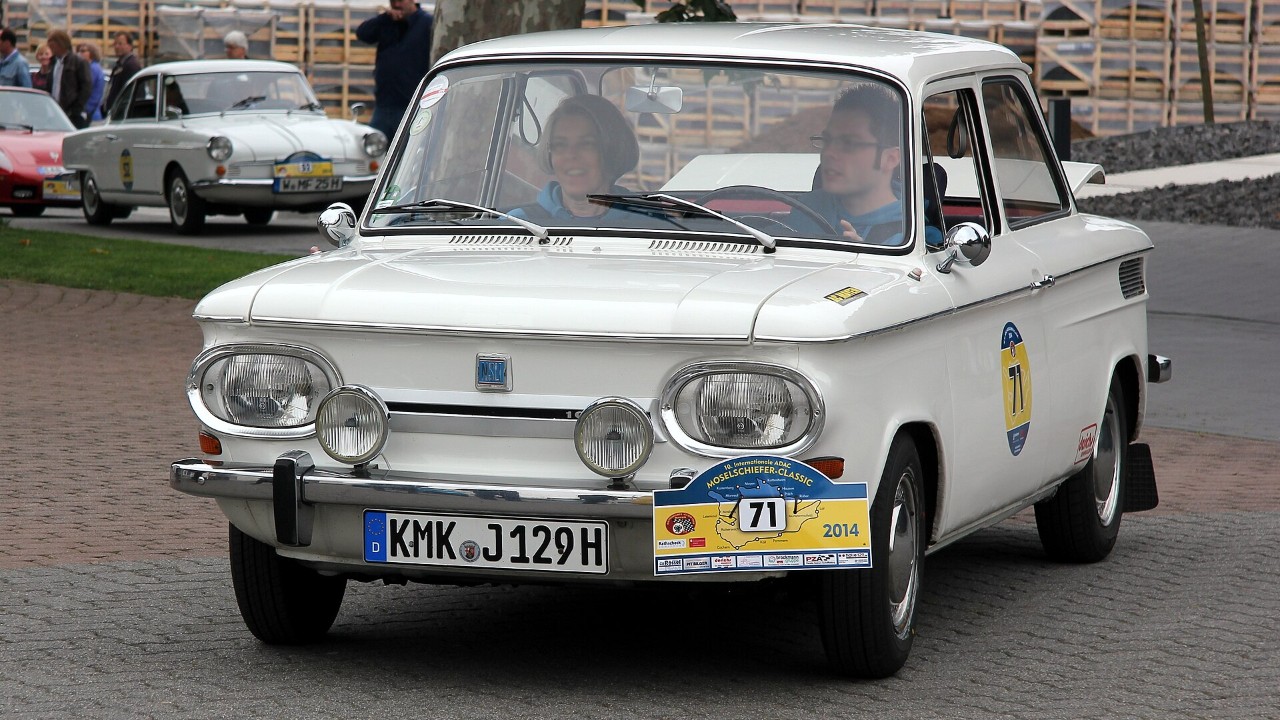
NSU first showed the 1000 at the 1963 Frankfurt Motor Show. It was a bigger-bodied take on the little Prinz, and it carried an air-cooled, overhead-cam four in the tail. The engine was mostly alloy, which was advanced thinking for a small family car.
There is a naming quirk worth knowing. In January 1967, NSU dropped the “Prinz” badge, so later cars were officially the NSU 1000 or 1000 C, depending on equipment. Even so, many owners and clubs still call a 1968 car a Prinz. The base model was rated at 40 PS. Meanwhile, the sporty TT versions went much further, and NSU built 14,292 of the 1000 TT between 1965 and 1967.
To us, the 1000 C feels like a German businessman’s idea of a fun car. It is upright, tidy and a little stern, yet it hides a rev-happy engine behind the back seat. Production of this generation ended in December 1972. If you find one, we would ask for its service history first, because parts for these cars take some hunting.
6. 1968 Renault 10 Major
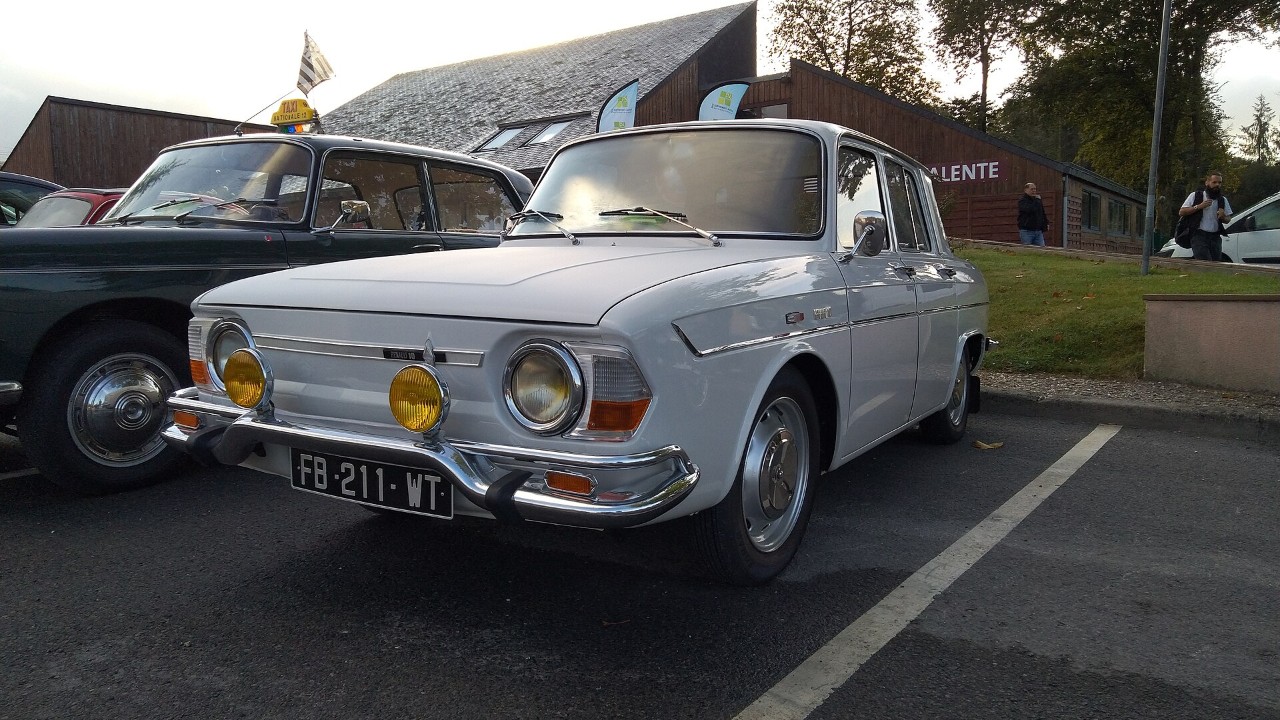
Renault launched the 10 Major in September 1965 as a longer, plusher version of the Renault 8. Most of the extra length went into the nose. That stretch raised front luggage space from 240 to 315 liters, a real gain on a car with its engine in the back.
Power came from a 1,108 cc four borrowed from the Renault Caravelle sports car. About two years after launch, Renault gave the car rectangular headlights. North American cars, by contrast, kept round sealed beams. Renault also sold the 10 in the United States with a memorable line: “The Renault for people who swore they would never buy another one.”
We picked the 10 because it shows a maker squeezing the last drop from a layout. In France, Renault built it at Flins. Plants in Spain, Bulgaria, South Africa and Australia also assembled it. By 1971, though, the 10 had bowed out. In our view, a tidy 10 Major is a charming and very French piece of the late 1960s. If you shop for one, look for solid front panels, because that longer nose is the part that sets it apart.
7. Skoda Rapid
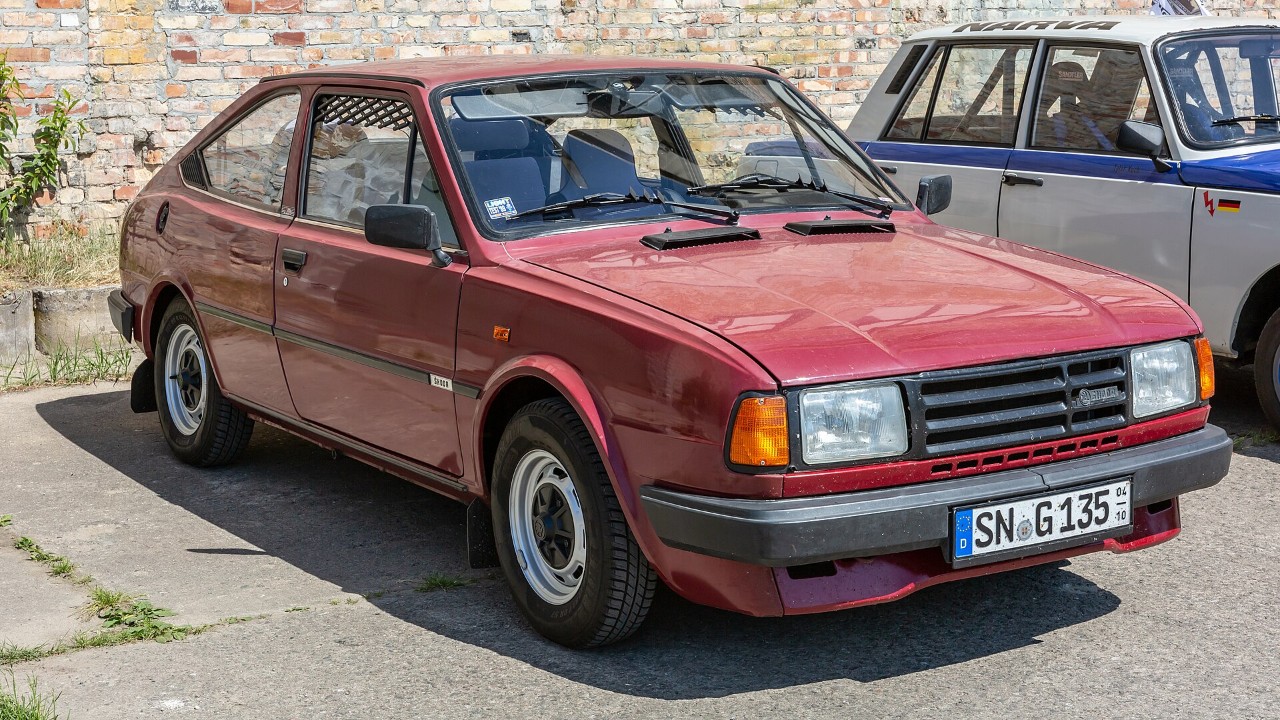
This is not the sensible 2010s hatchback. The original Skoda Rapid was a rear-engine, rear-drive coupe built in Czechoslovakia from 1984 to 1990. It replaced the Skoda Garde and shared its running gear with the 130-series sedans.
The Rapid 130 used a 1,289 cc four rated at 58 PS. It reached about 95 mph and needed 16.5 seconds to hit 60. Even so, Autocar & Motor called the Rapid “a beginners’ course to the 911,” and fans dubbed it “the poor man’s Porsche.” In Britain, Skoda also sold a converted Rapid Cabriolet. At just under £5,000, it was the cheapest convertible on sale there.
Here is why it feels frozen in time. Skoda was still selling a rear-engine coupe deep into the age of hot hatches. The body looks crisp and modern for the mid-1980s, while the layout underneath dates back decades. Only 50 Rapids were left on British roads in 2011, so finding one takes patience. If you are tempted, we would look for a later 1.3-liter car, since the earlier 1.2-liter version had a reputation for poor reliability.
8. Steyr-Puch 500
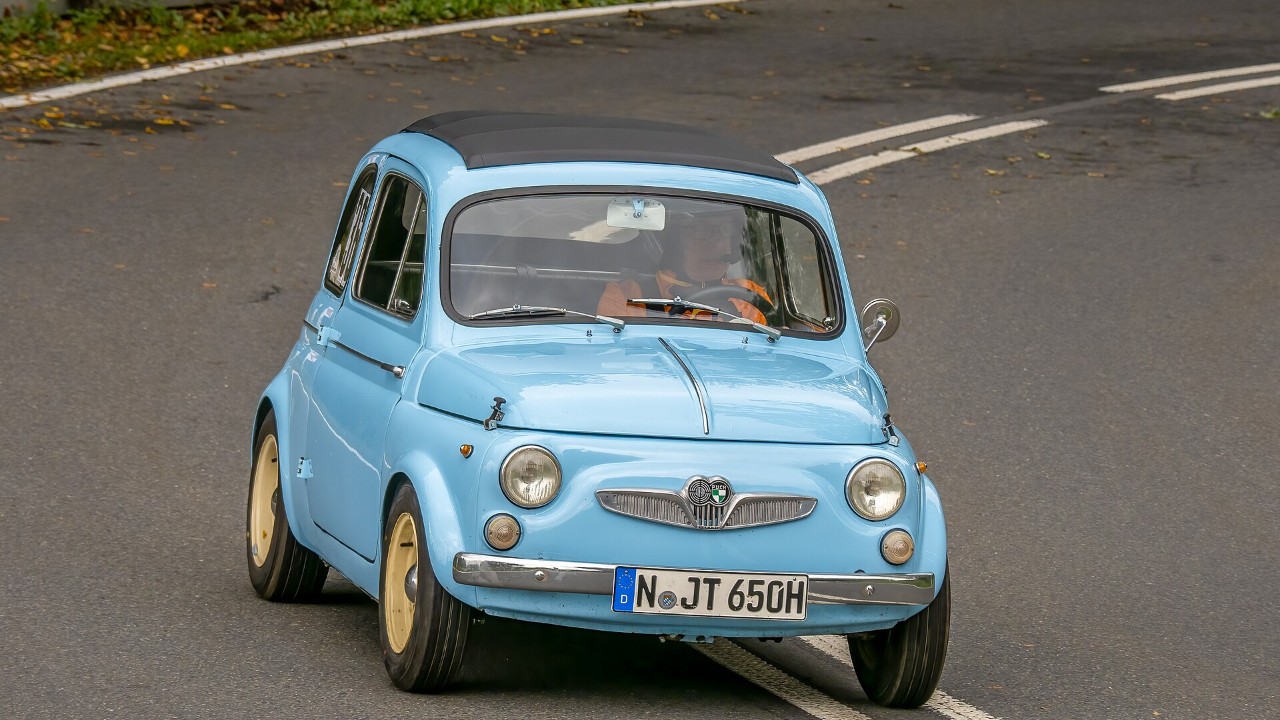
At a glance, the Steyr-Puch 500 looks like a Fiat 500. Look closer, however, and it turns out to be quite a different machine. Puch built it in Graz, Austria, from 1957 to 1975, under licence from Fiat.
Fiat supplied the bare body shell. After that, Steyr-Puch fitted its own engine, gearbox and chassis. The original engine was a 493 cc flat-twin with 16 hp, and Puch built around 60,000 cars in all. Its later, bigger engines took it well beyond city errands. In 1966, Sobiesław Zasada won the European Rally Championship in a Steyr-Puch 650 TR II, a bigger-engined version of the same car.
That rally story is why we included it. This is a city car from the late 1950s that ended up beating far larger machines. The car in our photo, for example, was caught at the Würgau hillclimb in Germany in 2022. In our view, it is the most underrated member of the Fiat 500 family. Just remember that parts differ from a Fiat’s under the skin, so find a specialist before you buy.
9. Tatra 613
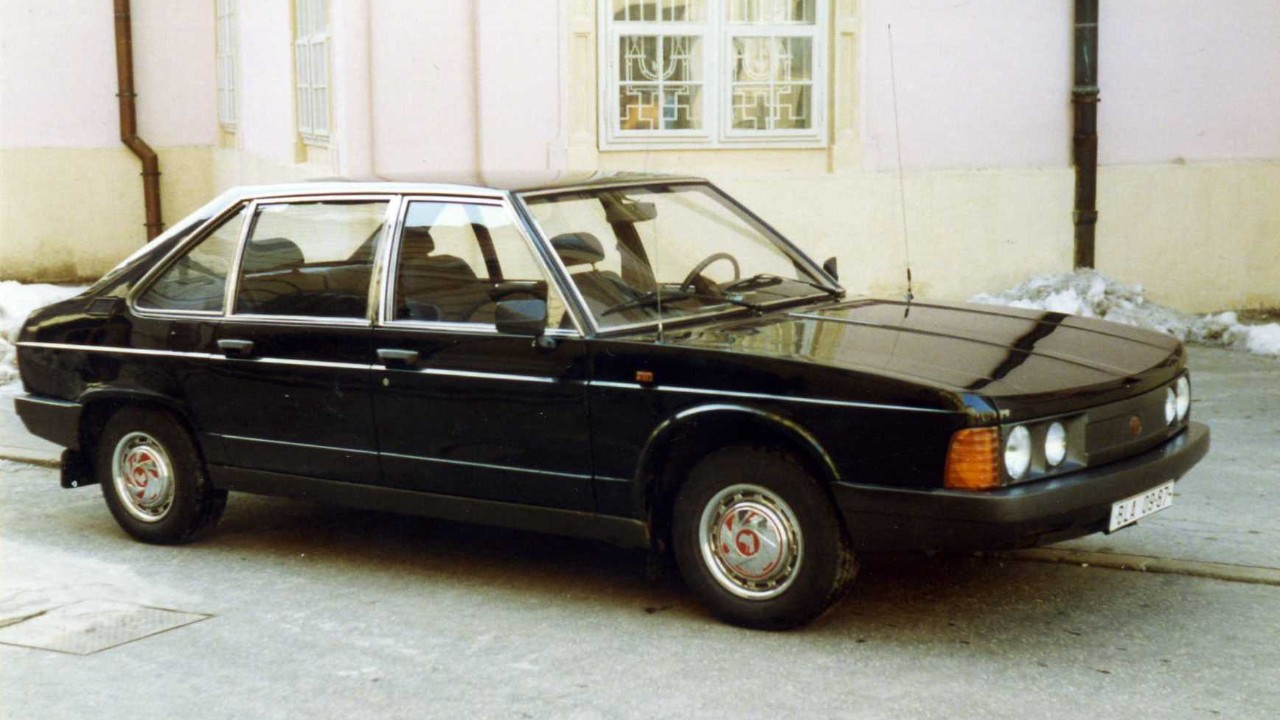
The Tatra 613 is the big exception on this list. It is a full-size luxury sedan, and it carries an air-cooled 3.5-liter V8 in the back. That engine had twin overhead cams per bank and made 168 PS in carbureted form. Vignale of Italy styled the body.
According to the Lane Motor Museum, it was the first Tatra styled outside the factory. It was also the first Tatra with the engine above the rear axle rather than behind it, which aimed to tame the handling. Communist officials were the main customers. Production peaked at about 1,500 a year in the late 1970s, then dropped to only 11 cars in 1996.
The museum puts total output at 11,009 cars. In our view, few cars feel more frozen in time, since the 613 stayed in production for more than two decades with only gentle updates. The engine layout itself goes back to the streamlined Tatras of the 1930s, like the 1934 Tatra 77. If you ever see one, listen for that air-cooled V8. It sounds like nothing else on the road.
10. 1970 Volkswagen 1600 TL Fastback
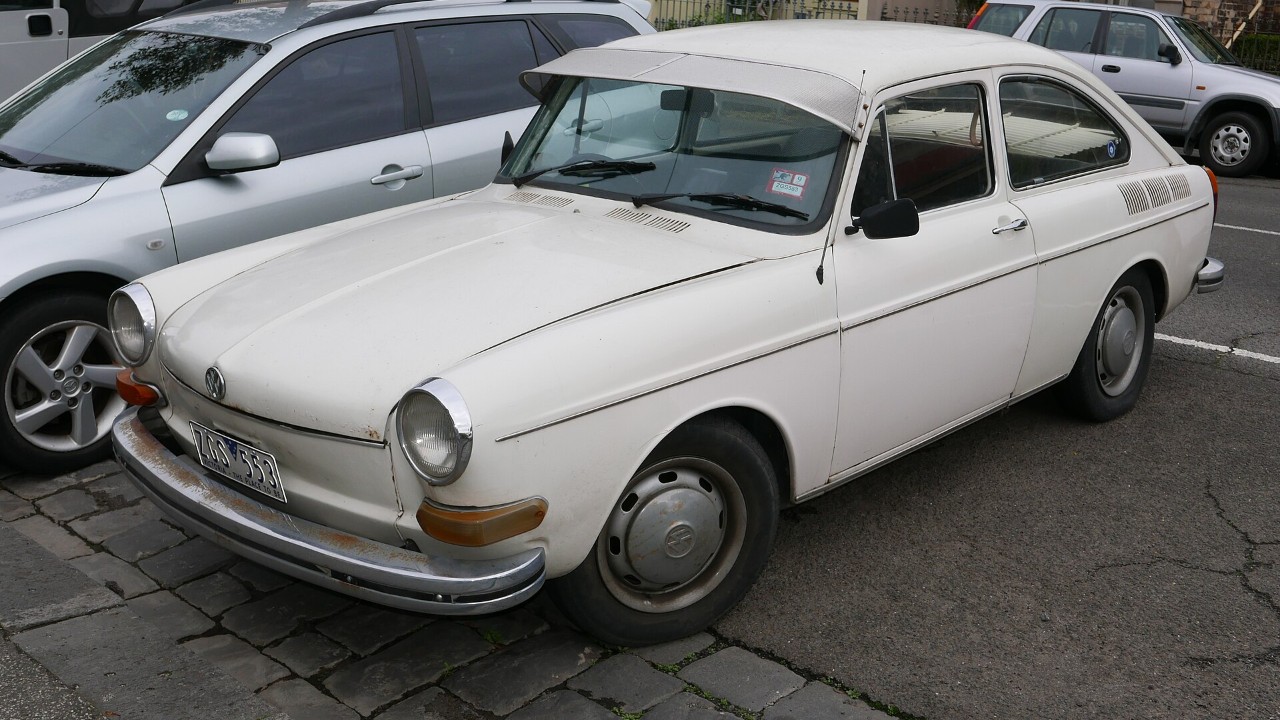
Volkswagen introduced the Type 3 fastback, called the TL, in August 1965, along with a new 1,600 cc engine. The idea was to give the Beetle’s maker a roomier, more modern car. Still, VW kept the air-cooled flat-four in the tail.
The clever part was the engine’s shape. VW laid the 1,584 cc flat-four low and flat, so it fit under a floor in the back. That left luggage space at both ends of the car. Then, for 1968, VW added Bosch D-Jetronic electronic fuel injection, and the system was standard on U.S. cars through 1973. In total, the Type 3 family reached 2,542,382 units.
We think the TL is the most 1960s shape VW ever built. The roofline slopes all the way to the bumper, and the chrome trim looks straight out of a period brochure. The Type 3 bowed out in 1973. If you like this kind of engineering, our list of air-cooled engines that refuse to wear out covers its Beetle cousin. Our advice: have the fuel-injection system checked by someone who knows it, since a tired one can make a good car feel bad.
More from Fast Lane Only