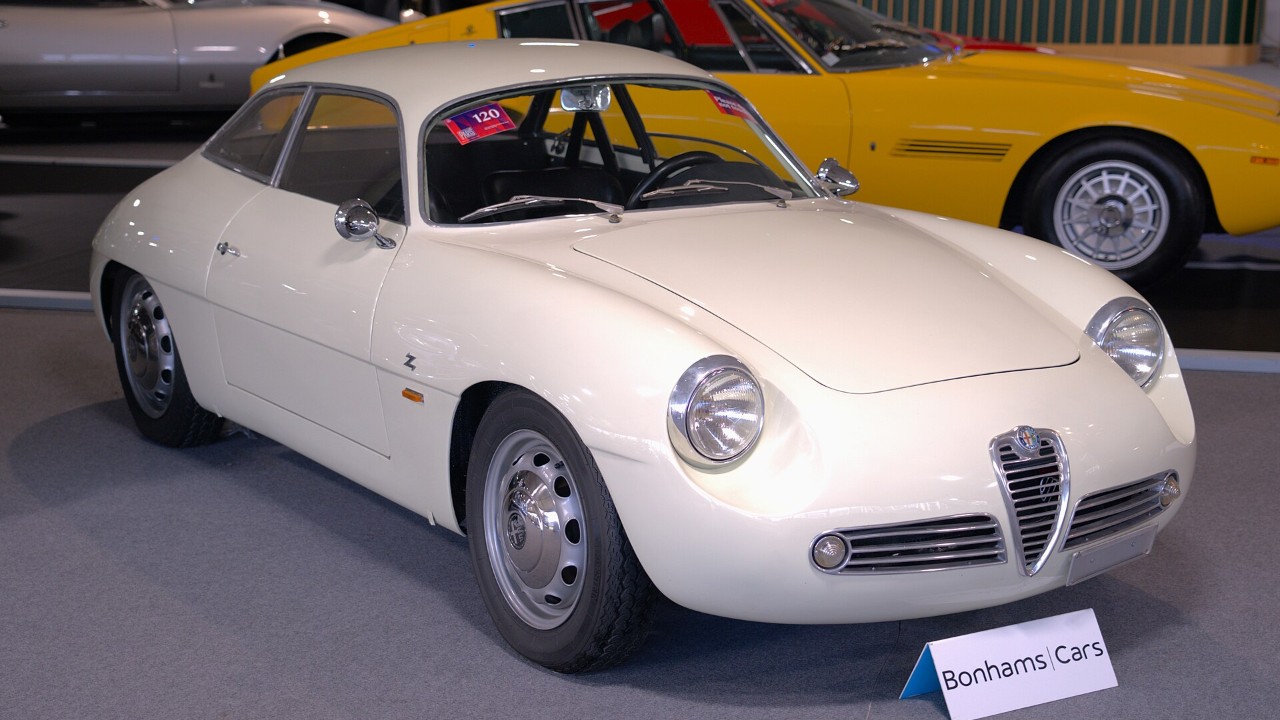
Alfa Romeo once sold a family sedan with the line “The family car that wins races.” That attitude ran straight into the Alfa Romeo Giulietta and Giulia years, when small twin-cam engines, light bodies and a factory racing habit put Alfas at the front of their class from the Mille Miglia to Sebring.
Most people remember the Spider and the GTV, and fair enough. However, the cars that actually earned the class trophies are far less familiar. Some, for example, came in tiny numbers for homologation. Others were sedans that looked ordinary until the flag dropped.
These eight are our picks for the forgotten Alfas that punched hardest in their categories. The race results, build numbers and specs come from auction records, Alfa Romeo’s own heritage material and the cars’ published histories. Our verdicts, however, are opinion.
1. 1962 Alfa Romeo Giulietta SZ
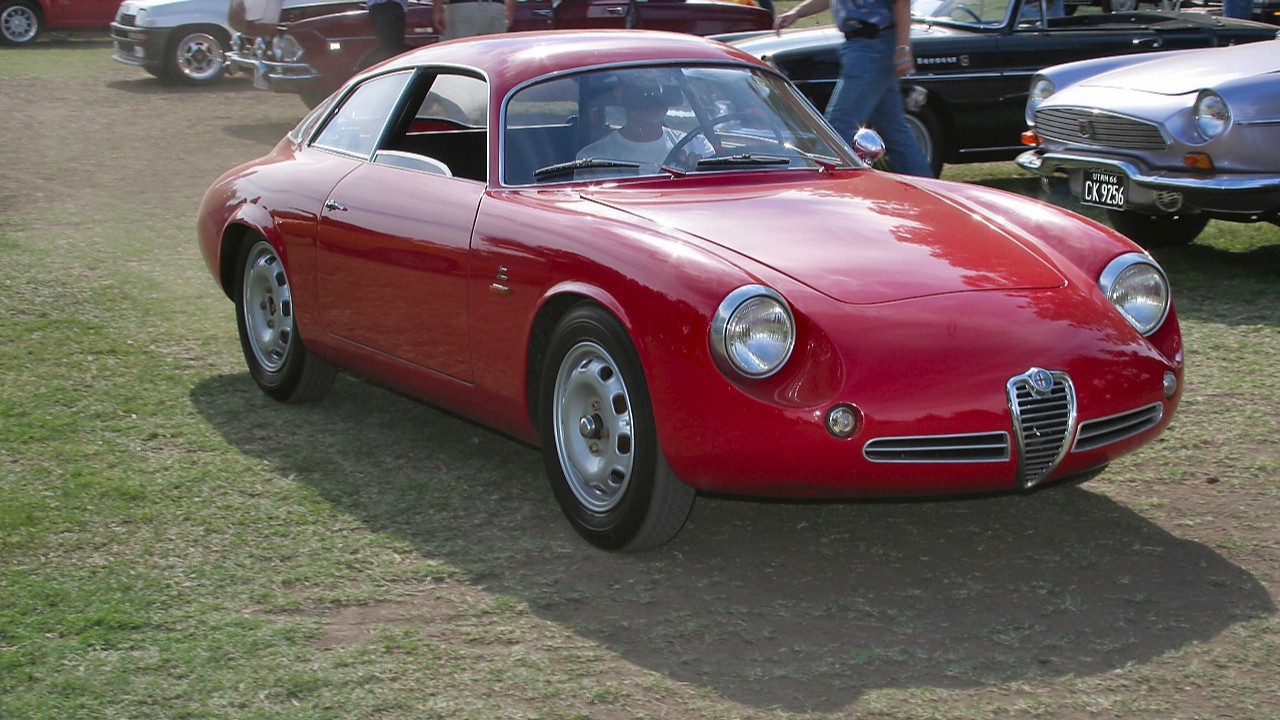
The SZ was Zagato’s answer to a simple question: how much of a Giulietta could you throw away? Ercole Spada drew a two-seat aluminium berlinetta with plexiglass side windows, and the finished car weighed about 770 kg. Alfa showed it at the 1960 Geneva Salon, and the early cars wore a rounded tail.
Then the shape changed. RM Sotheby’s puts total SZ output at roughly 216 cars, and only the final 41 received the chopped Kamm-style “Coda Tronca” tail and front disc brakes. That tail cut drag, and the results followed. According to RM Sotheby’s catalogue for a 1961 Coda Tronca, the Kamm-tail cars helped Alfa win the 1.3-litre class of the International Championship for GT Manufacturers in 1962 and 1963.
That same car tells the story on a smaller scale. For example, Paul Richards drove it to second in class at the Daytona Continental 3-Hours in February 1962, just behind a teammate. It later sold for $280,000 at Monterey in 2025. In our view, the SZ is the purest small-bore racer Alfa ever sold to the public. Almost nobody outside the Alfa world knows its name, which is exactly why it belongs here.
2. 1958 Alfa Romeo Giulietta SVZ
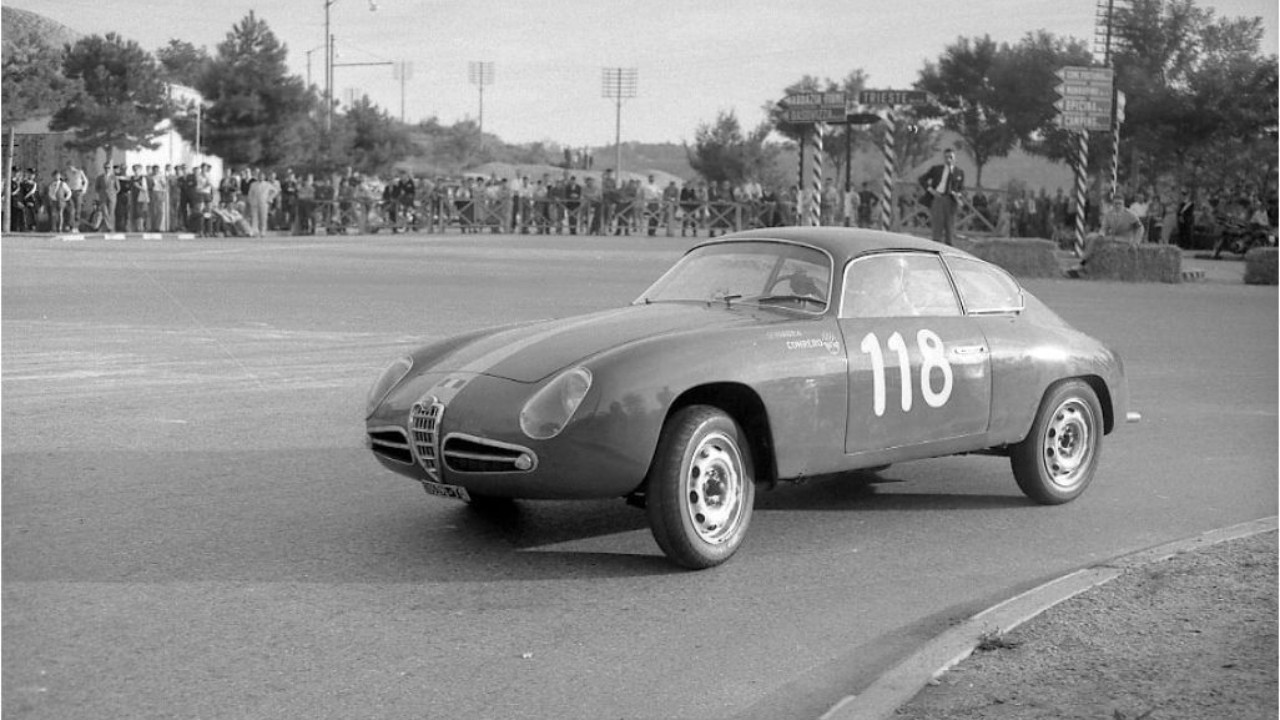
The SVZ began with a wreck. Late in 1956, a Giulietta Sprint Veloce crashed, and Zagato rebuilt it with a new, lighter body of its own design. The rebodied car was quick from the start, so Zagato went on to rebody more Veloces.
The name says it all: Sprint Veloce Zagato. In the end, Zagato converted 18 cars this way. Each SVZ came out roughly 120 kg lighter than the factory coupe it started from. In addition, these cars carried the hottest version of the Giulietta twin-cam, rated at 118 PS. That is a big number for a 1.3-litre road engine of the 1950s, and in a car this light, it made a real difference on twisting roads.
Hillclimbs suited it perfectly. In fact, an SVZ won the 1958 Trieste–Opicina hillclimb. Our take: the SVZ is the missing link between the pretty Bertone Sprint and the purpose-built SZ that followed. With only 18 built, it is also the rarest car on this list. If you ever find one for sale, ask for its Zagato history first, because a regular Sprint Veloce is far easier to come by.
3. 1964 Alfa Romeo Giulia TZ
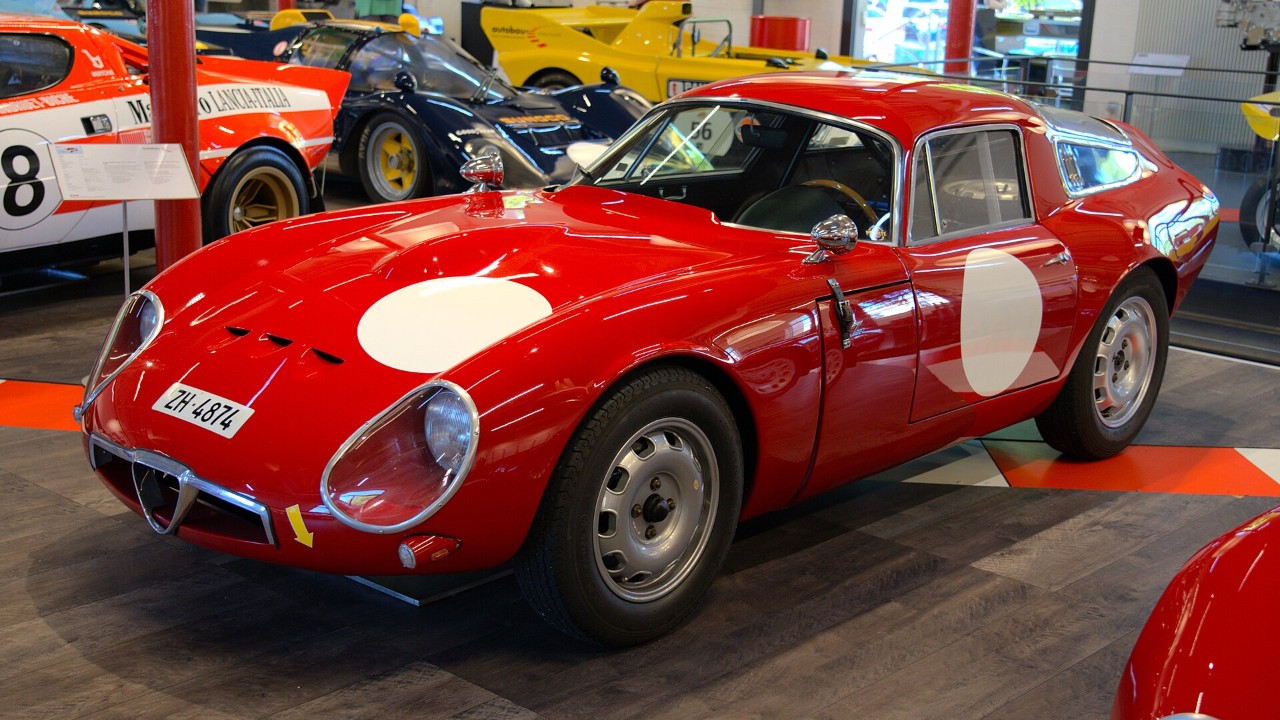
The TZ announced itself before it was even homologated. At the 1963 FISA Monza Cup, TZs took the first four places in the prototype category on the car’s debut weekend. Few new racing cars have started their careers with a sweep like that, and it set the tone for the next two seasons.
One surviving car shows what a privateer could do with it. RM Sotheby’s describes chassis 750061, a “Double Bubble” TZ with about 160 bhp and only 660 kg to carry. In April 1965 it finished fourth in class at the 1000 Kilometres of Monza. Then, in February 1966, Brunninghausen drove it to an outright win at the Warwick Farm International in Australia. That is a long way from Milan for a 1.6-litre coupe.
The same car later sold for $555,000, according to RM Sotheby’s roundup of five Alfa racers. In our opinion, the TZ was the most versatile weapon Alfa built in the 1960s. It ran endurance races, hillclimbs and club events, and it won on several continents. Even so, it lives in the shadow of the GTA and the 33 Stradale, which is why we call it forgotten.
4. Alfa Romeo Giulia TI Super
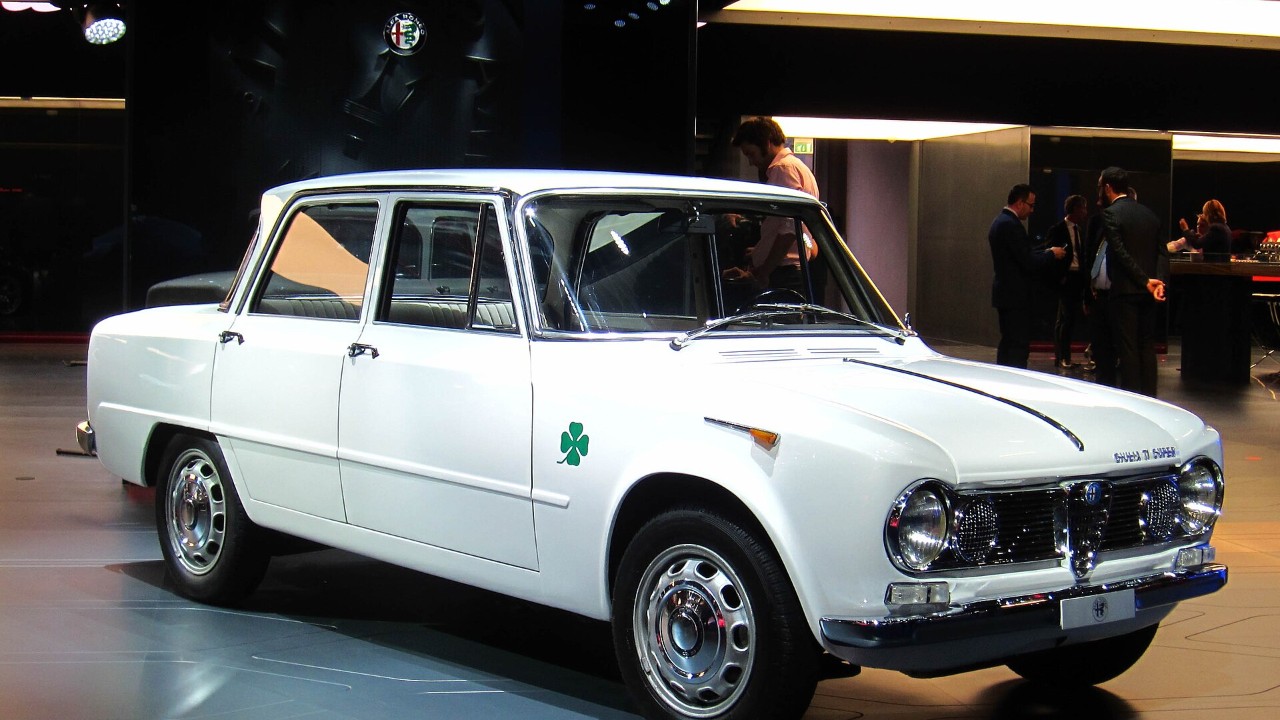
On the surface, the TI Super looked like a boxy family Giulia. Underneath, it was a homologation special for touring-car racing. In fact, Alfa Romeo built just 501 of them, 178 in 1963 and 323 in 1964. It gained FIA homologation on 2 May 1964, and teams then campaigned it in the European Touring Car Challenge.
The recipe was simple. Alfa took the 1,570 cc twin-cam from the Giulia Sprint Speciale and fed it through two twin-choke Weber 45 DCOE 14 carburettors. As a result, output rose to 112 PS, and top speed passed 185 km/h. Meanwhile, the factory stripped weight out. The TI Super weighed 910 kg dry against 1,000 kg for a standard Giulia TI. Mesh grilles replaced the inner headlamps, the rear windows were Plexiglas, and the wheels were magnesium alloy.
Inside, Alfa also removed the heater, armrests and glovebox lid and fitted racing bucket seats. Green quadrifoglio badges sat on the wings and tail. Almost every car left the factory painted white, while only two wore other colours. We love it because it is a four-door sedan with the soul of a race car. If you want one, check the paperwork carefully, because standard Giulias are easy to dress up.
5. 1970 Alfa Romeo GTA 1300 Junior
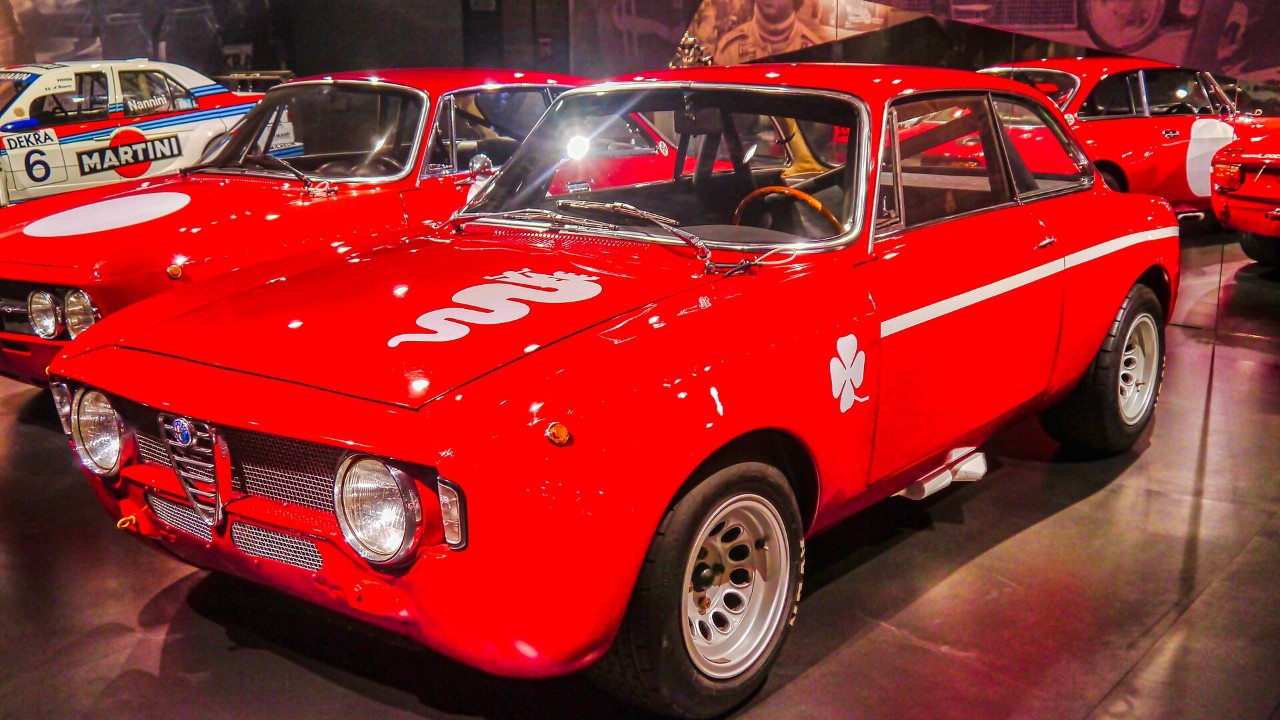
The “A” in GTA stands for Alleggerita, Italian for lightened. The original GTA arrived in 1965 with a 1.6-litre engine, and the Junior followed later as a smaller-engined version. Its 1,300 cc engine was based on the 1600 unit but used a shorter-throw crankshaft. That slotted it into the smaller touring-car classes.
At first, the road-going Junior made 96 PS. Alfa soon raised that to 110 PS. Autodelta, Alfa’s racing arm, then built fuel-injected race versions with about 165 PS. Every one wore the GTA badge, which Alfa kept for its lightened cars. Alfa produced only 450 GTA 1300 Juniors, which makes it scarcer than the 1600 GTA. You can read about that bigger sibling in our story on the 1966 Alfa Romeo Giulia Sprint GTA.
The GTA family’s record speaks for itself. Andrea de Adamich won the European Touring Car title in 1966, and the GTA won it again in 1967 and 1968. In our view, the Junior is the most underrated member of that family. It took the same lightweight thinking down a class, and it deserves as much attention as the 1600.
6. 1971 Alfa Romeo 1750 GTAm
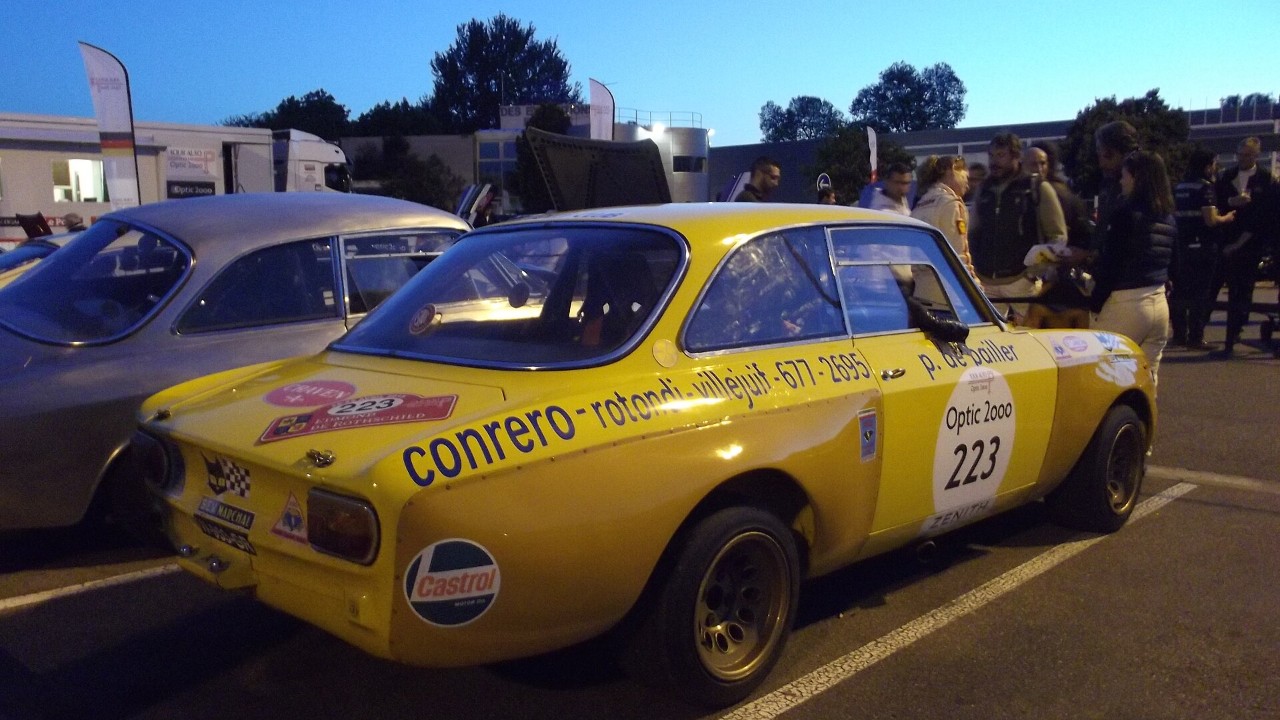
The GTAm was Autodelta’s enlarged GTA. Its starting point was the 1750 GT Veloce built for the United States. That car used Spica fuel injection to meet strict US emission rules, and Autodelta kept the injection for racing. It then built roughly 40 race cars in 1970 and 1971, according to Alfa Romeo’s heritage history of the GTAm.
The engine grew to 1,985 cc with a twin-spark head and 11:1 compression. Heritage figures put output at around 195 to 220 hp, and the car weighed 940 kg. Some had aluminium doors and bare interiors, too.
The results came quickly. Toine Hezemans took the 1970 European Touring Car drivers’ title in a 1750 GTAm, winning at Monza, Budapest, Brno and Jarama. For 1971, the 2000 GTAm followed with 240 hp, and Alfa won the championship again. One detail we love: the team painted white, yellow or blue bands on the noses so crews could spot each car from far away. Our take: this is the most aggressive-looking Alfa coupe ever raced, and it backed up every flare and rivet with silverware.
7. 1956 Alfa Romeo 1900 Super Berlina
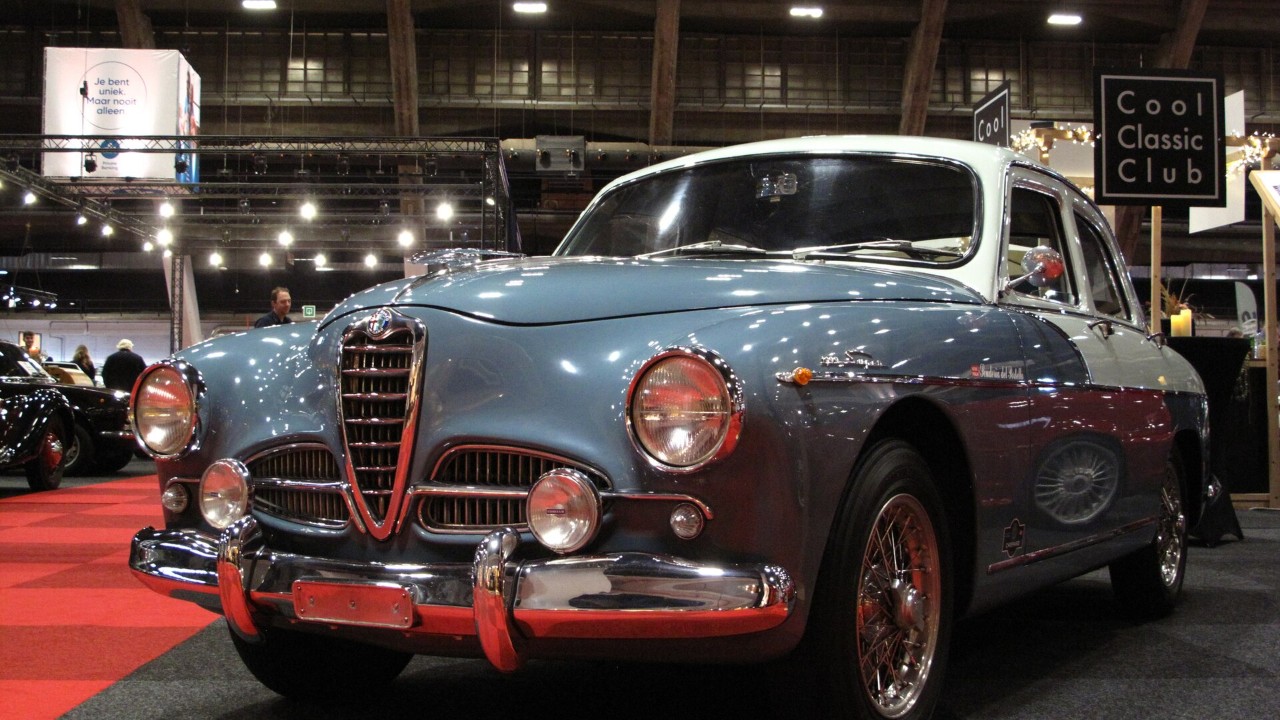
The 1900 changed how Alfa Romeo built cars. Produced from 1950 to 1959, it was the first Alfa made entirely on a production line. It was also the company’s first production car without a separate chassis. Orazio Satta’s design made its debut at the 1950 Paris Motor Show, and Alfa built 21,304 of them in all.
The Super was the everyday version of the bigger-engined car. Alfa enlarged the twin-cam four to 1,975 cc, and the specification table credits the Super sedan with 90 bhp and about 160 km/h. That was brisk for a roomy four-door in the 1950s. In fact, the Super outsold its hotter TI Super sibling by a wide margin, with 8,282 built against just 478. If you want the backstory, our feature on why the 1955 Alfa Romeo 1900 democratized performance covers the whole range.
Its slogan, “The family car that wins races,” pointed to results in events such as the Targa Florio and the Stella Alpina. We aren’t crediting the Super with a specific class win here. Instead, it earns its place as the everyday sedan that carried that racing promise into ordinary garages. In our view, it is the most important Alfa sedan of the 1950s, and almost nobody recognizes one on sight.
8. 1956 Alfa Romeo Giulietta Sprint Veloce
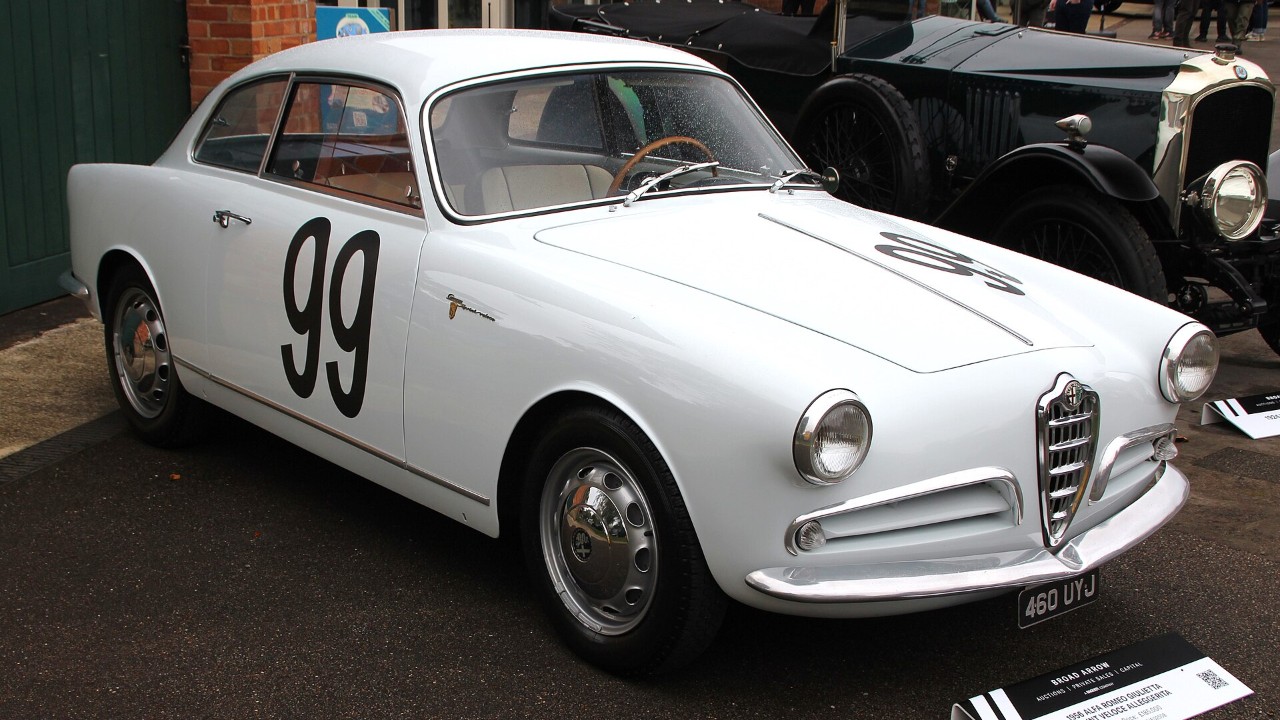
The Sprint Veloce arrived in 1956 as a competition-minded version of the Bertone-styled Giulietta Sprint. It proved its point right away. At the 1956 Mille Miglia, Sprint Veloces took the first three places in their class. For a 1.3-litre coupe on a thousand miles of open Italian roads, that was a statement.
At first, Alfa stripped the cars for racing, with lighter fittings than the regular Sprint. That didn’t last, though. With the Series II update in 1959, Alfa dropped most of the Veloce-only trim. From then on, every Sprint got roll-down windows and chromed hubcaps, and the Veloce became more of an engine package than a separate lightweight model. As a result, we’d hunt for an early car if we wanted the full racing flavour.
Production figures vary slightly by source, but the production list gives 3,058 Sprint Veloces in all. Our take: this is the Giulietta that taught Alfa how to win small-bore classes, and every car above owes it something. If you want to start with the regular coupe that came first, our story on the 1954 Alfa Romeo Giulietta Sprint fills in the background. As for that 1956 Mille Miglia, the Sprint Veloce’s clean sweep of its class podium remains its best calling card.
More from Fast Lane Only