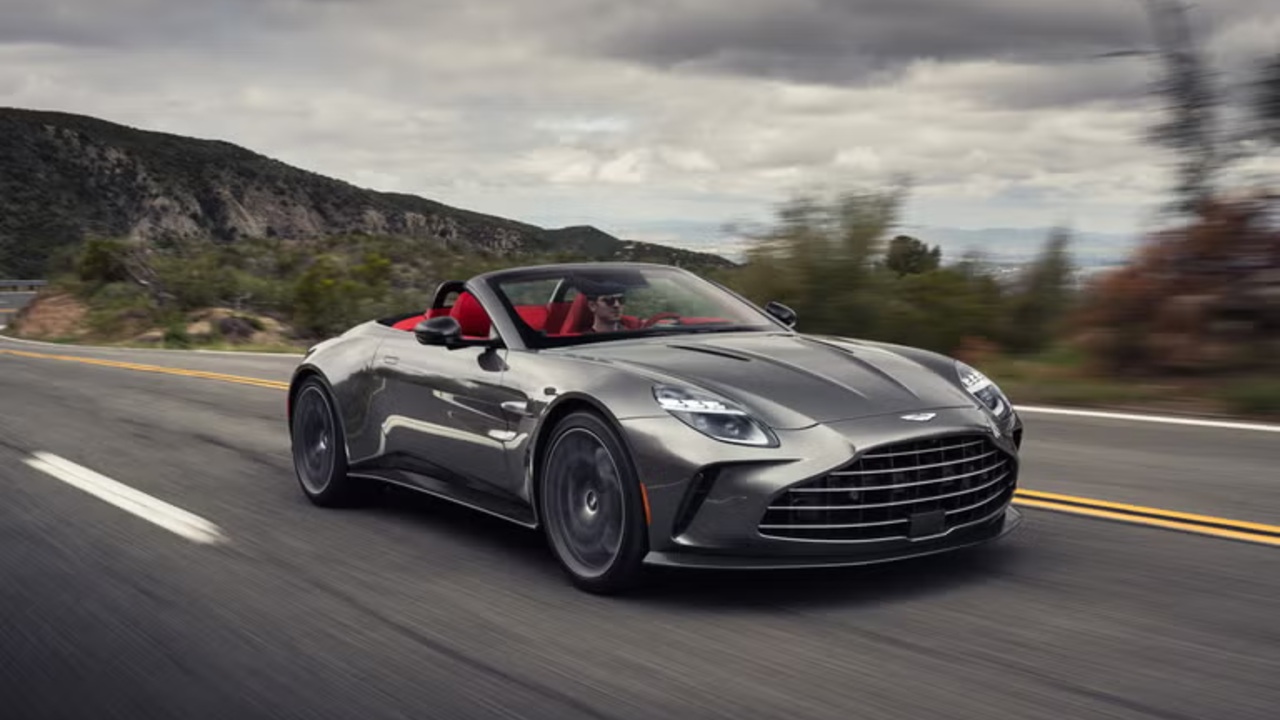
Aston Martin has rarely been accused of timidity, yet the 2026 Vantage family marks a decisive break from the brand’s old habit of polite understatement. With the latest coupe, Roadster and the sharpened Vantage S, the company leans into extroverted design, serious chassis work and a defiantly analog driving experience in a market that is rapidly pivoting to electrification and automation. The result is a compact sports car line that feels less like a cautious refresh and more like a statement of intent about where Aston Martin wants its performance halo to sit.
Rather than chasing outright numbers at any cost, the new Vantage range focuses on feel, proportion and craftsmanship, using hand‑built details and a muscular stance to push the car closer to the front of the modern performance pack. It is a calculated shedding of restraint, one that trades subtlety for presence and clinical efficiency for character, while still moving the badge back toward the sharp edge of contemporary sports car engineering.
Design that trades subtlety for presence
The 2026 Aston Martin Vantage presents a far more assertive face to the world, particularly in Roadster form, where wide fenders and an even wider grille dominate the front view. The proportions are classic front‑engined, rear‑drive sports car, but the surfacing is bolder and the stance more planted, with the bodywork pulled tightly over the wheels to emphasize mechanical muscle. On the coupe, details such as the Q Ion Blue finish and the prominent Aston Martin logo on the headrest underline the brand’s desire to make the car feel special even before the engine fires, while the Roadster’s soft top and compact rear deck give it a taut, almost aggressive elegance.
Crucially, the open‑top version was not treated as an afterthought. According to Aston’s design boss Marek Reichman, the Vantage Roadster was developed in parallel with the Vantage Coupe rather than being a simple roof‑off derivative of an existing shape. That simultaneous development helps explain why the Roadster’s silhouette looks cohesive with the roof down and up, and why its wide fenders and enlarged grille integrate so cleanly with the rest of the body. The result is a car that looks purpose‑built as a convertible, with the Roadster’s fabric roof and rear haunches reading as integral elements of the design rather than compromises imposed late in the process.
Hand‑built craft in an increasingly automated era
Under the skin, the 2026 Vantage family leans heavily on traditional craftsmanship at a time when much of the industry is racing toward electrified powertrains and heavily automated production. The Roadster in particular is positioned as a roughly 300,000 dollar, hand‑built object, with extensive manual work evident from the engine bay to the cabin. That level of attention is not simply a marketing flourish. It is central to the car’s appeal, especially for buyers who see the Vantage as a last opportunity to own a relatively compact, combustion‑powered sports car that still feels assembled by people rather than robots.
The interior reinforces that impression. Sitting in the Aston Martin Vantage Roadster, reviewers note that the seating position makes occupants feel deeply integrated into the car rather than perched on top of it, an effect heightened by the low cowl and snug cockpit. Material choices and options, such as the S highlight package with its vivid red accents in the Vantage S Roadster, underline the bespoke flavor. Even technology is framed as a supporting act rather than the main event. Features like CarPlay Ultra are present but described as a first‑generation system that will evolve over time, a reminder that the Vantage prioritizes tactile controls, clear sightlines and the sound of its V8 over an arms race of screens and software.
Roadster: open‑air theater for the V8
The 2026 Aston Martin Vantage Roadster is positioned as the emotional core of the range, a soft‑top evolution that allows occupants to enjoy more of the V8’s soundtrack without sacrificing the coupe’s essential character. The convertible layout is described as the obvious progression of the model line, with the fabric roof opening up the cabin to both sun and sound. Reviewers emphasize that Aston Martin “crushed it” with the latest Vantage Roadster, praising the way the car combines its extroverted styling with a driving experience that feels cohesive rather than compromised by the loss of a fixed roof.
Mechanically and existentially, the Roadster is framed as a triumph for the marque, not only because of its performance but because of what it signals about Aston Martin’s priorities. In an era when many rivals are shifting to hybrid or fully electric powertrains, the Vantage Roadster doubles down on a traditional, high‑output V8 and rear‑drive layout, using its wide fenders and broad grille to telegraph that intent. Analysts note that this approach helps push the badge back to the forefront of performance, positioning the Roadster as a halo product that embodies the company’s determination to remain a serious player in the sports car arena even as it prepares more electrified models elsewhere in the lineup.
Vantage S: subtle power bump, serious chassis work
For buyers who want a sharper edge, the 2026 Aston Martin Vantage S takes the standard car’s extroversion and layers in meaningful dynamic upgrades. The engine receives a modest increase of 15 horsepower, a figure that might sound incremental on paper but is paired with more significant changes to the suspension and structure. Engineers have added increased camber at both the front and rear wheels and adopted a solid mounted rear subframe, moves that are aimed squarely at improving turn‑in response, mid‑corner stability and the sense of connection between driver and chassis.
Inside, the Vantage S Roadster showcases its intent with details like the S highlight package, which brings “spicy” red accents to the cabin and visually distinguishes the model from the standard Roadster. The combination of a slightly more potent engine, more aggressive alignment settings and a stiffer rear structure suggests that Aston Martin is using the S badge to signal a more focused driving tool rather than a mere appearance package. That strategy aligns with the company’s broader performance push, which also includes headline projects such as the Valhalla AMR, and helps ensure that the Vantage S feels like a meaningful step up for enthusiasts who plan to exploit the car on challenging roads or occasional track days.
Positioning within Aston Martin’s performance push
The 2026 Vantage does not exist in isolation. It arrives as Aston Martin is widening its lineup and preparing additional high‑performance models, including the DB12 S coupe and the hybrid Valhalla AMR, as part of a coordinated effort to sharpen the brand’s performance edge. In that context, the Vantage family serves as the accessible, driver‑focused entry point to a broader portfolio that will span everything from traditional grand tourers to advanced hybrid supercars. The decision to invest heavily in the Vantage’s chassis, design and craftsmanship, rather than simply relying on incremental updates, reflects the company’s recognition that this car must anchor its sporting credibility.
At the same time, the Vantage’s extroverted styling and hand‑built feel help differentiate it from rivals that are increasingly defined by digital interfaces and electrified drivetrains. While the rest of the Aston Martin range moves toward more complex powertrains and higher levels of technology, the Vantage stands as a relatively pure expression of the brand’s heritage, with its wide fenders, open‑air Roadster option and carefully honed S variant all reinforcing that message. It is a calculated choice to strip away restraint in favor of presence and engagement, and it positions the 2026 Vantage as a pivotal model for a company intent on proving that traditional sports cars still have a compelling role in a rapidly changing automotive landscape.
More from Fast Lane Only