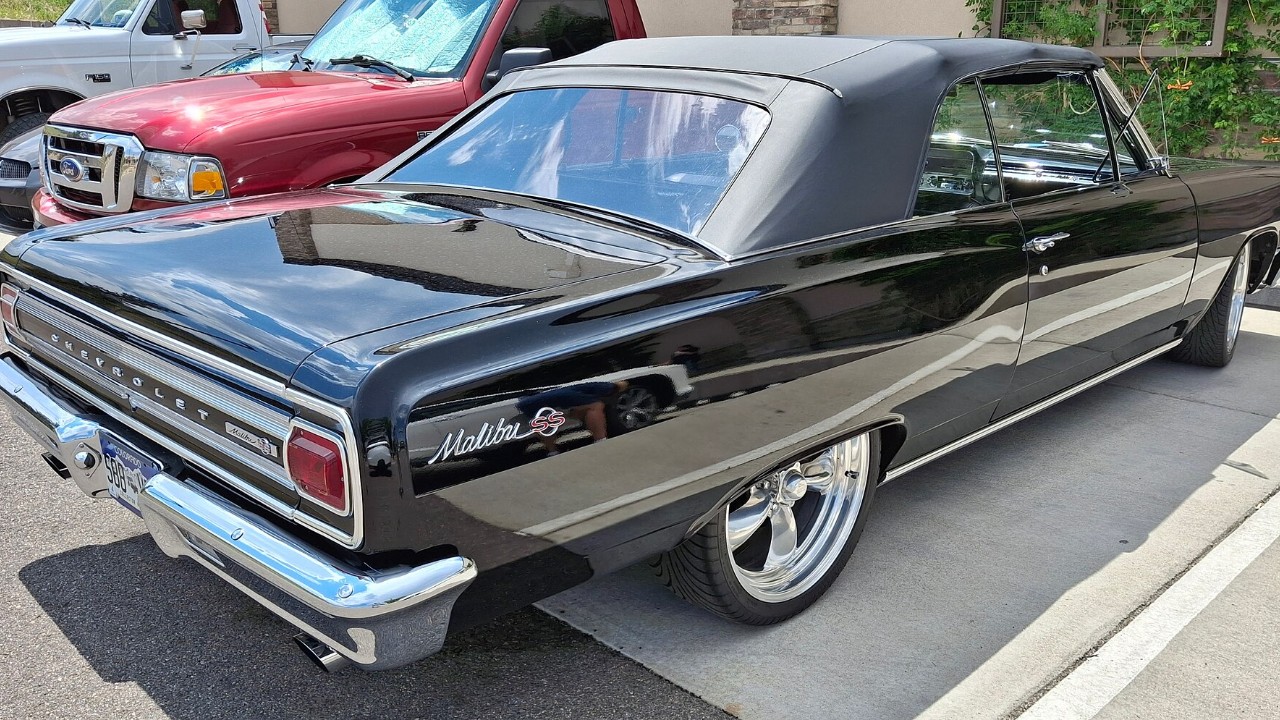
Chevrolet built 294,160 Chevelles in the car’s first year, and 76,860 of them were Chevelle Malibu SS models. That was 1964, and it kicked off a midsize run that lasted through 1977. Along the way, the Chevelle went from tidy family car to big-block drag weapon and finally to a plush personal coupe.
Looking back, what stands out is how much choice buyers had. You could order anything from a mild small-block to a 454, in a plain coupe or a dressed-up hardtop. Few new cars offer that kind of menu today.
These ten are our picks for the Chevelles that show how different car building used to be. The verdicts are our opinion. However, the engines, ratings and production numbers behind them come from period specifications, enthusiast references and auction records.
1. 1964 Chevrolet Chevelle Malibu SS 327
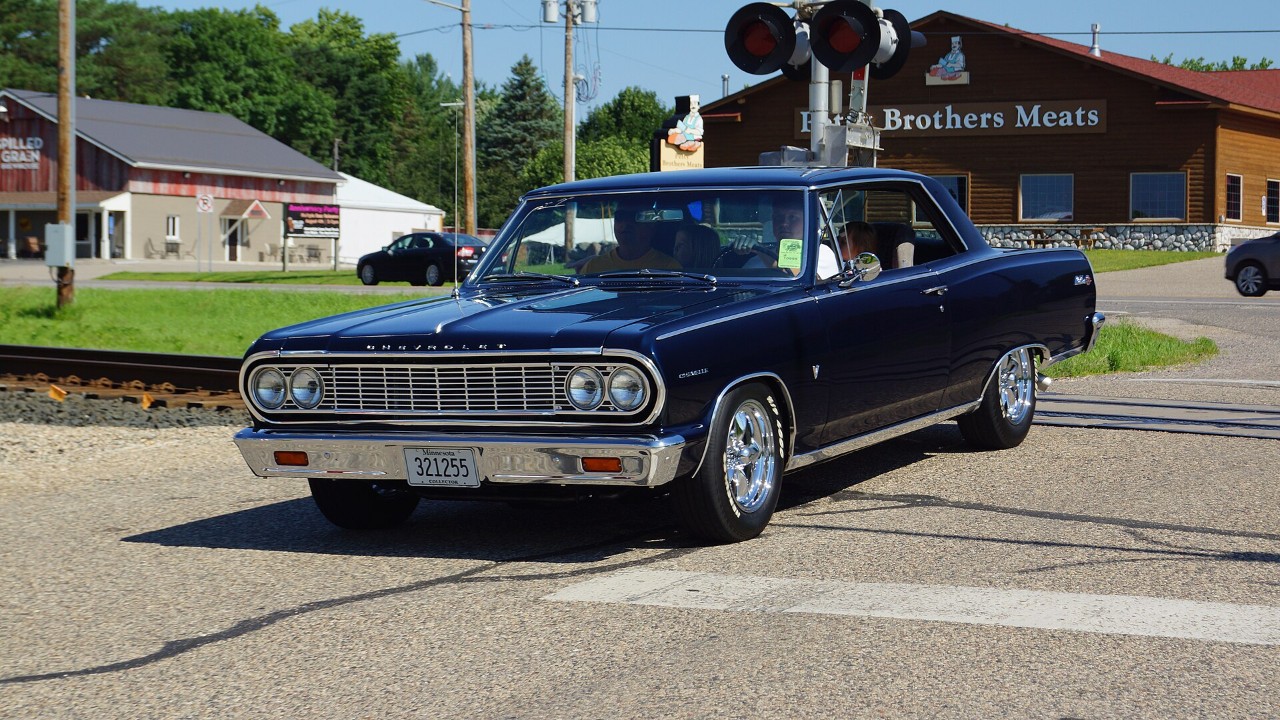
At first, the Chevelle arrived without a big-block in sight. At launch, the strongest choice was a 283-cubic-inch V8 with a four-barrel carburetor, rated at 220 horsepower. Then, in the middle of the 1964 model year, Chevrolet added the 327 V8 in 250- or 300-horsepower form.
That mid-year engine change turned the Malibu SS into a real sleeper in plain clothes. It kept the clean, upright styling of a family car, yet the 300-horsepower 327 gave it real pace. Chevrolet also sold a lot of SS models that year, with 76,860 out of the 294,160 total. In other words, about one Chevelle in four left the factory as an SS.
Our take: the 1964 Malibu SS 327 shows how a carmaker could change a car’s character halfway through a year. All it took was a new engine on the order sheet. Today, a new model gets a fixed launch plan and years of planned updates. Back then, Chevrolet simply dropped a bigger V8 into the lineup when it was ready, and buyers could walk in and order it. For that reason, a documented mid-year 327 car is a neat piece of Chevelle history.
2. 1965 Chevrolet Chevelle Malibu SS Z16
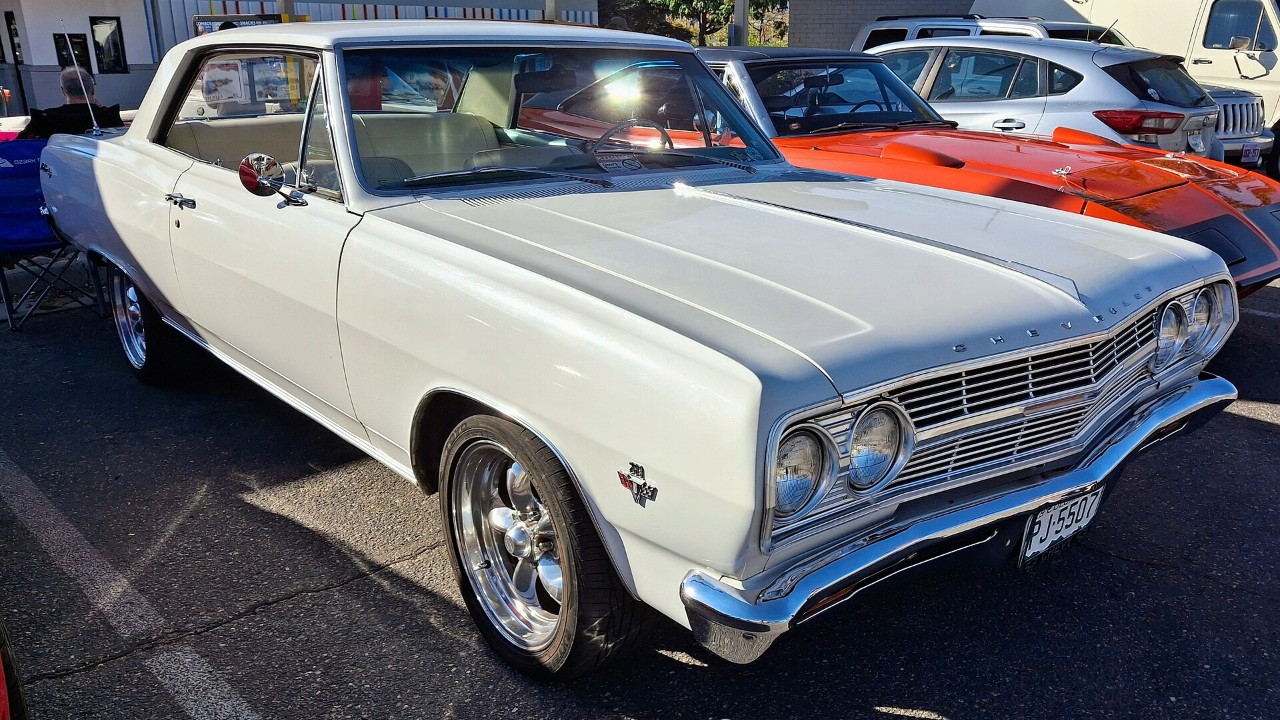
The Z16 is the Chevelle that started the big-block story. Chevrolet built 201 of them, a figure that Sports Car Market says includes two prototypes and one convertible. Each one carried a 396-cubic-inch V8 rated at 375 horsepower, with an aluminum intake manifold. Because the 396 was brand new for 1965, the Z16 was also the Chevelle’s first taste of big-block power.
The car around the engine got serious upgrades too. The Z16 package included the boxed frame from the convertible, a narrowed rear axle and brakes from the full-size Impala. Inside, meanwhile, the car Sports Car Market profiled had a 160-mph speedometer, bucket seats and a console.
Our take: the Z16 shows what a factory could do when it built a limited package rather than a normal option. The car Sports Car Market profiled even appears in a General Motors Z16 memo. That rarity makes it a pricey find now, and you should expect documentation on any real one. Mecum sold a restored Tuxedo Black Z16 at its Dallas auction in September 2013 for $214,000, including buyer’s premium.
3. 1966 Chevrolet Chevelle SS 396 L34
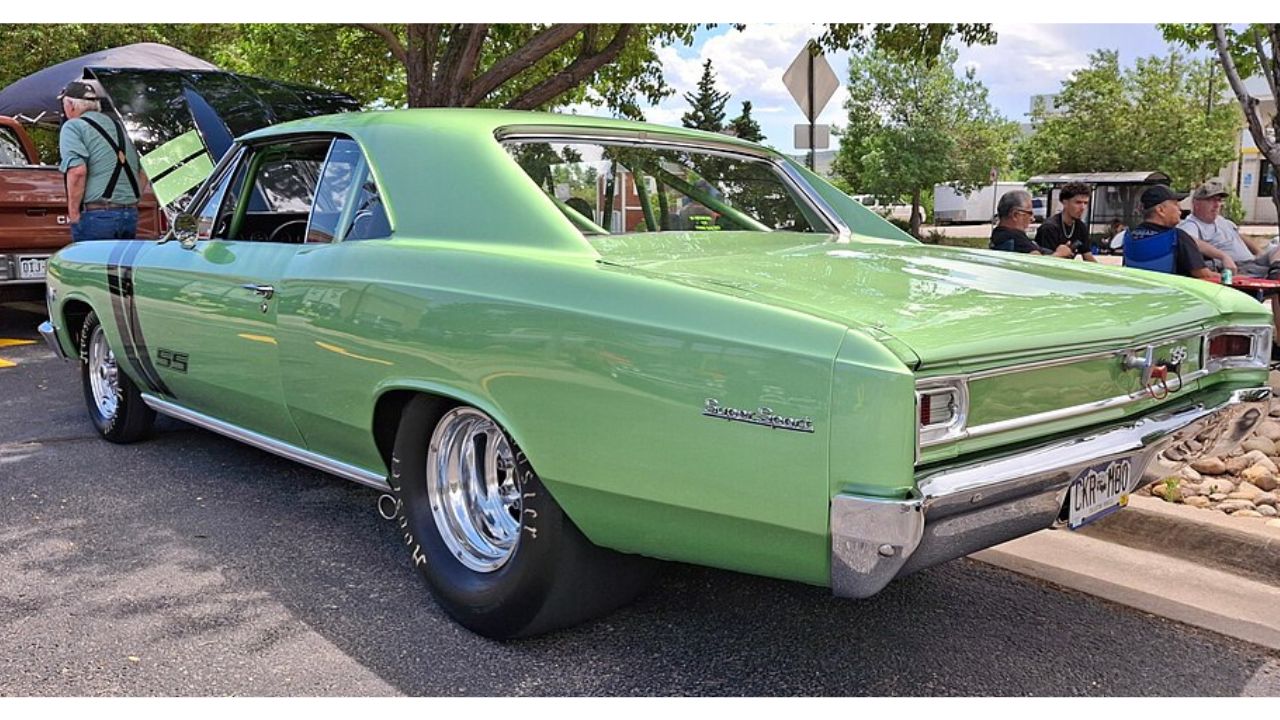
For 1966, the big-block became the heart of the Chevelle SS 396. Buyers got three versions of the 396. According to Chevy Hardcore, the standard L35 made 325 horsepower, the optional L34 made 360, and the top L78 made 375.
In our view, the L34 sits in the sweet spot. It gave you a clear step up from the base engine without stepping all the way up to the top option. In other words, it was the big-block for the buyer who wanted to drive the car every day and have plenty left for a stoplight.
Our take: the L34 is the kind of middle option carmakers rarely bother with anymore. Today, a performance car usually comes with one engine, or a base engine and a single upgrade. Back then, Chevrolet offered three big-block ratings in one midsize car. That level of choice is a big part of why this Chevelle earns its place here. Besides, a 360-horsepower big-block makes a strong case on its own, even before you look at the price of an L78.
4. 1967 Chevrolet Chevelle SS 396 L78
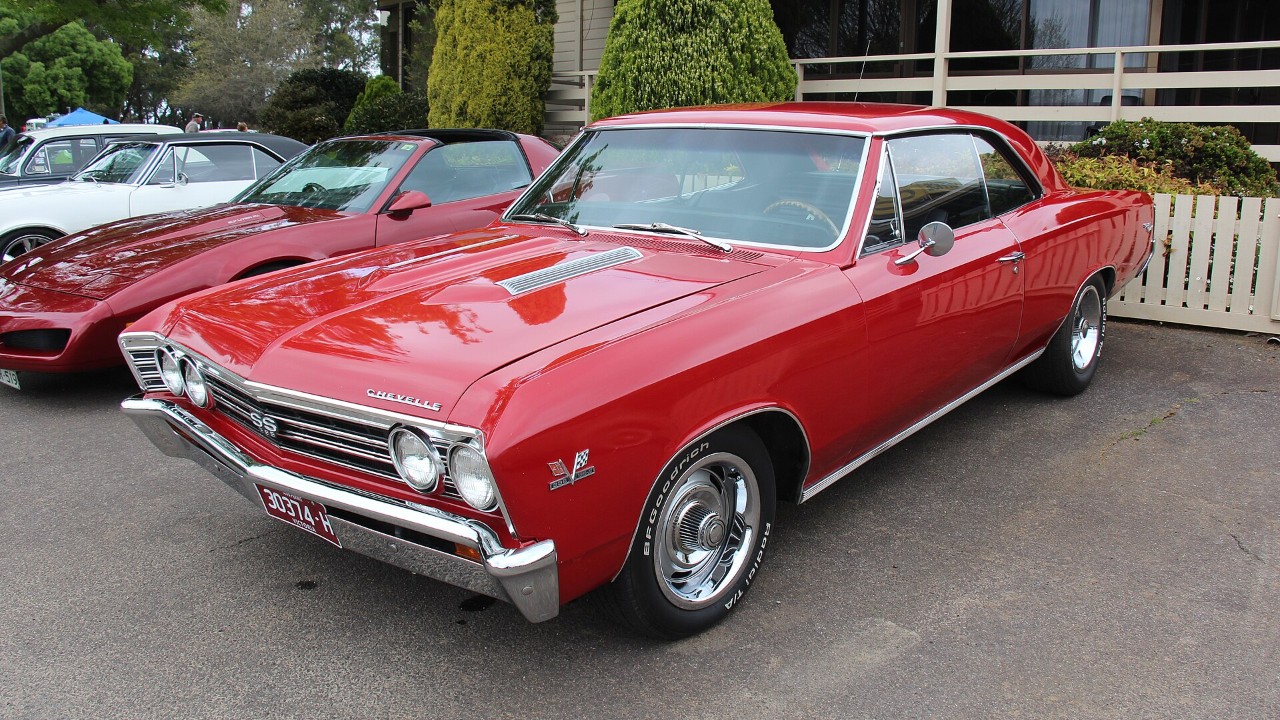
The 375-horsepower 396 had a strange 1967. It was unavailable until late in the model year, and when it returned, Chevrolet sold 612 of them. That small count makes the L78 one of the harder 1967 Chevelles to find.
Under the hood, though, the engine was old-school in the best way. Chevy Hardcore lists 11.1:1 compression, a solid-lifter cam, iron rectangular-port heads and peak power at 5,600 rpm. Interestingly, it made 415 lb-ft of torque, the same figure as the 350-horsepower version. Meanwhile, front disc brakes were now available on all Chevelle models.
Our take: a solid-lifter big-block that wants to rev is the kind of engine that no longer exists in a showroom car. Solid lifters and 11.1:1 compression are race-engine ingredients, and that was the point. Even so, Chevrolet sold it in a car with a back seat and a trunk. We can’t imagine an engine like that clearing today’s emissions rules, and that is exactly why it feels special. You bought it because it felt like a race engine. In our view, nothing in a modern car’s engine bay delivers the same mechanical feel.
5. 1969 Chevrolet Chevelle COPO 427
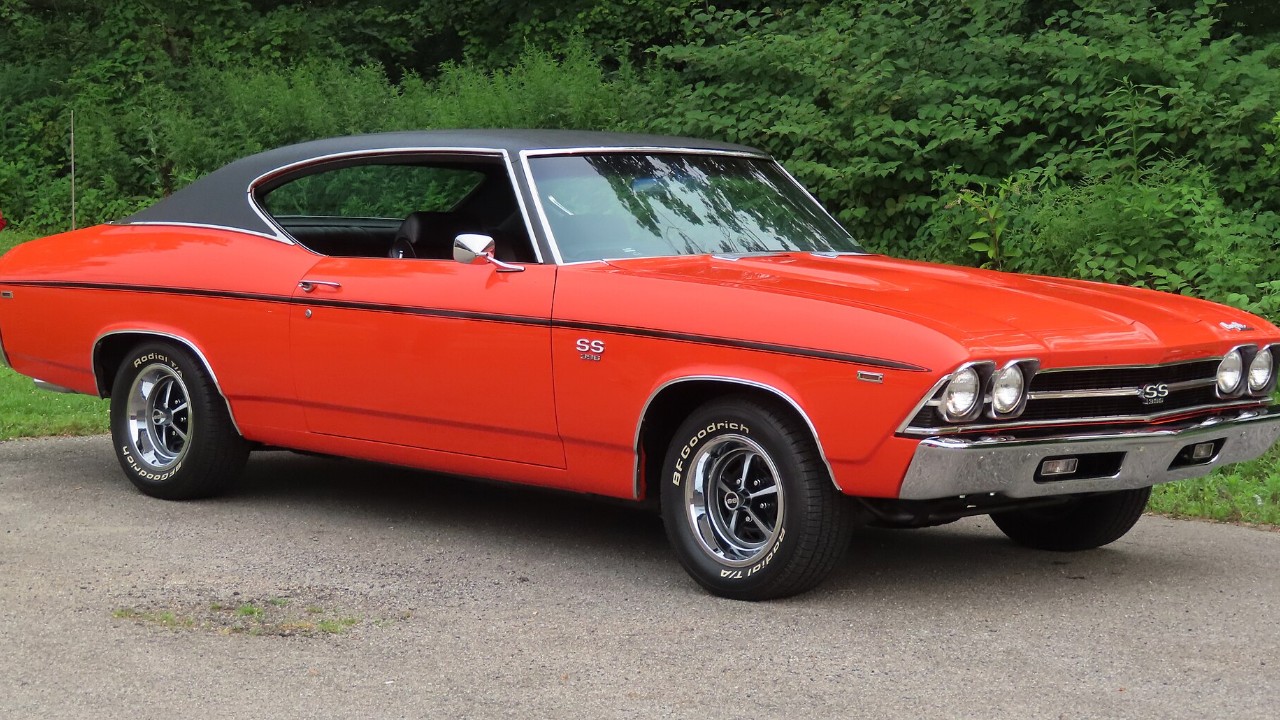
The 427 Chevelle came through a back door. Chevrolet’s Central Office Production Order system, or COPO, usually filled special-equipment fleet orders. In 1969, some Chevrolet dealers used it to get big-block Chevelles instead. As a result, around an estimated 323 Chevelle two-door hardtops got the L72 427, rated at 425 horsepower. That was 50 more horsepower than the hottest 1967 Chevelle 396.
One dealer stands out. Don Yenko, a Pittsburgh-area Chevrolet dealer, used the COPO system to create a special COPO 9562 package with the L72 427. A confirmed 99 of those cars went out through Yenko Chevrolet in Canonsburg, Pennsylvania.
Our take: the COPO 427 is the clearest proof that they don’t build them like this anymore. A dealer could use a fleet-order system to get a car with an engine the regular Chevelle order form did not offer. Today, special editions arrive through press releases and allocation lists. Back then, the right dealer and an order code could get you a 425-horsepower midsize car. If you shop for one today, insist on paperwork, because the COPO story is easy to tell and hard to prove.
6. 1970 Chevrolet Chevelle SS 454 LS5
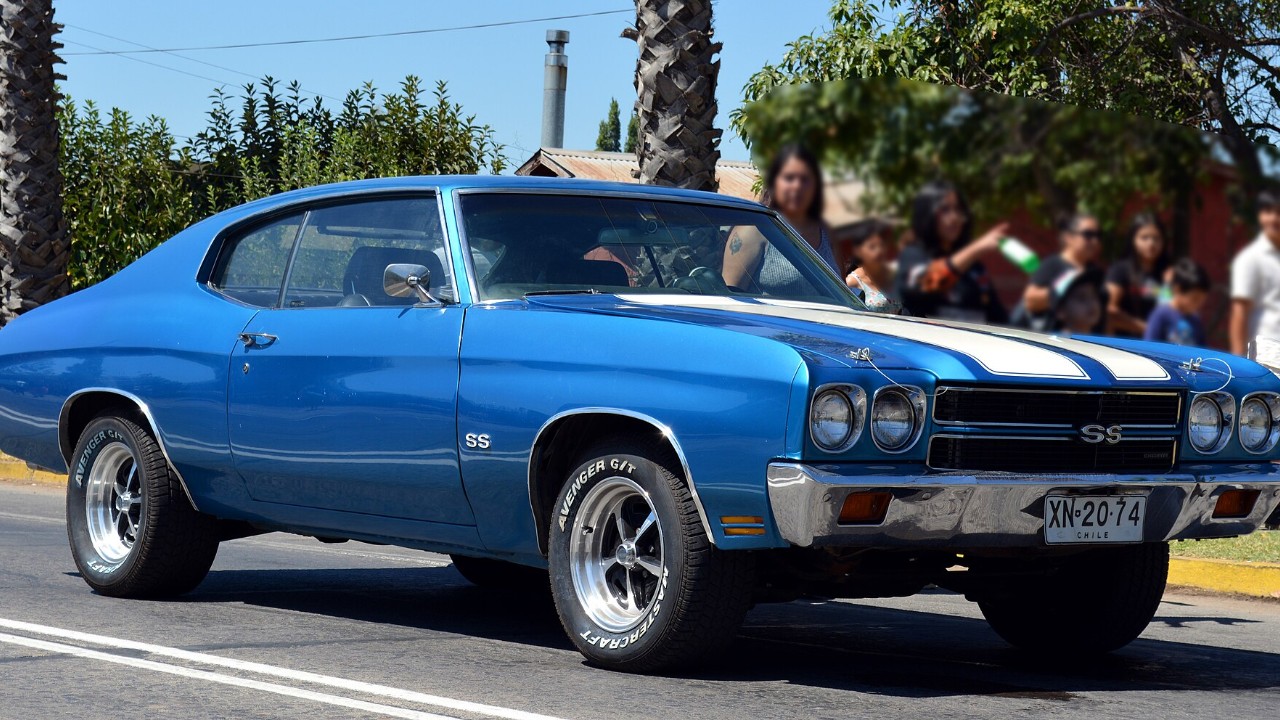
The 454 arrived in the Chevelle for 1970. Chevrolet offered it in two forms. The LS5 was the standard version, rated at 360 horsepower, while the solid-lifter, high-compression LS6 claimed 450 horsepower. Chevrolet built 4,475 LS6 Chevelles that year.
Because the LS6 grabs the headlines, fans often overlook the LS5. Yet in our view, the LS5 was the one you could live with on the street. It made big power with less fuss, and it fit the Chevelle’s role as a fast car you could also drive to work. If you want the full picture of what changed that year, our story on why the 1970 Chevrolet Chevelle SS became more powerful than expected goes deeper.
Our take: a 454 in a midsize coupe is pure late-1960s thinking, and we doubt any carmaker would sign off on that recipe today. The 454 also stayed in the Chevelle and El Camino through 1975. That run shows how long Chevrolet kept faith with big displacement, even as the rules changed around it. If you want a 454 Chevelle you can drive often, the LS5 is the version we’d look for first.
7. 1971 Chevrolet Chevelle Heavy Chevy
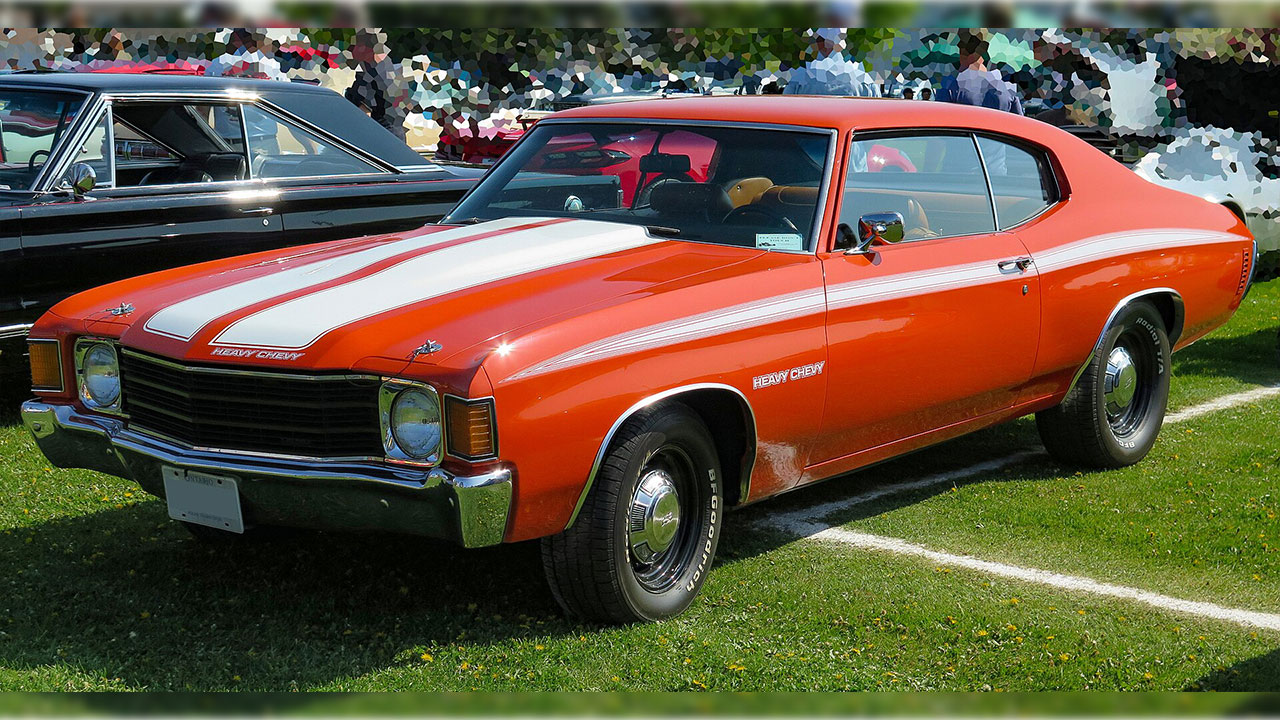
The Heavy Chevy is the budget muscle car on this list. Chevrolet introduced it at midyear in 1971 under RPO YF3. It was mainly an appearance package for the base Chevelle, giving the cheapest coupe the look of a performance car. Specifically, it was trim for the base Chevelle model, number 13437, rather than for the Malibu.
However, the engine rules were unusual. You could order the Heavy Chevy with any V8 except the 454. As a result, buyers could pick a mild small-block for daily use or a bigger engine for more go. Either way, the car wore the same Heavy Chevy look. For a young buyer on a budget, that flexibility made a lot of sense.
Our take: the Heavy Chevy shows how Chevrolet kept the muscle look alive in a cheaper package. It was an easy way into a car that looked fast. In our view, today’s appearance packages rarely have this much personality. If you find one, check the paperwork for the YF3 code, because the appearance parts alone are easy to copy.
8. 1972 Chevrolet Chevelle Malibu SS
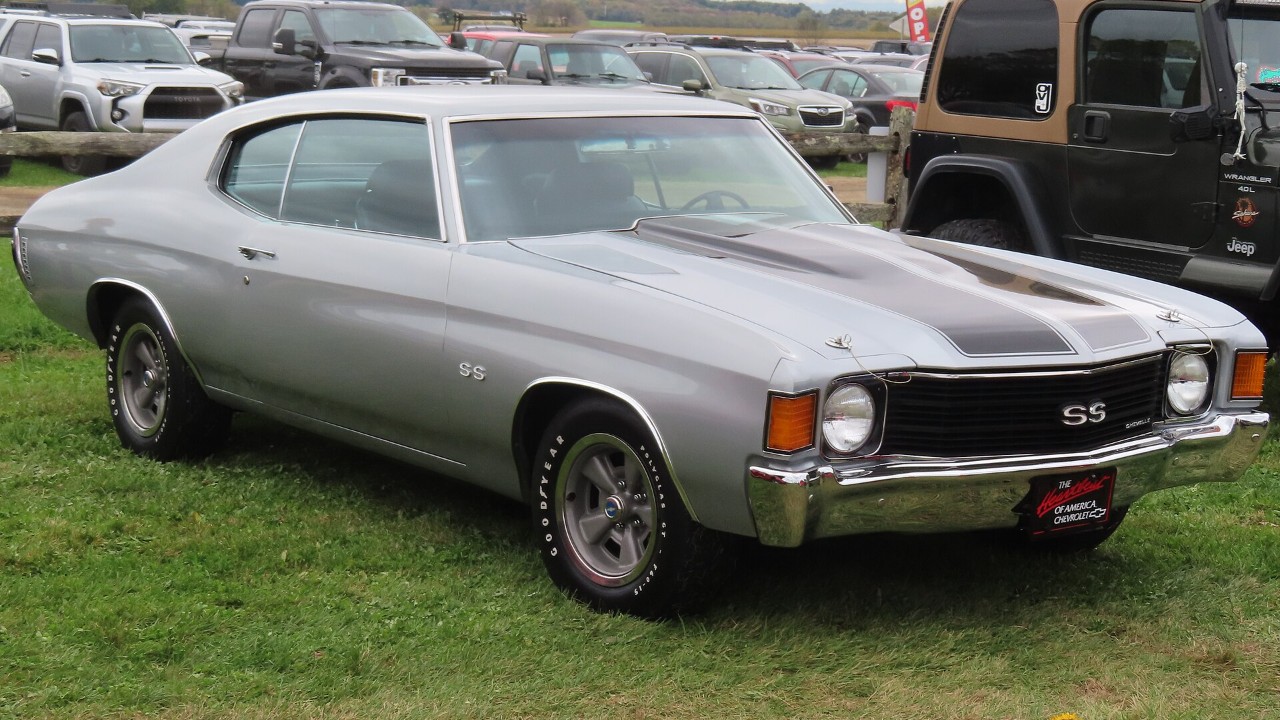
For 1972, the Chevelle Malibu SS kept its 1971 rules, so the SS equipment required an optional V8. In 1971, that meant buyers couldn’t order the base 307 with the SS, while the 350 qualified. Meanwhile, the top 1972 SS engine carried a rating of 270 net horsepower.
That net rating matters, because it isn’t directly comparable with the gross figures of the late 1960s. Even so, Chevrolet kept building Chevelles in big numbers. Model-year output came to 49,352 Chevelles, 290,008 Malibus and 54,335 station wagons.
Our take: the 1972 Malibu SS was handsome, simple and part of a line Chevrolet built by the hundreds of thousands. In our view, that volume is a gift for owners hunting parts today. It also means you can find a nice one without chasing a rare option code, which suits a car built to be driven. That mix of style and easy ownership is something we’d love to see again in a new coupe.
9. 1974 Chevrolet Chevelle Laguna Type S-3
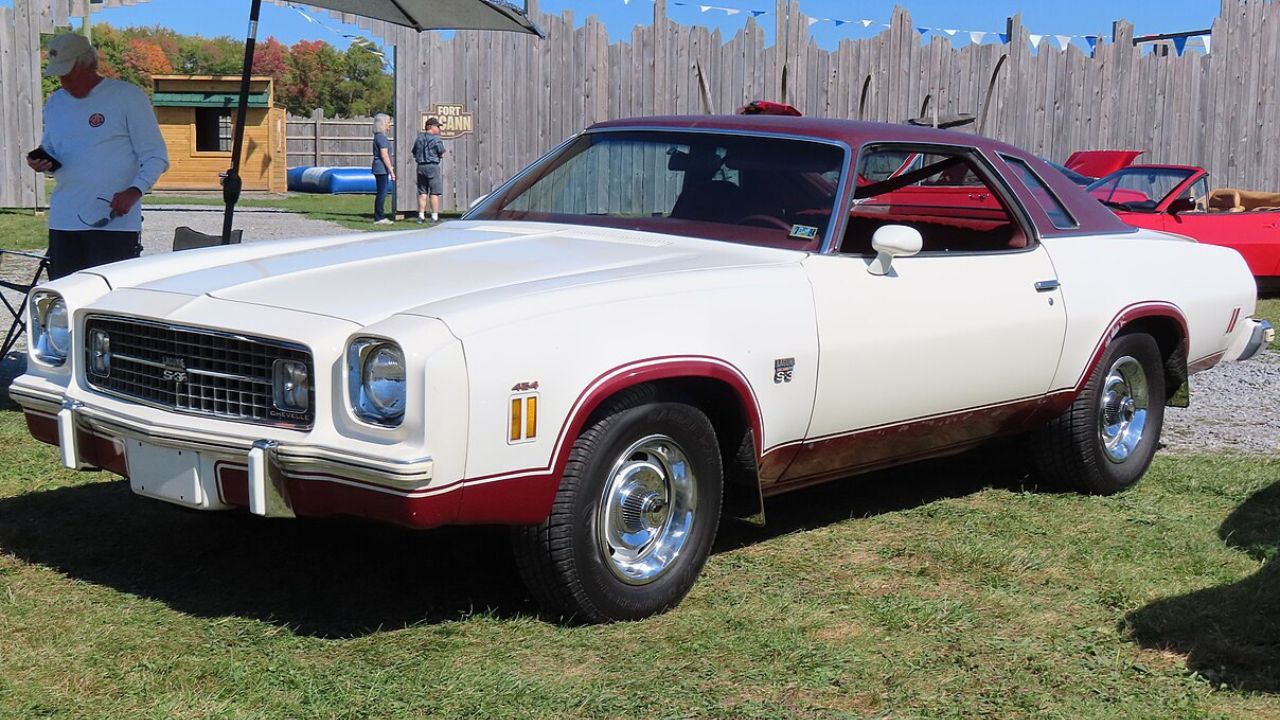
The SS option ended after 1973. In its place, the Laguna became the Chevelle’s top model. For 1974, it turned into the Laguna Type S-3, offered only as a coupe. Chevrolet built 15,792 of them that year.
At the same time, power came from a 350-cubic-inch V8 with a two-barrel carburetor, rated at 145 horsepower as standard. That is a far cry from the 450-horsepower LS6 just four years earlier. Still, the Type S-3 brought a different idea of performance to the Chevelle line, with a sporty look and the comfort of a personal coupe.
Our take: the Laguna Type S-3 is a snapshot of a carmaker reshaping a muscle car to fit a new era. It was low on power but high on style. In our view, few carmakers today would take that risk with a sporty midsize coupe, which makes the S-3 an interesting car to own now. Besides, at 15,792 built for 1974, it is far less common than a regular Malibu of the same years.
10. 1977 Chevrolet Chevelle Malibu Classic
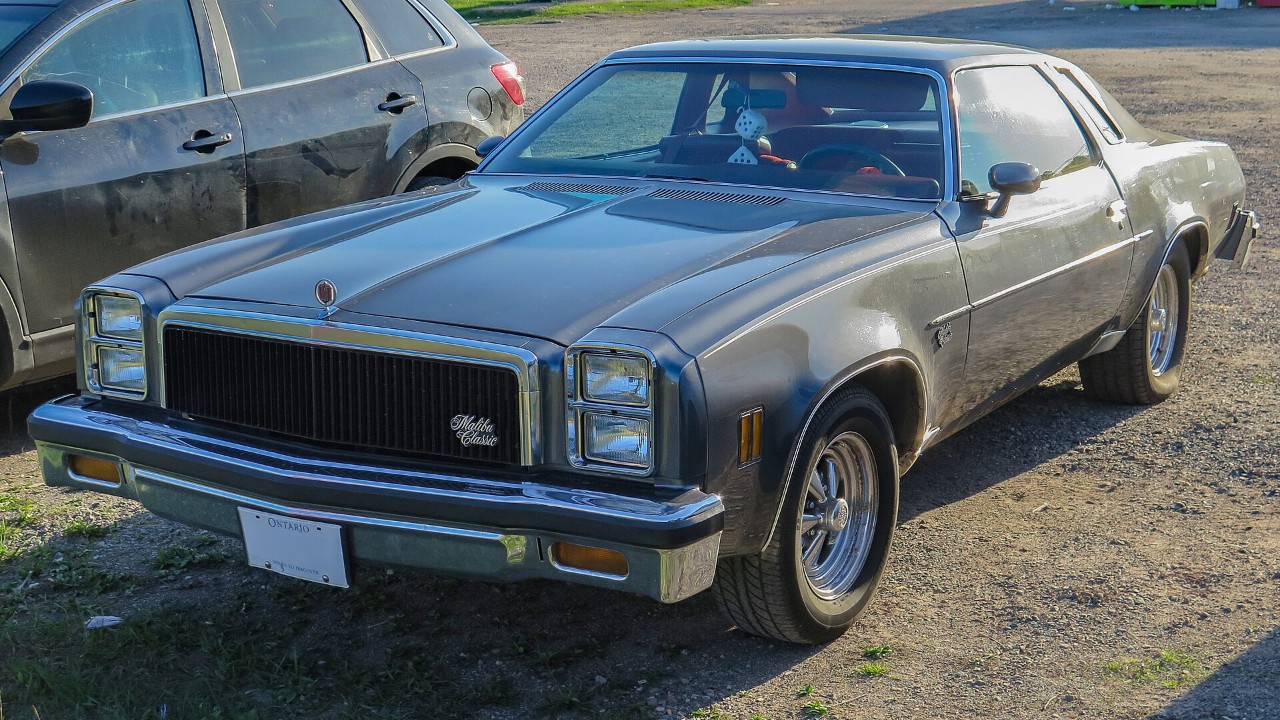
The Malibu Classic closed the book on the Chevelle name. For 1977, Chevrolet built 37,215 Malibu Classic Landau coupes and 73,739 Malibu Classic coupes. By comparison, it built 28,793 plain Malibu coupes.
In short, those numbers tell you where buyers had moved. The fancier Malibu Classic outsold the basic coupe, and the Landau version found plenty of homes too. If you want a comfortable 1970s cruiser, this is an approachable way into Chevelle ownership. For a full rundown of the engines Chevrolet offered over the years, see our guide to 10 engines Chevrolet offered in the Chevelle SS from 1964 to 1973.
Our take: the 1977 Malibu Classic is the gentle finale to a long run. It traded big-block power for comfort, and in our view it did that well. Few midsize cars today come with a formal Landau coupe version, which says a lot about how much tastes have changed. The 1977 models were the last to wear the Chevelle name, and for 1978 Chevrolet’s midsize cars carried the Malibu name instead.
More from Fast Lane Only