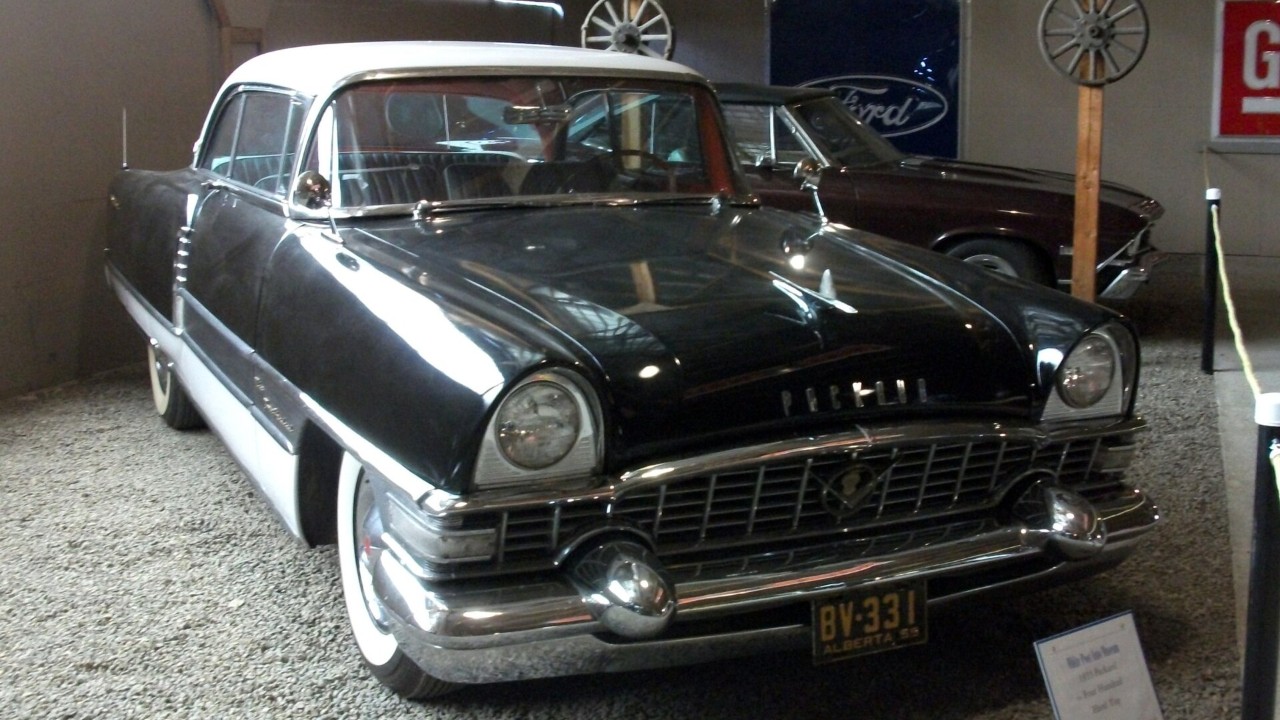
In 1955, Packard put a 352-cubic-inch V8 into its new Packard Four Hundred hardtop, a bigger engine than Cadillac, Chrysler or Lincoln offered that year. Yet within two years, Packard’s Detroit plant had closed. That rise and fall sums up the 1950s for America’s independent carmakers.
Ford, GM and Chrysler won the decade, and their Bel Airs and Thunderbirds hog the spotlight now. But Packard, Studebaker, Nash, Hudson, Kaiser, Frazer and Willys built some genuinely clever cars before they faded. At the same time, even the big three made a few oddballs that most people forget.
So here are our picks for 12 forgotten cars from the 1950s that we would never sell. The loyalty is our opinion, and we own it. However, every year, engine, price and production figure behind it comes from period sources, auction records, owners’ club histories and model records we read for this list.
1. 1955 Packard Four Hundred
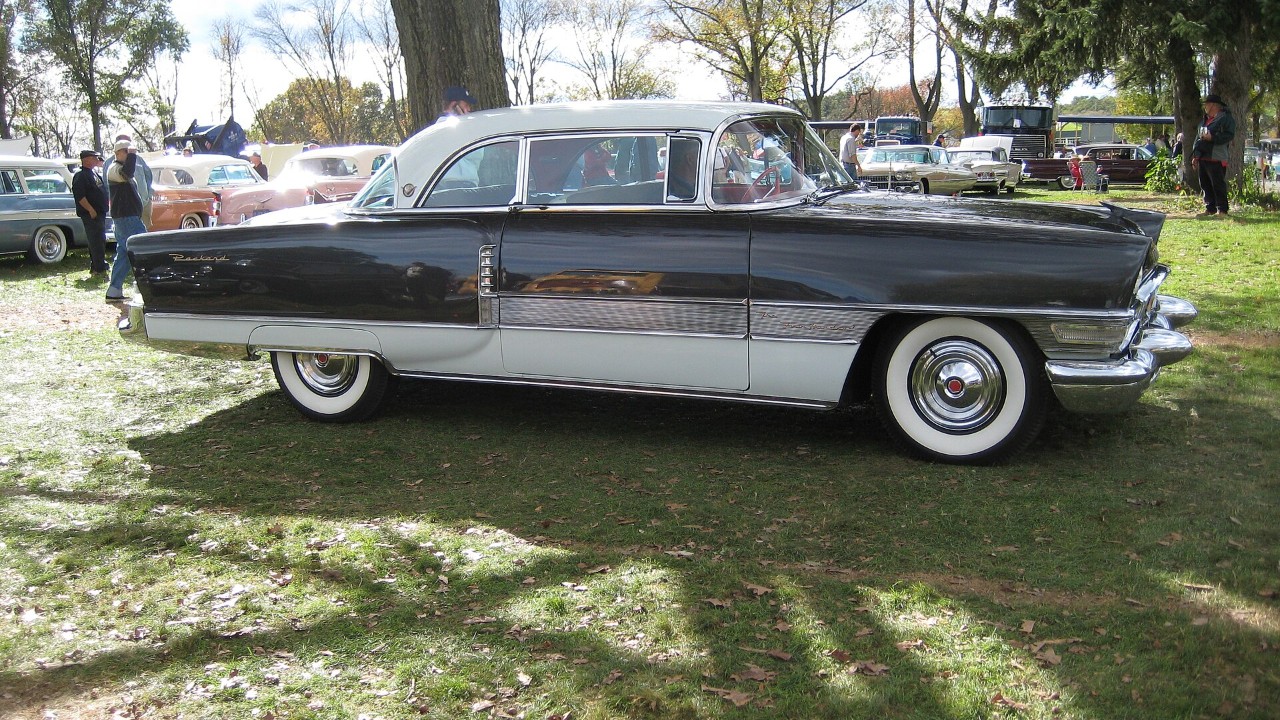
Packard revived the Four Hundred name for 1955 on its senior two-door hardtop. According to Remember Road’s history of the 1955 Packard 400, the name nodded to New York’s social elite. Styling chief Richard Teague reworked the 1954 body so thoroughly that only the cowl, roof, floor pan and inner structure carried over.
The hardware was just as ambitious. The new overhead-valve V8 replaced Packard’s old straight-eight and made 260 hp with a four-barrel carburetor. Torsion-Level suspension linked the front and rear wheels with long torsion bars, and an electric motor kept the car level. However, the weak spot was the Twin-Ultramatic transmission, which dated to 1949 and struggled with the V8’s torque. If you want the background on that gearbox, we covered how Packard built its Ultramatic in-house.
Packard built 7,206 Packard Four Hundred hardtops for 1955 in Detroit. Our take: few American luxury hardtops of 1955 aimed this high, flaws and all. So we would keep ours forever and make peace with the transmission.
2. 1956 Packard Executive
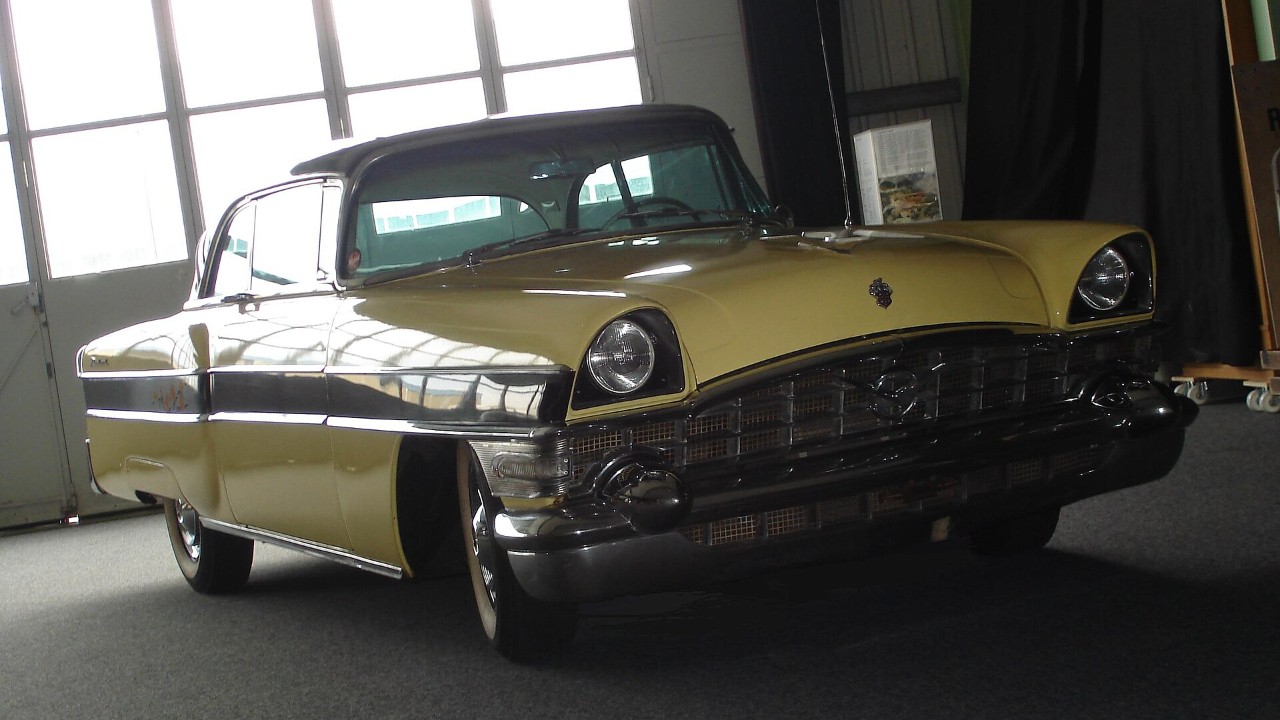
The Executive arrived on March 5, 1956, and it lived for only a few months. Packard aimed it at “the young man on the way up,” filling a price gap between the senior Patrician and the new Clipper. To do that, it also married the Clipper Custom body to the front end of a senior Packard.
Power came from a 352-cubic-inch overhead-valve V8 rated at 275 hp. Buyers could choose a four-door Touring Sedan for $3,465 or a two-door hardtop, model 5677, for $3,560. In total, Packard built just 2,779 Executives, including 1,031 hardtops and 1,748 sedans.
Then the story ended. All Detroit production of Packard and Clipper cars stopped on June 25, 1956, when the Conner Avenue plant closed. As a result, the Executive was among the last Detroit-built Packards. In our view, that history makes a 5677 hardtop worth far more to an owner than any price guide says. We would never let one go.
3. 1953 Willys Aero Ace
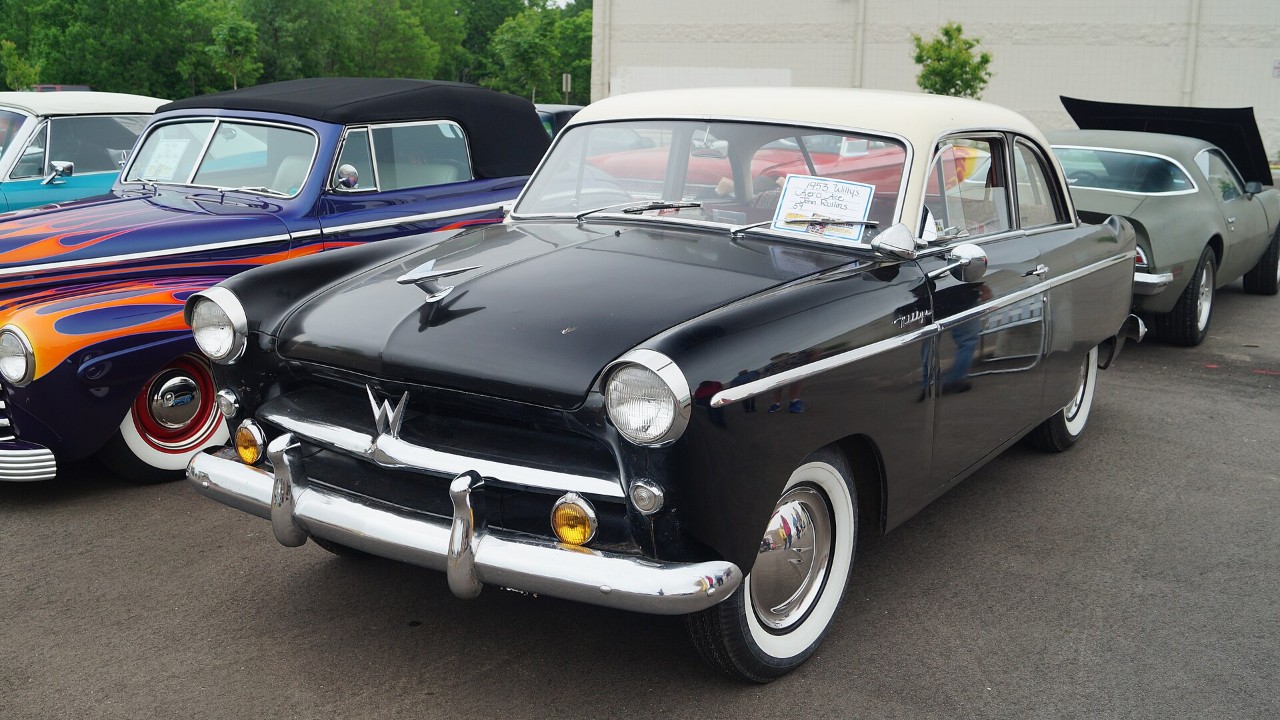
Willys is famous for Jeeps, so the Aero surprises people. Former Packard engineer Clyde Paton is credited as the father of this compact passenger car, which Willys built from 1952 to 1955 in Toledo. Underneath, it also used an all-welded unit body on a 108-inch wheelbase.
The engine was the 161-cubic-inch F-head Hurricane six. The range ran from the Lark to the Ace and the Eagle hardtop, and for 1953 the new Aero-Falcon replaced the Wing. Then, from August 1953, Aces and Eagles could have Dual-range Hydramatic. Popular Mechanics writer Floyd Clymer reported the car could cruise comfortably at 80 to 90 miles per hour.
Toledo built 91,377 Aeros in all, and the design later lived on in Brazil from 1960 to 1971. Our take: the Ace is the sweet middle of the range, nicer than the Lark and more practical than the Eagle. We think it shows how good a small American car could be in 1953.
4. 1950 Studebaker Champion Regal DeLuxe Starlight Coupe
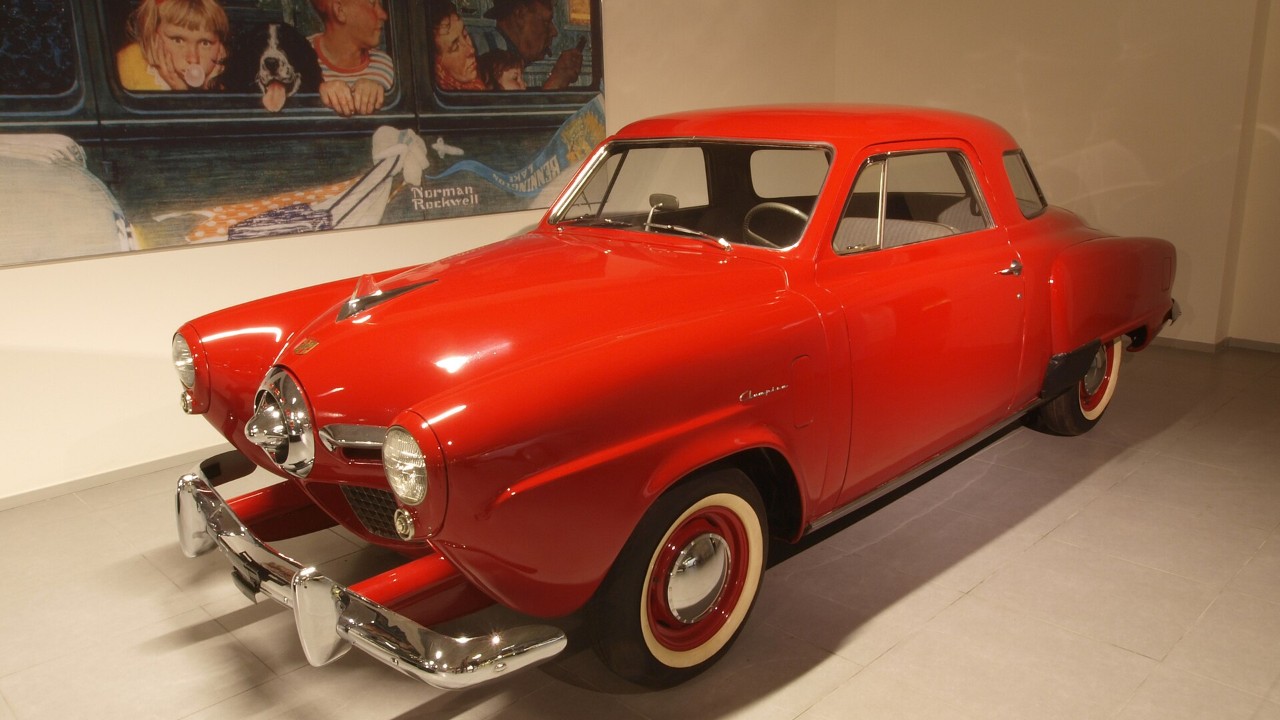
The Starlight coupe stood out for its wraparound rear window. For 1950, Studebaker gave the Starlight its own trim line. At the same time, the Champion gained a new “spinner” grille out front.
Raymond Loewy’s studio is credited with the ponton styling. Meanwhile, the Champion’s six-cylinder engine gained power for 1950, rising to 85 hp. Studebaker also introduced an automatic transmission built with Borg-Warner that year, which gave a modest family car a modern feature.
The car shown wears Regal DeLuxe trim, and it is the version we would pick. In our view, the 1950 Starlight is one of the purest expressions of postwar optimism on wheels. A Champion with this rear window is a car we would keep in the family, mostly for the looks it gets in traffic.
5. 1953 Studebaker Commander Starliner
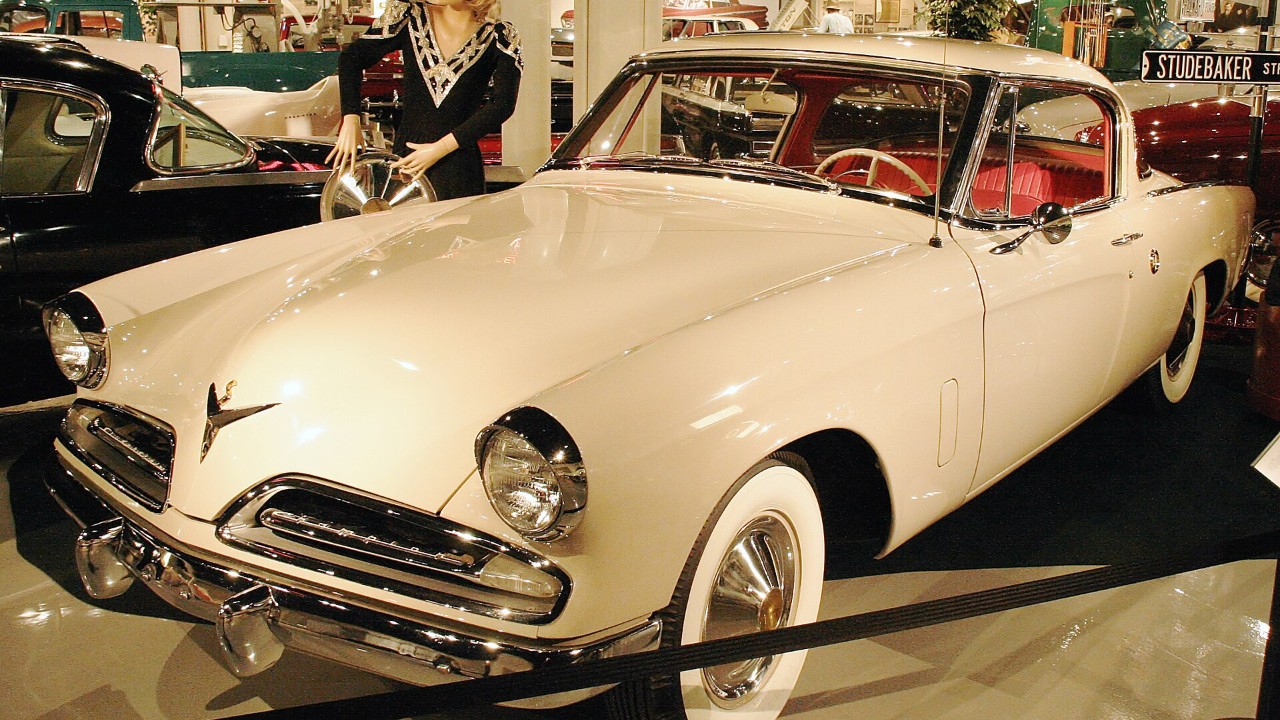
Raymond Loewy’s team, with Robert Bourke assisting, drew this coupe, and the design is often called the “Loewy-Bourke coupe.” According to Hyman Ltd.’s history of a 1953 Commander, the work took just ten days. The Starliner was the pillarless hardtop version, and it rode on the 120-inch Land Cruiser chassis.
Power came from Studebaker’s 232-cubic-inch overhead-valve V8, rated at 120 hp. At first, Studebaker’s marketing team expected sedans to make up 75% of sales. Instead, the split ran closer to 50/50, and the factory could not keep up with coupe demand. However, early quality problems and a Big Three price war hurt the company badly.
The shape lived on and eventually evolved into the Hawk line, which we covered in 7 Hawks that showed what Studebaker could really build. Our take: the 1953 Starliner is the original, before the add-ons. If we had one, nobody would get the keys.
6. 1957 Hudson Hornet Hollywood hardtop
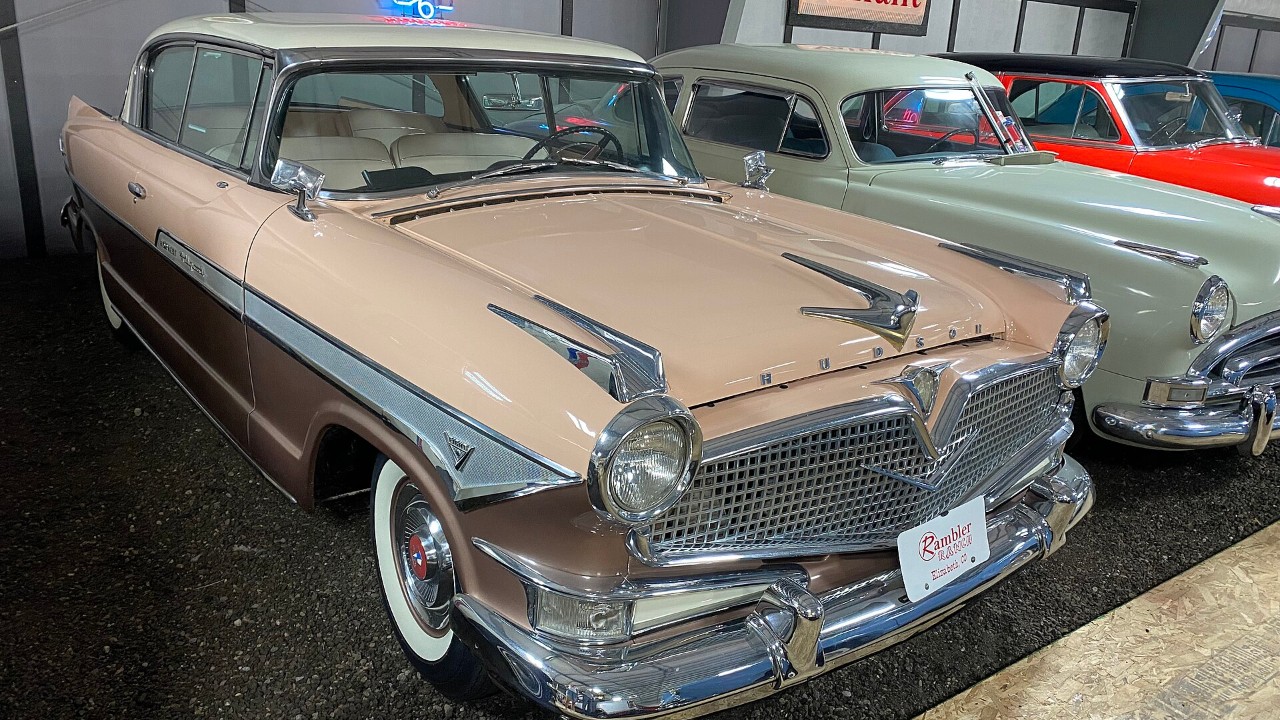
The 1957 Hornet was the last car to carry the Hudson name. After the 1954 merger with Nash, production moved from Detroit to Kenosha, Wisconsin. As a result, these Hornets rode on senior Nash underpinnings instead of Hudson’s famous step-down chassis.
For 1957, the car wore the second year of V-Line styling, with an enormous egg-crate grille, body-side creases and small fender “finettes.” Custom models also came in one of five tri-tone paint schemes. Under the hood sat AMC’s new 327-cubic-inch V8, rated at 255 hp with a four-barrel carburetor and dual exhausts.
Hudson built only 4,108 Hornets that year, and just 749 were Hollywood two-door hardtops. Production ended on June 25, 1957, and the Hudson name ended with it. In our opinion, a tri-tone Hollywood is the last word in Hudson history. That is exactly why we would never sell one.
7. 1953 Kaiser Dragon
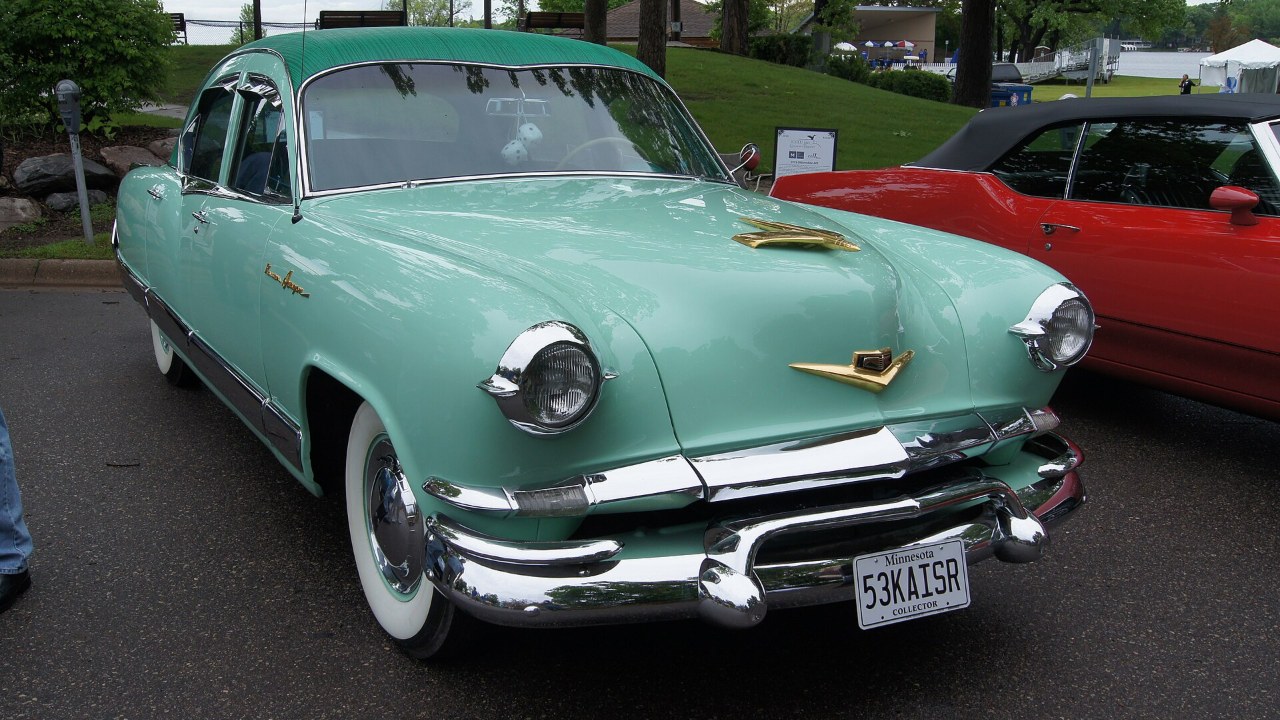
Kaiser launched the Dragon on October 31, 1952, as its own model above the Manhattan. It cost $3,924, more than a V8 Cadillac Series 62. For that money, buyers got a 14-karat gold-plated hood ornament and fender nameplates, plus a glove box plate engraved with the owner’s name.
Still, the cabin was the real show. Kaiser trimmed it in grass-patterned “Bambu” vinyl and “Laguna” cloth, and a padded dash came standard. On top of that, Hydramatic, power steering, a radio, a heater and tinted glass came standard. Even so, power came from a 226.2-cubic-inch “Supersonic” six with 118 hp, built on Dutch Darrin’s 1951 redesign.
Kaiser sold only 1,277 Dragons in 1953. The car did win its class at the 1953 Mobil Economy Run with 21 mpg. If you like the brand, our rundown of 10 cars Kaiser-Frazer built after World War II fills in the rest. Our take: a gold-trimmed six-cylinder luxury car is strange, wonderful and worth keeping.
8. 1950 Nash Airflyte Ambassador Super
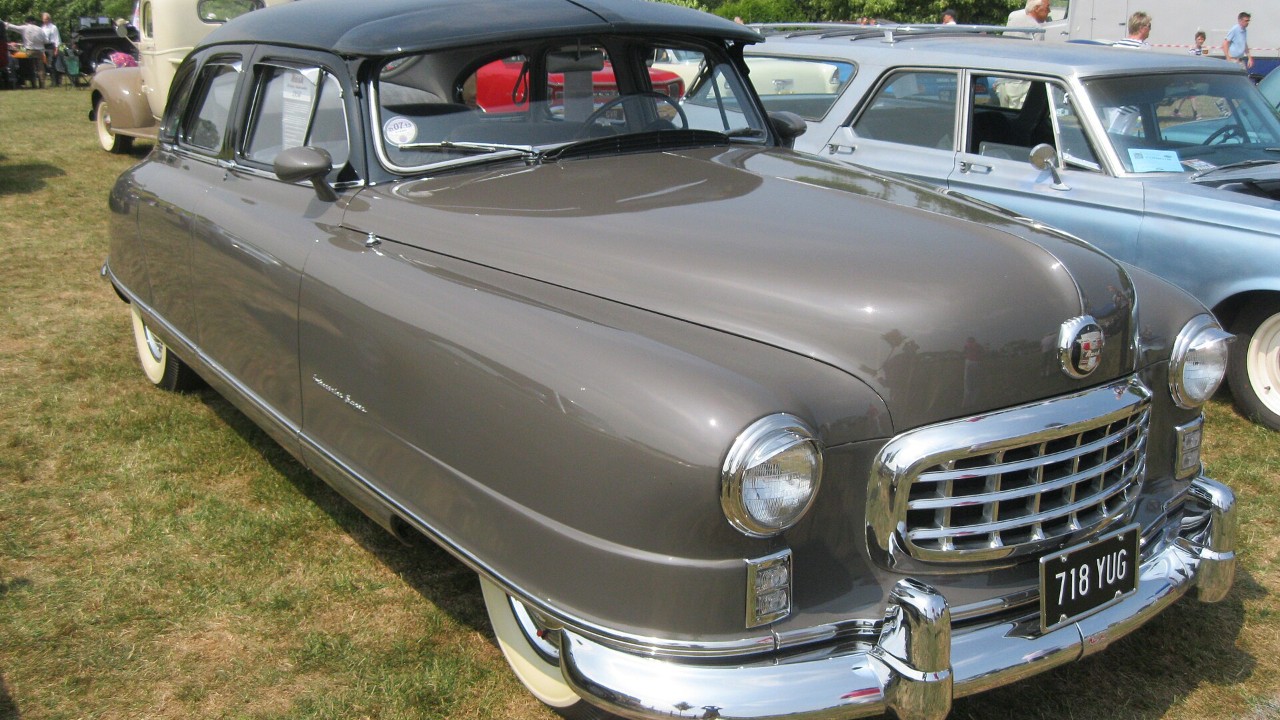
The Airflyte Ambassador looked like nothing else on the road. Its fully enclosed wheels were a bold idea championed by Nash boss George Mason. The car also dropped the separate frame for unibody construction in 1949, and Nash claimed its 8,000 welds made the structure up to two and a half times as rigid as a conventional car.
For 1950, the Ambassador became the first car outside GM to offer GM’s Hydramatic automatic. The Airflytes also had fully reclining seats that could turn the cabin into a bed for three adults. Even so, Nash sold the Ambassador only as two- and four-door sedans from 1949 to 1951.
We think the Airflyte is one of the most misunderstood shapes of the decade. In our view, the engineering underneath deserves far more credit than the styling gets. Our take: an Ambassador Super is comfortable, clever and odd, and those are three reasons we would hang on to one.
9. 1951 Frazer Vagabond
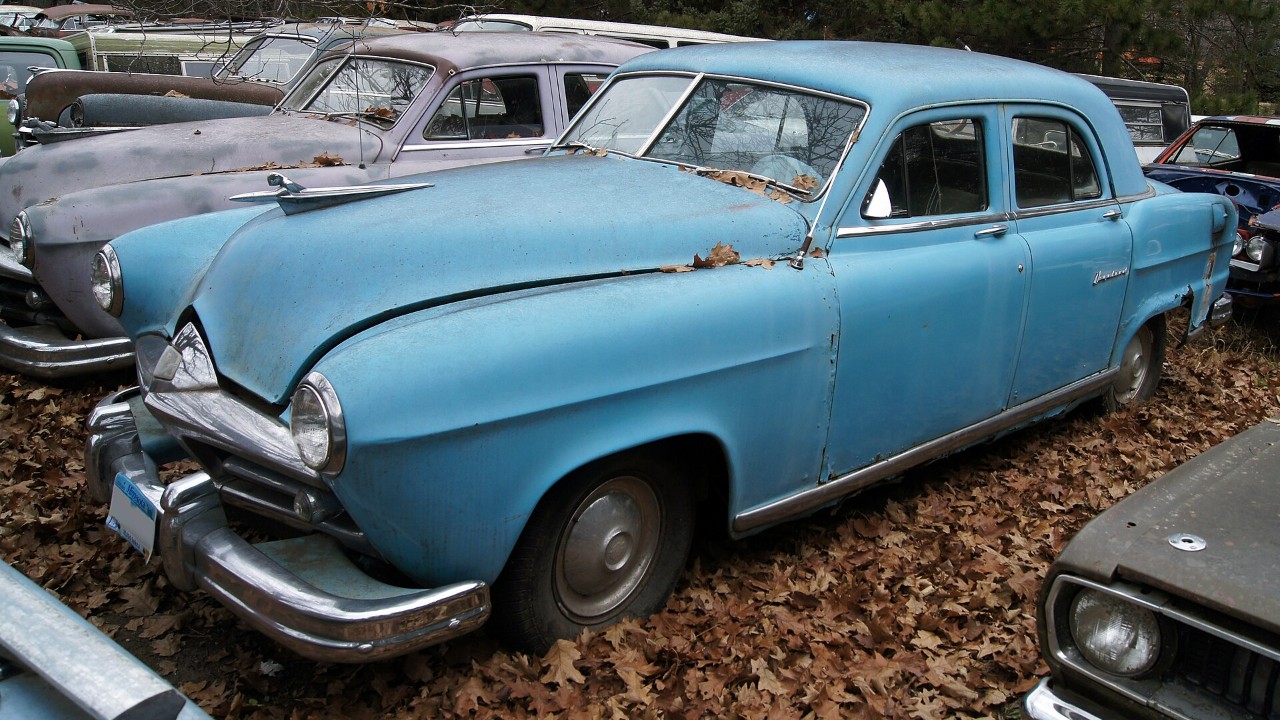
Joseph Frazer and shipbuilder Henry Kaiser founded Kaiser-Frazer in 1945. By 1951, Frazer was on its way out, but the Vagabond gave it a clever farewell. As Old Cars Weekly explains, it was a four-door sedan modified with a rear liftgate and dropgate.
Fold the rear seat, and the cargo area grew to 130 cubic feet. For 1951, the Supersonic six rose from 112 to 115 hp, and Hydra-Matic cost extra. Frazer sold about 2,900 Vagabonds that year, roughly a third of all 1951 Frazers. Hagerty’s Kaiser-Frazer history calls the utility design “more clamshell than hatch.”
Either way, it was a sedan that could haul like a wagon. In our view, the Vagabond is the most practical car on this list and the one with the best party trick. We would never part with it.
10. 1956 Dodge La Femme
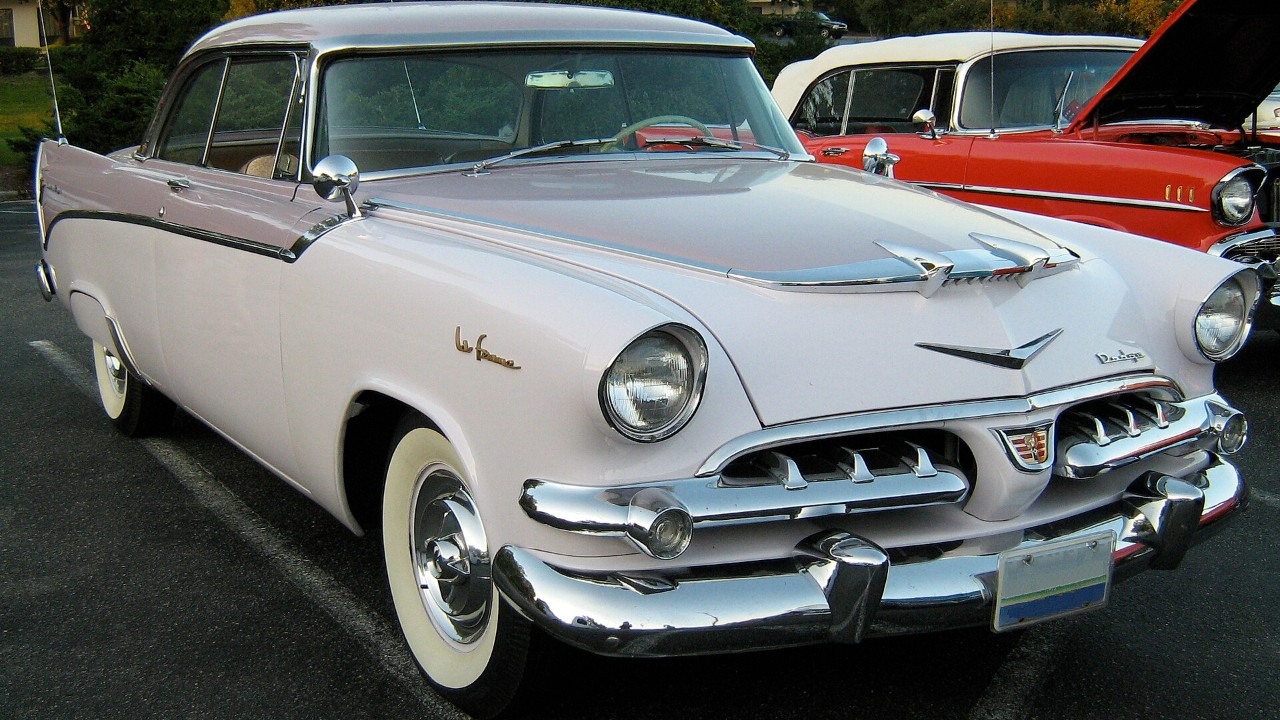
Dodge built the La Femme as an option package for the Custom Royal Lancer in 1955 and 1956, and it marketed the car to women. For 1956, the paint switched to Misty Orchid and Regal Orchid. Yet the whole package cost only $143.
The 1956 car also came with its own rain gear. A compartment on the back of the driver’s seat held a raincoat, a rain bonnet and an umbrella. By comparison, the 1955 version had come with a pink calfskin purse and matching accessories. Dodge never counted La Femme production separately, but research suggests fewer than 2,500 were built across both years.
Only a little over 20 of the 1956 cars are known to exist. Dodge then dropped the idea for 1957 and never tried it again. Our take: the La Femme is a time capsule of 1950s marketing, and a complete one with its rain gear is a keeper.
11. 1957 DeSoto Firesweep
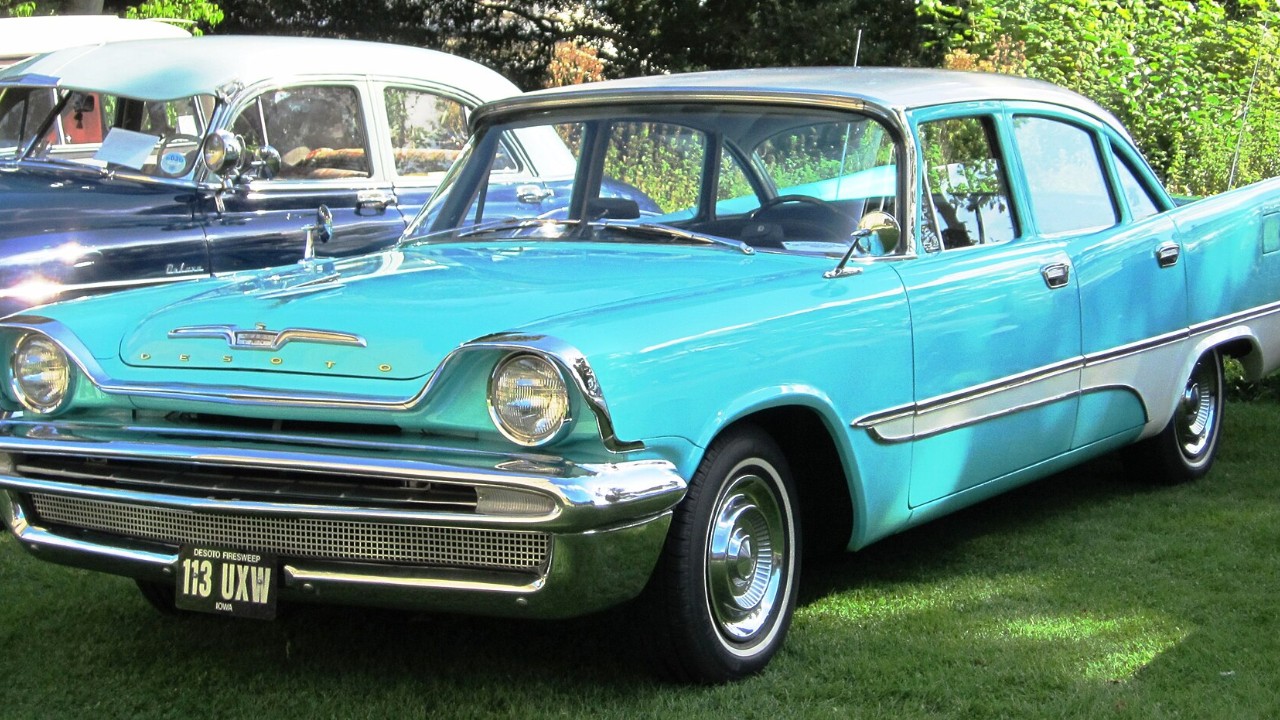
The Firesweep was DeSoto’s Dodge-based model, and it borrowed a lot. It used a Dodge shell and chassis on a 122-inch wheelbase, four inches shorter than senior DeSotos. The front clip came from the Dodge Coronet, while DeSoto added its own grille and tailfins.
Power came from a 325-cubic-inch Dodge “Poly” V8. An optional four-barrel power pack made 260 hp at 4,400 rpm, 15 more than the two-barrel. At $3,169, the Firesweep came with power steering, power brakes, a clock, a pushbutton radio and whitewall tires. Buyers could also pick a sedan, wagon, two-door hardtop or four-door hardtop.
The 1957 car was the first Firesweep, and it was also the model’s best sales year. Later, Australia also got locally built Firesweeps from 1958 to 1960. In our view, the Firesweep is the smartest buy in the DeSoto family: big fins, a V8 and simple Dodge underpinnings.
12. 1950 Mercury Monterey
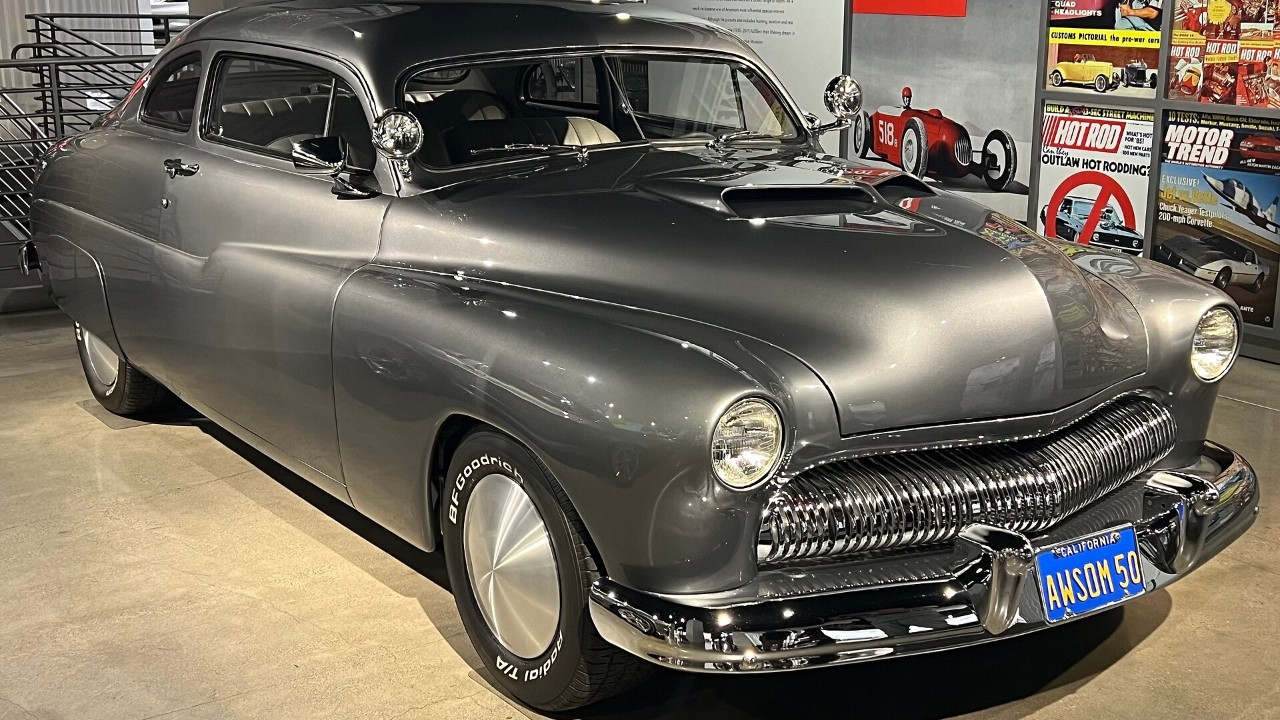
Mercury introduced the Monterey for 1950 as a high-end two-door coupe. Its job was to fight the new hardtop coupes from GM and Chrysler. So Mercury loaded it with luxury touches.
Standard equipment included leather seats, a simulated leather headliner, wool carpets, a two-tone dash, fender skirts, full wheel covers and a gold winged hood ornament. All-leather seating, by comparison, cost just $10 more. Paint came in three combinations: Turquoise Blue with a dark blue top, Cortaro Red metallic with a black top, or black with a yellow top.
Our take: a black-and-yellow Monterey is the kind of car you build a garage around, and we would never sell it. Few people remember it today, and for good reason, since Mercury sold few Montereys for 1950.
More from Fast Lane Only