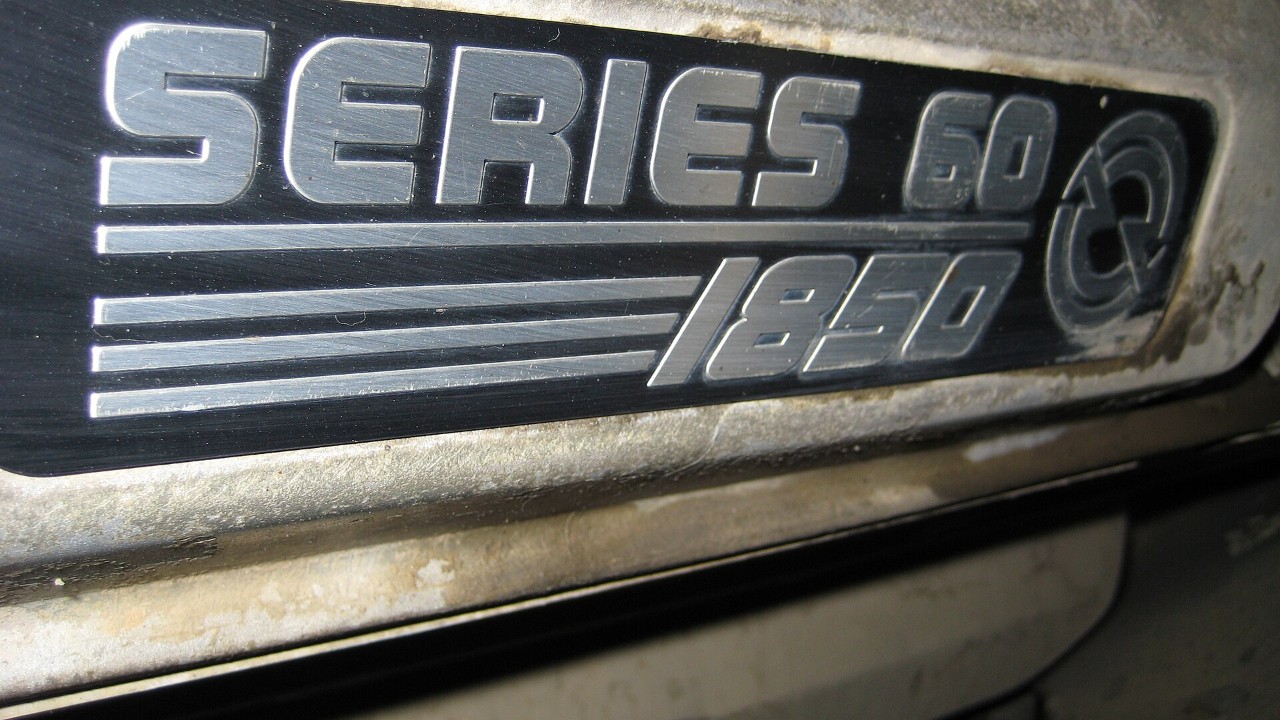
The Detroit Diesel Series 60 has sold more than 1.2 million engines since 1987, by its maker’s count. That is the kind of record diesel fans love. A good diesel is not flashy. Instead, it is the engine that keeps a truck, a tractor or a bus earning money long after the paint has faded.
Durability is hard to measure, though, and every fleet manager and farmer has a favorite. Some engines earned their name in war, others on farms, and others on the motorway at night. What they share is simple, sturdy engineering and makers who kept them in production for decades.
These are our picks for six diesel engines we’d rank among the most durable. The ranking is our opinion, and we make no mileage claims for any of them. Still, the years, displacements, outputs and production figures below come from maker records and engine histories.
1. Detroit Diesel Series 60
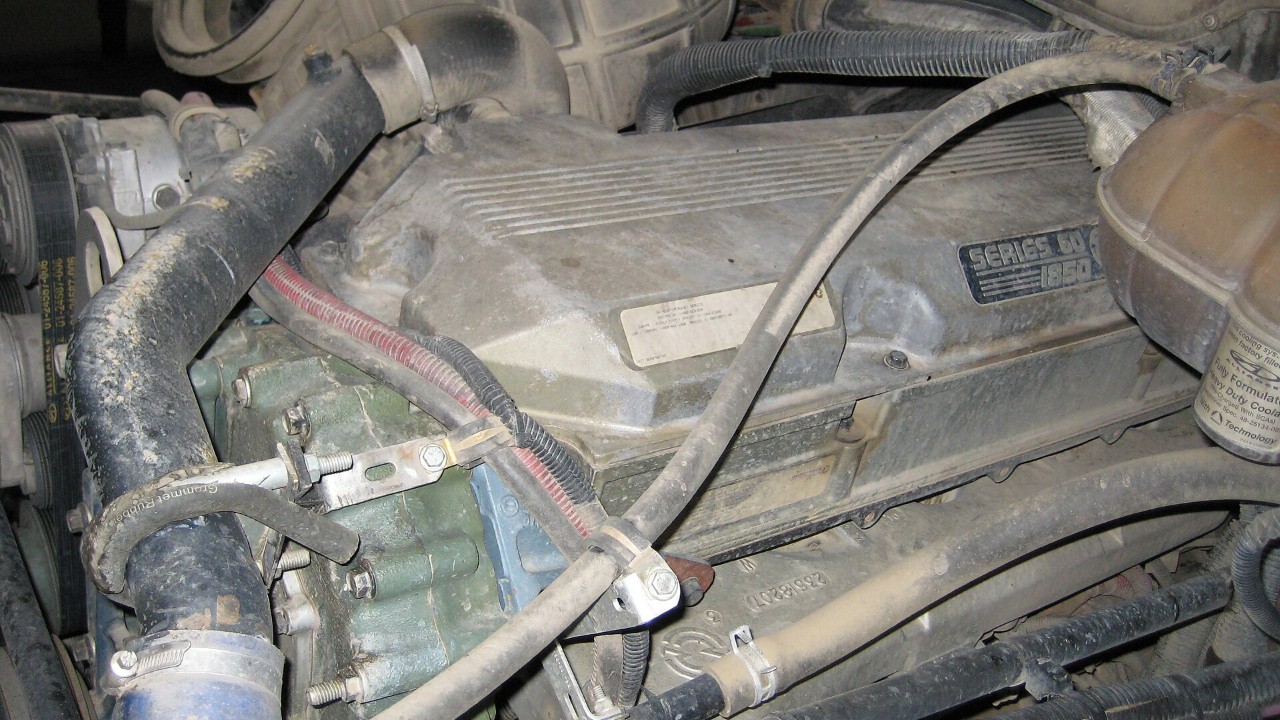
Detroit Diesel calls the Series 60 the first engine in the world to fully use electronic engine controls. That was a bold move for a heavy-duty truck engine in 1987. In our view, it was also a gamble that paid off fast.
According to Detroit’s own history of the Series 60, the engine became the most widely used heavy-duty truck engine in North America by 1992. The engine also put the camshaft overhead, which was unusual among highway diesels of its time. Over its life, Detroit offered the inline-six in 11.1-liter, 12.7-liter and 14.0-liter sizes.
Our take: an engine that reaches seven figures in sales does not get there by luck. The Series 60 went into trucks, boats, generators, fire trucks and mining gear, per Detroit. Detroit added a marine version in 1999, and by 2004 the 14-liter had become the dominant choice in Freightliner sleeper trucks. It finally gave way to the DD15 in 2011. If you are shopping for an older truck that has one, ask for service records and an oil analysis. For more long-haul favorites, see our list of classic truck engines built for the long haul.
2. Detroit Diesel 6-71
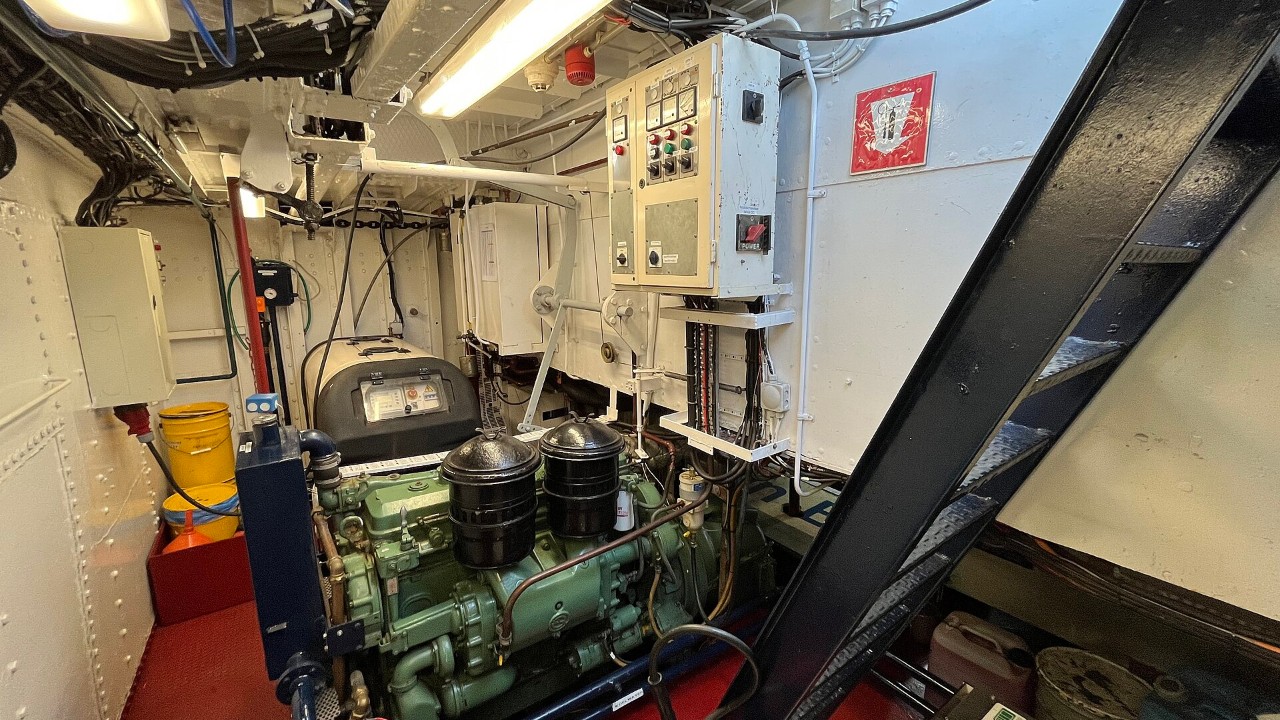
The 6-71 had a job description that no modern engine would envy. GM’s Detroit Diesel division introduced the 71 series in 1938 as its first flagship. Then, within a few years, it went to war. Roughly 57,000 6-71s powered American landing craft during World War II. Another 22,000 went into M4A2 Sherman tanks, mounted in pairs.
The name is pure engineering shorthand. “6” is the cylinder count, and “71” is the nominal displacement of each cylinder in cubic inches. That works out to about 7.0 liters, or 426 cubic inches. It is also a two-stroke diesel. Because a two-stroke cannot pump its own air, a gear-driven Roots blower bolted to the side does the job.
In our view, an engine that survived beach landings and tank warfare has nothing left to prove. The inline 6-71 and its V-shaped 6V-71 cousin also went into transit buses in large numbers. Sales of the 71 series finally ended in the summer of 1995. That is 57 years from launch to last sale, which tells you plenty about how operators felt about it.
3. Mercedes-Benz OM352
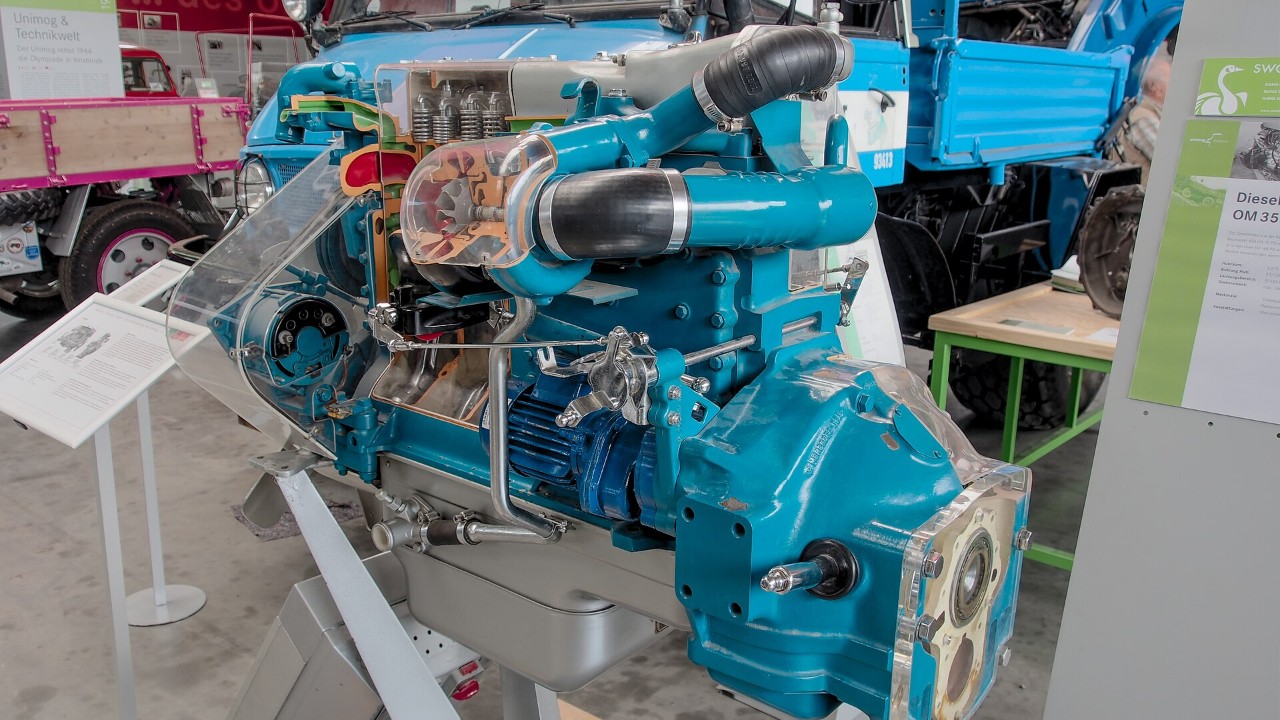
Mercedes-Benz revealed the OM352 in 1964, and it soon found work almost everywhere. It is a 5.675-liter inline-six, usually rounded to 5.7 liters. It uses direct injection, with fuel delivered by a Bosch inline pump.
The OM352 went into Unimog models such as the 406, 425 and 435, and into Mercedes L 322 trucks. It also powered marine, military, municipal and farm equipment, plus stationary generators. However, its reach went far beyond Germany. In 1979, Atlantis Diesel Engines in South Africa licensed it as the ADE 352. Later, Tata Motors in India licensed it for its 713S trucks.
Our take: when other makers pay to build your engine, you have done something right. Over the years, Mercedes offered it with and without turbocharging, in A and LA versions. Its own successors, the OM364 and OM366, built on the same basic idea. In our view, a spread across three continents is about the best evidence of toughness an engine can offer. If you find a Unimog with one of these, our advice is to check the injection pump first, since that is the heart of the engine.
4. Land Rover 200Tdi
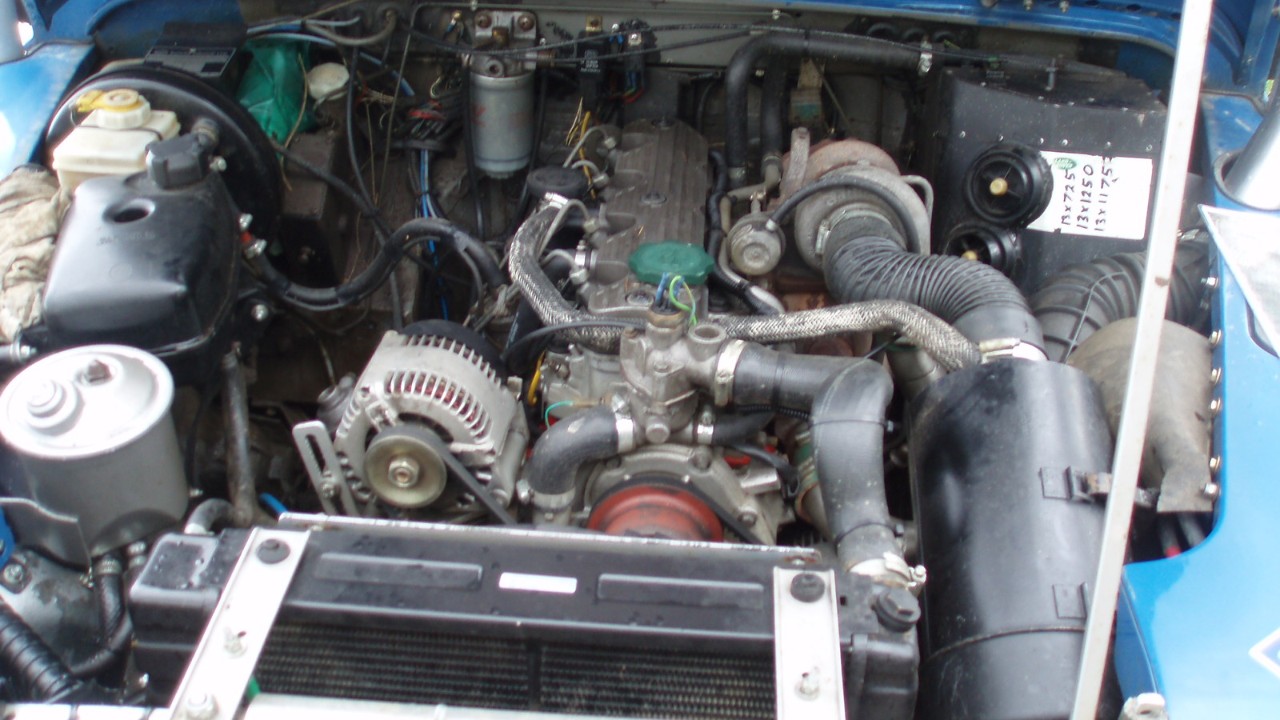
Land Rover developed the 200Tdi under the code name “Project Gemini,” according to Glencoyne Engineering’s history of the Tdi engines. The engine made its debut at the launch of the Discovery in 1989. Then, in 1990, it went into the utility range just as Land Rover renamed it the Defender.
The key change was the cylinder head. Land Rover cast it in aluminum rather than iron, and it switched to direct injection. Glencoyne puts output at 111 bhp in the Discovery and 107 bhp in the Defender. Those are modest numbers today. Even so, they gave the Discovery a diesel with real pulling power for its day, and that is how we remember it.
In our view, the 200Tdi earned its name because it was simple enough to fix in a field. That matters in a vehicle built to go where tow trucks cannot. Later, the 300Tdi replaced it with the same cylinder capacity and the same power, per Glencoyne. In other words, it was a redesign of the 200 rather than a clean sheet. If you buy one, budget for a full service and a cooling-system check before any long trip.
5. Perkins 4.236
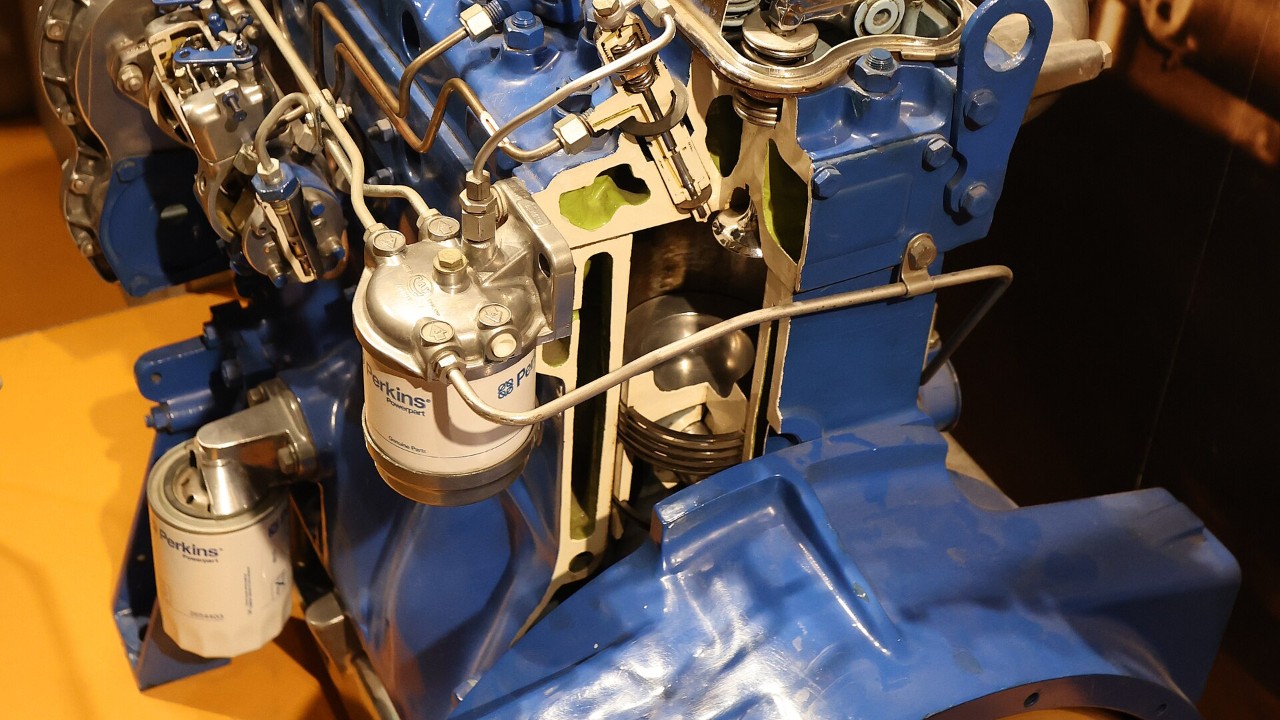
The first Perkins 4.236 came off the line in August 1964. Its name tells you everything: four cylinders and 236 cubic inches. According to the Perkins heritage page for the 4.236, it made 80 hp at 2,800 rpm. Perkins also says it was the first four-cylinder direct-injection engine offered for on-highway use.
Then the orders came in. Perkins built more than 70,000 in the first three years alone. From 1969 to 1984, UK production topped 60,000 a year. The Peterborough plant made more than two million engines in the 4.236 family over its life, and licensees built more around the world. Massey Ferguson, JCB, Manitou, Landini and Vermeer were among the makers that used it.
Our take: few engines have pulled so many plows, forklifts and generators. Perkins also built turbo versions for every use except marine, plus gasoline and LPG versions for forklifts. That flexibility kept it in demand for decades. If you are restoring an old tractor with a 4.236, good news: a production run that large should make parts easier to find than for most old diesels. If you prefer diesels with license plates, see our diesel classics so overbuilt they refused to quit.
6. Gardner 6LW
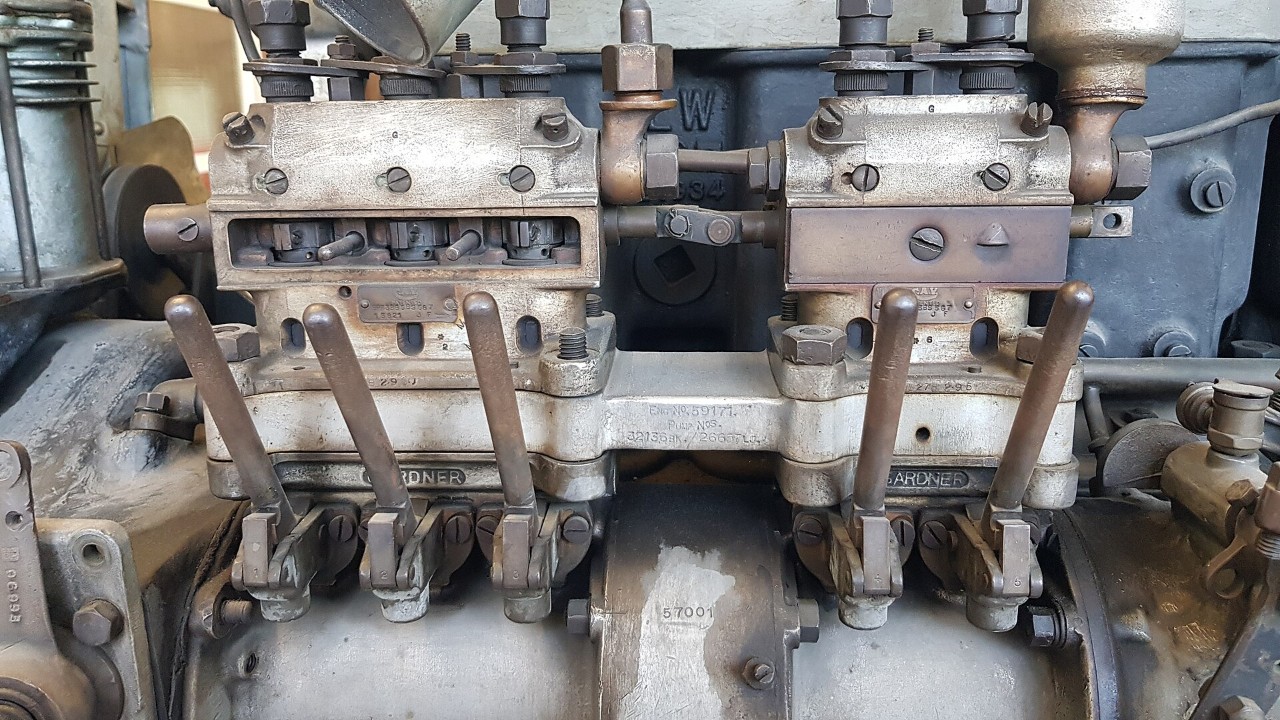
L. Gardner and Sons built its engines at Barton Hall Engine Works in Patricroft, near Manchester. The company designed the LW series for road vehicles after a 1929 bus conversion showed what a Gardner diesel could do. The six-cylinder 6LW displaced 8,370 cc and made 102 hp at 1,700 rpm. Later, Gardner rated it at 112 hp.
Its construction was unusual. Gardner cast the blocks and heads in sections of two or three cylinders. As a result, a six could use three twin-cylinder sections or two three-cylinder ones. After the war, Gardner built the LW in large numbers for lorries and buses. The engine in our photo came from an ERF truck.
In our view, the LW’s other claim to fame is economy. In the 1930s, Gardner LW engines went into some Lagondas, Bentleys and Rolls-Royces. Tests showed even a two-ton Bentley could reach 30 mpg with a top speed of 80 mph. Gardner’s larger 6LX later displaced 10,450 cc and reached 180 bhp. Perkins bought Gardner in 1986, and new engine production ended in the 1990s.
More from Fast Lane Only