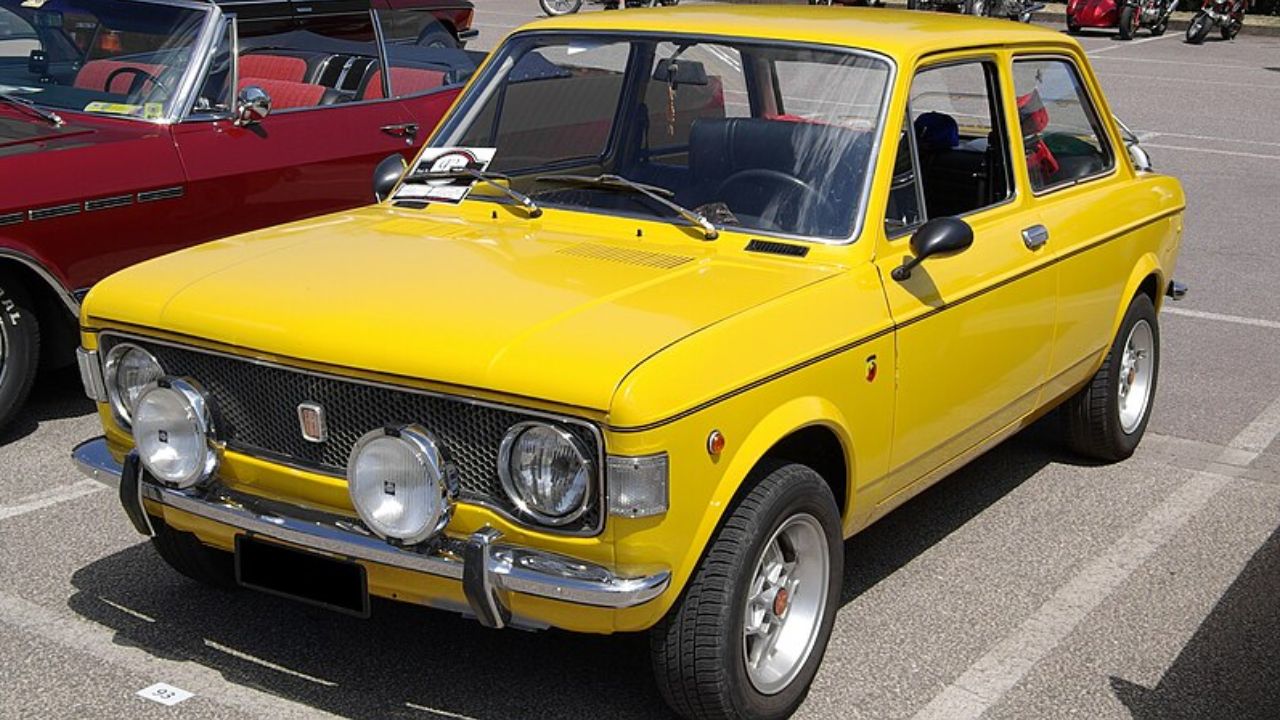
The Fiat 128 changed how small cars get built. Its engine sat sideways, with the gearbox beside it and unequal-length driveshafts to the front wheels. That layout spread to virtually every maker of front-wheel-drive cars, and Fiat’s own design kept going in other factories for decades.
Front-wheel drive used to look like a gamble. Early buyers worried about strange steering, fragile joints and complicated repairs. Yet many of the oddballs from France, Sweden, Italy and Japan outlived those doubts, and some stayed in production far longer than anyone planned.
These are our picks: nine front-wheel-drive classics whose designs, in our view, lasted far beyond what anyone expected when they were new. Some ran for decades, some outsold every forecast, and some taught the rest of the industry how to build a car. Each fact comes from a source we checked, and the verdict on every car is our own take.
1. 1934–1957 Citroën Traction Avant 11CV

Citroën nearly died building this car. Development and factory costs pushed the company into bankruptcy in late 1934, and its largest creditor, Michelin, took control. Michelin then owned Citroën until 1976, so the Traction Avant carried two companies on its back.
André Lefèbvre and Flaminio Bertoni designed it in late 1933 and early 1934. Together, they gave it a welded, largely unitary body and front-wheel drive at a time when most cars rode on separate frames. The bigger 11CV arrived in November 1934 with a 1,911 cc four-cylinder engine. As we covered in why the Traction Avant’s innovations took decades to spread, rivals needed years to catch up.
In the end, the production run is the proof. Citroën kept the Traction Avant going for 23 years and built 759,111 of them, with assembly in Paris and at plants in Slough, Forest, Cologne and Copenhagen. The 11 stayed in the lineup right up to 1957. Our take: a late 1955 car gives you the full 11CV recipe with two decades of refinement behind it.
2. 1970 Citroën DS 21 Pallas
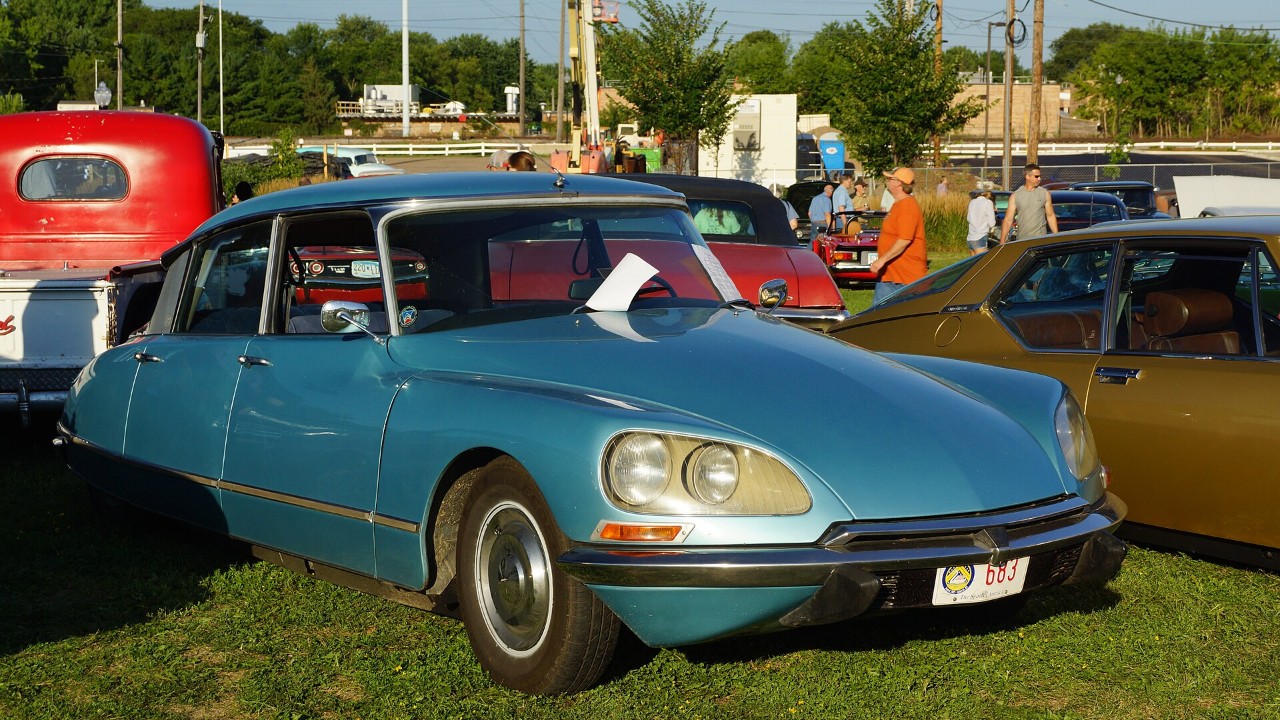
The DS replaced the Traction Avant, and it looked like a spaceship next to it. Paul Magès developed its self-leveling hydropneumatic suspension in-house. The same high-pressure hydraulics also worked the brakes, steering, clutch and gear change, which sounds fragile on paper.
However, history says otherwise. Citroën built the DS from 1955 to 1975 and made 1,455,746 of them in six countries. The DS 21 arrived for the 1965 model year with a 2,175 cc engine rated at 106 horsepower. That same year, the Pallas trim added better sound insulation, richer upholstery and extra exterior brightwork. Then, for 1970, Bosch electronic fuel injection raised output again. If you want the car’s launch story, our look at the DS’s first day at the 1955 Paris show covers it.
One night in 1962 sums up the toughness. On August 22, gunmen ambushed President Charles de Gaulle’s DS at Le Petit-Clamart. Despite bullet holes and two punctured tires, the unarmored car escaped at full speed. In our view, a 1970 DS 21 Pallas is the sweet spot of comfort and late-model engineering.
3. 1968 Saab 96 V4
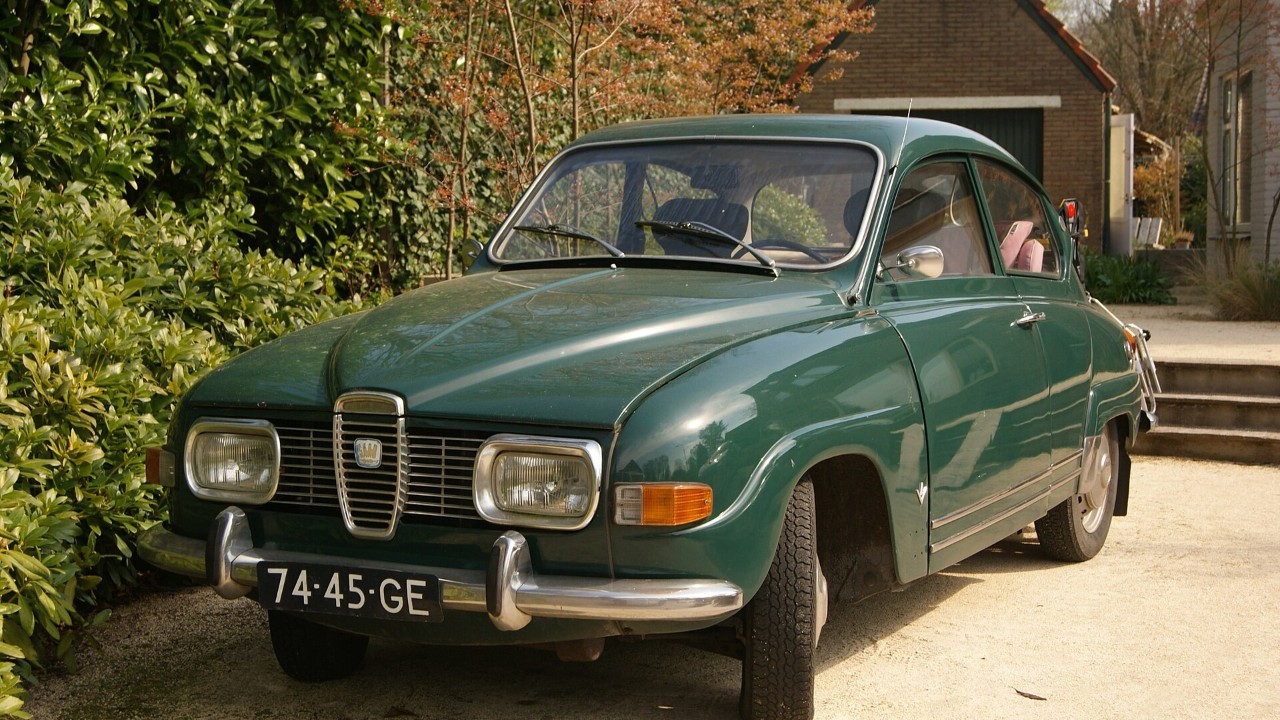
The Saab 96 began life with a tiny two-stroke engine, an 841 cc three-cylinder rated at 38 PS. That engine won rallies, but buyers wanted something smoother. So for 1967, Saab dropped in Ford’s 1,498 cc Taunus V4, rated at 65 PS in ordinary form.
As a result, the swap gave the car a second life. Saab built the 96 from 1960 all the way to January 1980 and made 547,221 of them. Two-strokes stayed available until 1968, which makes a 1968 car a transition year in the showroom. Interestingly, Saab kept the freewheel on the V4 to the end. Originally, that one-way clutch protected two-stroke engines from oil starvation on long downhill runs.
The 96’s toughness came from rally stages long before the V4. Erik Carlsson won the RAC Rally three years running from 1960 and took Monte Carlo in 1962 and 1963. Our pick is the V4 car, because it combines that proven shell with an engine you can live with every day. For more on the shape, see our list of elegant Saabs.
4. 1975 Volkswagen Golf Mk1

Volkswagen bet the company’s future on this hatchback. The Golf debuted in Europe in May 1974 with crisp, folded-paper styling from Giorgetto Giugiaro’s Italdesign. In the United States and Canada, it went on sale in December 1974 as the Rabbit.
Meanwhile, the engineering suited everyday buyers. Europe got gasoline engines from 1.1 to 1.8 liters, plus 1.5- and 1.6-liter diesels, with four- or five-speed manuals or a three-speed automatic. Then the GTI arrived in showrooms in September 1976, with a 1,588 cc engine rated at 110 PS. Total GTI production eventually reached 462,000 units.
Here is the part nobody planned for. Volkswagen replaced the Mk1 in most markets in September 1983, yet the Cabriolet carried on until April 1993. Meanwhile, South Africa kept building the Mk1 shape as the Citi Golf until November 2, 2009, and 377,484 came from that line. In our view, that 35-year career makes the original Golf one of the clearest cases on this list.
5. 1975 Honda Civic CVCC
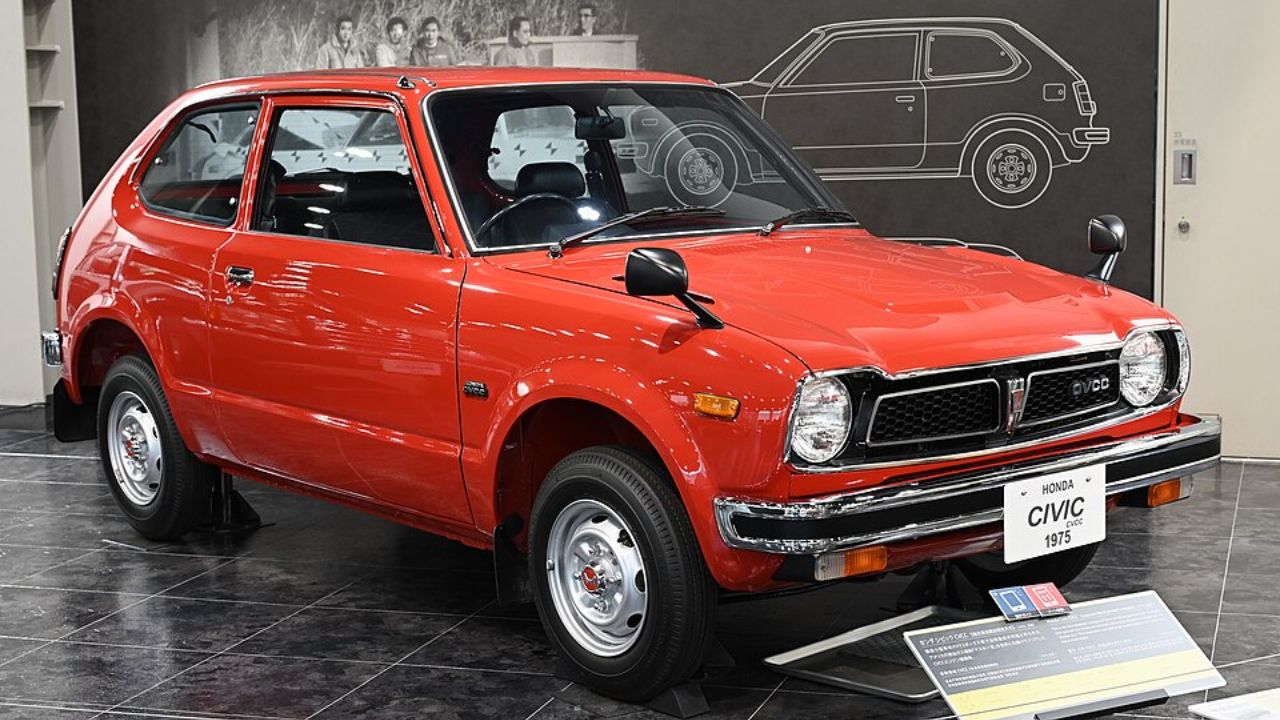
Honda’s CVCC engine solved a problem the big makers were fighting with catalytic converters. The 1,488 cc stratified-charge four, rated at 53 horsepower, debuted in the Civic in 1975. Its design meant the car needed neither a catalytic converter nor unleaded fuel to meet emissions rules.
The Audrain Automotive Museum’s 1975 Civic CVCC page puts its economy at 40 to 50 mpg. That museum also notes the four-speed manual, the optional two-speed Hondamatic, and front disc brakes. Civic sales had already topped 100,000 units in 1974, before the CVCC even arrived.
The weak spot was the body, not the drivetrain. A rust-related safety recall covered 936,774 vehicles built between September 1972 and August 1979. So if you want one now, look hard at the fenders and suspension mounts. Still, the CVCC idea outlasted every doubt about small Japanese cars, and in our opinion this is the Civic that made Honda.
6. 1970 Lancia Fulvia Coupe
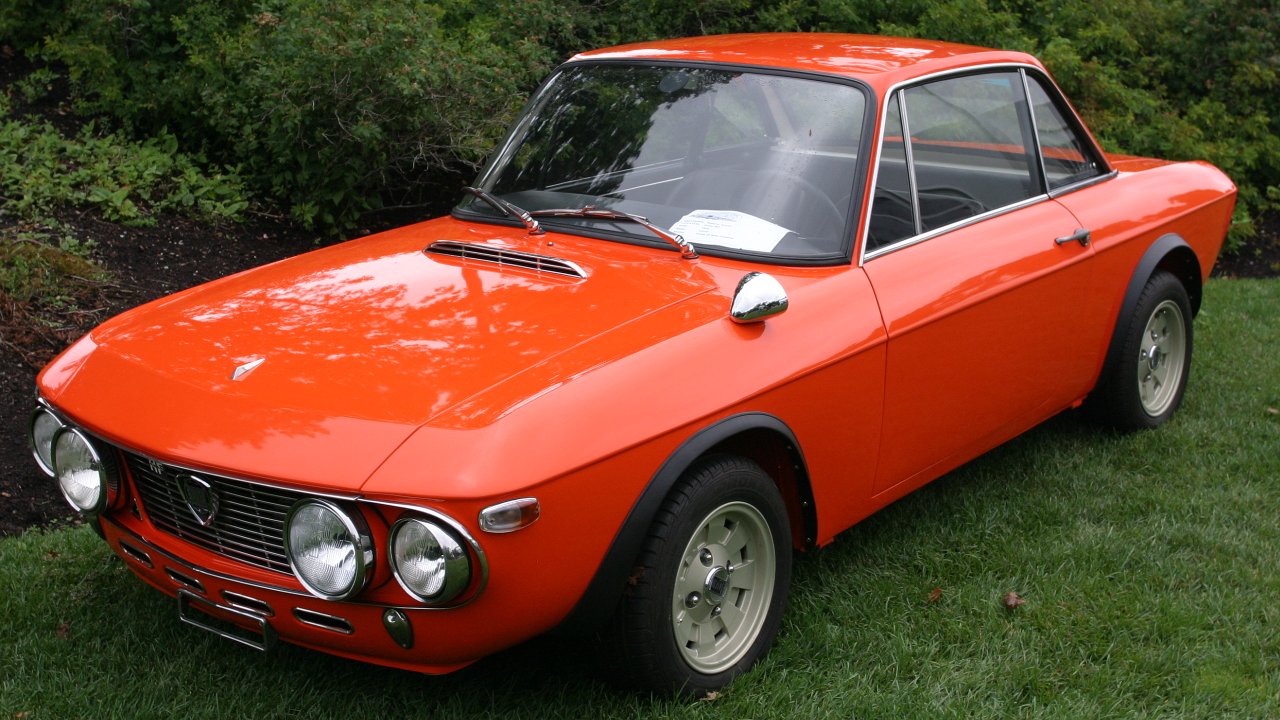
Lancia’s Fulvia used one of the strangest engines of its era. Its V4 had a cylinder angle of just 12 degrees, so narrow that one cylinder head covered both banks. Antonio Fessia designed the Fulvia Berlina to replace the Appia, and the Coupe followed.
In fact, the car handled better than its tall little engine suggests. Hagerty UK ranks it among the best-handling front-wheel-drive classics, noting 79 bhp from even the early 1.2 and a transverse leaf front end. Lancia built the Fulvia from 1963 to 1976, and the Coupe alone reached 139,797 cars.
Then came the result that settled any doubts about durability. Sandro Munari and Mario Mannucci won the 1972 Monte Carlo Rally in a Fulvia, finishing 10 minutes and 50 seconds ahead of a Porsche 911 S. That same year, Lancia clinched the International Championship for Manufacturers with two rounds to spare. Our take: a 1970 Coupe gives you that rally DNA in a road car you can enjoy.
7. 1977 Honda Accord hatchback
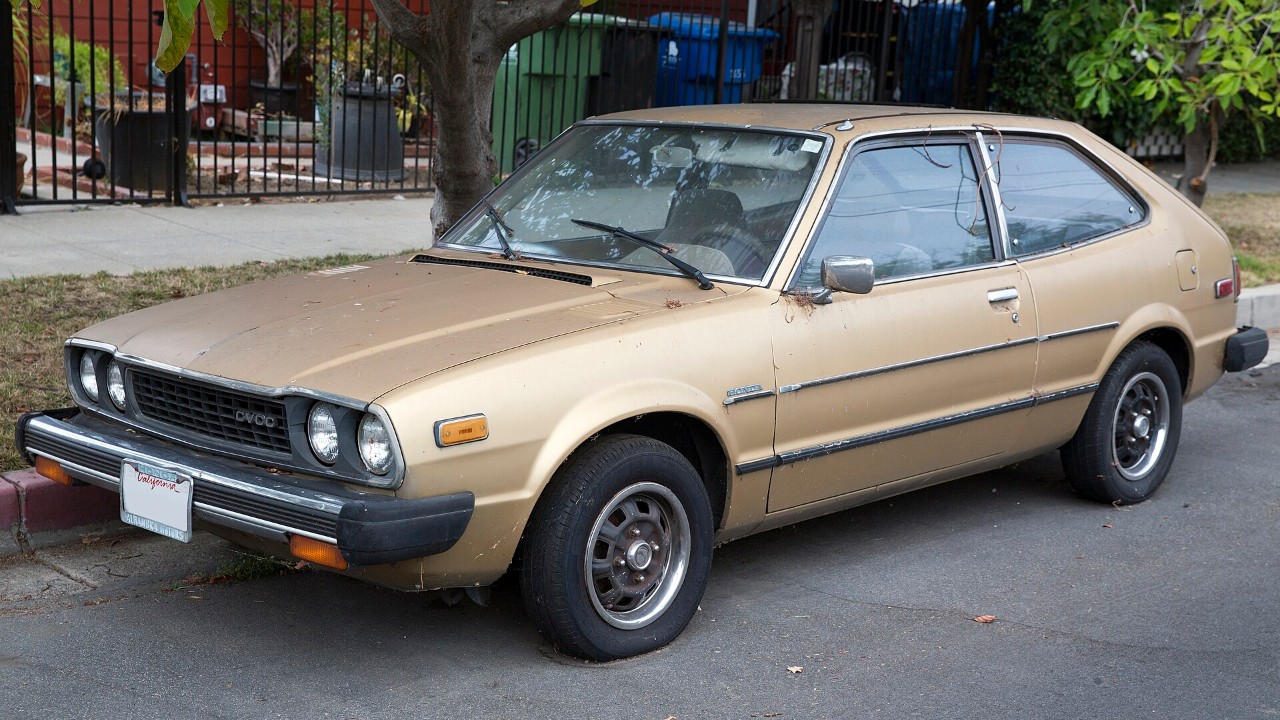
Honda launched the Accord on May 7, 1976, as a three-door hatchback. North American cars claimed 68 horsepower, and the engine used the same CVCC thinking as the Civic. As a result, it met the emissions rules of the late 1970s without a catalytic converter or unleaded fuel.
That modest start grew into one of the longest-running success stories in the business. The Accord has been on sale since 1976, and Honda began building it in Marysville, Ohio, in 1982. By 2020, the nameplate had passed 18 million units sold worldwide.
The early hatchback is the one we like most. It shows the formula in its purest form: a light, roomy front-driver that asked little of its owner. In our view, the 1977 hatchback earns its spot because the car Honda designed for the 1970s turned into a nameplate built for half a century.
8. 1973 Alfa Romeo Alfasud
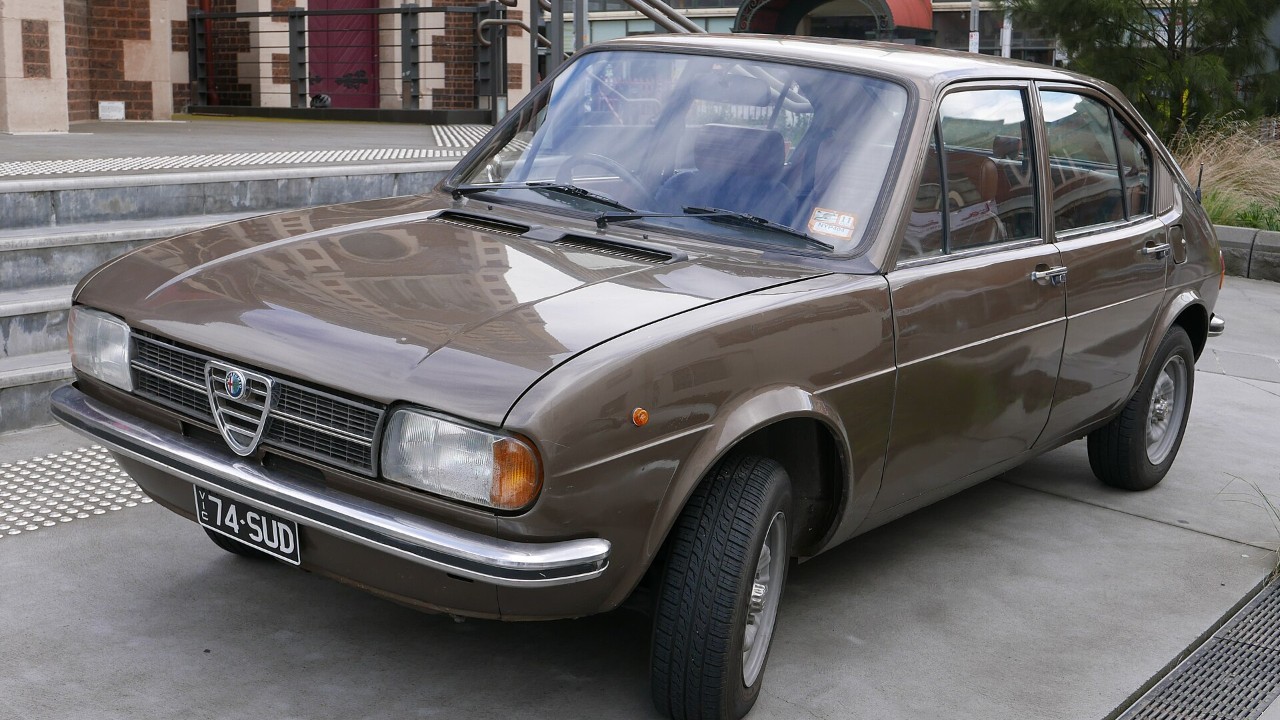
Alfa Romeo built a whole new factory for the Alfasud. Construction at Pomigliano d’Arco, near Naples, began in April 1968. Austrian engineer Rudolf Hruska developed the car, and Giorgetto Giugiaro styled it.
Underneath, the mechanical layout was clever because it kept things low. A 1,186 cc boxer four, rated at 63 to 68 PS at launch, kept the center of gravity low. The original specification also used inboard front disc brakes to cut unsprung weight. Hagerty UK notes that early cars, “those that are left, anyway,” are supposedly the sweetest to drive. Alfa then built 893,719 saloons from 1972 to 1983, plus 121,434 Sprint coupes through 1989.
Unfortunately, the bodies didn’t match the engineering. The Alfasud became notorious for rust, blamed on recycled steel and a plant about 15 km from the Bay of Naples. That makes this the honest entry on our list. The design lasted almost two decades; many of the shells did not. If you find a solid 1973 car, buy it and keep it dry.
9. 1971–1974 Fiat 128 Rally
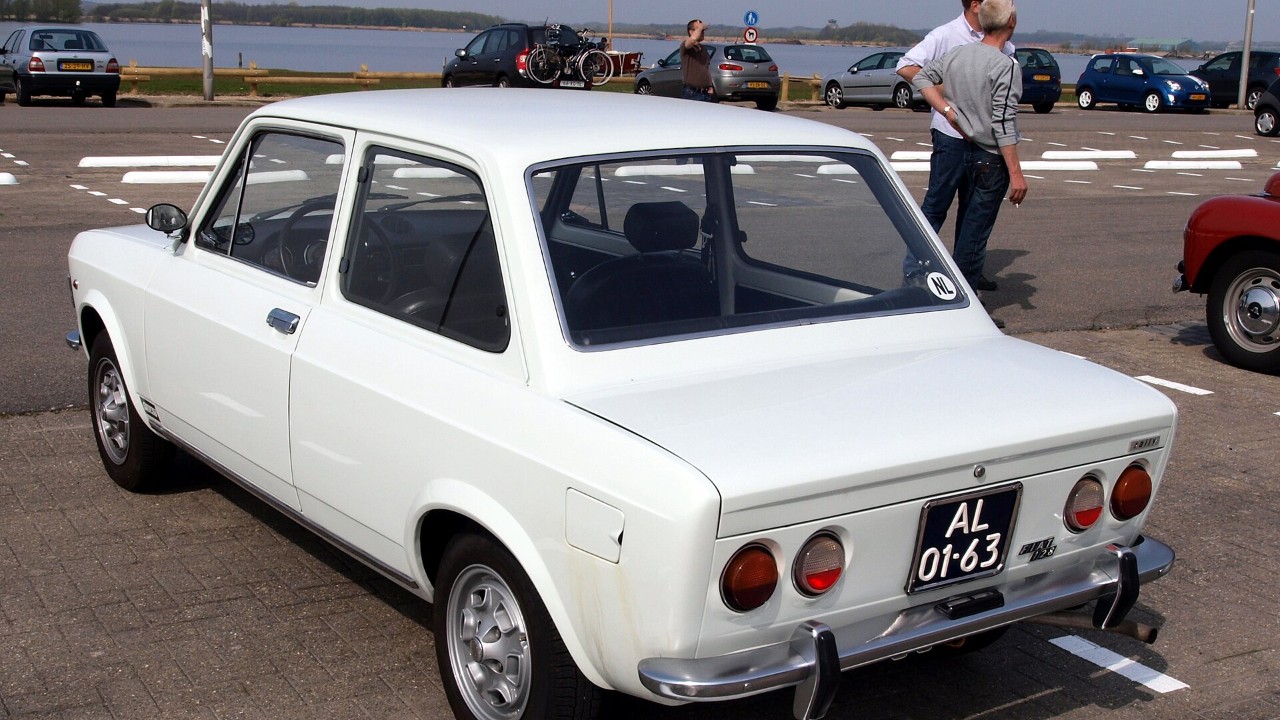
The Fiat 128 won European Car of the Year in 1970. Dante Giacosa engineered it, and Aurelio Lampredi designed its engine. Fiat built it in Italy from 1969 to 1985, and total production passed three million.
The Fiat 128 Rally made the recipe fun. Fiat introduced it at the Geneva show in March 1971 and built it until 1974. Its 1,290 cc engine used a twin-choke Weber 32 DMTR carburetor and made 67 DIN horsepower at 6,200 rpm. That might sound mild today, but in our view it was plenty for a small sedan with a rev-happy engine.
Even so, Fiat’s design kept going long after Italy moved on. Zastava in Yugoslavia built 128-based cars from 1971 until regular production ended in November 2008. Meanwhile, its Poly pickup carried on in very limited numbers until December 2010. That is 41 years for one small front-wheel-drive design, and the clearest proof on this list that a Fiat 128 could outlast all expectations.
More from Fast Lane Only