Ford’s F-Series passed the Chevrolet C/K in 1977 to become America’s best-selling truck, and it has held that spot since. Long before that race began, though, the Ford F-100 and its rivals were already working out the ideas modern pickups take for granted. Extended cabs, coil-spring rear ends, fuel injection and car-like comfort all showed up on trucks your grandfather could have bought.
That’s why some old pickups feel surprisingly current when you drive or even just look at one. Others, by comparison, feel like museum pieces the moment you close the door. The difference usually comes down to one smart idea that the rest of the industry later copied.
So these are our picks, 12 classic pickups from the 1940s to the 1990s, in no particular order. The facts come from model histories and period records. The verdict, that each one still feels relevant, is our own opinion.
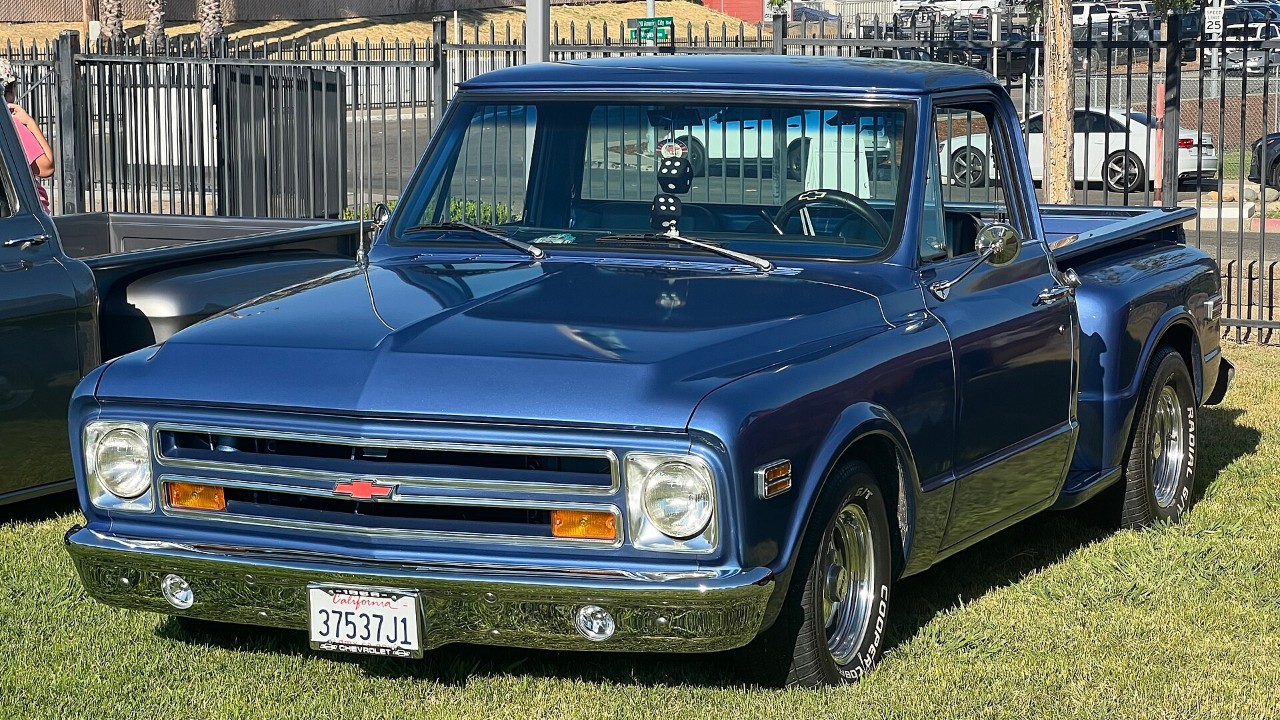
1. 1967 Chevrolet C10 Stepside
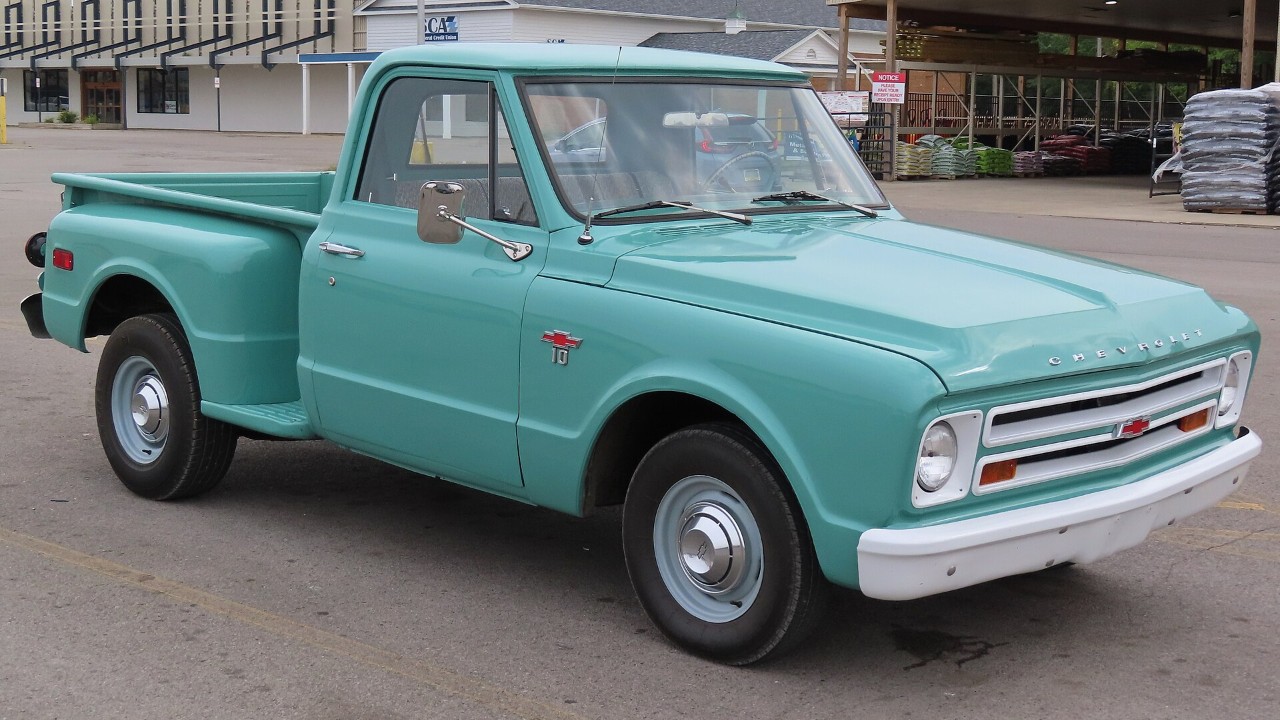
Chevrolet’s 1967 pickup was a ground-up redesign. GM called this generation the Action Line, a name the earlier trucks never got. Buyers could choose a Stepside bed with rear fenders or a smooth-sided Fleetside, in 6.5-foot or 8-foot lengths. Trim ran from base to Custom and then to the top CST, short for Custom Sport Truck.
Under the bed, half-ton and three-quarter-ton Chevrolets used coil-sprung trailing arms at the rear axle instead of leaf springs. In our view, that setup is a big reason these trucks ride so well. For 1967, engines carried over from 1966, with 250 and 292 sixes plus 283 and 327 V8s. In fact, 1967 was the only year this generation offered the 283.
Our take: the 1967 C10 feels relevant because it was designed for drivers, not just loads. Its clean shape also made it a favorite canvas for customizers, as we covered in 8 C10 pickups that never lost their cool. If you’re shopping, check the trailing-arm mounts and frame for rust before anything else.
2. 1964 Dodge A100 pickup
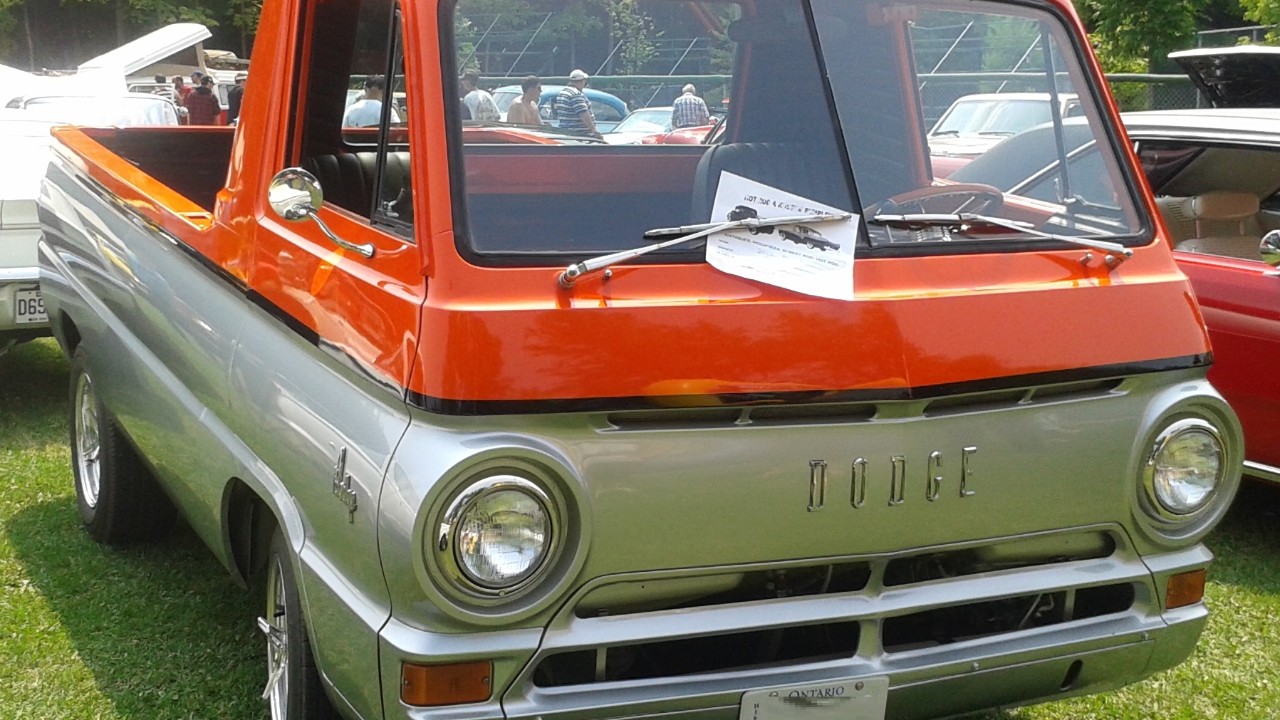
The Dodge A100 put the driver right over the front axle. Its engine sat between the front seats, just behind the front wheels. Chrysler built the A100 range from 1964 to 1970, under the Dodge name in the U.S. and as the Fargo in Canada. It rode on a short 90-inch wheelbase.
Engine choices started with the 170 and 225 Slant-6. Later, Dodge also offered 273 and 318 V8s. Its rivals included the Ford Econoline and the Corvair Greenbrier. One A100 even became a drag strip star: the Hemi-powered Little Red Wagon, introduced in 1965 and driven by Bill “Maverick” Golden, wowed crowds with wheelstands for decades.
Why does it feel current? Because today’s cab-over work trucks and compact vans use the same space math. You get the most bed in the shortest length, which helps in tight city streets. In our view, the A100 was ahead of the American market. If you buy one, though, expect cramped engine access, since the motor lives inside the cab.
3. 1984 Nissan 720 King Cab
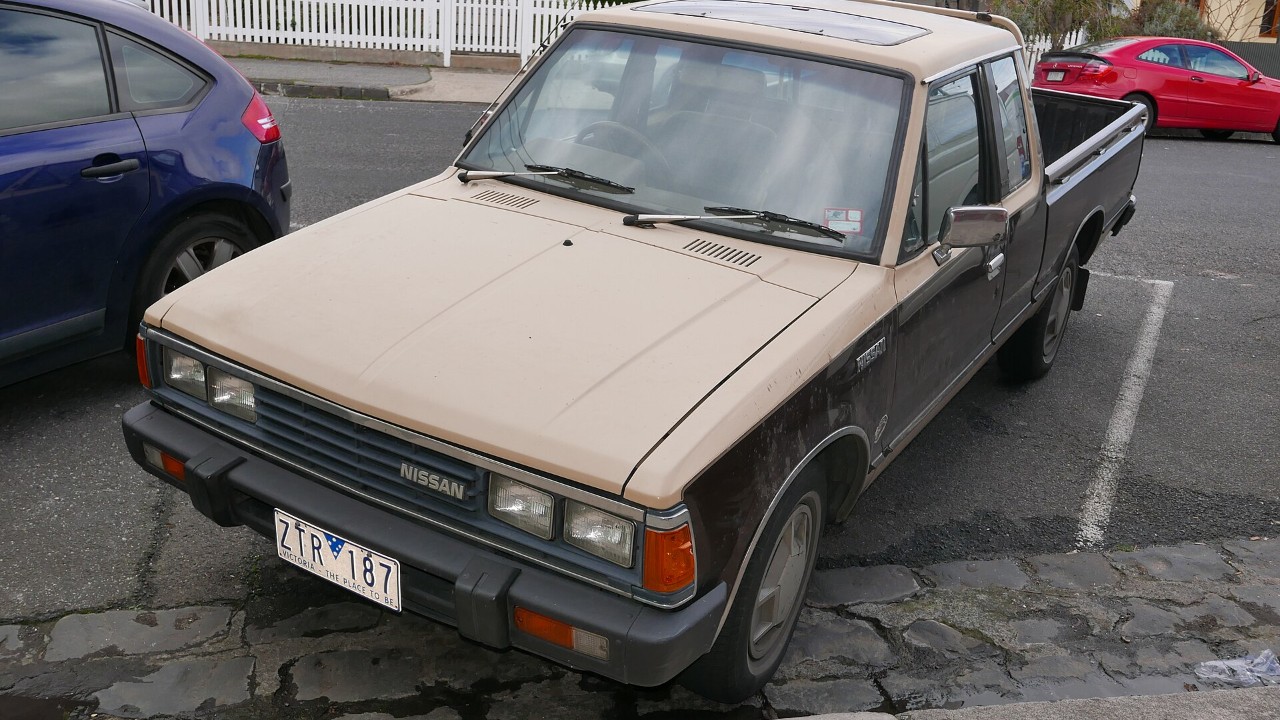
The 720 arrived in October 1979 as the successor to the 620. In the U.S., it sold from 1980 to 1986 in regular cab and King Cab forms, with two-wheel or four-wheel drive. The King Cab added space behind the seats, a simple idea that every half-ton now offers in some form.
The 1984 model sits at a turning point. Nissan was replacing the Datsun name in most markets during 1983 and 1984, so U.S. trucks that year wore a mix of Datsun and Nissan badging. Meanwhile, from the 1983.5 model year, Nissan assembled the 720 at its new plant in Smyrna, Tennessee. Mid-1983 also brought the 2.4-liter Z24 four-cylinder.
Our take: a 1984 720 King Cab is an American-built Japanese pickup with an extended cab, which describes plenty of trucks on sale today. It’s also small enough to park anywhere. Shoppers should look for a rust-free bed and cab corners, because rust there is costly to fix.
4. 1941 Hudson Big Boy pickup
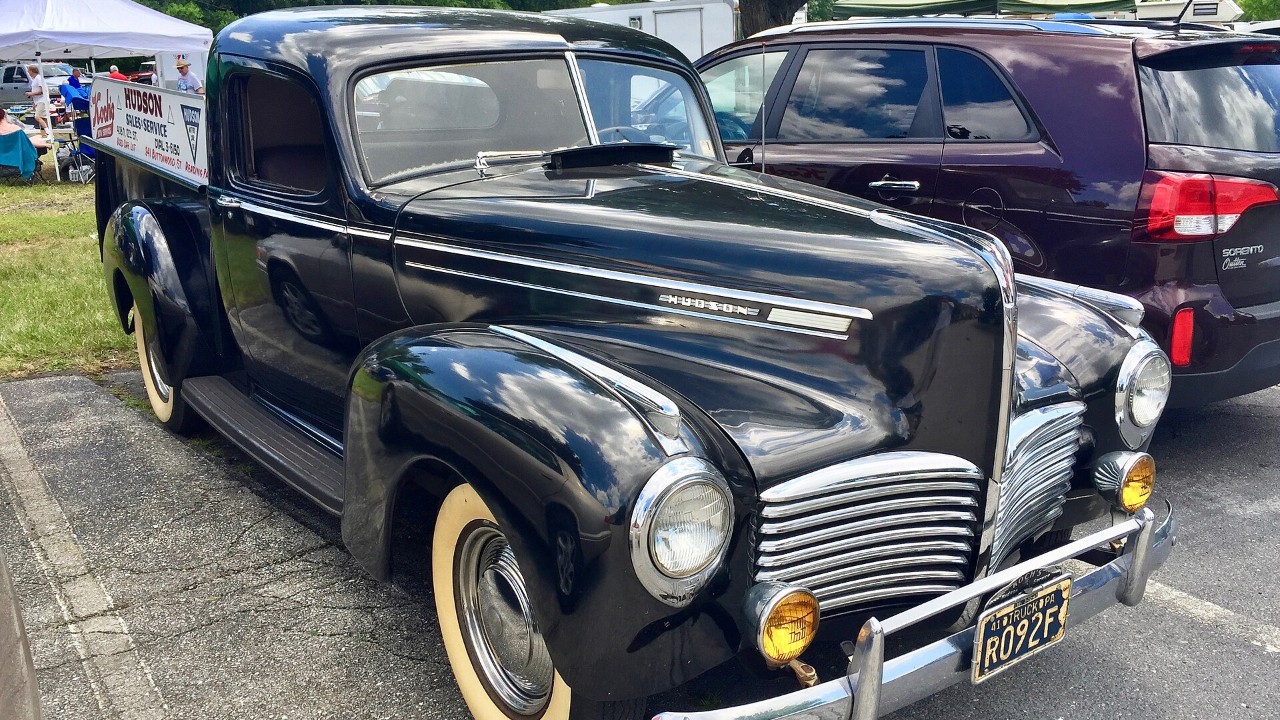
Hudson built cars in Detroit from 1909, and for a time it built pickups too. Its truck lineup shrank from 19 models at its peak to eight in 1941, according to Curbside Classic’s history of Hudson’s pickups. The Big Boy was the three-quarter-ton model. It wore a body that Curbside Classic describes as half car and half truck.
By the postwar trucks, the factory engine was a 102-horsepower side-valve Super Six. A column-shift three-speed manual was standard, with overdrive available. However, Hudson’s switch to unit-body construction for 1948 left it without a platform for pickups, so the 1947 trucks were the last.
That car-based look is exactly why the Big Boy feels relevant. Today’s unibody pickups, such as the Ford Maverick and Hyundai Santa Cruz, sell on the same promise of car comfort with a bed. Classic.com lists two Big Boy-labeled sales at $55,000, in February 2023 and June 2025. For more of the brand’s overlooked models, see 8 Hudsons that deserved more attention than they got. If you find one, budget for trim parts, which are hard to source.
5. 1949 Dodge B-Series pickup
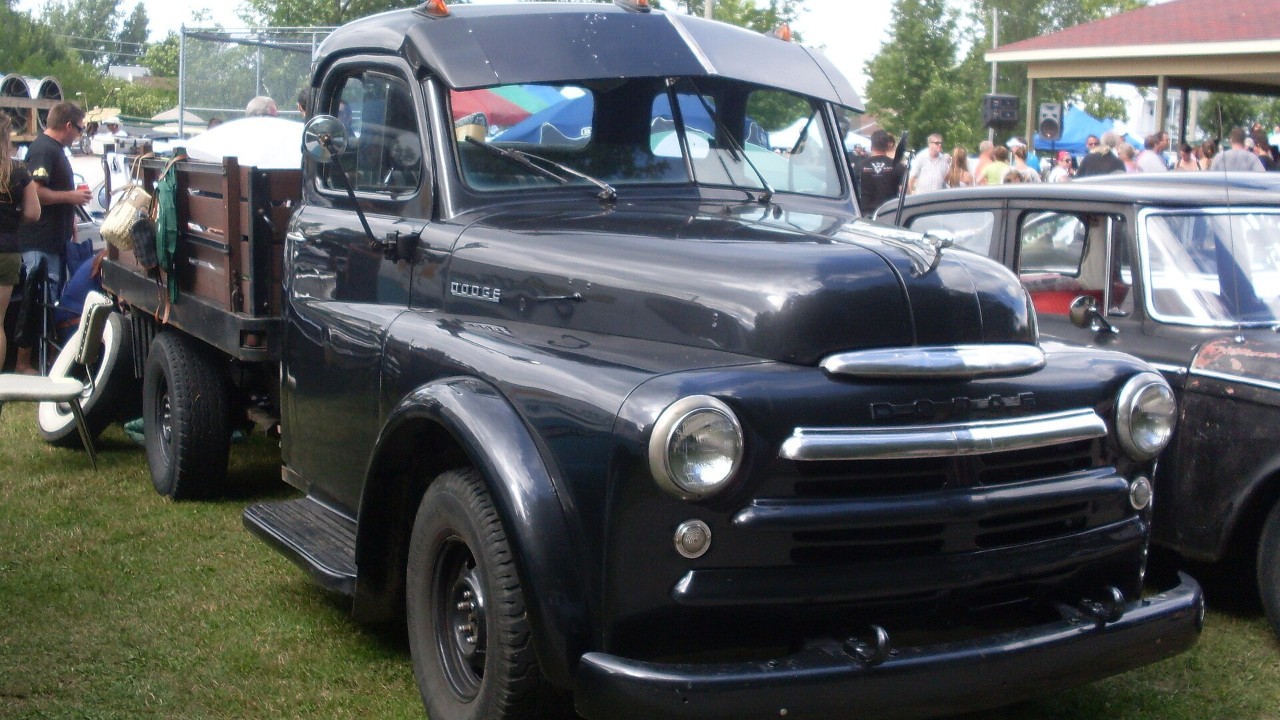
Dodge’s B-Series ran from 1948 to 1953, and its selling point was the “pilot-house” cab. Compared with the prewar truck, the new cab was 2.5 inches taller, 6 inches wider and 3 inches longer. It also sat on rubber mounts for a smoother ride, and buyers could add rear quarter windows for better visibility.
The half-ton B1-B came with a 95-horsepower flathead six on a 108-inch wheelbase. Higher bed sides raised cargo capacity by 40 percent. Also, cross-steering gave the truck a tight 37-degree turning radius. Then, for 1950, Dodge added Fluid Drive as an option.
In our view, the B-Series is where pickups started to care about the person in the cab. Big glass, room for three and a cushioned cab are now basic expectations. That’s what makes a 1949 model feel familiar today. If you’re buying, check the cab mounts and floors, because a 75-year-old truck has had plenty of time to rust.
6. 1965 Ford F-100 Twin I-Beam
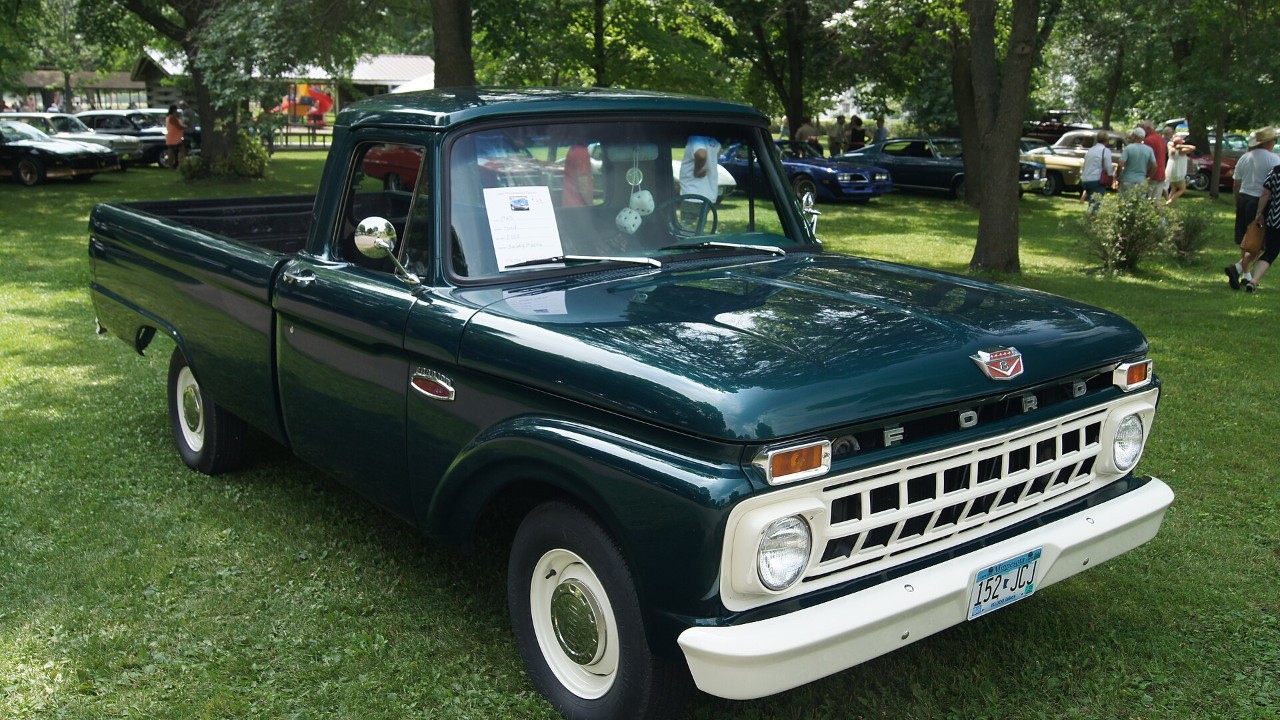
For 1965, Ford gave its two-wheel-drive trucks Twin I-Beam front suspension. It replaced the earlier straight axle and let each front wheel move on its own beam. As a result, the Ford F-100 rode and handled more like a car without losing the toughness of a beam axle.
The same year brought the 240 and 300 inline-sixes, while the 352 FE V8 carried over. Ford also introduced the Ranger package for 1965, with bucket seats and a curtain over the fuel tank behind the seats. On the 6.5-foot bed, the wheelbase measured 115 inches.
Our take: a 1965 Ford F-100 is the earliest Ford pickup that drives like a modern truck on a rough road. The 300 six is also a fine engine for daily use. If you shop for one, check the I-beam bushings and radius arms, because worn parts make the front end wander.
7. 1969 Ford F-100 Ranger
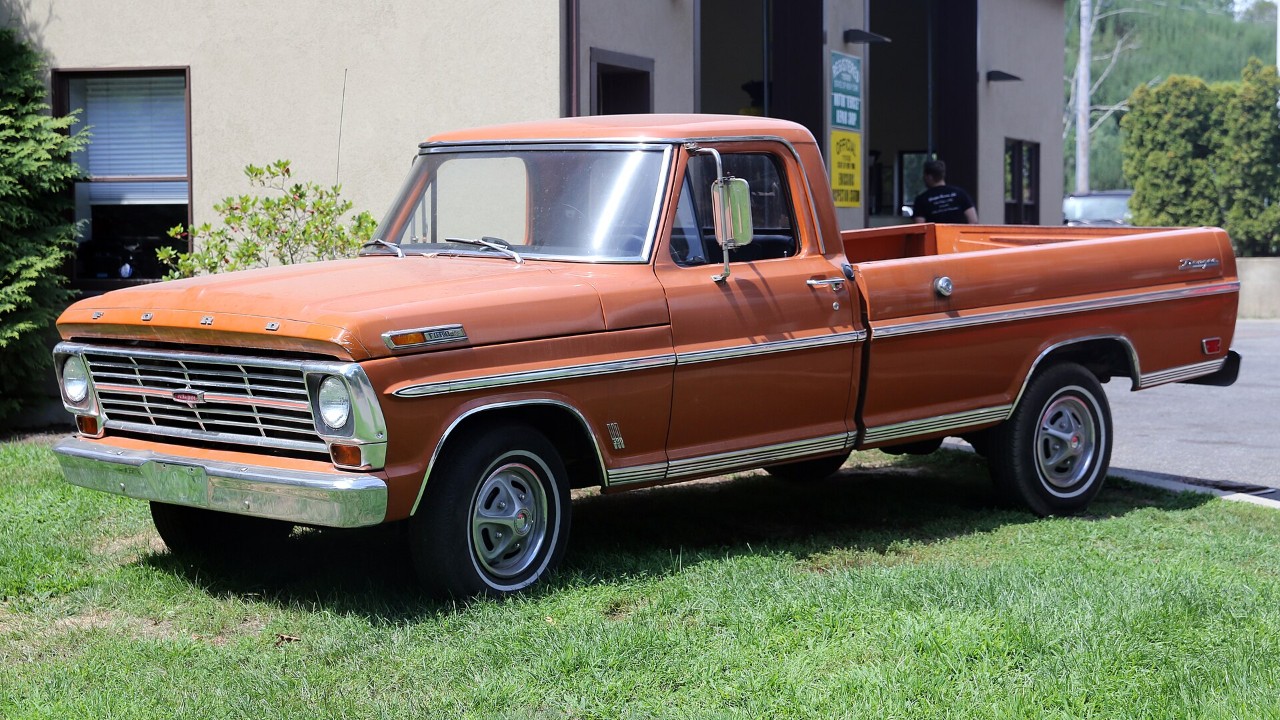
Ford’s fifth-generation F-Series arrived for 1967 with a cab three inches wider than before and a heavier frame. Ranger was the top of three trim levels that year. Then, for 1968, Ford offered factory-installed air conditioning for the first time.
The 1969 truck got a new grille and a new 302 Windsor V8 option. However, the F-100 Ranger pictured here carries the 390 FE V8, rated at 255 horsepower in its stronger version. A year later, Ford added the Ranger XLT above it as the new top trim.
This truck feels relevant because it’s the start of the dressed-up pickup. Bright trim, air conditioning and a big V8 turned a work truck into a family vehicle. That’s the recipe behind every luxury pickup today. In our view, a 1969 F-100 Ranger is the sweet spot: the comfort of the later trucks with the simpler 1960s look. Before you buy, confirm the trim with the paperwork, since badges are easy to add.
8. 1979 Ford F-150 Ranger
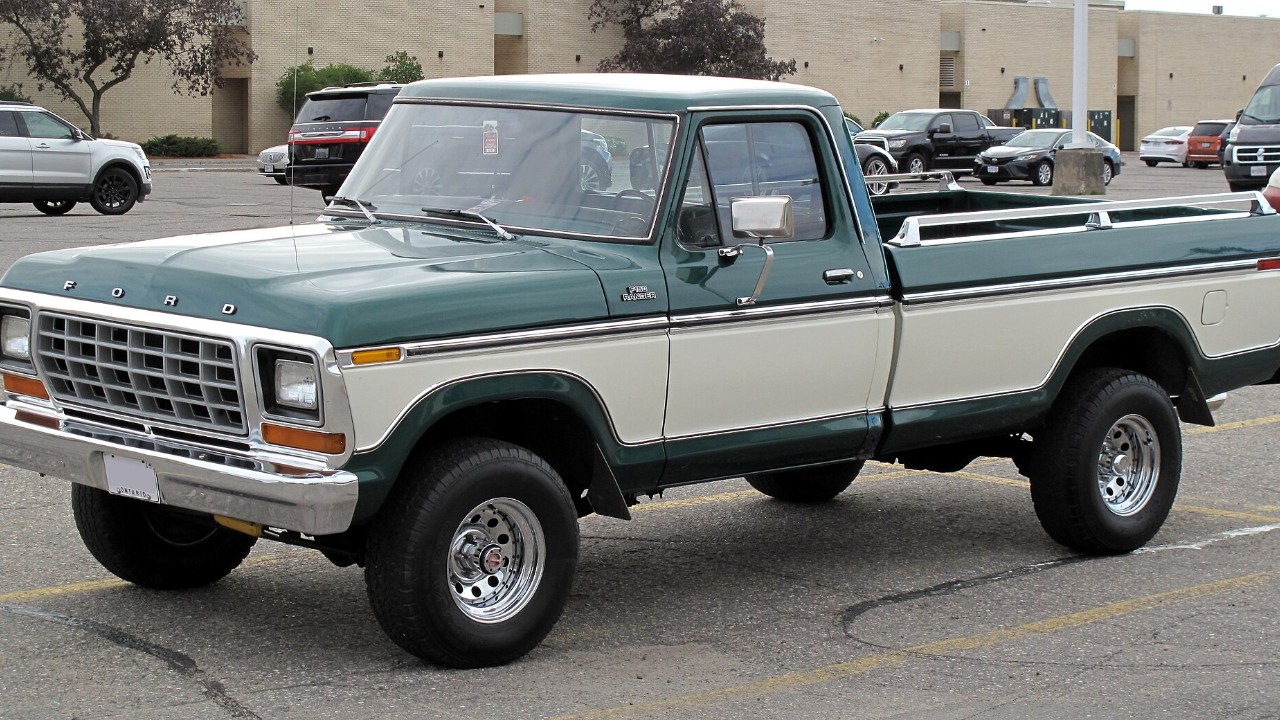
Ford introduced the F-150 for 1975 as a higher-payload version of the Ford F-100, rated at over 6,000 pounds gross. Enthusiasts call this generation the dentside. Two years later, in 1977, the F-Series became America’s best-selling truck.
For 1979, every model wore rectangular headlamps. Trims ran from Custom to Ranger, Ranger XLT and Ranger Lariat, which arrived for 1978. Engines ranged from the 300 six to the 302, 351M and 400 V8s, plus the 460.
Our take: the 1979 F-150 Ranger is the dentside at its most finished. It’s also the direct ancestor of the truck that leads the sales charts today. The square lights and chrome make it look at home next to a new F-150, which is why it feels so current. If you shop for one, check the cab corners and rocker panels, since those rust first on dentsides.
9. Mazda B2000 pickup
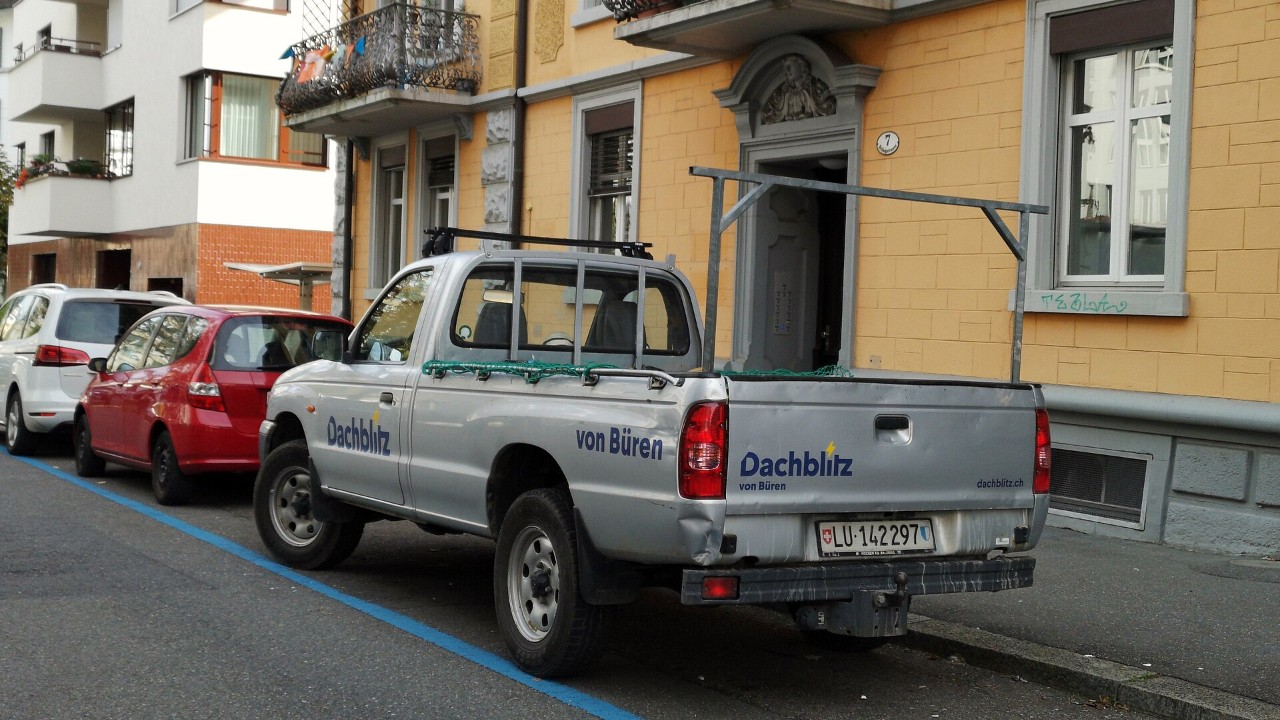
Mazda’s B-Series ran from 1961 to 2006. The B2000 name arrived in the U.S. for the 1980 model year, replacing the B1800, with a 2.0-liter four-cylinder. Its MA engine made 75 horsepower and stayed in production from 1979 to 1984.
Mazda also built the Courier for Ford, which Ford sold in the U.S. until its own Ranger replaced it for 1983. Then, for the 1986 model year, a new generation of B2000 arrived in North America. It lasted only through 1987, when the B2200 took over.
In our view, the B2000 feels relevant because it nailed the small truck’s job: light, simple and cheap to run. Those are exactly the qualities buyers keep asking for as full-size pickups grow. If you’re shopping, look for an unmodified example, since many small trucks were worked hard and then customized.
10. 1994 Toyota Xtracab pickup
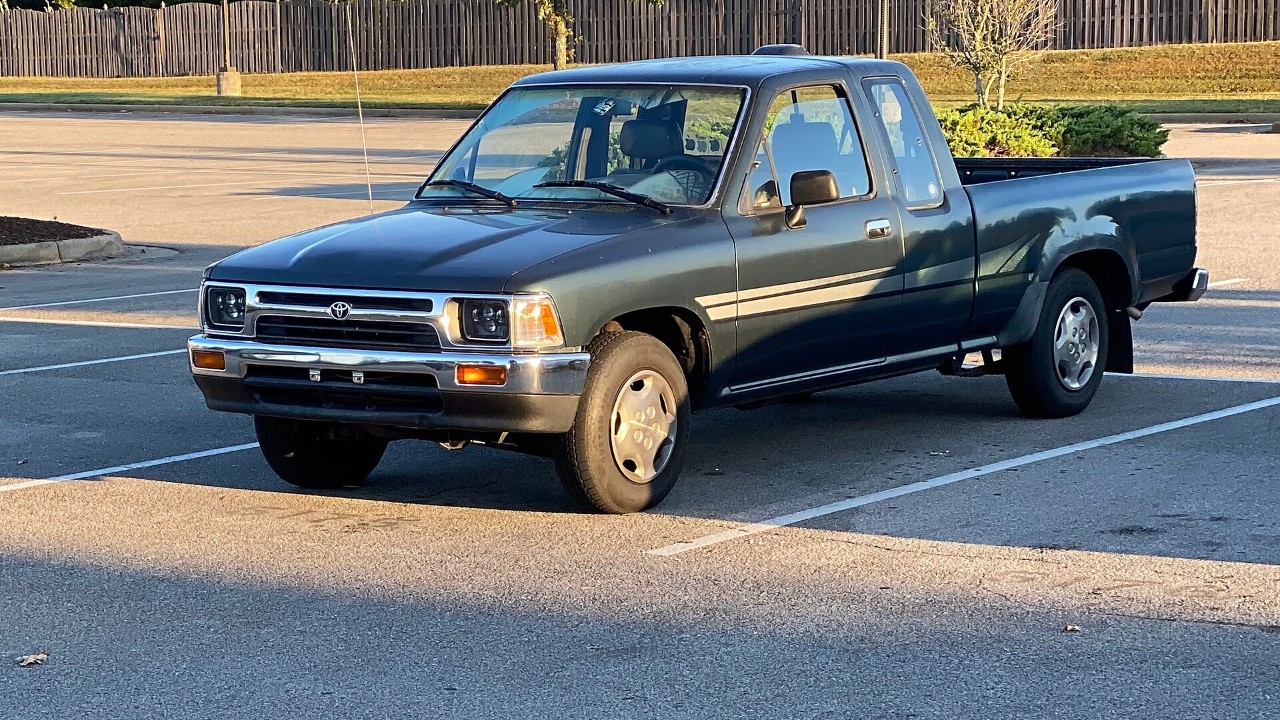
Toyota’s fifth-generation compact truck launched in September 1988. In North America, Toyota began building it at NUMMI in 1990. The Xtracab name dated back to the 1984 model year, but this generation gave it more room behind the front seats, with optional jump seats.
Engines included the fuel-injected 2.4-liter 22R-E four, rated at 113 horsepower, and the 3.0-liter 3VZ-E V6, rated at 150 horsepower. At launch, the V6 Xtracab SR5 also won Motor Trend’s Truck of the Year award. After an abbreviated 1995 model year, the Tacoma replaced it.
Our take: a 1994 Xtracab is the old-school Toyota truck that today’s Tacoma owners recognize right away. It has an extended cab and a simple four-cylinder, and in our view that combination is why it makes sense today. If you’re buying, check the frame closely, because rust is the usual enemy of these trucks.
11. 1949 Studebaker 2R pickup
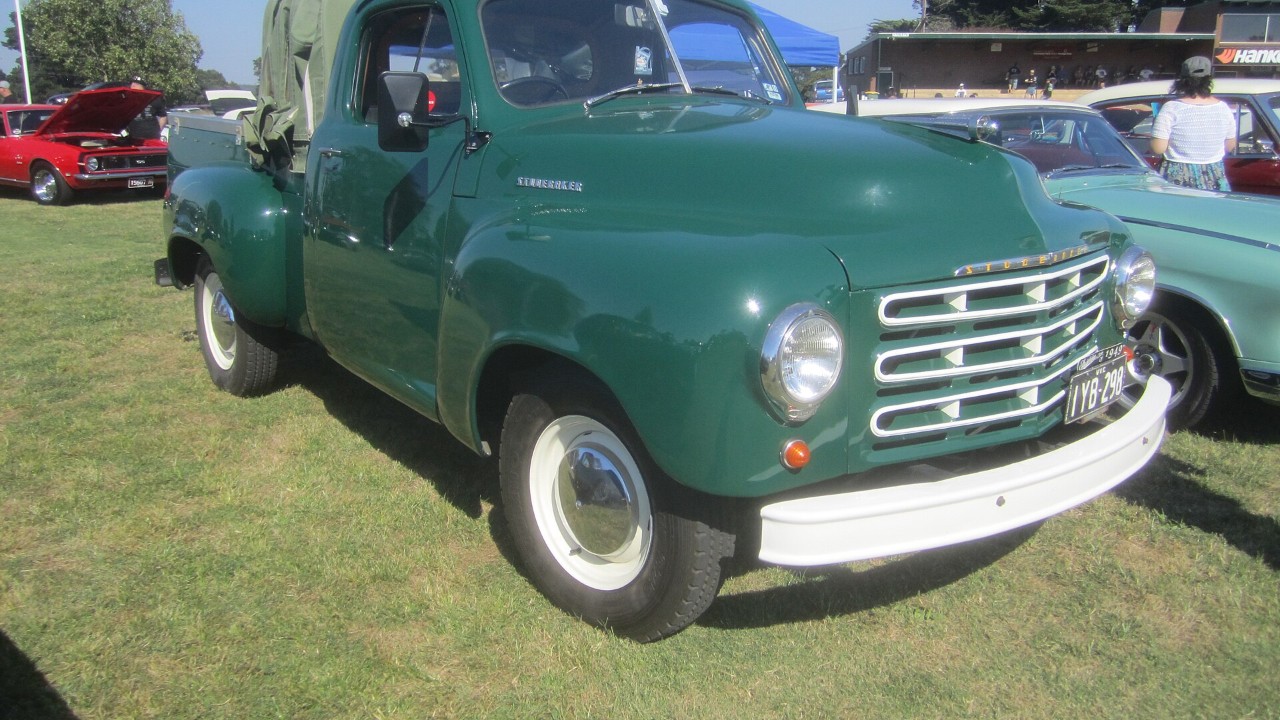
Studebaker introduced its 2R truck line in April 1948 as a 1949 model. Robert Bourke is usually credited with the styling. The half-ton 2R-5 rode on a 112-inch wheelbase, and lighter trucks used the 170-cubic-inch Champion six, rated at 85 horsepower, according to Curbside Classic’s 2R history.
The design looked ahead. Front fenders blended into the body, and there were no running boards. A double-wall bed kept dents inside from showing outside. Studebaker built the trucks in South Bend, Indiana, and Hamilton, Ontario. Altogether, it made roughly 273,000 of them through 1953, and the line reached nearly a 5 percent share of the truck market.
In our view, the 2R showed early how good a flush-sided pickup could look. For more from the brand, see 20 Studebakers you’ve probably never seen in person. If you shop for a 2R, look for an intact double-wall bed, because a sound original bed is hard to replace.
12. 1974 Jeep J10
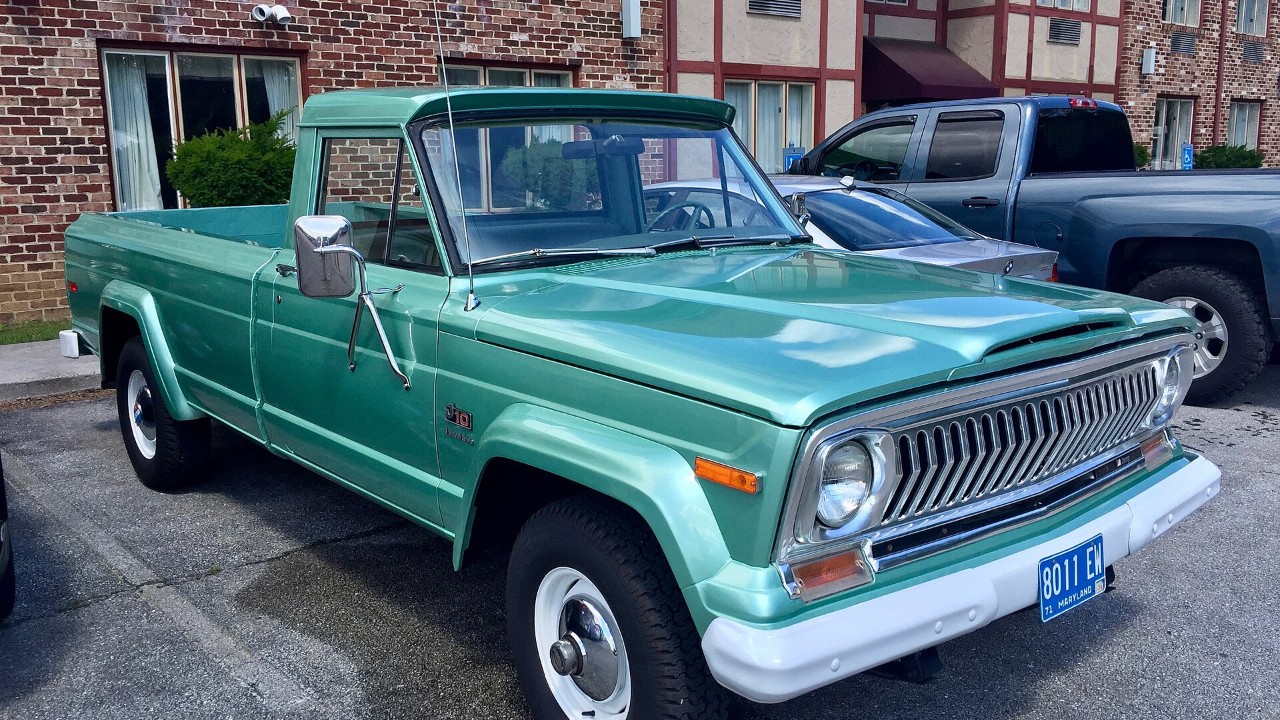
Jeep’s J-series pickups began in 1962 as the Gladiator for the 1963 model year. Early trucks offered an overhead-cam Tornado six and, on 4WD half-tons, independent front suspension. Then American Motors bought Kaiser Jeep in 1970.
For 1974, the trucks traded wheelbase-based names for payload-based ones, J-10 and J-20. Engines that year included the 258 six, the 360 V8 and the new 401 V8. Quadra-Trac full-time four-wheel drive became available with every engine. Also, the 1974 trucks gained better brakes and a tighter turning radius.
The full-time 4WD and a big V8 make a J10 feel close to a modern off-road pickup. In our view, it’s the most usable classic 4×4 truck here. If you buy one, have the Quadra-Trac system checked by someone who knows it, because repairs get expensive. Jeep kept this platform in production for more than 26 years, until the J-series ended in 1988.
More from Fast Lane Only