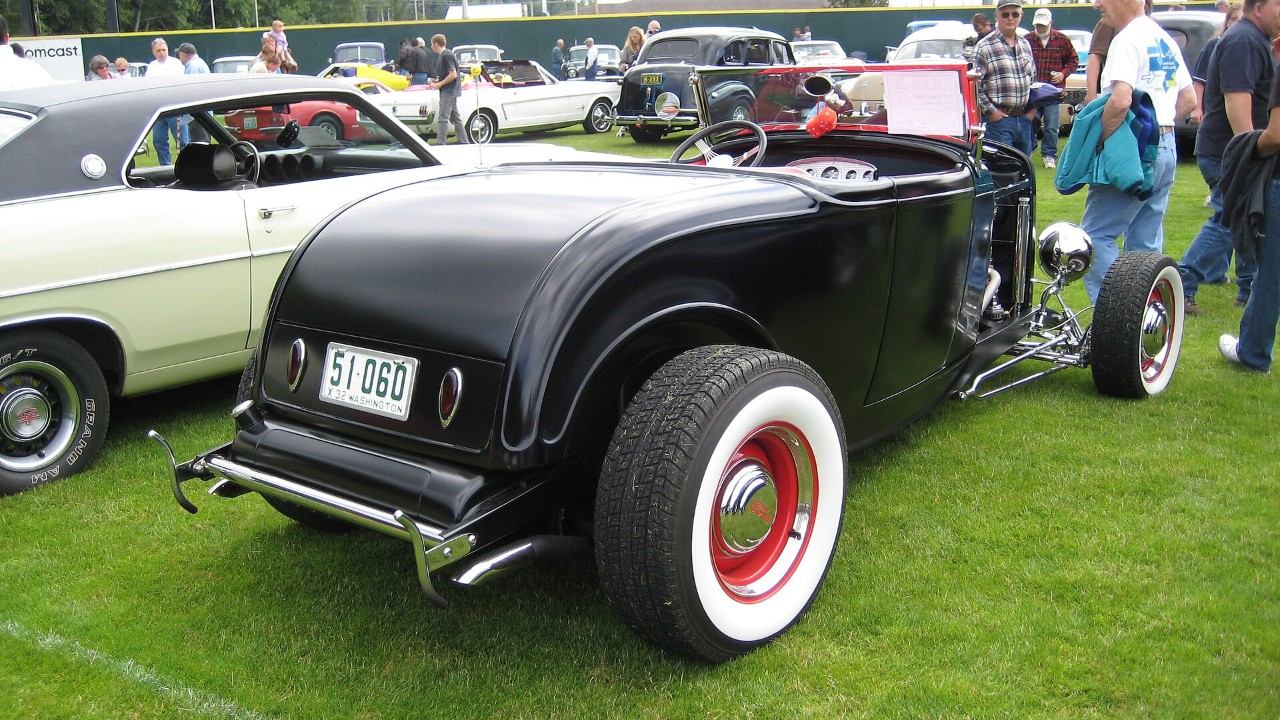
The classic Ford hot rod was born on the dry lake beds northeast of Los Angeles in the late 1930s. At first, young drivers stripped old Fords, tuned their engines and raced them across the flats. After World War II, returning servicemen with mechanical training joined in, and a whole culture took off.
Hot Rod magazine launched in 1948, and the National Hot Rod Association followed in 1951 to get drag racing off the streets. Since then, builders have tried almost every car imaginable. Yet a small group of base cars keeps coming back, because they look right, weigh little and feel alive on the road.
These are our 12 picks for the hot rods that make any drive feel like an occasion. Most are Fords, a few are not, and all of them turn a trip for milk into an event. The picks are our opinion, while the history and specs come from period records, museum notes and drag racing histories.
1. 1932 Ford “Deuce” highboy roadster
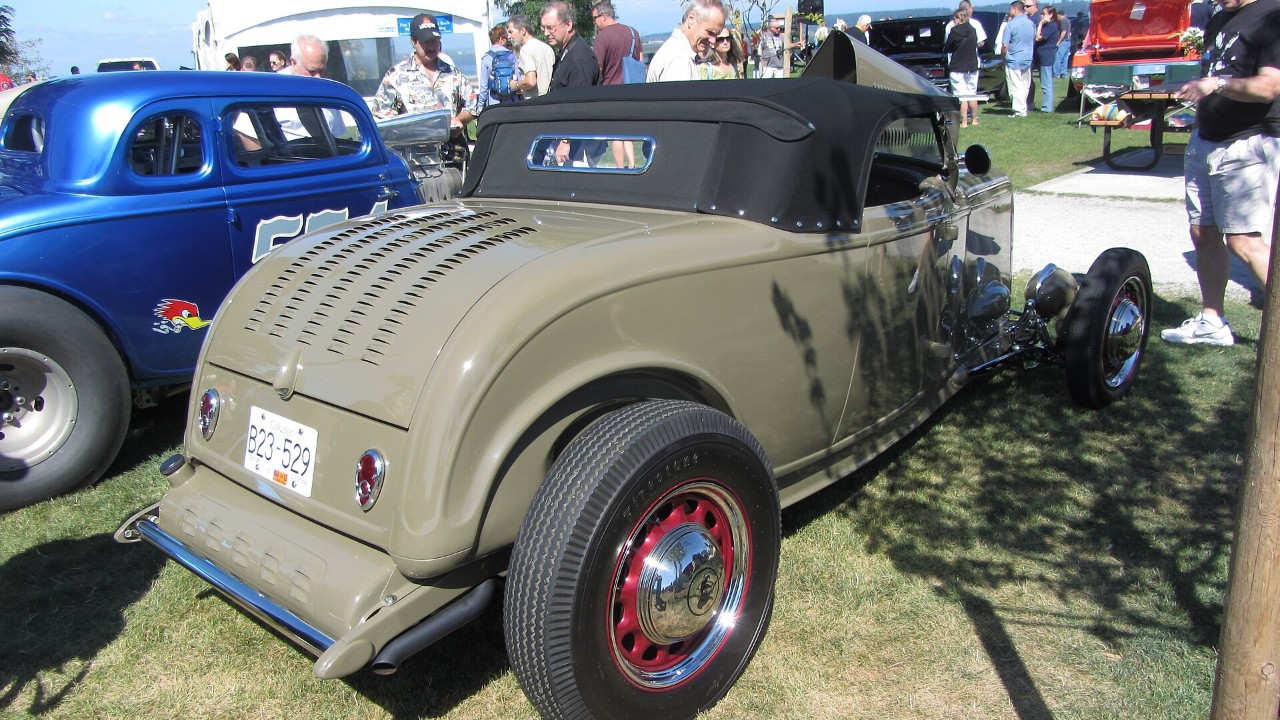
The 1932 Ford earned its nickname from the “2” in its model year, and hot rodders have called it the Deuce ever since. It mattered because Ford offered its new flathead V8 in a low-priced car. The Model 18 V8 displaced 221 cubic inches and made 65 hp, and it cost only $10 more than the four-cylinder Model B.
A roadster listed at $495 when new. In hot rod form, the highboy keeps the body sitting on top of the frame rails, with no fenders and the grille shell standing proud. That look defined the mid-century Deuce, often with a Ford or Mercury flathead under the hood.
In our view, a Deuce highboy is the purest hot rod shape ever made. You sit low, the wind hits you square and the V8 burble fills the cockpit. As a result, every drive feels like a parade. For the full story of the car, read why the 1932 Ford Model 18 changed hot rodding forever.
2. 1923 Ford Model T T-bucket hot rod
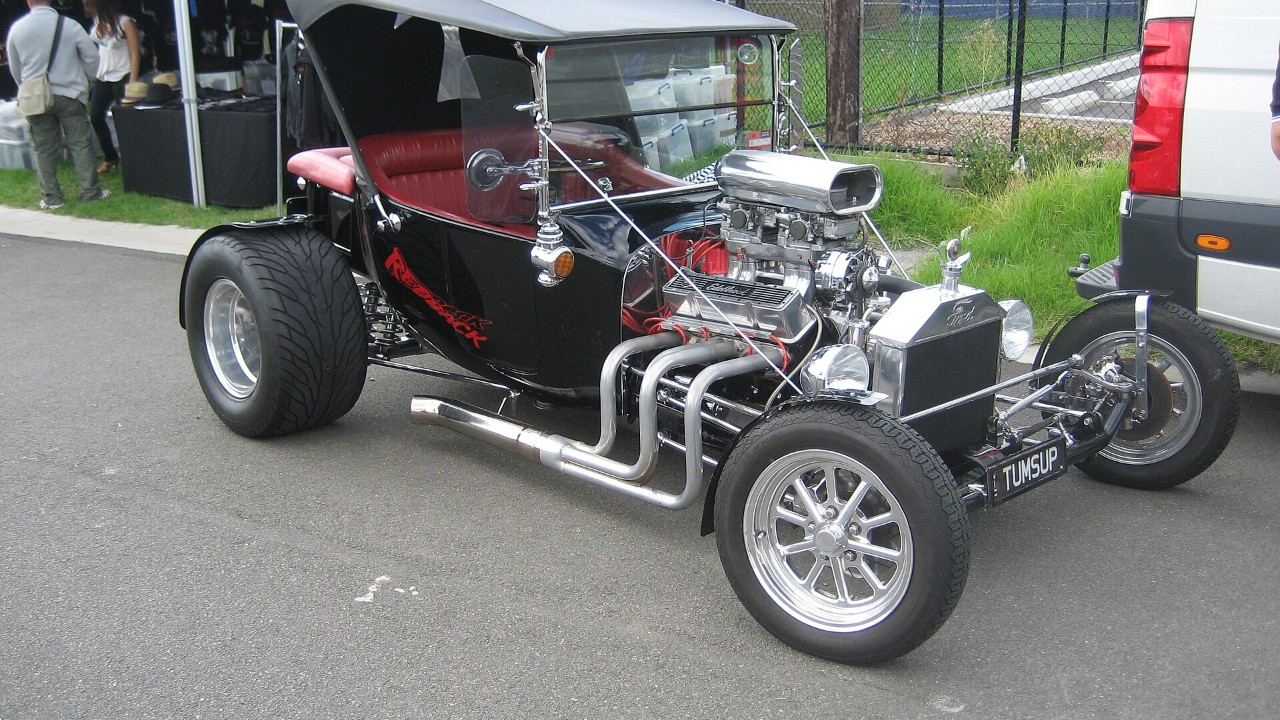
The T-bucket takes the two-seat body of a Ford Model T roadster, which looks a bit like a bucket, and turns it into a hot rod. Norm Grabowski first created and named the style in the 1950s. His car, the Lightning Bug, then appeared on the TV show 77 Sunset Strip as the “Kookie Kar,” and copies spread across the country.
Real Model T bodies ran out long ago, since Ford ended the Model T in 1927. As a result, most T-buckets today use fiberglass replica bodies. The first one appeared in 1957 from Diablo Speed Shop in Northern California. A Model T-style radiator usually sits up front, and a big V8, often a small-block Chevy, sits right behind it.
Our take: no hot rod gives you more engine per pound of car. A T-bucket is loud, short and absurdly fun, and you feel every bump and every throttle blip. It’s not a long-distance cruiser, but a 20-minute drive in one feels like a weekend.
3. 1941 Willys Americar gasser
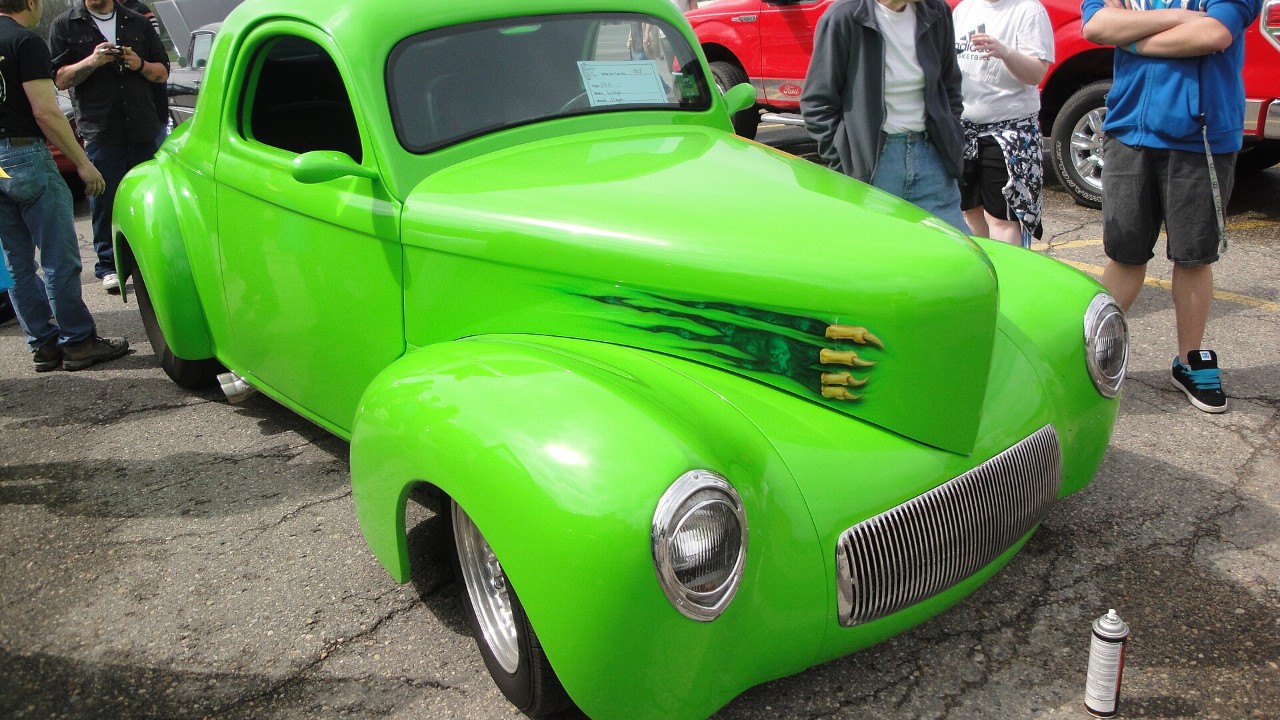
Gassers ran in drag racing’s gasoline classes from the late 1950s until NHRA dropped those classes in 1972. Builders jacked up the front with a straight axle to shift weight rearward on launch. Soon, light, short-wheelbase Willys coupes became favorites. According to Mac’s Motor City Garage, their small size and light weight suited the new sport perfectly.
The most famous is the Stone, Woods & Cook 1941 Willys known as the “Swindler.” NHRA’s history of the car says Fred Stone, Leonard and Tim Woods and driver Doug “Cookie” Cook raced it in AA/Gas Supercharged. That partnership lasted from about 1961 until 1967. Its rivals included “Big John” Mazmanian, whose candy-red ’41 Willys carried a blown Chrysler Hemi.
In our view, the nose-high ’41 Willys is one of the most recognizable shapes in drag racing, and nothing on the street looks more ready to launch. You don’t just drive a Willys gasser, you show up in one.
4. 1940 Ford Deluxe coupe
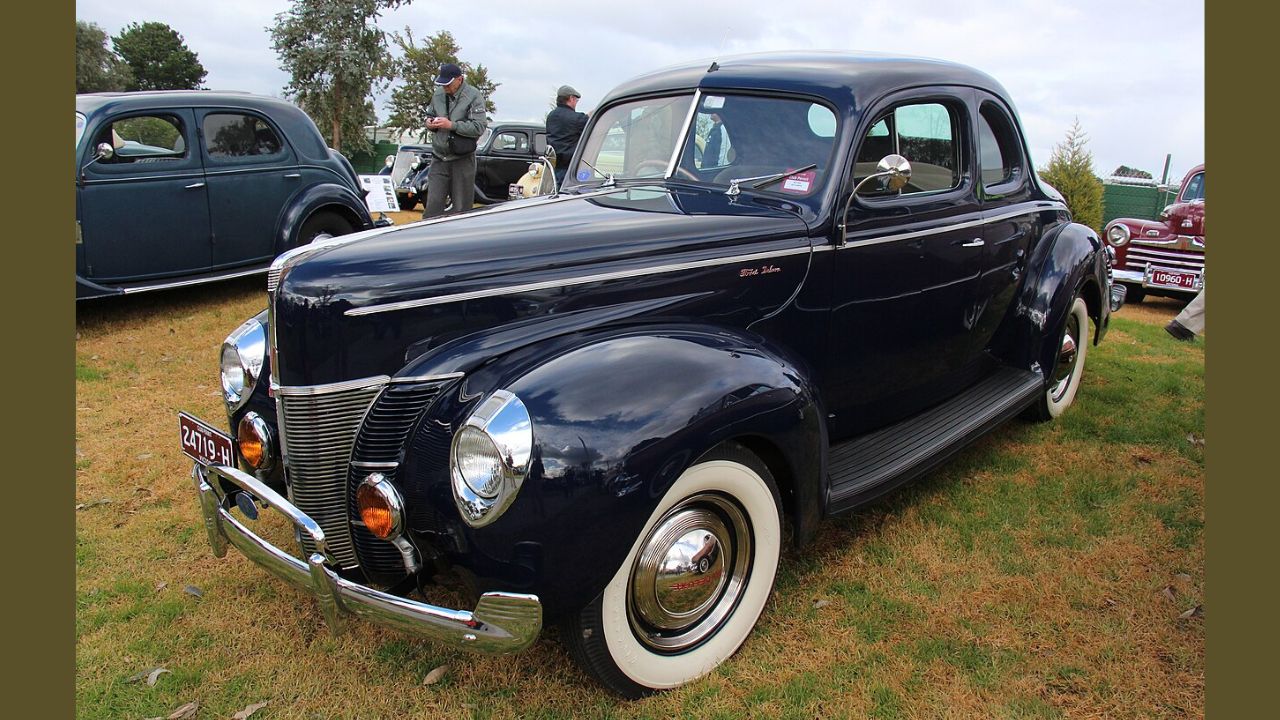
The 1937 to 1940 Fords rank among the most popular hot rod bases, and the 1940 Deluxe is our favorite of them. It was also the last year of that design. Ford stretched the Deluxe grille out toward the fenders and set the headlights wider apart.
The 1940 car also brought sealed-beam headlights, one of the few major advances that year. Meanwhile, Ford had switched to hydraulic brakes for 1939, which makes the later cars easier to live with. The V8 had made 85 hp by 1939, so the factory package already had some punch.
Early stock-car racers used these Fords too, and they inspired a style of dirt-track racer. Our take: the ’40 Deluxe coupe is the Ford hot rod for people who want curves and comfort in equal measure. With a roof over your head and room for a passenger, you can drive it farther than most cars on this list. That’s why we’d pick it for a long Sunday run.
5. 1934 Ford Model 40 three-window coupe
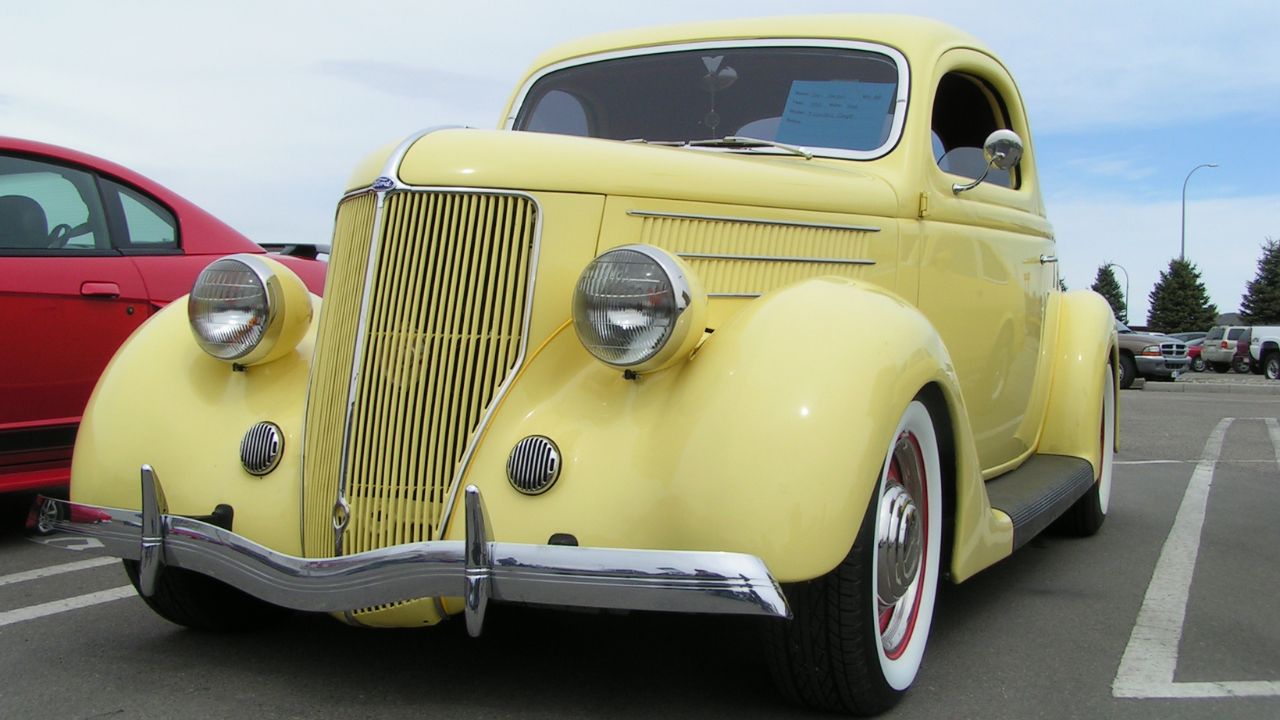
The 1933 and 1934 Fords, the Model 40 line, took the Deuce and stretched it. For 1933, Ford lengthened the wheelbase from 106 to 112 inches, skirted the fenders and brought the hood back over the cowl. For 1934, it gave the grille a flatter face and a wider surround, and it used straight hood louvers.
Ford also dropped the standard three-window coupe in 1934, so the three-window that year came as a Deluxe. Its narrow pillars and small rear window give it a lean look. Under the hood, the flathead V8 reached 85 hp in 1934, up from 65 hp two years earlier.
A ’34 three-window has a kind of tension in its lines that few cars match. In our view, chopped or stock, it’s one of the best-looking closed hot rods there is. It also gives you a cozy, close cockpit that makes even a short drive feel like something special.
6. 1929 Ford Model A highboy roadster

Ford built the Model A from late 1927, as a 1928 model, until March 1932. In that time it made 4,858,644 of them. The engine was a 201-cubic-inch four rated at 40 hp, and a roadster started at just $385. Later, hot rodders nicknamed it the “A-bone.”
The roadster drew builders for good reasons. It had an open cockpit, it weighed less than the closed bodies and its chassis was dependable. In other words, it was cheap, plentiful and easy to make fast. For that reason, the Model A was one of the most common hot rods of the early years, along with the Model T and the Model B.
Our take: a Model A highboy is the friendliest Ford hot rod of all. It’s a little softer in shape than a Deuce, and the parts supply is huge. On a warm evening, with the top down and a hopped-up four or a V8 swap, it might be the most relaxing car here.
7. 1936 Ford Model 68 five-window coupe
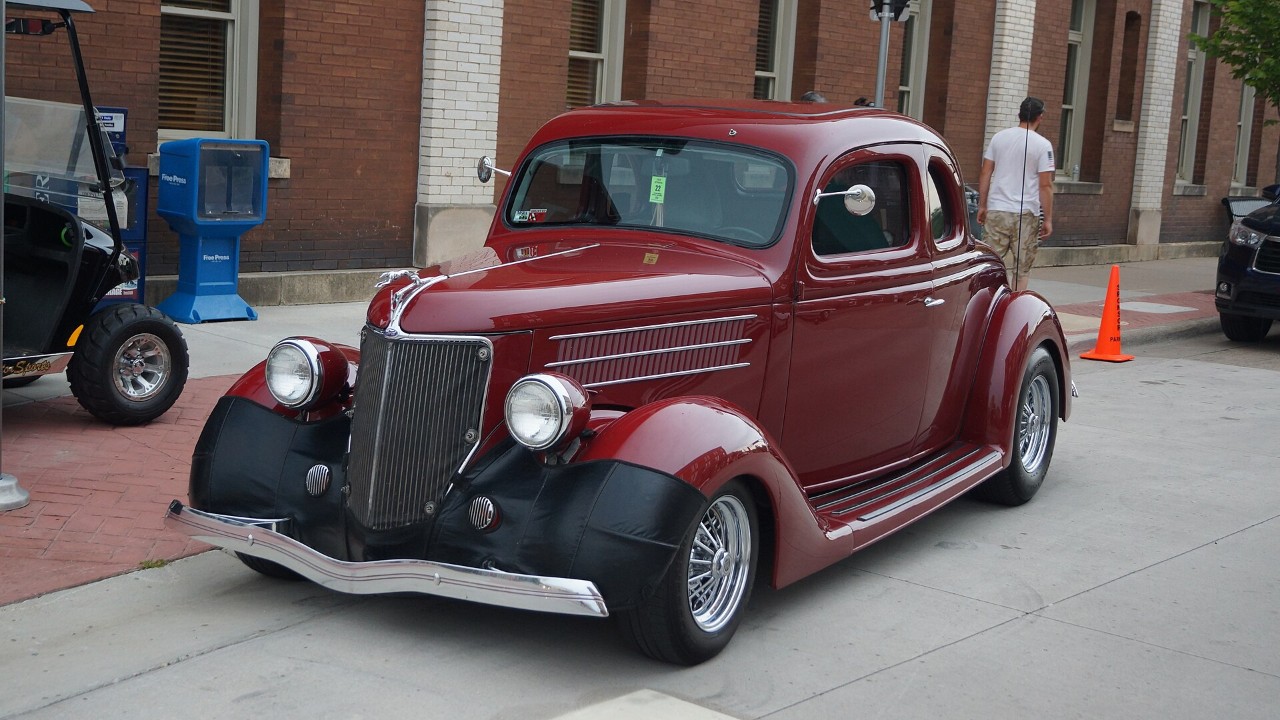
For 1936, Ford called its V8 Deluxe the Model 68. It got an inverted pentagon grille with all-vertical bars and three chrome strips down the side. Ford also swapped wire wheels for pressed-steel “artillery” wheels that year.
The five-window coupe, meanwhile, was part of a big range. Ford had offered a roadster, three- and five-window coupes, sedans, a convertible sedan and a wagon since 1935. Sales were strong, too. In 1935 Ford sold 820,000 cars and pulled ahead of Chevrolet, although Chevrolet took back the lead at the end of 1936.
The ’36 is where Ford’s styling started to round out, and that shows in the coupe’s gently sloping back. In our opinion, a five-window ’36 makes a wonderful Ford hot rod because it looks friendly and graceful rather than aggressive. With a flathead or a modern V8, it’s a cruiser that makes people smile as it passes.
8. 1933 Ford Model 40 Victoria

The Ford Victoria is the odd one in the early-Ford family, and that’s what makes it special. Ford designed it as a smaller version of the Lincoln Victoria. The body arrived in 1932, carried on through the restyled 1933 cars and disappeared in 1934.
The new Model 40 debuted on February 9, 1933. In addition, it brought the longer 112-inch wheelbase, rounder fenders and a revised grille. Meanwhile, the V8 rose to 75 hp thanks to a revised ignition system. Deluxe closed cars also got woodgrain trim inside.
Victorias are less common than coupes and sedans, so they stand out at any show. In our view, a ’33 Victoria hot rod is the classy choice: it seats four, looks elegant and still turns heads with a V8 rumble. It’s the one we’d take to dinner rather than the drag strip.
9. 1949 Mercury Eight coupe

The 1949 Mercury Eight was the brand’s first postwar design, with a smooth “pontoon” body and no running boards. Mercury enlarged its flathead V8 to 255 cubic inches and 110 hp. Buyers liked it, and Mercury climbed to sixth in US sales that year.
Customizers, however, liked it even more. In 1949, Sam Barris turned one into what many call the first lead sled. Then, in 1953, Sam and George Barris built the Hirohata Merc for Bob Hirohata from the same body style. That car became one of the most famous customs ever, and the chopped ’49 Merc became a template.
Our take: the ’49 Merc isn’t a lightweight hot rod. Instead, it’s a cruiser, low and long, and that’s the point. A chopped Merc rolling slowly down a boulevard is one of the great sights in car culture. Every drive in one feels like a scene from a movie.
10. 1955 Chevrolet 150 gasser
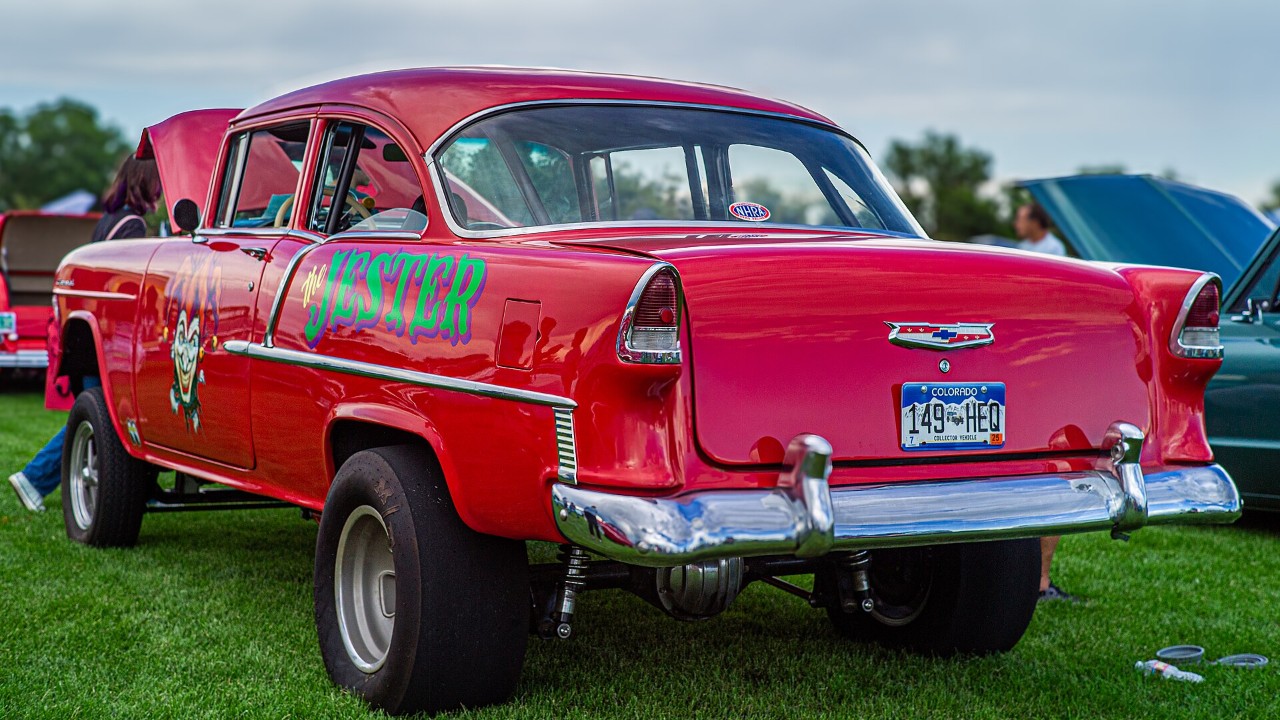
The One-Fifty was Chevrolet’s plain economy and fleet model, built from 1953 to 1957. Then, for 1955, it got an all-new body and chassis. More importantly, 1955 was the year Chevy introduced its 265-cubic-inch small-block V8. In standard form it made 170 hp, while a four-barrel version made 205 hp.
A bare-bones body and a strong new V8 made the ’55 a natural for drag racing. In fact, 1955 to 1957 Chevrolets show up throughout the gas-class results tables. Gasser builders raised the nose with a straight axle, stripped the weight out and often ran the exhaust through the front fender well.
In our view, a ’55 One-Fifty gasser is the most fun you can have with a family sedan shape. It’s big enough to be comfortable and light enough to wheelie, at least in spirit. If you love the small-block, this is the hot rod that shows where its story began. For more early performance cars that came straight from the dealer, see our list of factory hot rods that were ahead of their time.
11. 1937 Chevrolet Master Deluxe coupe
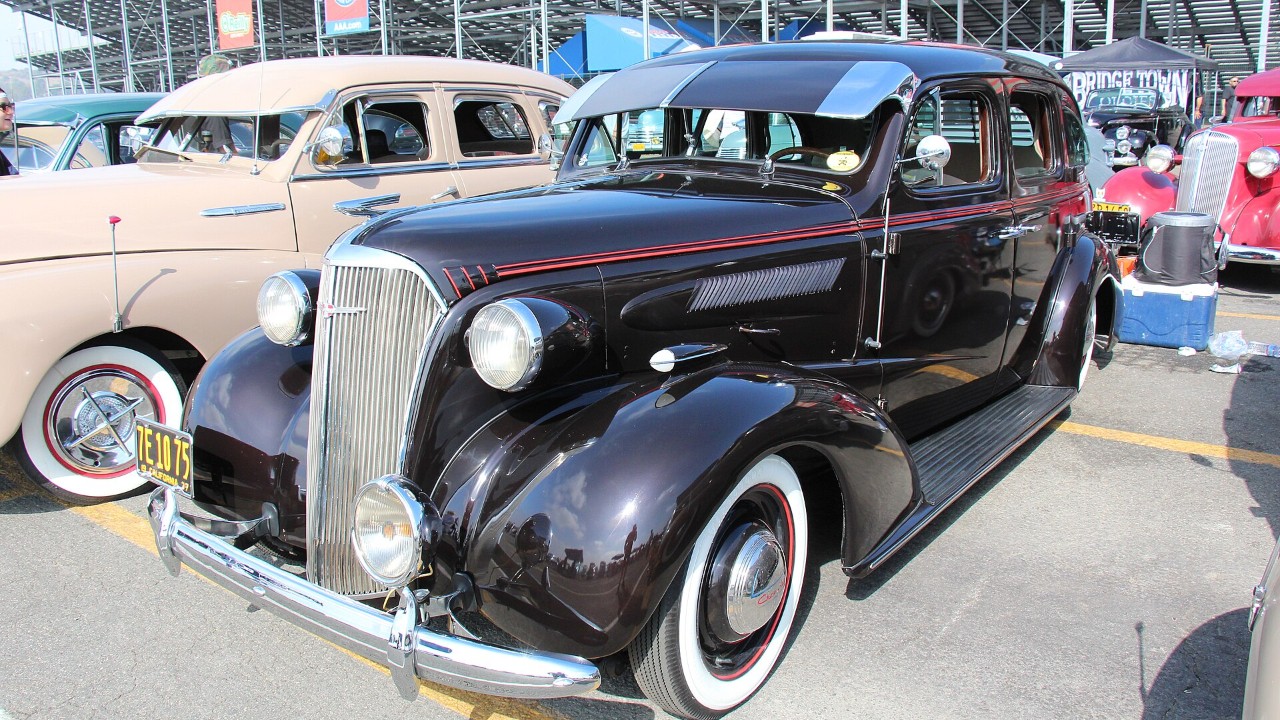
For Chevrolet, the 1937 car was a big step forward. According to Mac’s Motor City Garage, it had a new 216.5-cubic-inch overhead-valve six making 85 hp, matching the rated output of Ford’s V8. It also brought Chevrolet’s first all-steel Fisher bodies, with no wood framing.
The Master Deluxe sat above the base Master and got Knee Action independent front suspension. Prices for 1937 ran from $619 for a Master Business Coupe to $788 for the Master De Luxe Sport Sedan. Ford outsold Chevrolet that year, but the similar 1938 Chevy took the sales lead and kept it through 1948.
Our take: the ’37 Chevy coupe is the Bowtie answer to the fat-fendered Ford. It has wide, rounded fenders and a tall grille, and it looks great with a mild drop. If you want something different at a Ford-heavy cruise night, this is it.
12. 1932 Ford Model B Tudor sedan
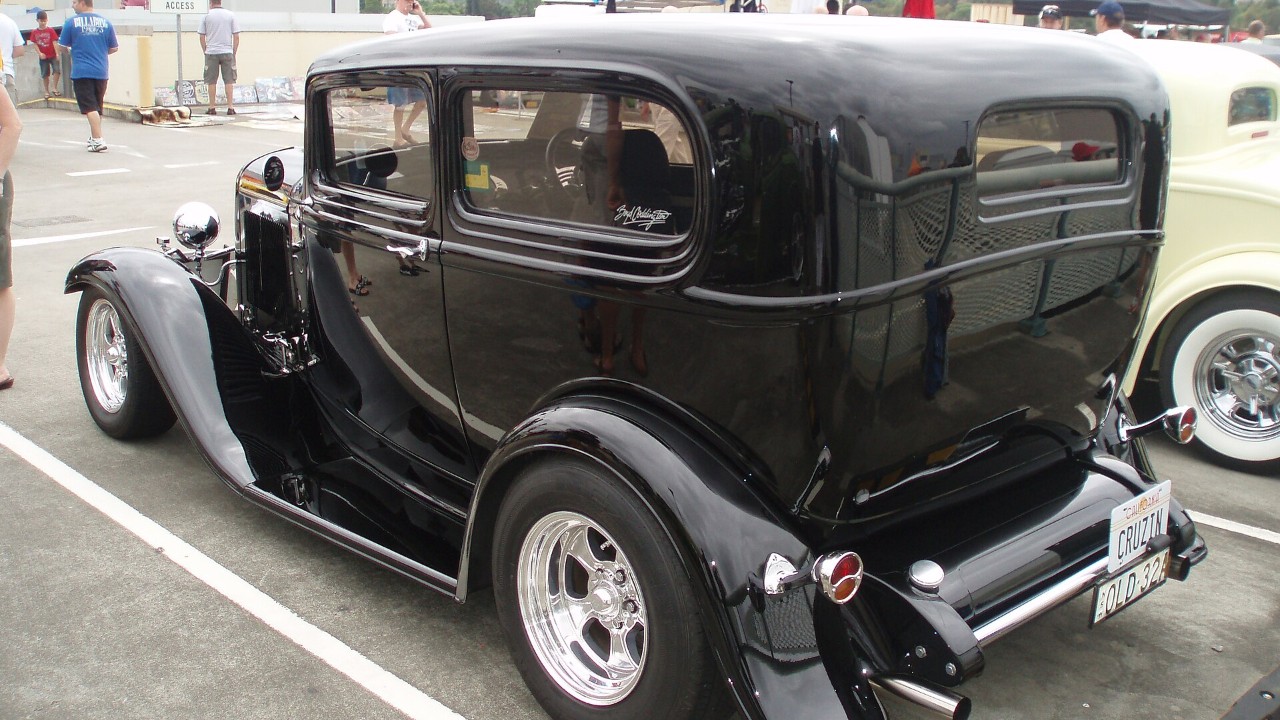
But not every Deuce had a V8. The 1932 Model B used a 201-cubic-inch four making 50 hp, an improved version of the Model A engine. Ford sold 133,539 Model Bs in 1932, compared with 298,647 V8 Model 18s.
The Tudor, Ford’s name for its two-door sedan, was the most common body of all that year. Ford’s 1932 production ran from 12,597 roadsters up to 124,101 two-door sedans. That’s why a Tudor is often the easiest way into a real steel Deuce. Plus, the back seat means you can bring friends. Our story on how owners of 1932 Ford hot rods balance history with drivability covers the choices you’ll face.
In our view, the Tudor is the family-friendly Ford hot rod of the Deuce era. It has the same grille and the same proportions, and it costs less than a roadster or coupe. Ford dropped the four-cylinder Model B in 1934, the same year it retired the Victoria.
More from Fast Lane Only