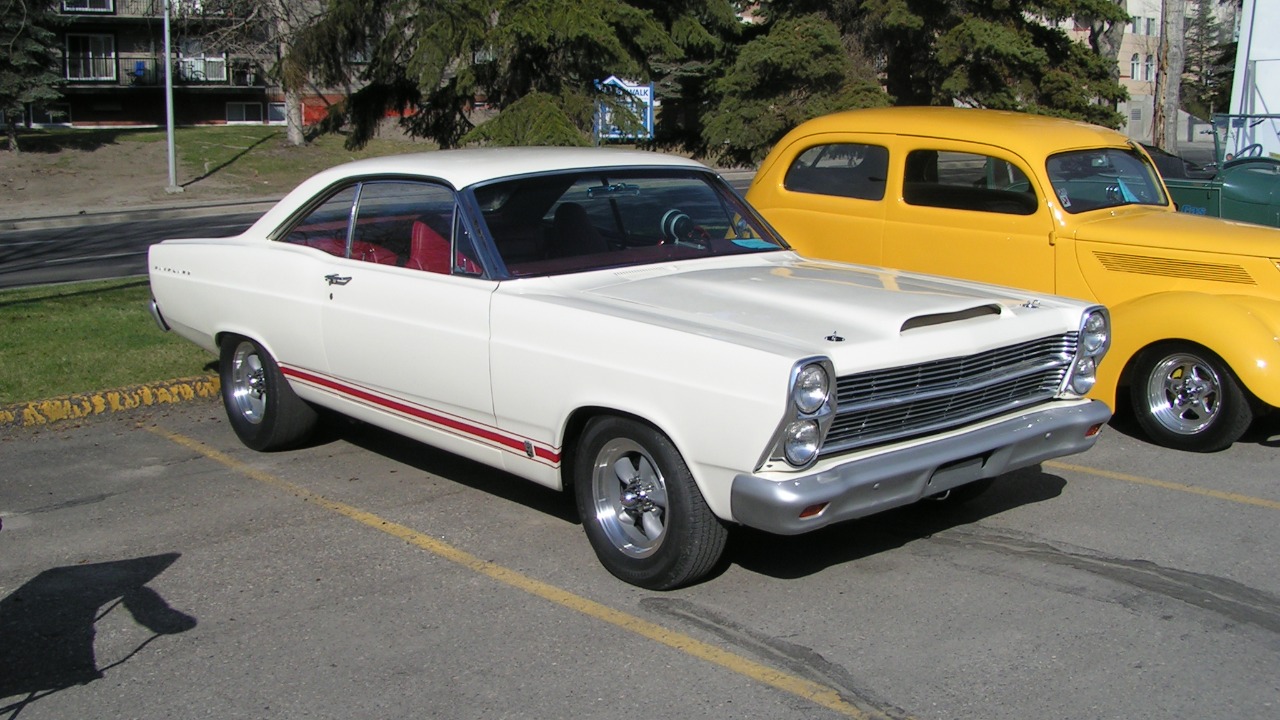
Ford’s intermediate line in the late 1960s and early 1970s created one of the most persistent nameplate puzzles in American car history. The Ford Torino and Ford Fairlane shared bodies, engines, and even brochures, yet enthusiasts still argue about what truly divided them. Understanding where the two overlapped and where they diverged reveals how Ford quietly shifted an entire model line from sensible family transport toward full‑fledged muscle car territory.
Rather than being cleanly separate models from the outset, the Fairlane and Torino evolved in layers of trim, marketing, and performance. The real separation came not from a single engineering change, but from how Ford repositioned the upscale Torino within, and then above, the Fairlane family, until the older name was left as a base badge and eventually disappeared.
Shared bones: one family, two badges
At the mechanical level, the Fairlane and Torino were far closer than their later reputations suggest. When the Torino name first appeared, it was introduced as a premium subseries within the existing Ford Fairlane line, not as a stand‑alone platform. Contemporary descriptions of Torino the Torino make clear that it was conceived as an upscale variation of the intermediate Ford Fairlane, much as the Ford LTD was positioned as a more luxurious take on a full‑size Ford. In other words, the Torino began life as a trim and image upgrade built on the same intermediate chassis, rather than a clean-sheet design.
Owners and restorers still see that shared DNA in the hardware. In enthusiast discussions about parts interchangeability, voices such as Robert Stevens describe the Torino as being “in the Fairlane family,” noting that most components are the same apart from some trim and ornamentation, with the powertrain essentially shared between Torino and Fairlane. That continuity extended across related models as well, with reports that Torino, Ranchero, Cobra, and the 70 1/2 Falcon used an identical front clip and mechanical underpinnings. Ford’s own production figures from that period, including a run of 13613 Fairlanes, underline that these cars were built as a single intermediate family with multiple badges layered on top.
Trim ladders and brochures: how Ford drew the line
The clearest distinction between Fairlane and Torino in the late 1960s came from how Ford structured its trim hierarchy. The Fairlane name had already been used to denote a step up within Ford’s range, with a new top trim level called Fairlane 500 sitting above the basic Fairlane and the Country Squire continuing as a separate luxury station wagon line. When the Torino arrived, it effectively climbed one rung higher, turning the Fairlane into the base intermediate and reserving Torino badges for buyers willing to pay for extra style and comfort. Period fact sheets describe Fairlane as “again the base trim level,” with The Fairlane identified by modest brightwork such as chrome windshield and rear window moldings and chrome rain gutters, while the Torino was marketed as the more tailored choice.
Ford’s own brochures from 1968 and 1969 show how deliberately that ladder was constructed. The 1968 literature lists FAIRLANE 500 2‑Door Fastback, 4‑Door Sedan, 2‑Door Hardtop, and Convertible, all tied to a Power Team that started with a 200 cubic inch Fairlane Six and a Synchro‑Smooth manual transmission. By contrast, the 1969 material opens with language that places the reader “Inside” a Torino, emphasizing foam‑padded seats that are “flawlessly fitted” and presented as exceptionally comfortable. The Fairlane pages talk in practical terms about body styles and basic equipment, while the Torino pages lean into tactile details like Foam cushions and tailored interiors. On paper, Ford was telling buyers that Fairlane meant sensible value, and Torino meant a more personal, almost custom‑crafted experience.
Styling and image: from plain sedan to “forgotten muscle”
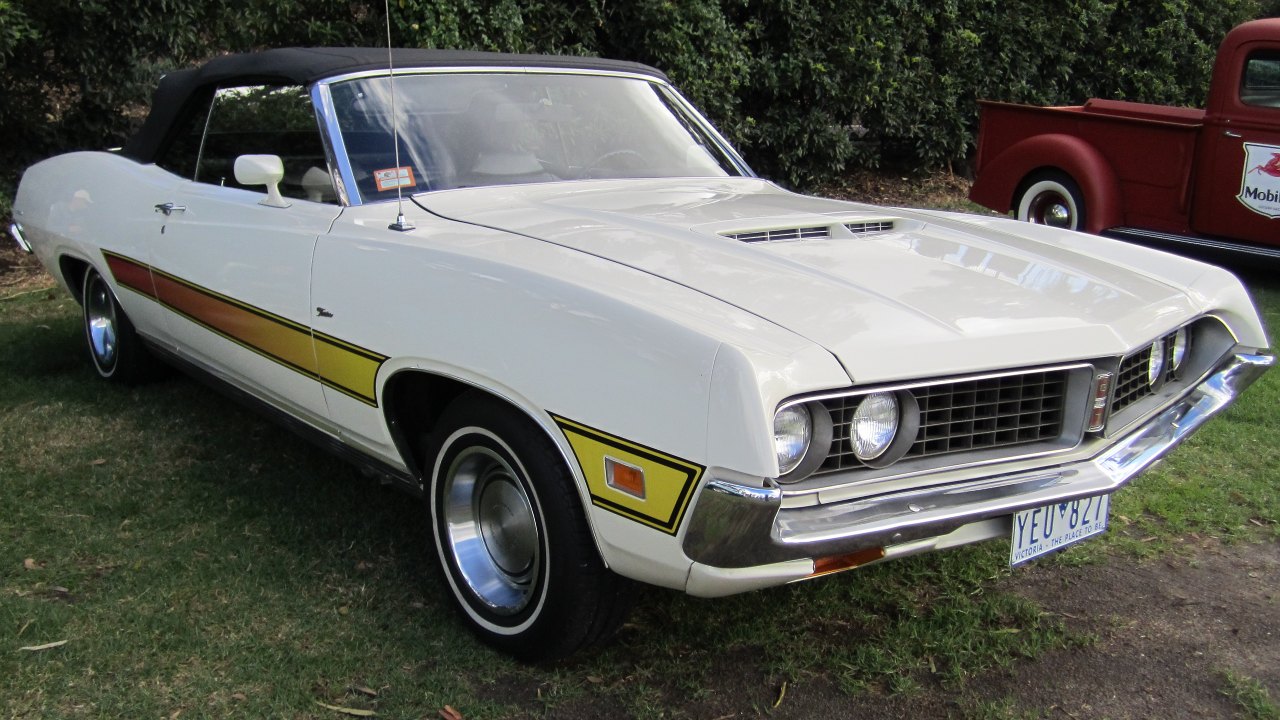
If the chassis and drivetrains were shared, the sheetmetal and marketing tone did much of the work in separating Fairlane from Torino in the public imagination. Enthusiasts looking back on the period often describe the 68 and 69 Fairlanes as relatively plain looking, especially when parked next to the more aggressive 70 Torinos. That perception reflects Ford’s own styling choices. The Fairlane tended to wear more conservative rooflines and trim, while the Torino was offered with an optional fastback roofline, often referred to as a “Sports Roof,” that visually aligned it with contemporary muscle cars and NASCAR stockers.
Later commentary on the Torino’s history frequently characterizes it as Ford’s “forgotten muscle car,” a label that would have made little sense if it had remained just another Fairlane variant. The fastback profiles, bolder grilles, and sportier interior treatments pushed the Torino into a different visual category, even when the underlying structure was shared. Over time, that styling emphasis helped the Torino name eclipse Fairlane in enthusiast circles, with Torinos remembered for their dramatic lines and racing associations, while Fairlanes are more often recalled as straightforward intermediates that happened to share the same bones.
Engines and performance: when the badges mattered
Under the hood, the two nameplates started from the same menu but did not always get equal access to the most dramatic options. At the entry level, both Fairlane and Torino could be ordered with modest six‑cylinder and small‑block V8 engines, including the 200 cubic inch Fairlane Six listed in the FAIRLANE 500 brochure. That commonality supports the view that, for many buyers, choosing between the badges was more about appearance and comfort than raw speed. However, as Ford leaned harder into performance marketing, the Torino increasingly became the showcase for the most potent combinations.
Accounts from owners and period enthusiasts highlight how the Torino badge often accompanied serious hardware. One story about a black 1957 Ford Fairlane police interceptor describes a wrecked “Tornio” that donated its Ford 429 “Thunder Jet” V8 for a swap, illustrating how the intermediate line became a donor pool for big‑block power. Other discussions of the 1970 model year note that Torino, Ranchero, Cobra, and the 70 1/2 Falcon shared front clips and mechanical underpinnings, but the most aggressive performance branding clustered around Torino and Cobra variants rather than the Fairlane name. In that sense, the Torino label signaled not only extra trim but also a higher likelihood of serious performance parts, even if the basic powertrain architecture remained common.
From subseries to standalone: how Torino replaced Fairlane
Over a relatively short span, Ford’s marketing decisions turned the Torino from a subseries into the de facto identity of its intermediate line. Early descriptions of The Torino emphasize that it was initially an upscale variation of the intermediate sized Ford Fairlane, explicitly likened to the way the Ford LTD sat above more basic full‑size Fords. As the Torino gained recognition, particularly through its styling and racing presence, the balance shifted. The Fairlane name, once a proud mid‑range badge, was increasingly confined to base trims and fleet‑oriented configurations, while Torino carried the aspirational imagery.
By the time Ford was promoting the Torino’s racing heritage and positioning it as a key player in stock car competition, the Fairlane label had largely receded from the spotlight. Enthusiast recollections that a 1970 Fairlane 500 was “the same as a Torino” in structural terms, and that Ford built 13613 Fairlanes alongside Torinos, underscore how the company was selling essentially one intermediate car with two names, then gradually letting one of those names fade. The real separation, therefore, was not a matter of different platforms or radically distinct engineering. It was the cumulative effect of trim hierarchies, styling emphasis, and performance branding that elevated Torino from a Fairlane variant into Ford’s primary intermediate identity, leaving the Fairlane badge as a historical stepping stone rather than a true rival.
More from Fast Lane Only