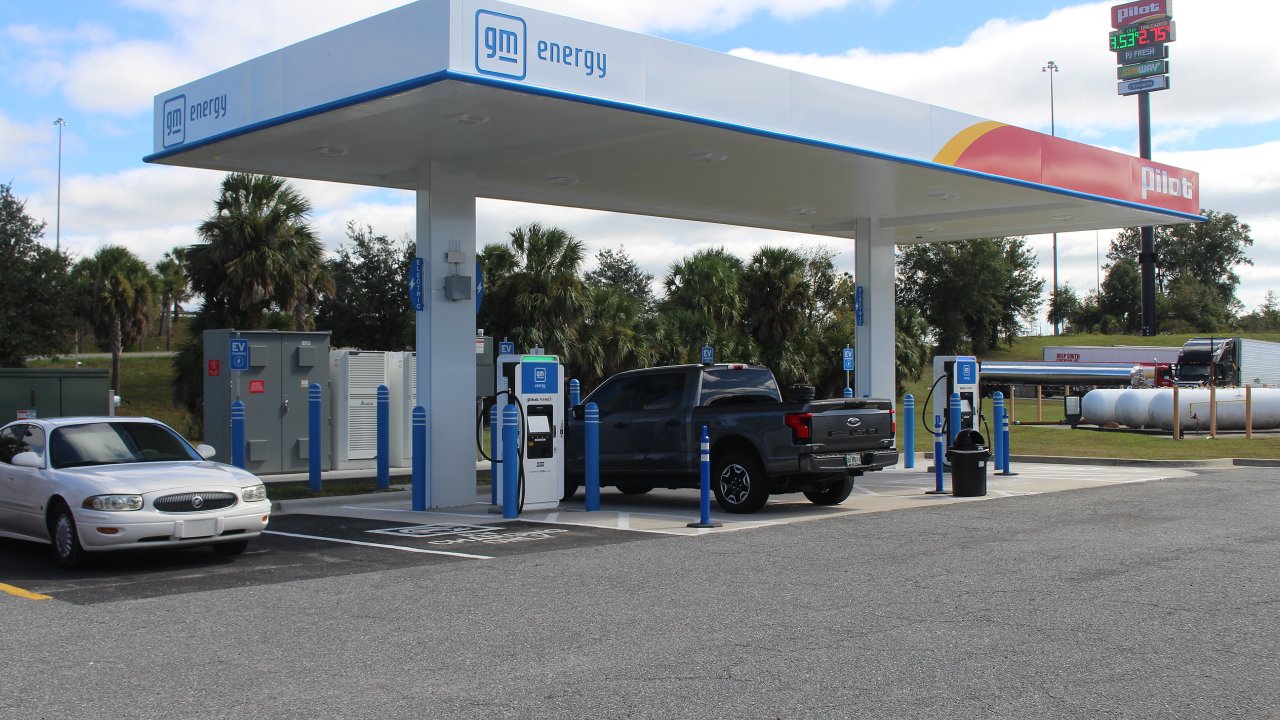
General Motors and Pilot are quietly building one of the most consequential charging corridors in the United States, stitching together a fast‑charging network that now reaches across more than 25 states and is designed for long‑distance travel rather than just city errands. As the buildout accelerates, the partnership is starting to show what a truly national public charging system can look like for everyday drivers, commercial fleets, and the truck‑stop economy that keeps the country moving.
I see this expansion as a turning point for electric mobility in the United States, not because it adds another set of plugs, but because it targets the exact pain point that has held back many would‑be EV buyers: confidence that they can cross state lines, tow, and road‑trip without hunting for a compatible charger at every exit.
From concept to a 25‑state corridor network
The collaboration between General Motors, Pilot and EVgo started as an ambitious plan to wire the nation’s highways with high‑power chargers at familiar travel centers. The partners initially set a goal to install 2,000 DC fast chargers at 500 Pilot and Flying J locations, a scale that would rival some of the most established charging brands and directly target interstate routes where drivers already stop for fuel and food. That blueprint is now materializing on the ground, with the network spanning more than 25 states and forming the backbone of a true coast‑to‑coast corridor system.
According to project updates, the charging infrastructure tied to Pilot, General Motors and EVgo is already installed in over 25 states, with sites concentrated along major national travel corridors that serve both passenger vehicles and commercial traffic. The partners are working toward a total buildout of up to 2,000 fast chargers at Pilot Travel Centers LLC locations, a scale that would give EV drivers a predictable pattern of high‑speed charging every few exits on key interstates. Separate reporting notes that the trio has outlined plans to extend coverage to 40 states, underscoring how quickly the network is evolving from a regional experiment into a near‑national grid of highway fast chargers.
What the new Pilot EV sites actually offer drivers
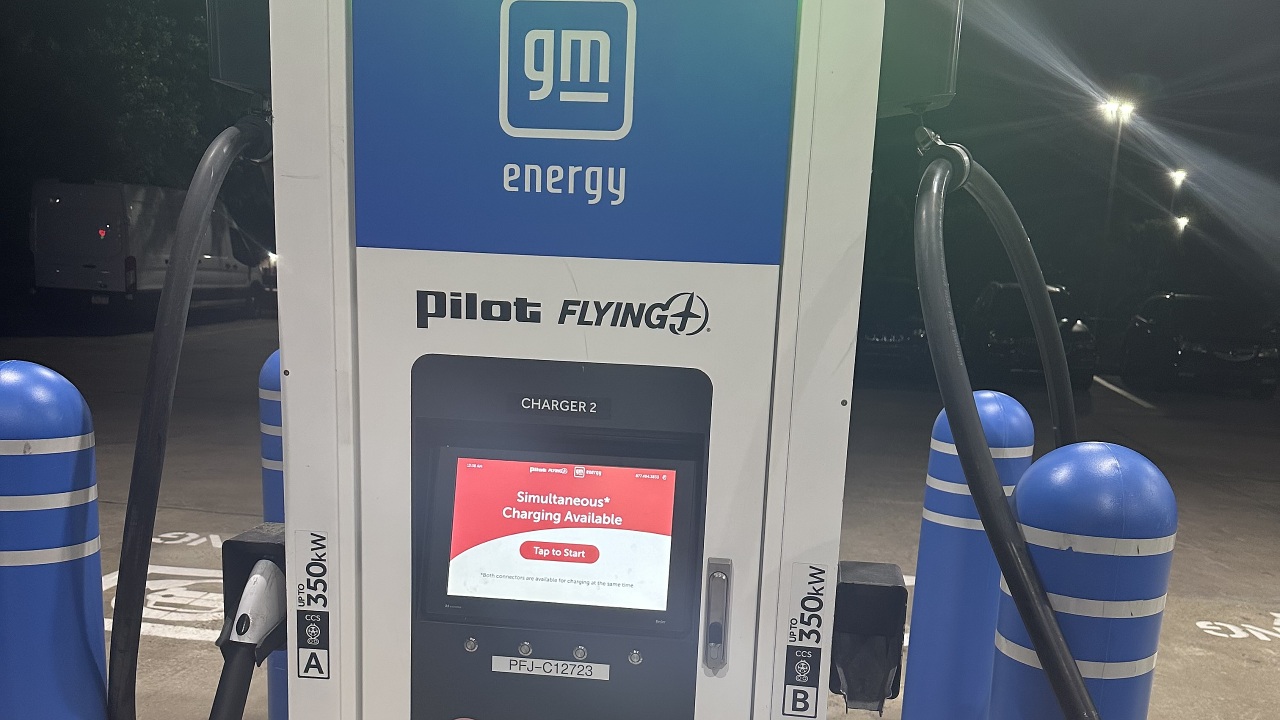
For drivers, the value of this network is not just the number of dots on a map, but the experience at each stop. Pilot has described locations equipped with fast chargers that can deliver up to 350 kilowatts, a power level that allows many modern EVs to add substantial range in the time it takes to grab a coffee or a meal. These chargers are integrated into existing travel centers, so drivers can access restrooms, food and convenience retail while their vehicles charge, rather than waiting in a remote parking lot with little to do.
Access and wayfinding are also being built into the ecosystem from the start. Drivers can use Pilot’s MyRewards Plus app to locate charging locations along their routes and see which sites fit into their travel plans. On the automaker side, General Motors is promoting public charging tools that let owners find charging stations, check real‑time availability and even plan stops directly from a GM vehicle mobile app. By tying the physical infrastructure to digital tools like the MyRewards Plus app and GM’s “Find Charging Stations No” experience, the network aims to make long‑distance EV travel feel as routine as pulling into a gas station.
Design lessons from highways, condos and service plazas
One of the most striking aspects of the GM and Pilot buildout is how closely it tracks best practices emerging from other charging projects in North America and Europe. On European motorways, for example, planners are already prioritizing pull‑through charging bays that accommodate vehicles towing trailers, so drivers do not have to unhitch just to plug in. That kind of design thinking is highly relevant to U.S. truck stops and travel centers, where pickup trucks, crossovers with bike racks and commercial vans all share the same forecourt and need space to maneuver.
The same attention to layout and future‑proofing is visible in dense urban projects. At a residential building on 75 Oneida Crescent, installers added 20 charging stations for current EV owners but also built infrastructure readiness for 30 additional chargers as more residents switch to electric. That approach, wiring for tomorrow while serving today’s demand, mirrors what highway networks like the GM and Pilot collaboration must do as EV adoption rises. Service plazas along Colorado’s E‑470 corridor are taking a similar tack, with plans for food and beverage outlets, convenience retail, fuel and EV charging stations all under one roof, turning charging stops into full‑service hubs rather than isolated pedestals in a corner lot.
Amenities, resilience and the truck‑stop advantage
Traditional fuel stops have long competed on amenities, and the same logic is now shaping EV charging. Pilot locations already offer restrooms, food options and convenience retail, and the addition of high‑power chargers effectively layers a new energy service onto an existing hospitality footprint. Other charging providers are experimenting with similar upgrades, such as solar‑powered canopies that provide weather protection while potentially storing energy, turning a bare parking lot into a more comfortable and resilient charging environment. These design choices matter when drivers are spending 20 to 40 minutes at a site instead of five.
Resilience is also becoming part of the conversation as climate‑driven disasters test infrastructure. In Texas, one company responding to severe floods offered free Wi‑Fi and charging at several locations, moving assets as conditions changed to keep people connected and powered. That kind of mobile support underscores why it is useful to have charging embedded in a broader network of travel centers and service plazas that can pivot quickly in an emergency. When EV charging is co‑located with fuel, food and communications services, it becomes easier to support both the traveling public and local communities during disruptions.
How this network fits into the broader EV ecosystem
The GM and Pilot corridor buildout does not exist in a vacuum, and its impact will depend on how well it meshes with vehicles, software and other charging providers. General Motors is already positioning its public charging tools as a way for owners to locate nearby stations, check real‑time availability and plan routes, with the ability to pull this information directly from a GM vehicle mobile app. That integration is crucial for drivers who want to see fast chargers along their path, filter by power level and amenities, and avoid arriving at a station that is already full or out of service.
Commercial fleets are watching these developments closely. Electric vans like the 2023 Ford E‑Transit are designed to keep drivers connected, informed and in control, with built‑in navigation and telematics that help businesses manage routes and charging stops. As corridor networks grow, fleet operators can start to plan interstate runs that rely on predictable high‑power charging at Pilot and Flying J locations, rather than building their own private depots along every route. For businesses that are trying to ensure a smooth transition to electric mobility, the combination of corridor fast charging, robust apps and vehicle connectivity can reduce range anxiety and simplify logistics.
From 25 states to a truly national footprint
The most important question now is how quickly the GM, Pilot and EVgo collaboration can move from a 25‑plus‑state footprint to something approaching universal coverage. Reporting on the partnership’s expansion indicates that the companies are already working toward installations in 40 states, a threshold that would put fast charging within reach of nearly every major interstate corridor in the continental United States. As more sites come online, the original target of 2,000 DC fast chargers at 500 Pilot and Flying J locations will become a key benchmark for judging whether the network has delivered on its promise.
Even at this early stage, the outlines of a new charging landscape are visible. Drivers can increasingly plan cross‑country trips around a mix of home charging, urban hubs, residential installations like the 75 Oneida Crescent project and highway fast chargers at Pilot Travel Centers LLC sites. Infrastructure projects along toll roads, such as the E‑470 service plazas that will combine fuel, EV charging and retail, point to a future in which every major travel node offers multiple ways to refuel, recharge and regroup. If General Motors, Pilot and EVgo can sustain their current pace and maintain a focus on driver experience, the network that now spans more than 25 states could soon redefine what “national” EV charging really means.