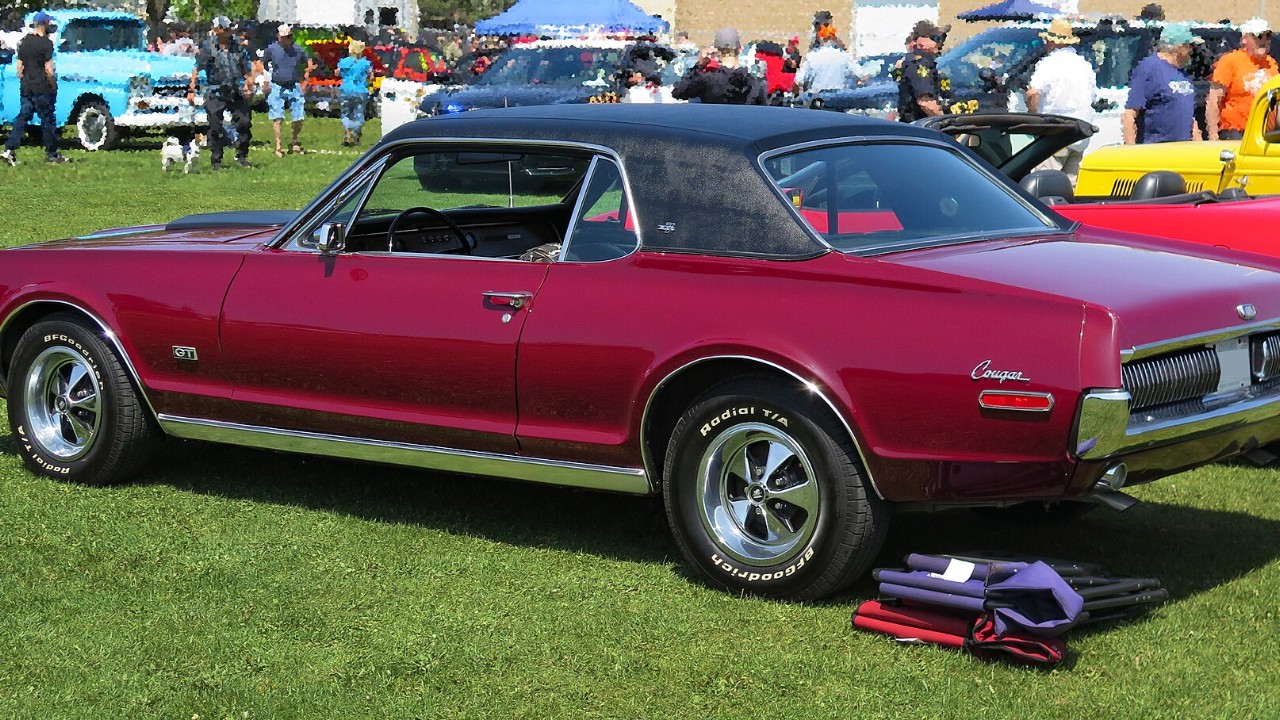
Mercury’s first Cougar won Motor Trend’s Car of the Year award for 1967, and no other Mercury ever took that title. A year later, buyers could order a Cougar XR-7 GT with wood-look trim inside and a big V8 up front. After that, the mix of comfort and muscle set the tone for everything that followed.
The Cougar shared its bones with the Mustang, yet it never felt like a copy. Instead, Mercury aimed it at drivers who wanted a little polish with their horsepower. Over the years, the name moved from pony car to personal coupe to front-drive hatchback. Some versions hit the mark better than others.
These are our picks for the seven Cougars that best capture the fun of the name. The choices and verdicts are our opinion. Meanwhile, the years, engines and production figures come from period specifications, owner-club records and auction-market research we checked.
1. 1968 Mercury Cougar XR-7 GT
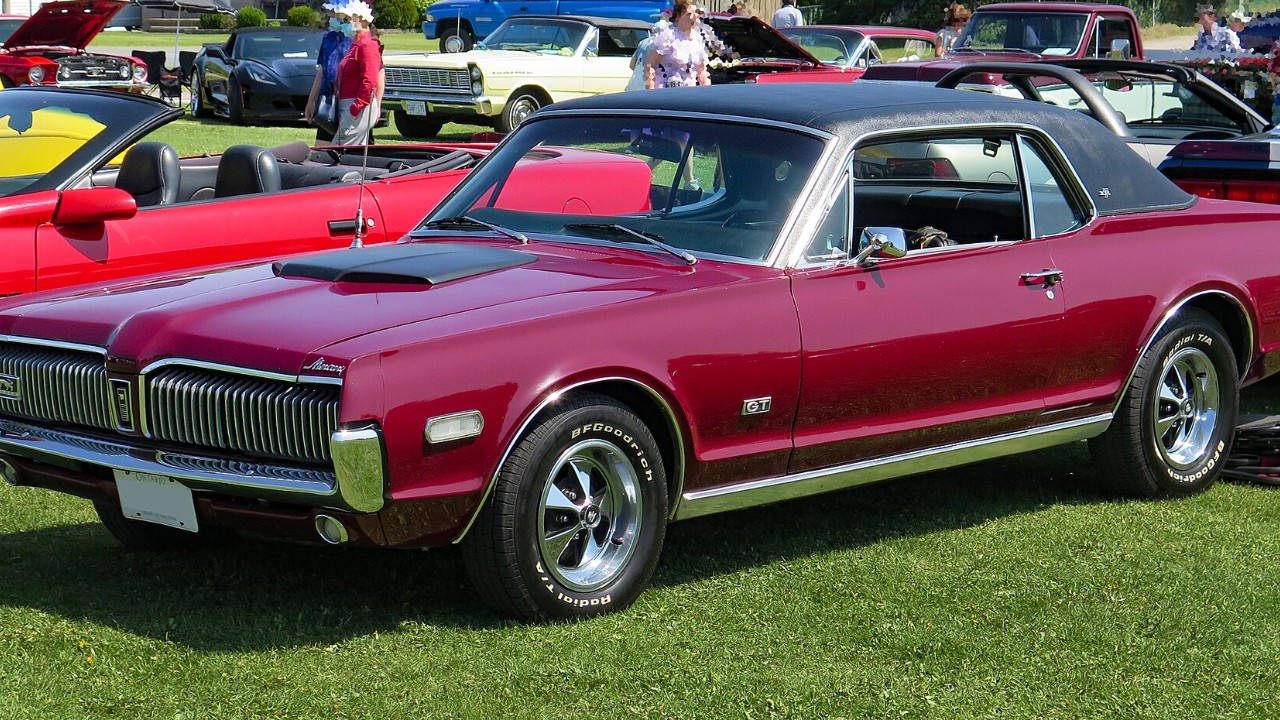
The XR-7 arrived halfway through the 1967 model year as a $185 upgrade. For that money, then, buyers got a simulated wood dashboard, black-face gauges, toggle switches and an overhead console. In other words, it turned a sporty coupe into a small luxury car.
For 1968, you could stack the GT package on top. It brought a 390-cubic-inch V8, a heavy-duty suspension, bigger brakes and a low-restriction exhaust. Power front disc brakes came with it too, so the car could stop as well as it went. Mercury built 32,709 XR-7s that year, according to a 1968 Cougar fact sheet from Over-Drive Magazine, so the trim itself was far from rare.
The GT combination is the interesting part, because it gave you gentleman’s-club cabin trim with a torquey big-block underneath. In our view, the Cougar XR-7 GT is the purest version of the original idea. It is fast enough to be fun, yet comfortable enough to drive all day. If you shop for one, ask for paperwork that proves the GT package, because badges are easy to add.
2. 1968 Mercury Cougar Dan Gurney Special
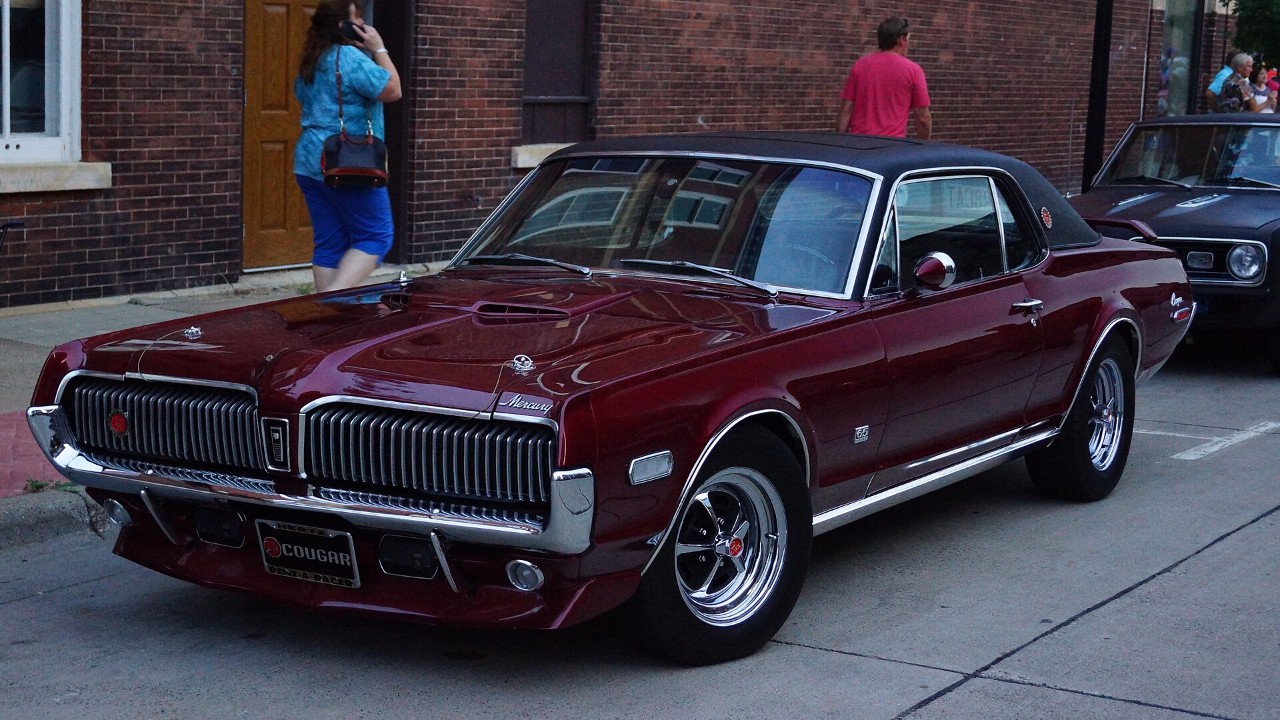
Mercury tied racer Dan Gurney’s name to its Cougar in two ways. First came the Dan Gurney Special, introduced in the middle of the 1967 model year. The Cougar Club of America’s registry page on the Dan Gurney Special lists turbine wheel covers, F70x14 wide-oval whitewall tires and a Gurney signature decal. It also added a chrome dress-up kit for the air cleaner lid, valve covers, dipstick and radiator cap.
The club says the package was meant to sell more Cougars, and dealers could add it as well as the factory. For 1968, however, it went only on standard Cougars with the 289 V8. Meanwhile, the much rarer XR-7G carried Gurney’s name on the XR-7. Sports Car Market counts 619 XR-7Gs, and Hertz bought 188 of them.
Gurney had real Ford credentials, too. In fact, he drove the mid-engine prototype in our story on Ford’s Mustang I concept at Watkins Glen. We love these cars because they show how a famous name could add swagger without a bigger engine. If you want one, start with the club registry, since dress-up parts can be swapped onto any Cougar.
3. 1969 Mercury Cougar Eliminator 428 CJ Ram Air
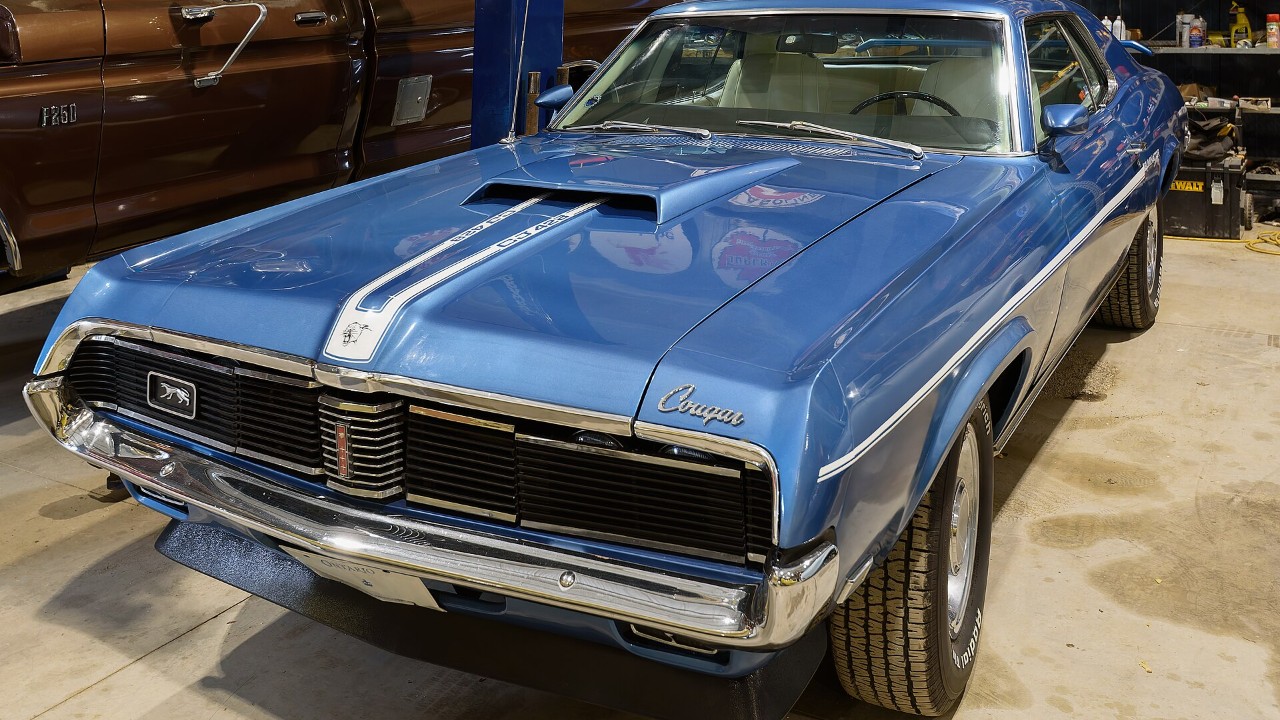
Mercury launched the Eliminator on April 1, 1969, and it was the loudest Cougar yet. Outside, it wore a blacked-out grille, side stripes and a spoiler. Under the hood, buyers could pick from several V8s, but the Boss 302 was exclusive to the Eliminator within the Cougar line.
The top choice was the 428 Cobra Jet with Ram Air, rated at 335 horsepower. Sports Car Market notes that a CJ-equipped Eliminator could run the quarter-mile in under 15 seconds. Hagerty’s look at a yellow 1969 Eliminator listed on eBay points to the functional hood scoop and hideaway headlights. Together, those details give the car real street presence, even parked.
Our take is simple. In our view, this is the Cougar that finally matched the Mustang’s muscle while keeping Mercury’s grown-up cabin. The following year’s car changed a lot, as our piece on the 1970 Cougar Eliminator’s Boss 302 split explains. If you buy a 428 car, check the VIN, because the fifth digit should read R or Q.
4. 1970 Mercury Cougar XR-7 convertible
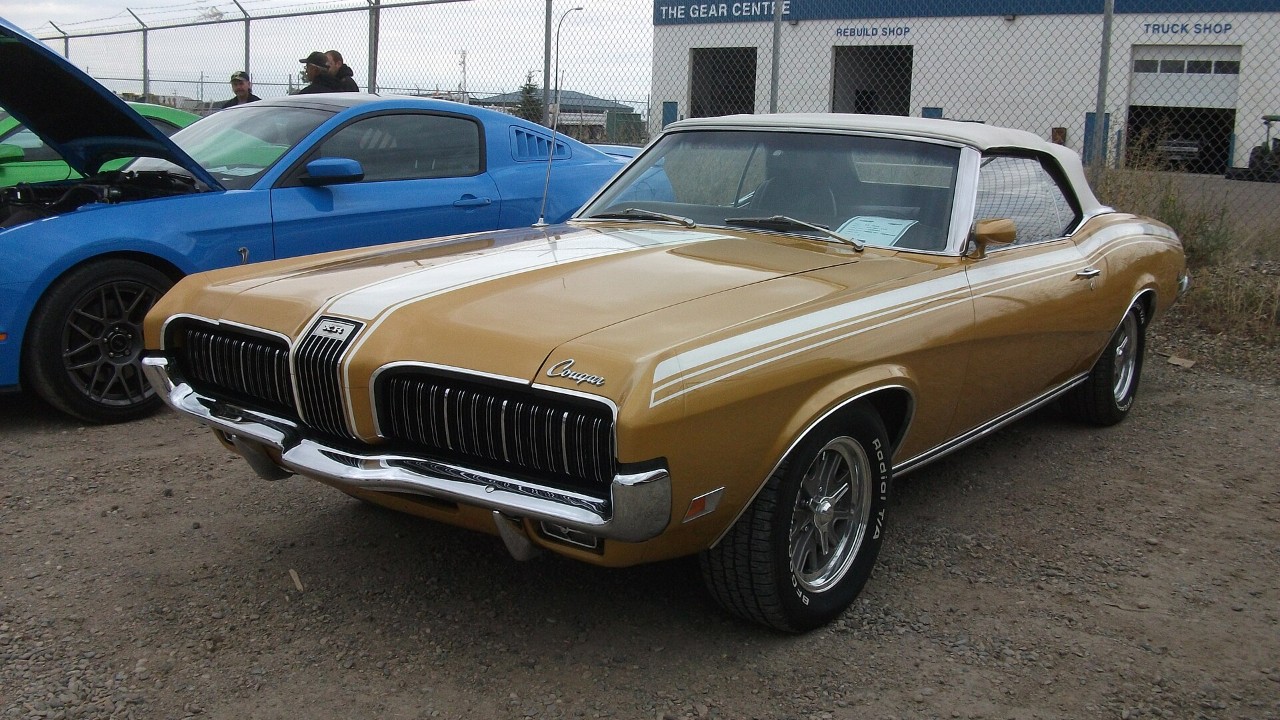
Mercury added a convertible to the Cougar range for 1969, in both standard and XR-7 trim. Better yet, a power top came standard. Then, for 1970, the split “electric shaver” grille with vertical slats returned. It gave the car a cleaner, more upright face than the 1969 model.
The engine list for 1970 ran from the new 351 Cleveland to the Boss 302 and the 428 Cobra Jet, according to Sports Car Market’s 1967–1973 Cougar profile. However, the same profile warns that many of the most desirable options were never offered on convertibles. That means a drop-top Cougar is usually a cruiser rather than a drag car.
Still, that suits us fine. A 1970 XR-7 convertible mixes the wood-trimmed cabin with an open sky, and that is a lot of fun on a summer evening. Cougar convertibles ran only from 1969 to 1973, so the window is short. If you want one, have the power top checked before you buy, and expect a milder engine than the hardtops offered.
5. 1971 Mercury Cougar XR-7 hardtop
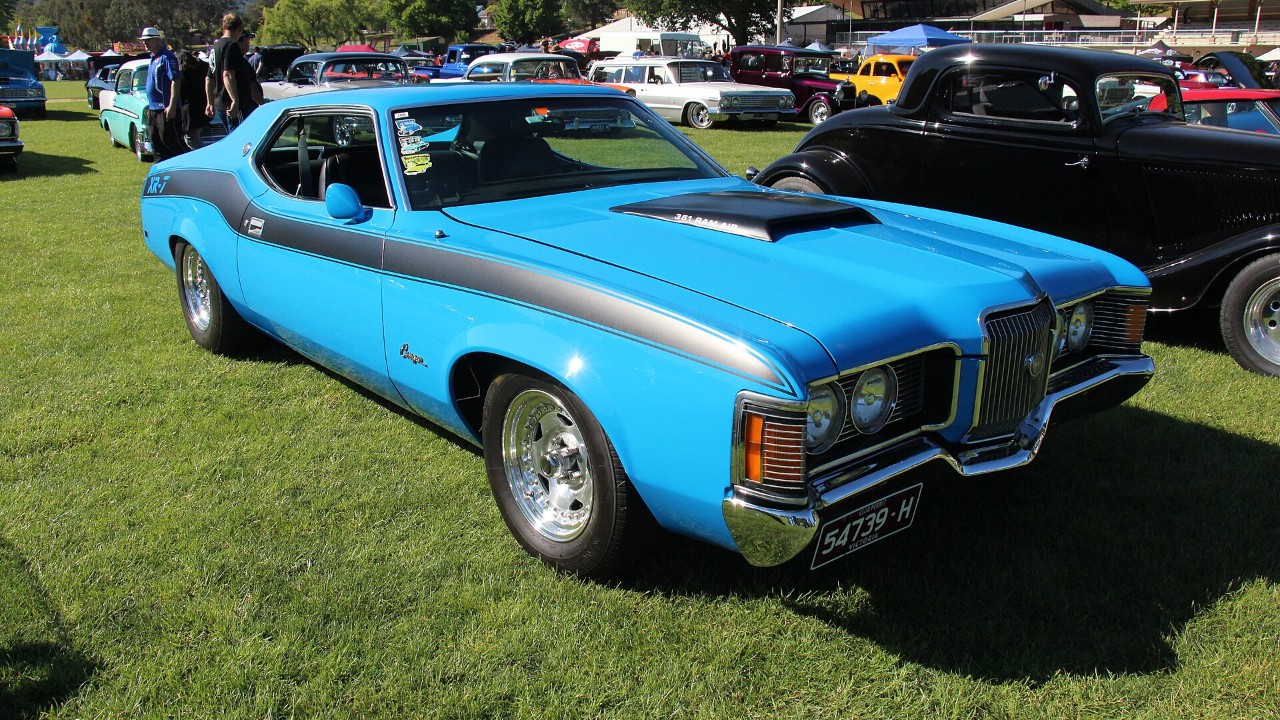
For 1971, the Cougar grew up and out. Its wheelbase stretched to 112 inches, and its front track reached 61.5 inches. It was also the first Cougar with exposed headlamps, four of them flanked by vertical chrome strips. As a result, the face lost the hidden-headlight drama of earlier cars.
The XR-7 hardtop added a vinyl roof, special door panels and its own dashboard. A 351 two-barrel V8 rated at 240 horsepower came standard, and a four-barrel 351 made 285. At the top sat the 429 Cobra Jet with 370 horsepower. Mercury built 62,864 Cougars that year, according to Old Cars Weekly’s profile of a 1971 XR7, down 13.10 percent from 1970.
Many fans dismiss this generation as too big, and we understand why at first glance. We disagree, because a 429 CJ XR-7 is a plush, very quick highway car. For the full engine story, see our rundown of the nine engines Mercury offered in the Cougar. Before you buy a 429 car, confirm the engine with a Marti Report or the VIN, because a big-block is easy to claim.
6. 1997 Mercury Cougar XR7
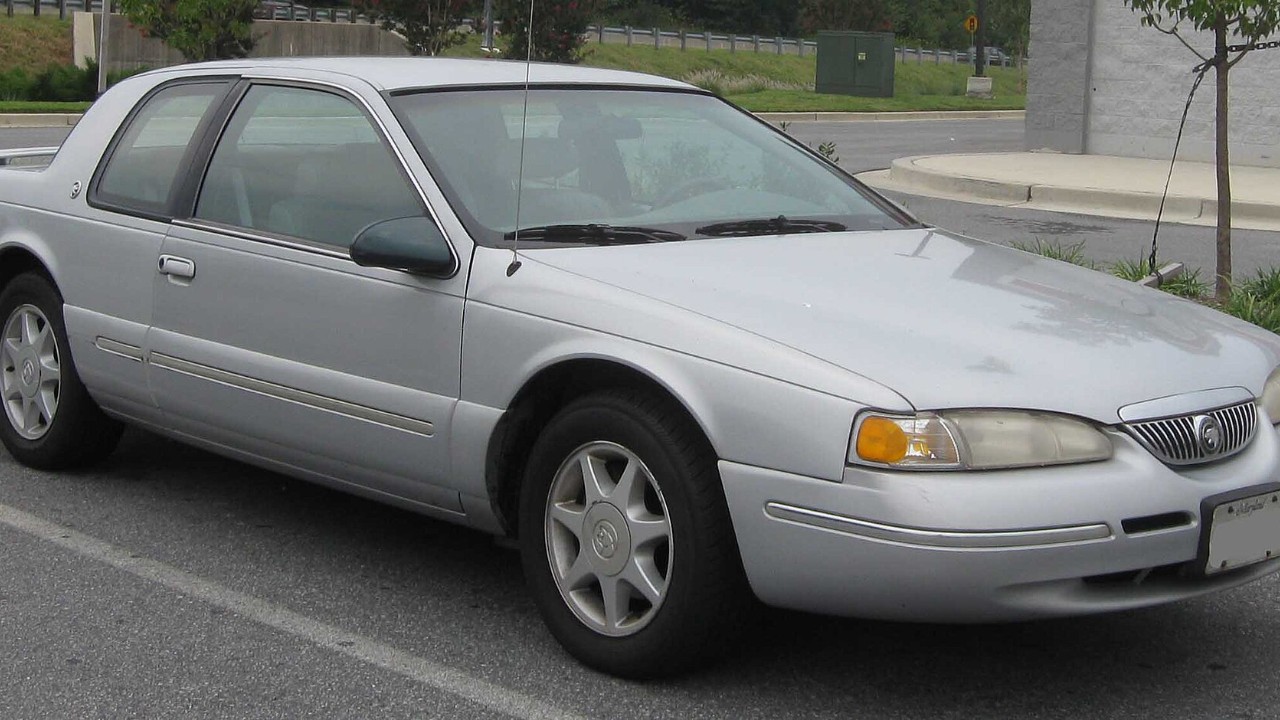
By the 1990s, the Cougar had become a big rear-drive personal coupe. From 1989 to 1997, it rode on the MN12 platform shared with the Thunderbird and Lincoln Mark VIII.
Every 1997 Cougar was an XR7, and it was the final year for the rear-drive car. Power came from a 4.6-liter SOHC V8 that Ford rated at 205 horsepower. Mercury also offered a 30th Anniversary package with Toreador Red paint, embroidered seats and special aluminum wheels. According to The Truth About Cars, that package added just $495 to a $17,830 car.
We think the last rear-drive Cougar is one of the most overlooked 1990s coupes. It rides softly, cruises easily and delivers relaxed V8 torque in a comfortable package. If you shop for one, favor a documented, unmodified anniversary car, since those are the ones collectors notice.
7. 1999 Mercury Cougar
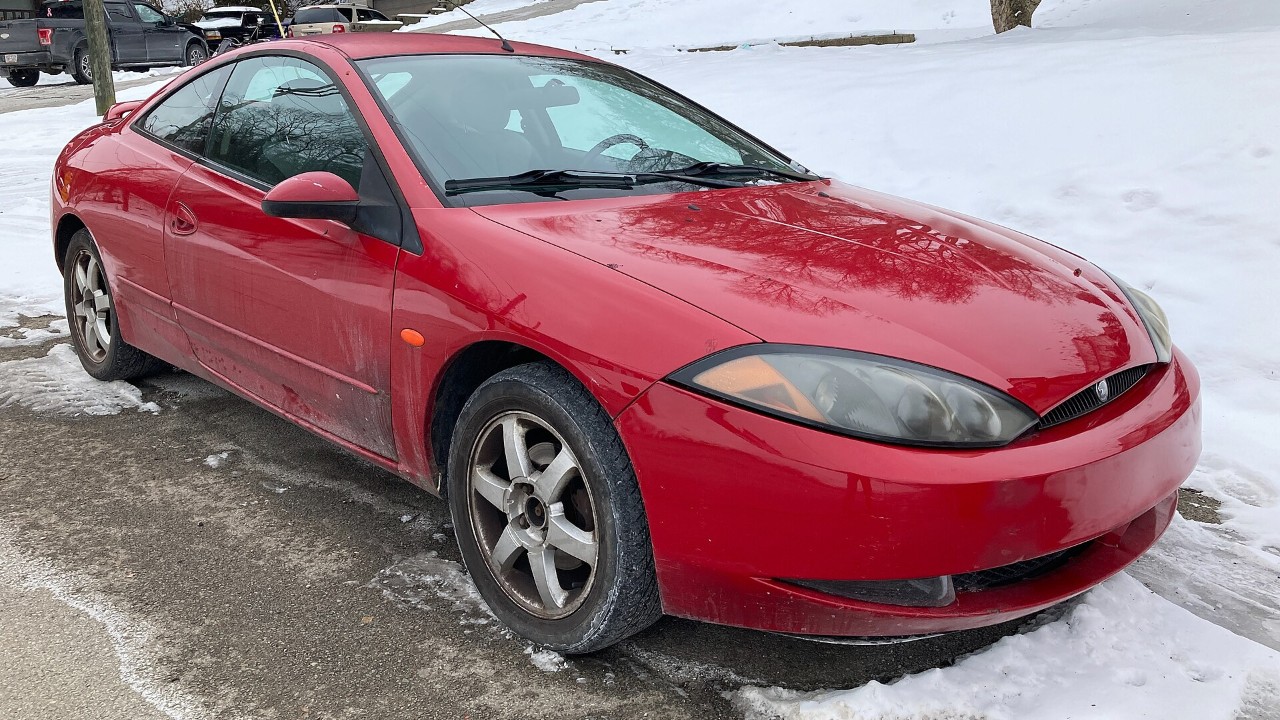
The 1999 Cougar broke every rule of the old car. It was the first front-wheel-drive Cougar, and it was a hatchback built on the CDW27 platform shared with the Ford Contour and Mercury Mystique. Buyers could choose a 2.0-liter Zetec four with 125 horsepower or a 2.5-liter Duratec V6 with 170 horsepower.
Its sharp creases came from Ford’s “New Edge” design language. A period review on Curbside Classic praised its handling and firm ride, and it listed a base price of $16,195. As a result, the Cougar was a sporty coupe a young buyer could actually afford.
We would pick the V6 with the five-speed manual for the most fun. Besides, it is eager, comfortable and unusual to see at a car show. Ford built this final Cougar at its Flat Rock plant until 2002. With it, the name ended a run that Old Cars Weekly puts at almost three million Cougars from 1967 to 2002.
More from Fast Lane Only