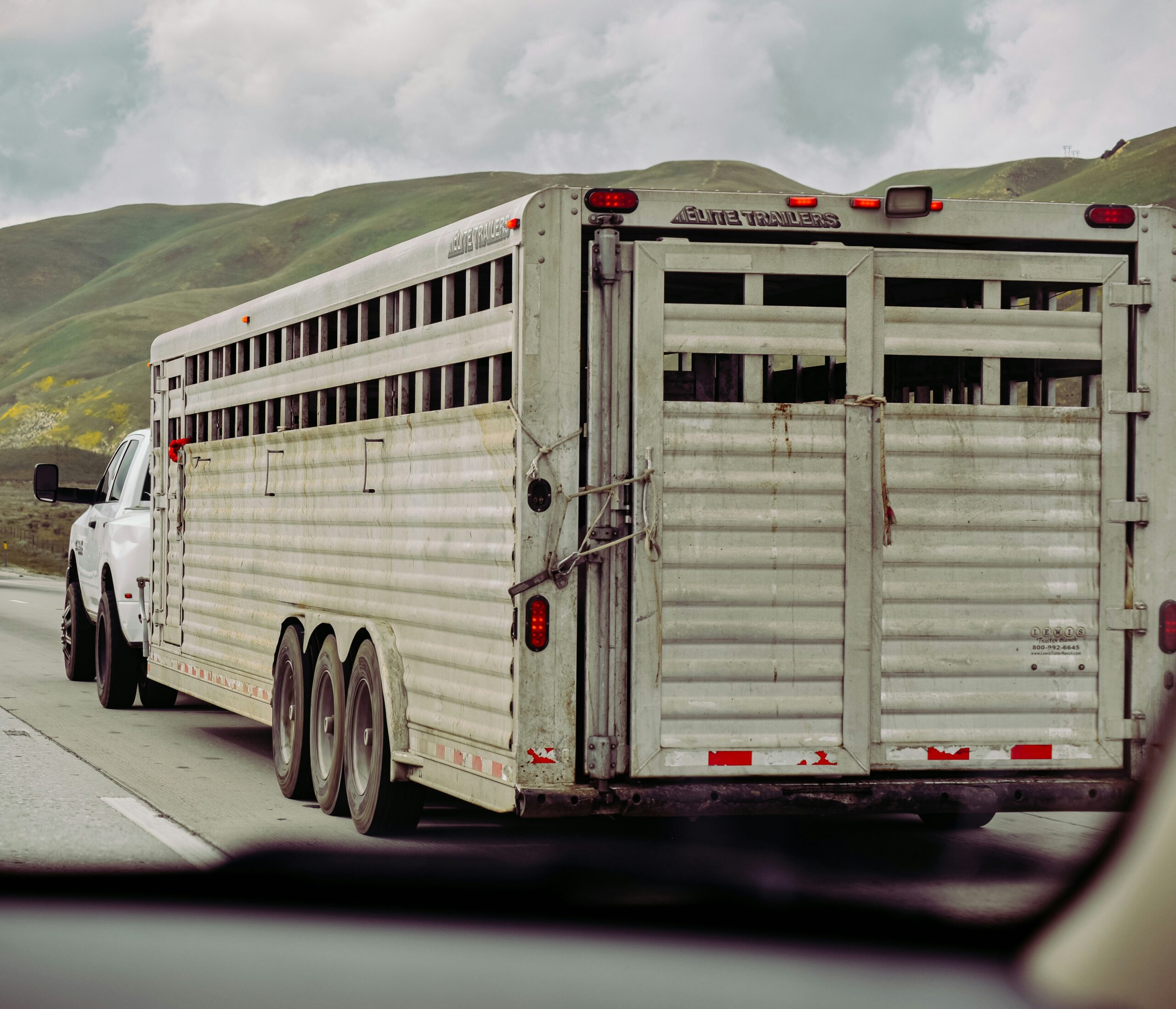
It’s the kind of sound that makes your stomach drop before your brain even catches up: a sharp, metallic bang that doesn’t belong in any normal drive. One heavy-duty Ram owner was hauling a horse trailer up a grade when that noise hit, followed by violent vibration and the immediate sense that something underneath had gone very wrong. They eased off, fought the urge to panic, and got to a stop as safely as they could.
When they finally looked under the truck, the culprit wasn’t subtle. The driveshaft’s U-joint had let go in spectacular fashion, and the freed end of the shaft had whipped around with enough force to tear through the transmission tunnel. It’s a scary reminder that even tough work trucks can have a single small part turn into a very big problem.
What happened on the climb
Grades are where tow rigs earn their keep, and they’re also where weak links get exposed. Climbing puts the driveline under steady load, and if the road is uneven or the truck hits a bump mid-pull, those forces can spike fast. Add a trailer pushing back and a little driveline angle, and the U-joint has a harder day than it does cruising on flat ground.
In this case, the “bang” was likely the moment the joint caps failed or the cross snapped. Once the joint came apart, the driveshaft didn’t just stop working—it turned into a flailing steel baton. That’s how it can slam the underside of the cab and punch up through sheet metal, wiring, insulation, and anything else in its path.
Why a U-joint failure can get so violent
A U-joint looks simple—just a cross with four caps—but it lives a brutal life. It spins thousands of times per minute, handles torque reversals, and constantly changes angle as the suspension moves. When it’s healthy, it’s boring, and boring is good.
When it starts to fail, though, it can fail fast. If a bearing cap runs dry, overheats, and seizes, the joint can bind and crack. If a cap walks out because a retaining clip fails or a yoke wears, the joint can separate, and the driveshaft immediately loses its controlled rotation.
The transmission tunnel damage: more than just sheet metal
The phrase “tore through the transmission tunnel” sounds dramatic because it is. The tunnel isn’t armor plating, but it is a major structural area, and it’s also home to things you really don’t want hit by a spinning driveshaft. Depending on the truck, you can be looking at damaged wiring harnesses, crushed transmission cooler lines, ripped insulation, or even damage to the floor braces.
There’s also the in-cab factor. If the driveshaft or debris penetrates far enough, it can intrude into the passenger compartment. Most of the time it’s a loud, terrifying event with damage below, but the potential for injury is real—which is why pulling over safely and keeping everyone calm (including the animals in the trailer) matters so much.
Warning signs people often miss
A lot of U-joint failures don’t come completely out of nowhere; they just don’t announce themselves in a way that feels urgent. A faint chirp at low speed, a clunk when shifting from drive to reverse, or a shudder under load can all be early hints. People often blame tires, road surface, or “it’s just a truck thing,” especially if the vehicle still drives.
Another big one is vibration that changes with speed, not engine rpm. If it gets worse on acceleration and eases on coast, that’s a classic driveline clue. And if there’s any rusty dust around the U-joint caps—like a reddish-brown powder—that can be a sign the bearings have been eating themselves for a while.
Why towing makes it more likely to show up
Towing doesn’t automatically kill U-joints, but it does raise the stakes. Higher torque loads and longer time spent under load mean more heat and stress. If the joint is already worn, towing is like turning up the volume on every weak part of the driveline.
Trailer weight can also squat the rear suspension, changing driveline angles. If the angle gets too steep, the U-joint operates through a larger range each rotation, which increases bearing load. That doesn’t guarantee failure, but it can accelerate wear—especially on long grades where everything stays hot for a sustained period.
What to do if you hear the bang
If something in the driveline lets go, the priority is staying in control. Ease off the throttle, don’t slam the brakes, and signal your way to a safe shoulder or turnout. If the truck is shaking violently, it’s usually best to come to a stop as soon as it’s safe, because continuing can turn one broken part into ten.
With a trailer—especially with live animals—try to stop smoothly and avoid sudden steering inputs. Once stopped, keep people clear of the underside until you’re confident nothing is still moving or leaking. And if there’s any chance the driveshaft has compromised fuel lines, transmission fluid lines, or wiring, it’s tow-truck time, not “maybe I can limp it home.”
How repairs typically shake out
The obvious repair is replacing the failed U-joint and likely the driveshaft, since a flailing shaft can bend or crack. But the tunnel damage is where costs and downtime can balloon. Body and structural repairs may involve cutting and welding, replacing insulation and carpet, and checking for damage to brake lines, fuel lines, wiring, and transmission components nearby.
It’s also smart to inspect the rear differential pinion yoke, transmission output area, carrier bearing (if equipped), and any driveline dampers. When one joint fails violently, it can shock-load the rest of the system. A good shop will measure runout, check angles, and look for collateral damage rather than just tossing in a new joint and calling it a day.
Easy prevention that’s surprisingly effective
The most basic prevention is also the most ignored: periodic driveline inspection. Grab the driveshaft near each joint (with the truck safely supported and in neutral, wheels chocked) and check for play, binding, or rough movement. Any clunk, looseness, or stiffness is a reason to investigate further.
If your setup uses serviceable (greasable) U-joints, keeping them properly lubricated matters—especially if the truck sees water crossings, road salt, or lots of towing. If they’re sealed, that doesn’t mean “forever”; it means you’re relying on the factory grease and the integrity of the seals. Either way, catching wear early is way cheaper than repairing a new “inspection hole” in the cab floor.
A tough reminder for anyone who tows
Heavy-duty trucks are built for work, but they’re still a collection of parts that wear out on a schedule the odometer doesn’t always predict. A U-joint is small, relatively inexpensive, and easy to overlook—right up until it isn’t. The good news is most failures give off hints, and a quick inspection now and then can keep a routine tow from turning into a roadside ordeal.
And if you tow regularly, especially with precious cargo like horses, it’s worth adding the driveline to the same mental checklist as tire pressure and brake controller settings. Nobody wants to hear that bang halfway up a grade. But with a little attention, chances are you won’t.
More from Fast Lane Only
- Unboxing the WWII Jeep in a Crate
- 15 rare Chevys collectors are quietly buying
- 10 underrated V8s still worth hunting down
- Police notice this before you even roll window down
*Research for this article included AI assistance, with all final content reviewed by human editors.