The Ford Model T did not simply put more people behind the wheel. It rearranged daily life, work, and even the shape of cities by turning the automobile from a fragile luxury into an everyday tool. Launched in 1908, Henry Ford’s “Tin Lizzie” helped create the modern middle class, the commuter routine, and the culture of mass-produced technology that still defines the 21st century.
Looking back at how one simple, rugged car reshaped society helps explain current debates about electric vehicles and artificial intelligence. The Model T shows how a single technology, once it becomes cheap and reliable, can quietly rewrite the rules of ordinary life.
From fragile toy to practical machine: what really changed in 1908
Before the Model T, early automobiles were expensive, finicky machines that signaled wealth more than practicality. Henry Ford set out to build a car that farmers, shopkeepers, and factory workers could use every day. He designed the Model T with high ground clearance, a tough frame, and a simple, reliable four-cylinder engine that could handle rough rural roads where horses had struggled.
Its revolution lay not in a single engineering trick but in the way the entire car was optimized for mass production. Standardized parts, a limited set of body styles, and a focus on ease of repair meant the Model T could be built and maintained at scale. Later, when Ford introduced the moving assembly line, the time to build a car fell dramatically and the price followed. That shift is why the Model T appears on lists of cars that changed the industry rather than simply successful products.
The engine itself reflected a new philosophy. Instead of chasing exotic performance, Ford focused on simplicity and durability. The Model T’s powerplant helped establish the idea that an internal combustion engine could be a standardized, repeatable product, not a bespoke contraption. Later assessments of engines that transformed motoring often trace their lineage back to this approach to mass-market power.
Equally significant was how Ford treated workers. By raising wages and shortening hours in his factories, he made it possible for his own employees to buy the cars they built. That feedback loop between industrial paychecks and consumer demand helped shape the emerging American middle class and turned car ownership into a realistic aspiration rather than a fantasy.
How the Model T rewired everyday routines and social life
Once the Model T reached real scale, daily life started to look different. Rural families who had relied on horses and trains could suddenly travel on their own schedules. Trips to town for supplies, church, or social events became easier and more frequent. Farmers used the car to haul produce, visit distant markets, and access services that had once been out of reach.
In cities, the impact was just as profound. Workers were no longer tied to homes within walking distance of factories or streetcar lines. Affordable cars helped fuel early suburban growth, as families moved a little farther out in search of space and cleaner air while still commuting to urban jobs. The familiar pattern of morning and evening traffic, now associated with modern freeways, has its roots in the spread of cars like the Model T.
Culture shifted around the car as well. Dating, leisure travel, and weekend drives all became part of a new social script. Some Model T owners converted their cars into makeshift trucks or even experimental motorcycles, a sign of how quickly people adapted the platform to different needs. The car turned mobility into a kind of personal freedom that previous generations had rarely experienced.
The Model T also helped normalize the idea that complex machines could be understood and tinkered with by ordinary people. Owners learned basic maintenance, swapped parts, and customized their vehicles. That hands-on relationship with technology foreshadowed later eras in which people would build their own radios, computers, and eventually software projects in garages and basements.
Why the Model T’s legacy matters in the age of AI and EVs
The story of the Model T resonates strongly with current debates about transformative technologies. Historians often group the car with earlier breakthroughs like the printing press and later ones like digital computing, as examples of inventions that reorganized work, communication, and social norms. Modern discussions of historic technology and frequently point back to the automobile as a benchmark for how deeply a single innovation can penetrate everyday life.
Artificial intelligence now sits at a similar inflection point. Early AI systems were expensive, specialized tools used by a small circle of experts, much like pre-1908 automobiles. As AI models become cheaper, more accessible, and integrated into consumer products, they start to resemble the Model T era: powerful technology moving from the elite fringe into the middle of society.
The Model T also offers a cautionary tale. Cheap cars brought mobility and opportunity, but they also paved the way for traffic congestion, pollution, and car-dependent urban design. With AI, the parallel risks are job disruption, privacy concerns, and new forms of bias. The lesson is not that transformative technology should be resisted, but that its second-order effects need attention long before it becomes ubiquitous.
Henry Ford’s approach to production and wages still shapes how people think about the social contract around innovation. As detailed accounts of how Henry Ford industry show, he understood that mass production only works if ordinary people can afford the products. That insight now informs arguments that the benefits of AI and electrification must be broadly shared, not captured only by a narrow group of companies or highly skilled workers.
A century on, the Model T still lives in culture and nostalgia
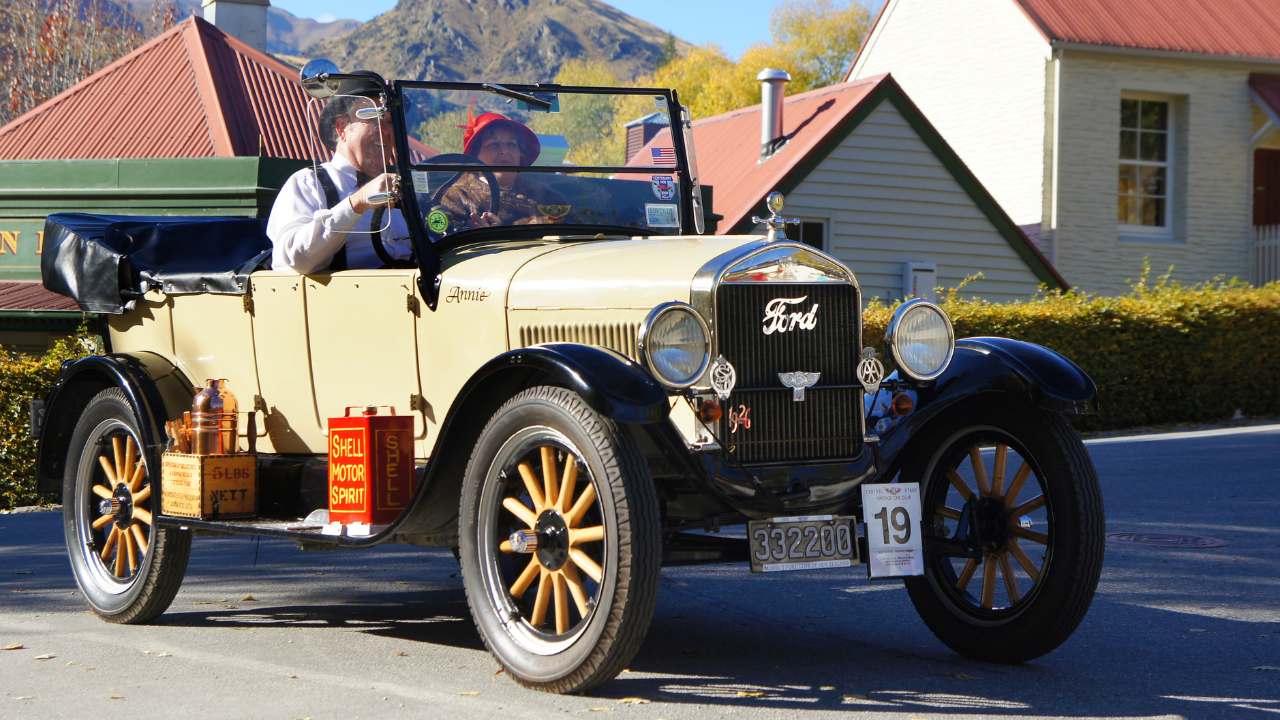
More than 100 years after its debut, the Model T continues to occupy a special place in cultural memory. Original cars still appear at parades and vintage rallies, but the icon has also migrated into toys, films, and collectibles. A recent LEGO Model T kit, for example, invites builders to recreate the early 1900s car in miniature, turning industrial history into a hands-on hobby project.
That kind of nostalgia is not just about design. It reflects a fascination with the moment when technology first became personal. The Model T symbolizes a time when ordinary families could buy into a future that had previously been reserved for the wealthy. In that sense, it stands as an emblem of optimism about progress, even as later generations grapple with the environmental and social costs of mass motoring.
Popular histories of how the Model emphasize that the car was both a product and a promise. It offered not just transportation, but a narrative of upward mobility, independence, and control over time and space. That story still resonates whenever new technologies are marketed as gateways to a better life.
What the next transportation revolution can learn from the Model T
The Model T era offers several clear lessons for the future of mobility and technology. First, affordability matters more than novelty. Electric vehicles and advanced driver assistance systems will only match the Model T’s impact if they reach price points and reliability levels that work for average households, not just early adopters.
Second, supporting infrastructure is as important as the product. The spread of the Model T went hand in hand with better roads, fuel stations, and repair shops. Today, charging networks, grid upgrades, and software maintenance play the same role for EVs and connected cars. Without that ecosystem, even the most advanced vehicle risks becoming a niche product.
Third, society needs to think ahead about secondary effects. The Model T helped create sprawling suburbs and reshaped labor markets long before policymakers fully understood what was happening. As AI tools and new drivetrains spread, planners and lawmakers face a similar challenge: how to guide technology so it supports livable cities, fair work, and environmental goals.
More from Fast Lane Only
- Unboxing the WWII Jeep in a Crate
- 15 rare Chevys collectors are quietly buying
- 10 underrated V8s still worth hunting down
- Police notice this before you even roll window down
*Research for this article included AI assistance, with all final content reviewed by human editors