The 1984 Ferrari Testarossa arrived as more than a new flagship from Maranello. With its wide stance, side strakes and flat-12 soundtrack, it crystallised the optimism, excess and visual drama that defined high-end car culture in the 1980s. Four decades later, that same silhouette still carries the weight of an era, even as Ferrari prepares a modern reinterpretation for a very different world.
Tracing how a single model came to embody its time means examining what changed in Ferrari’s design language, how pop culture seized on the car, and why the Testarossa name is now being carefully revived.
From radical design sketch to 1980s cultural shorthand
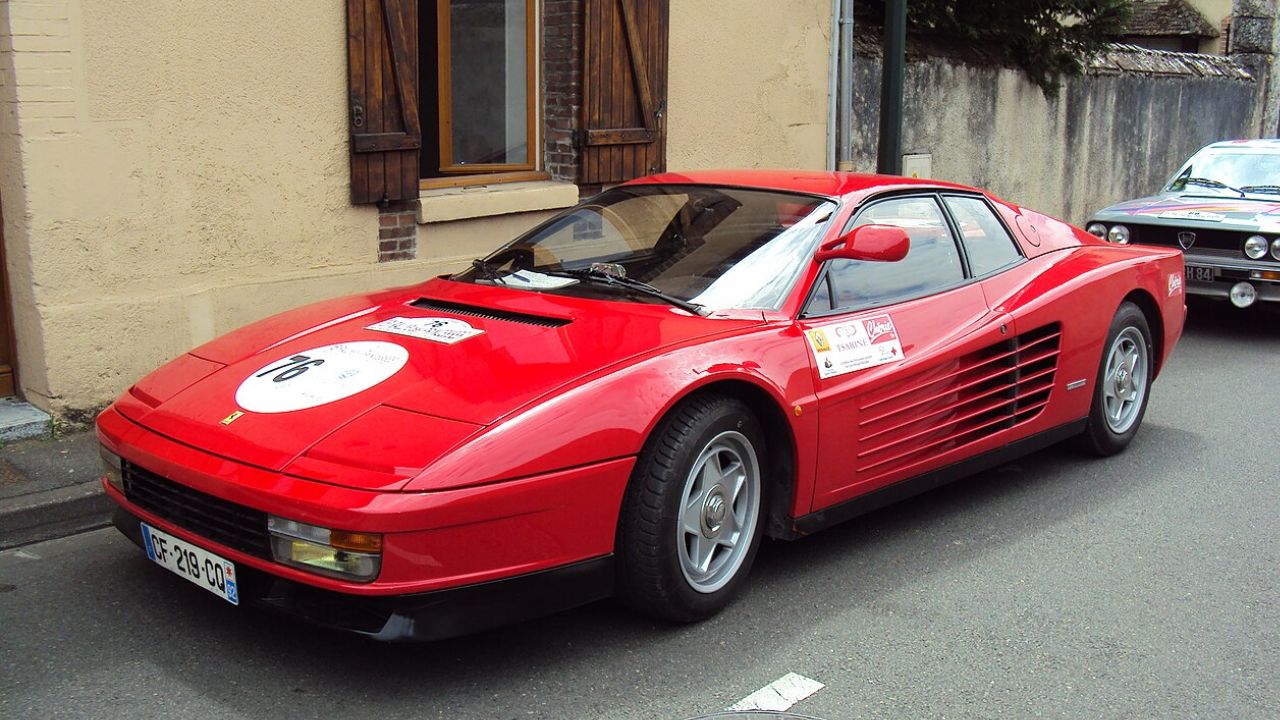
When the Testarossa debuted at the Paris Motor Show in the mid 1980s, it replaced the Berlinetta Boxer and signalled a break from the low, wedge-shaped supercars that had dominated the previous decade. The new Ferrari was wider, with a dramatic rear track and a long, flat tail that housed its 12 cylinder engine. Most striking were the horizontal strakes that ran along the doors and into the rear wings, feeding air to the radiators and instantly setting the car apart from rivals.
The styling did not emerge by accident. Ferrari entrusted the project to Pininfarina, and designer Leonardo Fioravanti, already known for work on earlier Ferraris, played a central role. In later recollections, he described how aerodynamic demands, cooling needs and a desire for visual lightness shaped the Testarossa’s surfaces. Those requirements led to the deep side intakes and the layered strakes that became the car’s signature, details he discussed when sharing his approach to the Testarossa design.
The engineering matched the visual impact. The flat-12 engine sat longitudinally, delivering power through a five speed gearbox, and the car’s wide rear track gave it both stability and a distinctive stance. Unlike the more compact Berlinetta Boxer, the Testarossa looked almost theatrical from the rear, with a full width grille and squared off tail that filled mirrors on the autostrada.
Ferrari also used the model to modernise its interior and usability. The Testarossa offered improved cabin space, better ventilation and more luggage capacity than its predecessor, which made it more viable as a grand tourer rather than a track focused special. That mix of daily usability and extreme styling helped broaden its appeal beyond hardcore enthusiasts.
How television, posters and aspiration turned a car into an icon
Design and engineering alone rarely turn a car into a cultural symbol. The Testarossa’s leap from showroom to shorthand for 1980s luxury came through television, advertising and a surge of aspirational marketing. The most visible example was its starring role in the series Miami Vice, where a white Testarossa became the on screen partner of detective Sonny Crockett and a rolling advertisement for sun soaked glamour.
The choice of a white car was unusual for Ferrari, which traditionally associated its brand with red, but it amplified the Testarossa’s strakes and wide body under neon lighting. The show’s global reach meant that millions of viewers saw the car weekly, which cemented the connection between the model and the decade’s high living image. Later coverage of the model’s legacy has repeatedly linked the Testarossa’s status to its immortalisation in Miami, a reminder that screen exposure can define how a car is remembered as much as any technical specification.
Beyond television, the Testarossa dominated bedroom walls and magazine covers. Its side profile, with the long rear deck and strakes, reproduced well in posters and advertising, turning the car into a visual code for success. Video games and toy manufacturers followed, using the model in racing titles and die cast lines that reached audiences far beyond the clientele able to buy a real Ferrari.
At the same time, the Testarossa’s price and exclusivity aligned it with the decade’s financial boom. It appeared in the driveways of celebrities and entrepreneurs, often photographed alongside yachts and glass walled mansions. That recurring imagery reinforced the idea that the car was not just a vehicle but a statement about having arrived in a certain social class.
What changed in Ferrari’s identity because of the Testarossa
The success of the Testarossa shifted expectations for Ferrari’s flagship road cars. The model proved that a grand touring Ferrari could be both visually extreme and commercially successful, which influenced the design language of later 12 cylinder models. Wide rear tracks, dramatic intakes and bold surface treatments became more acceptable within a brand that had previously leaned on purer, less ornamented forms.
Internally, Ferrari also saw how a single car could anchor the brand’s presence in popular culture. The Testarossa’s television exposure and poster fame created a feedback loop in which demand for the car supported the brand’s racing and product development efforts, while motorsport success reinforced the desirability of the road model. This cycle helped Ferrari weather economic swings and maintain its status as an aspirational marque through the late 1980s and early 1990s.
The Testarossa era also marked a change in how Ferrari managed naming heritage. The word Testarossa, Italian for “red head,” referenced earlier racing Ferraris that used red painted cam covers. By reviving the name for a road car, Ferrari tied its contemporary flagship to historic competition success. That strategy of reusing significant names would later influence how the company approached models like the GTO and other limited series cars.
Why the Testarossa story matters in the 2020s
Four decades after the original car, Ferrari is preparing a modern reinterpretation known internally as the 849 project. Early reporting describes this upcoming model as a contemporary take on the Testarossa idea, with a mid engined layout and styling that references the 1980s original. The project has already attracted attention because it suggests Ferrari sees enduring value in the Testarossa narrative.
One report on the new car noted that Ferrari considered several names before deciding to revive the historic badge, and that the 849 almost was. That hesitation highlights how carefully the company treats its heritage. The name carries expectations about design drama, performance and cultural impact, and misusing it could dilute the legacy built in the 1980s.
Yet the context for a modern Testarossa is very different. Regulatory pressure on emissions, the rise of electrification and changing attitudes toward conspicuous consumption all shape how a new flagship can be engineered and marketed. Ferrari must balance nostalgia for a flat-12 icon with the need to meet stricter standards and appeal to buyers who may value technology and sustainability as much as raw spectacle.
The continued fascination with the original car also affects the collector market. Values for well preserved Testarossas have risen, particularly for early single mirror and rare specification examples, as enthusiasts seek tangible links to the 1980s supercar boom. That demand supports restoration businesses, parts suppliers and specialist dealers, extending the car’s economic footprint long after production ended.
What comes next for Ferrari’s most 1980s creation
The forthcoming 849 project suggests that Ferrari intends to treat the Testarossa not as a closed chapter but as a living reference point. A modern reinterpretation will likely echo key visual cues, such as strong side intakes and a wide rear stance, while updating proportions and detailing for current tastes. The challenge lies in capturing the sense of shock that the original generated without resorting to pastiche.
Ferrari also faces choices about powertrain and positioning. A naturally aspirated flat-12 is no longer viable under present regulations, so the modern car will need a different mechanical heart, possibly a hybrid assisted V8 or V6. That shift raises questions about how much of the original character can be translated when the soundtrack and power delivery change so fundamentally. Yet Ferrari has already shown with other recent models that it can blend electrification with emotional driving experiences.
More from Fast Lane Only
- Unboxing the WWII Jeep in a Crate
- 15 rare Chevys collectors are quietly buying
- 10 underrated V8s still worth hunting down
- Police notice this before you even roll window down
*Research for this article included AI assistance, with all final content reviewed by human editors