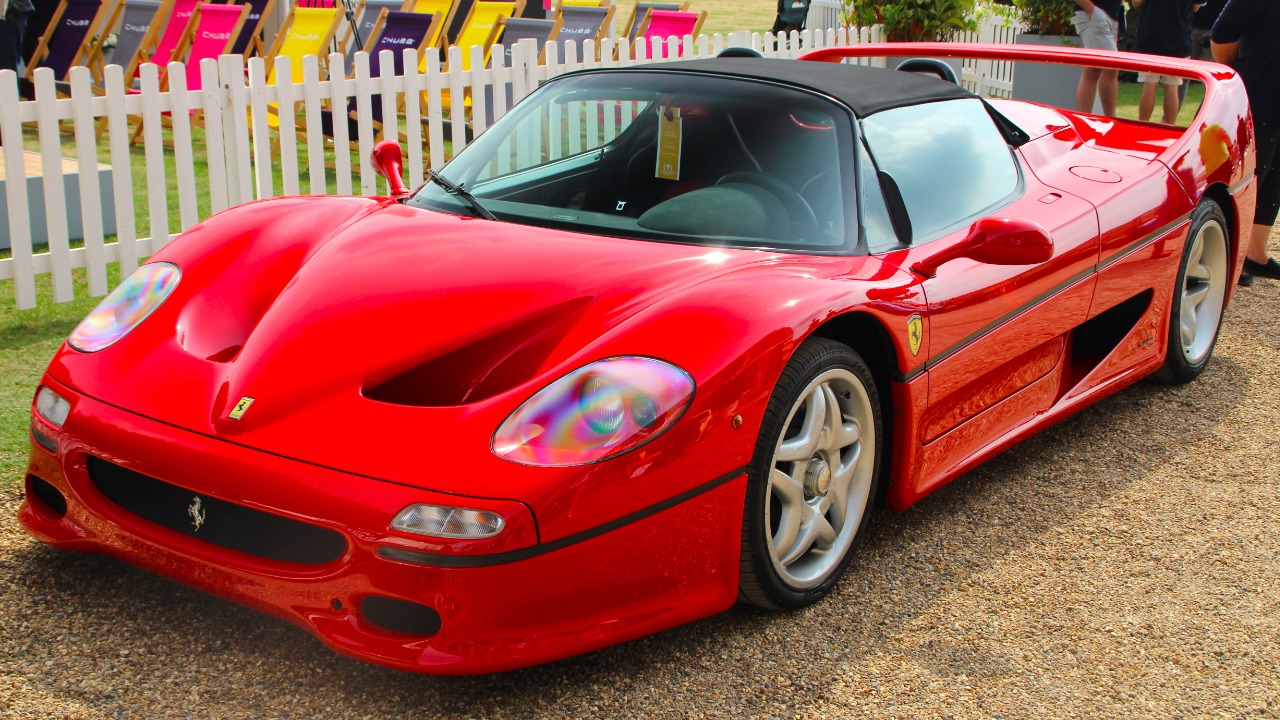
The Ferrari F50 arrived in the mid‑1990s as a raw, naturally aspirated V12 machine that tried to put a Formula One experience on the road, yet it spent years in the shadow of its turbocharged predecessor and its Enzo successor. Today it has flipped that script, becoming the rare V12 halo car that serious collectors quietly prioritize and aggressively pursue. I want to unpack how that transformation happened, and why this once‑controversial flagship now sits at the center of the modern supercar hunt.
The radical F1 experiment that felt out of step
When I look back at the launch of the Ferrari F50, what jumps out is how uncompromising the concept really was. The car was built around a naturally aspirated V12 derived from Ferrari’s Formula One program, mounted as a stressed member in a carbon tub, with the bodywork and suspension designed to make the driving experience all‑consuming rather than comfortable. Official material on the project makes clear that the F1 technology ran deep, from the engine architecture to the way the chassis and aerodynamics were tuned, and that the performance figures were considered spectacular even by mid‑1990s standards, with the whole package engineered to make the driver feel like a Formula One pilot on public roads.
That purity came at a cost in period perception. Contemporary reactions were oddly muted, in part because the F50 followed the wild, twin‑turbo F40 and did not chase headline top‑speed numbers in the same way. Reporting on its reception notes that, for some reason, the car’s debut landed with less fanfare than its specification deserved, and that the naturally aspirated V12, open‑top layout and track‑biased setup were initially seen as a niche taste rather than a universal dream. Only later did history “apologise” to this Nineties nat‑asp V12 hero, as the same qualities that once made it seem difficult have turned it into a Holy Grail‑like object for enthusiasts who now prize that Grail‑like object level of focus.
From underdog halo to “Big Five” royalty
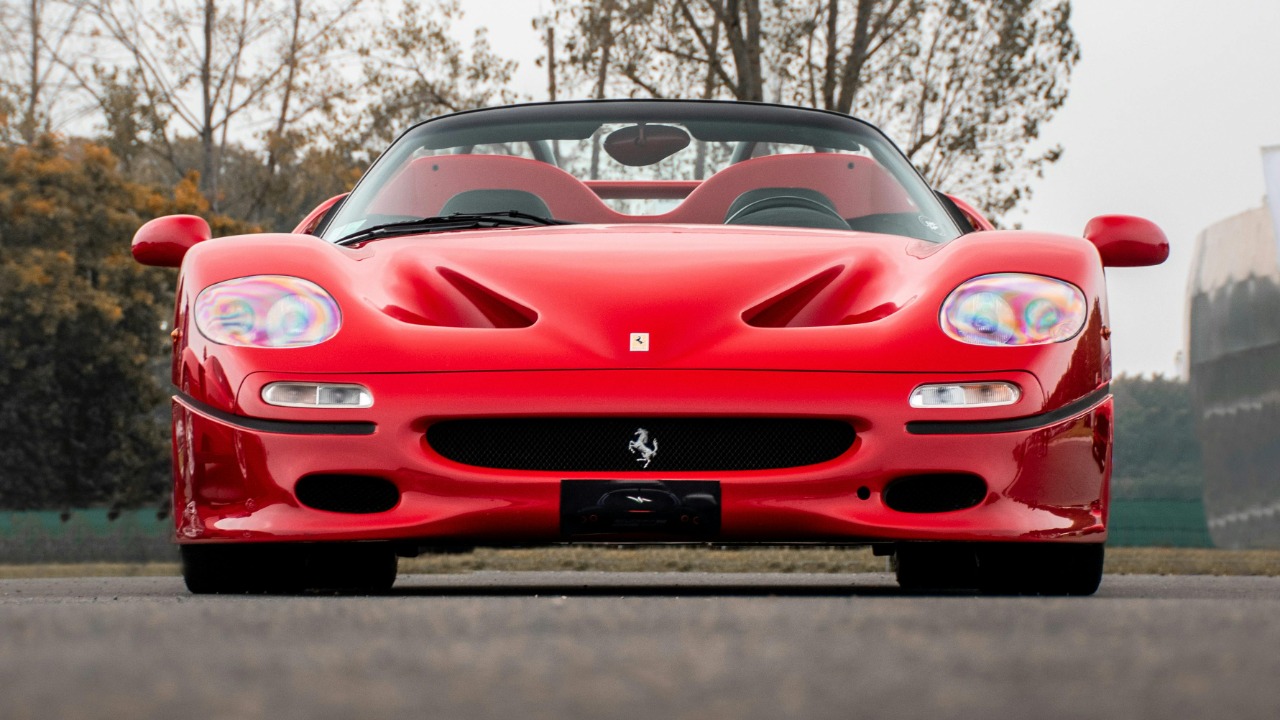
In the broader Ferrari story, the F50 was always meant to be a halo car, but it was not immediately treated as royalty. It sat between the F40 and the later Enzo in the brand’s pantheon, and for years collectors tended to rank it behind both. That hierarchy has shifted. The car is now firmly embedded in what enthusiasts call the “Big Five” Ferrari hypercars, a group that also includes the 288 GTO, F40, Enzo and LaFerrari, and recent market commentary notes that Ferrari’s F50, originally considered a niche member of that legendary “Big Five,” has risen to become one of the most desirable expressions of the artistry and performance Ferrari represents, a status underlined by the attention given to rare 1997 examples in colors like Giallo that highlight its sculpted bodywork and race‑bred stance in a way only a handful of cars can match, as seen in coverage of a particularly rare 1997 Ferrari F50.
The shift is not just about clubby status, it is about how the car is understood technically. Detailed model histories now describe The Ferrari F50 as one of the most radical and ambitious cars in Ferrari’s history, emphasizing its carbon fiber construction, removable hardtop, and the way its 4.7‑liter V12 was essentially a detuned race engine adapted for the street. That framing has helped re‑cast the car from an awkward middle child into a pivotal link between Ferrari’s track program and its road‑going flagships, and it is why modern guides to the model treat The Ferrari F50 as a benchmark for analog, high‑revving supercars rather than a footnote between more famous siblings.
Why collectors now chase the F50’s V12
As values have climbed, I have noticed that the F50 ticks almost every box that serious collectors look for when they talk about “unicorn” cars. Analyses of supercar appreciation point to a combination of rarity, innovation and design as the key ingredients that let certain models keep rising in value even decades after production ends, and the F50 lines up neatly with that template. It was built in very limited numbers, it carried over cutting‑edge Formula One technology into a road car, and its styling is instantly recognizable, all of which fit the pattern described when Aug breaks down how rarity, innovation and design influence long‑term supercar value appreciation.
On top of those fundamentals, the market has started to single out the F50 by name. In discussions of which models have become blue‑chip assets, Aug explicitly calls out the Ferrari F50 as a car whose values have increased significantly, noting that low‑mileage examples are now breaking records as collectors compete for the best preserved cars. That is the behavior you see when a model crosses from being a used exotic into being a financial instrument, and it is why Ferrari F50 values have become a bellwether for the broader analog‑era V12 segment, with Ferrari F50 values now watched as closely as any modern classic.
The driving myth: F1 fantasy on real roads
Part of what makes the F50 so magnetic is that it delivers on a fantasy every tifosi has entertained at some point. Detailed auction profiles describe how every tifosi has dreamt of piloting a Formula One car on the open road, with no traffic, no stop lights and nothing but the sound of a high‑revving V12 behind their head, and they frame the 1995 Ferrari F50 as the closest thing to that dream that Ferrari has ever put on sale with license plates. That narrative has only grown stronger as more owners and journalists share stories of the car’s intensity, and it is why a 1995 Ferrari F50 is now treated as an experience as much as an object.
Modern retrospectives have helped cement that myth. Writers who revisit the car now emphasize how the naturally aspirated V12, manual gearbox and lack of electronic driver aids create a level of connection that newer hypercars, for all their speed, struggle to match. They also point out that the initial cool reaction has been replaced by a kind of collective mea culpa, with history effectively apologizing to this Nineties nat‑asp V12 hero and elevating it to a Grail‑like object in the eyes of drivers who crave that rawness. When I read those accounts, especially the ones that describe how the reaction to the F50 was muted at first before it became a Grail‑like object, it is clear that the legend now rests as much on the way the car feels as on any spec sheet.
Thirty years on, the V12 unicorn is fully grown
Three decades after its debut, the F50’s place in Ferrari history looks very different from how it did in the late 1990s. Earlier this year, coverage of the model’s 30th anniversary framed The Ferrari F50 as a very rare model in the Ferrari lineup, one that stands apart from the cars that came before and after it because of its open‑top layout, naturally aspirated V12 and direct Formula One lineage. That perspective underscores how the car has aged into its role as a bridge between analog and modern eras, with The Ferrari F50 now celebrated as a singular chapter rather than a transitional one.
The market has followed that reassessment. Commentators who track the “Big Five” note that Ferrari’s F50, once the quietest member of the group, has become one of the most desirable, with collectors chasing low‑mileage, well‑documented cars and paying premiums for rare colors or unique histories. That evolution mirrors the broader pattern that Aug identifies when defining the super and hypercar segments, where not every fast car becomes a collectible investment but specific characteristics distinguish the ones that do, and the F50 now checks those boxes so completely that it has turned into the V12 unicorn people chase, a transformation that reflects both its intrinsic qualities and the way Defining the Super and Hyper categories has reshaped how we value cars like it.